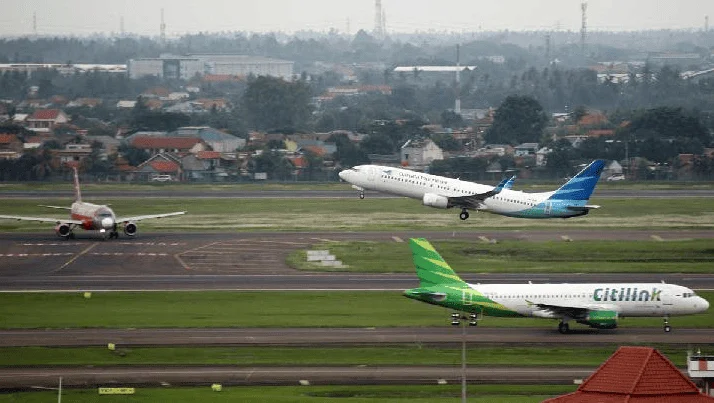
The Indonesian aviation sector is preparing for a significant logistical challenge as the 2025 Lebaran holiday season approaches, with official forecasts identifying March 22 and March 28 as the primary dates for peak aircraft movements. This annual phenomenon, driven by the deeply rooted cultural tradition of "Mudik" or the mass homecoming of millions of citizens, is expected to strain the capacity of the nation’s air transport infrastructure. Government officials, airport authorities, and major airline carriers are currently synchronizing their operational strategies to manage a volume of traffic that historically represents the busiest period for the country’s airspace.
The concentration of travel on these two specific dates reflects the alignment of the 2025 calendar and the anticipated scheduling of the Eid al-Fitr holidays. March 22 is projected to be the initial surge of departures as families seek to begin their journeys early to maximize their time in their home provinces. Conversely, March 28 is identified as a secondary peak, likely representing a combination of late-departing travelers and the start of the initial return flow for those who began their holidays earlier in the month. For Indonesia’s primary aviation hub, Soekarno-Hatta International Airport (CGK) in Tangerang, the stakes are particularly high, with movement projections exceeding 23,000 flights during the monitoring period, a figure that underscores the immense scale of the 2025 exodus.
Chronology of the 2025 Lebaran Aviation Peak
The timeline for the 2025 Lebaran aviation surge is dictated by the religious calendar and the subsequent government-mandated collective leave (Cuti Bersama). Based on astronomical calculations, Eid al-Fitr 1446 Hijri is expected to fall in late March 2025. This placement has created a unique travel window that differs from previous years, necessitating a revised approach to traffic management.
The first peak on March 22 serves as the opening of the mass migration. This date, falling on a Saturday, is expected to capture travelers who are taking advantage of the weekend to begin their journey before the official holiday week starts. Aviation analysts suggest that this "early bird" travel trend has become more prominent in recent years as passengers seek to avoid the extreme congestion of the days immediately preceding the holiday.
The second peak on March 28 represents the traditional "peak of the peak." Positioned just days before the actual celebration of Eid, this date will see the highest density of movements as the remaining workforce begins its leave. This period often sees airports operating at or above their designed capacity, requiring precision-timed slot management and rapid turnaround times for ground crews.
Statistical Forecasts and Infrastructure Readiness
Data provided by the Ministry of Transportation and state-owned airport operator PT Angkasa Pura suggests that the 2025 season will likely exceed 2024 levels in terms of passenger volume and flight frequency. At Soekarno-Hatta International Airport, the predicted 23,000 aircraft movements represent a significant test for the airport’s three-runway system. To put this in perspective, this volume necessitates an average of over 1,000 movements per day throughout the peak period, with the peak dates themselves seeing much higher concentrations.
Other major regional hubs are also bracing for impact. Juanda International Airport in Surabaya, I Gusti Ngurah Rai International Airport in Bali, and Sultan Hasanuddin International Airport in Makassar are all expected to see double-digit percentage increases in traffic compared to standard operating months. The "Hub and Spoke" model utilized by Indonesian carriers means that any delay at a major hub like Jakarta can have a cascading effect on regional airports across the archipelago.
In response to these projections, AirNav Indonesia, the national air traffic control provider, has announced plans to implement "flexible slot management." This allows for the dynamic allocation of takeoff and landing times to accommodate extra flights without compromising safety margins. Furthermore, airport operators are focusing on the "Passenger Throughput" metric, ensuring that security checkpoints and check-in counters are fully staffed to prevent bottlenecks in the terminal buildings.
Strategic Responses from Airlines and Regulatory Bodies
To accommodate the surge, the Ministry of Transportation has opened applications for "Extra Flights." Major carriers, including the Garuda Indonesia Group (Garuda and Citilink) and the Lion Air Group, have already indicated they will deploy additional capacity. This includes the utilization of wide-body aircraft on high-demand domestic routes—such as Jakarta to Medan, Surabaya, and Makassar—to move more passengers with fewer total movements.
The Minister of Transportation, in recent coordination meetings, emphasized that safety remains the non-negotiable priority. "The Lebaran period is a test of our resilience and our commitment to safety," the Ministry stated in a preliminary briefing. "We are conducting rigorous ‘ramp checks’ on all aircraft slated for service to ensure that every hull is airworthy and that maintenance schedules are strictly followed."
Airlines are also leveraging technology to manage the load. Enhanced mobile check-in capabilities and biometric boarding trials at selected gates are being used to reduce physical contact and speed up the boarding process. Furthermore, the government continues to monitor airfare pricing to ensure that carriers remain within the Upper Limit Price (TBA) regulations, preventing predatory pricing during this high-demand window.
Safety, Security, and Public Health Considerations
While the immediate threat of the COVID-19 pandemic has receded, health protocols remain a secondary focus for airport authorities. Thermal scanners and hygiene stations continue to be maintained as part of a broader "healthy travel" initiative. More critically, security measures are being heightened. The Integrated Lebaran Command Center (Posko Terpadu) will be established at all major airports, involving a multi-agency task force comprising the Ministry of Transportation, the Indonesian National Police (Polri), the Indonesian National Armed Forces (TNI), and the National Search and Rescue Agency (Basarnas).
Security personnel are being trained specifically for crowd control and conflict de-escalation, as the stress of holiday travel can occasionally lead to passenger friction. The use of advanced surveillance systems, including AI-integrated CCTV, will be employed at Soekarno-Hatta to monitor terminal density in real-time, allowing ground staff to redirect passenger flows before areas become dangerously overcrowded.
Socio-Economic Implications of the Aviation Surge
The surge in aircraft movements is a vital barometer for Indonesia’s economic health. The Lebaran exodus facilitates a massive transfer of wealth from urban centers like Jakarta to rural provinces, as travelers spend on local transportation, hospitality, and retail in their hometowns. The aviation sector acts as the primary conduit for this economic activity for those traveling long distances across the island nation.
However, the reliance on air travel also highlights the ongoing need for infrastructure investment. The 2025 peak will likely reignite discussions regarding the expansion of secondary airports and the acceleration of digital air traffic management systems. From a sustainability perspective, the industry is also facing pressure to balance this seasonal surge with carbon reduction goals, leading some carriers to highlight their use of newer, more fuel-efficient aircraft during the 2025 period.
Operational Advice for the Traveling Public
For passengers caught in the March 22 and March 28 peaks, the logistical environment will be challenging. Aviation experts and airport authorities have issued several critical recommendations to ensure a smoother experience:
- Early Arrival and Digital Preparation: Passengers are urged to arrive at the airport at least three to four hours before domestic departures. Utilizing online check-in services 24 hours in advance is no longer just a convenience but a necessity to secure seat assignments and bypass initial terminal queues.
- Baggage Management: To expedite security screenings, travelers are encouraged to minimize carry-on luggage and strictly adhere to weight limits for checked bags. This reduces the time spent at check-in counters and security X-ray machines.
- Real-Time Monitoring: With the high volume of "Extra Flights," schedule adjustments are common. Passengers should download their respective airline’s app and monitor the airport’s digital flight information boards for real-time updates on gate changes or delays.
- Ground Transportation Planning: Increased traffic is not limited to the air. Road access to airports, particularly the Soedijatmo Toll Road leading to Soekarno-Hatta, is expected to be heavily congested. Travelers are advised to use rail links, such as the Airport Rail Link (KA Bandara), to ensure timely arrival at the terminal.
Conclusion: A Test of National Coordination
The 2025 Lebaran aviation peak is more than a seasonal travel spike; it is a complex national operation that requires the seamless integration of technology, human resources, and regulatory oversight. The identified peaks of March 22 and March 28 will serve as the ultimate stress test for Indonesia’s aviation ecosystem.
Through proactive planning, including the provision of over 23,000 flight slots at the nation’s primary gateway and the implementation of rigorous safety protocols, the government and private sector aim to facilitate a safe and efficient homecoming for millions. As the dates approach, the focus remains on maintaining operational integrity and ensuring that the cultural significance of the Lebaran holiday is supported by a robust and reliable air transport network. Success in 2025 will provide a blueprint for future holiday seasons, reflecting Indonesia’s growing maturity as a global leader in domestic aviation management.