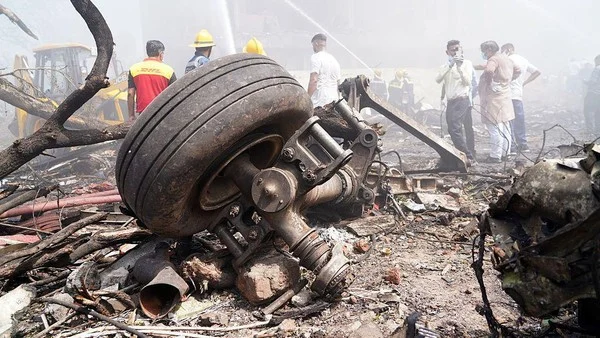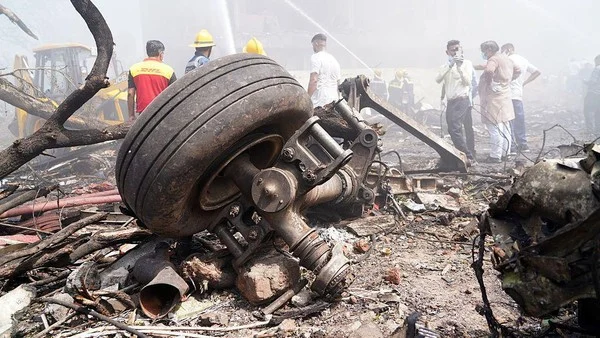
The global aviation community remains in a state of shock following the catastrophic loss of Air India Flight AI-171, a Boeing 787 Dreamliner that crashed during its final approach to Sardar Vallabhbhai Patel International Airport in Ahmedabad on June 12, 2025. The flight, which originated from London Heathrow, was carrying 245 passengers and crew members when it plummeted into a residential-industrial zone approximately five kilometers from the runway. In the wake of the disaster, which left only one survivor in critical condition, the focus of the international investigative team has shifted toward the recovery and decryption of the aircraft’s "black boxes"—the Flight Data Recorder (FDR) and the Cockpit Voice Recorder (CVR). These devices, recovered from the charred wreckage within 24 hours of the incident, are currently being processed at a specialized laboratory in New Delhi under the supervision of the Directorate General of Civil Aviation (DGCA) and international observers.
The timeline of the tragedy suggests a sudden and unexplained loss of control during a phase of flight usually considered routine. Flight AI-171 departed London at approximately 10:30 AM GMT and had proceeded without incident across European and Middle Eastern airspace. Radar data indicates that the aircraft began its descent toward Ahmedabad at 10:45 PM local time. Weather reports at the time indicated marginal visibility due to early monsoon haze and localized turbulence, but conditions were within the operating limits for a Boeing 787. At 11:12 PM, air traffic control (ATC) lost contact with the aircraft. Eyewitness accounts from the ground describe the plane appearing to "wobble" or "bank sharply" before diving nose-first into the ground. The resulting impact and subsequent fire destroyed the majority of the fuselage, making the survival of even one individual a feat of near-impossible odds.
The Critical Role of the Flight Data and Cockpit Voice Recorders
As the site is cleared of debris and the remains of the victims are identified, the technical investigation is centering on the two orange-painted flight recorders. The Flight Data Recorder (FDR) is designed to track more than 1,000 parameters, including airspeed, altitude, vertical acceleration, and the position of flight control surfaces such as the rudder, elevators, and flaps. Simultaneously, the Cockpit Voice Recorder (CVR) captures all sounds within the cockpit, including the conversations between the captain and the first officer, communications with ATC, and any automated mechanical alarms or structural sounds that may have preceded the impact.
The analysis process is being conducted in a high-security environment in New Delhi. Because the Boeing 787 is an American-manufactured aircraft, the National Transportation Safety Board (NTSB) and the Federal Aviation Administration (FAA) have dispatched a team of technical advisors to assist the Indian authorities. Boeing, as the original equipment manufacturer (OEM), is also providing engineering support. The initial stage of the analysis involves the "downloading" of raw data from the solid-state memory chips. If the chips have sustained physical damage from the impact or the subsequent thermal event, investigators must use microscopic forensic techniques to retrieve the data bit by bit—a process that can take weeks.
Technical Scrutiny: The Focus on the Flap System
While the investigation is in its infancy, preliminary data transmitted via the aircraft’s Aircraft Health Management (AHM) system prior to the crash has pointed toward a potential anomaly in the wing’s flap system. Flaps are movable panels on the trailing edge of the wings that increase lift and drag, allowing an aircraft to fly at lower speeds during takeoff and landing. If a "flap asymmetry" occurs—where the flaps on one wing extend or retract differently than the other—it can cause a sudden, violent roll that is difficult for pilots to counteract, especially at low altitudes.
In the case of AI-171, there are unconfirmed reports that the crew may have been struggling with a configuration issue during the final approach. The Boeing 787 utilizes an advanced "fly-by-wire" system where electronic signals, rather than mechanical cables, control these surfaces. Investigators will be looking closely at whether a software glitch, a hydraulic failure, or a mechanical jam led to a loss of control. The FDR will provide the definitive answer by showing exactly how the flaps were positioned in the final 60 seconds of the flight.
Institutional and Official Responses
The tragedy has prompted a wave of official statements and a call for increased transparency in Indian aviation safety. The Prime Minister of India, in a televised address, expressed profound grief over the loss of life and assured the families of the victims that the investigation would be "exhaustive, impartial, and swift." The Ministry of Civil Aviation has ordered an immediate safety audit of all Boeing 787 aircraft currently operating in the fleets of Indian carriers, including Air India and its subsidiaries.
A spokesperson for Boeing issued a brief statement: "Our thoughts are with the families and loved ones of those on board Air India Flight AI-171. Boeing is providing technical assistance to the Indian DGCA and the U.S. NTSB as they lead the investigation. We remain committed to ensuring the safety of our aircraft and will cooperate fully with the authorities."

International aviation experts are also weighing in. Sarah Thompson, a former NTSB investigator, noted that the Boeing 787 has historically maintained an excellent safety record since its introduction. "The Dreamliner is one of the most technologically advanced aircraft in the world. For an incident of this magnitude to occur during a standard approach suggests a complex chain of events—likely a combination of technical failure and environmental factors. The black box data will be the only way to untangle that chain."
Contextualizing the Boeing 787 Safety Record
To understand the gravity of the AI-171 crash, one must look at the history of the Boeing 787. Launched as a revolutionary, fuel-efficient aircraft made largely of composite materials, the 787 faced significant "teething" problems in its early years, most notably involving lithium-ion battery fires that led to a global grounding of the fleet in 2013. However, since those issues were resolved, the aircraft has been a workhorse for long-haul travel, praised for its cabin pressure systems and efficiency.
A total loss of a 787 with nearly all souls on board is an unprecedented event for the model. This crash marks the deadliest incident in the history of the Dreamliner’s service life. Consequently, the results of the AI-171 probe will have massive implications for airlines worldwide. If a fundamental design flaw is discovered, it could lead to another global grounding or mandatory, expensive retrofits for hundreds of aircraft currently in service with major airlines like United, British Airways, and Qatar Airways.
Impact on Air India and the Global Aviation Market
For Air India, the crash comes at a time of significant transition. The airline, recently privatized and brought back under the umbrella of the Tata Group, has been undergoing a massive multibillion-dollar fleet modernization program. The loss of AI-171 is a significant blow to the brand’s efforts to shed its past reputation for safety concerns and operational delays. Analysts suggest that the airline may face significant insurance claims and a temporary dip in passenger confidence, particularly on its high-traffic international routes.
On the stock market, shares of Boeing and various aerospace suppliers saw a sharp decline in the days following the accident. The aviation industry operates on a razor-thin margin of public trust; any suggestion that a flagship aircraft model has a critical vulnerability can lead to shifted orders and canceled contracts. The global aviation insurance market is also bracing for one of the largest payouts in recent history, encompassing hull loss, passenger liability, and potential ground damage in Ahmedabad.
The Human Element and the Sole Survivor
While the technical investigation proceeds in laboratories, the human tragedy continues to unfold. The lone survivor, identified as a 28-year-old male passenger seated in the rear section of the aircraft, remains in a medically induced coma at a specialized trauma center. His survival is being studied by safety engineers to determine if the structural integrity of the aft fuselage played a role in his protection.
For the families of the 244 deceased, the delay in receiving answers is agonizing. The process of DNA identification is expected to take several weeks, as the intensity of the post-crash fire made visual identification impossible in most cases. Support centers have been established in London and Ahmedabad to provide counseling and logistical assistance to the grieving families.
Looking Forward: The Path to a Final Report
The Indian Ministry of Civil Aviation has cautioned that a final report on the crash of AI-171 may not be released for 12 to 18 months. However, an "interim report" is expected within 30 days, which will summarize the initial findings from the black boxes and any immediate safety recommendations for other operators of the Boeing 787.
The aviation industry has always been a discipline that learns from tragedy. Every crash in the modern era has led to improvements in pilot training, cockpit ergonomics, or mechanical design. As the investigators in New Delhi meticulously piece together the digital data from AI-171, the goal is not just to assign blame, but to ensure that the 244 lives lost on June 12, 2025, contribute to a safer future for the millions of people who take to the skies every day. The mystery of why a state-of-the-art Dreamliner fell from the sky over Ahmedabad will eventually be solved, but the repercussions of this event will be felt in the hangars, cockpits, and boardrooms of the aviation world for decades to come.