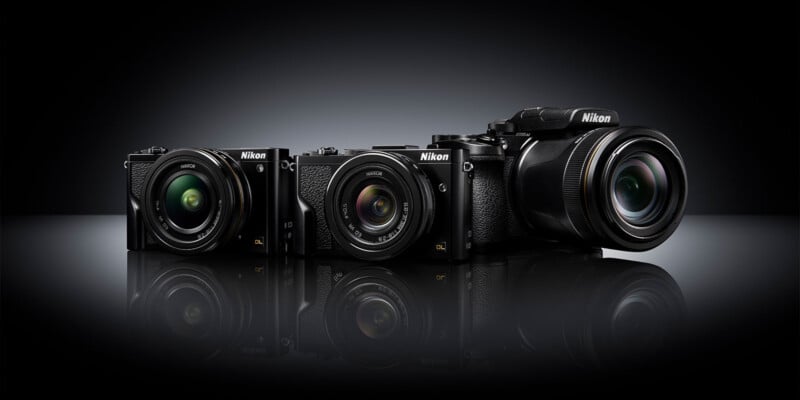
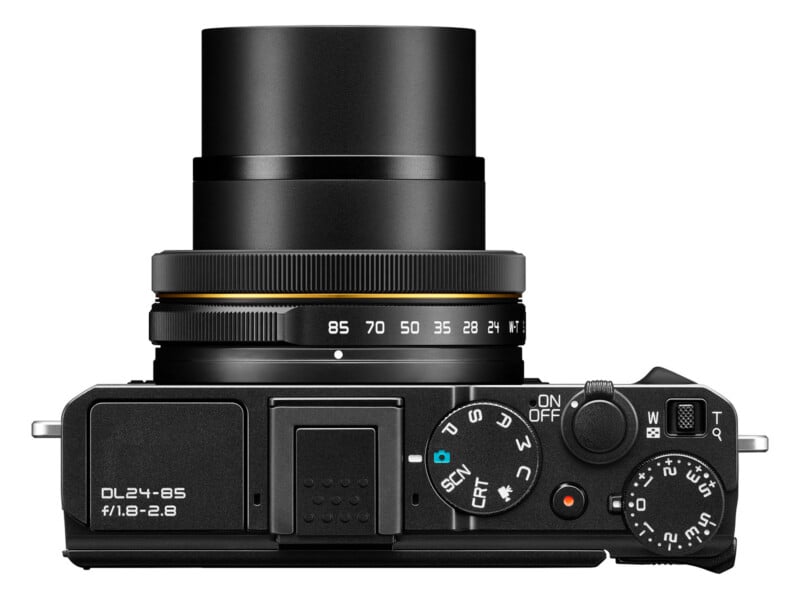
In February 2016, a period when Digital Single-Lens Reflex (DSLR) cameras still held significant sway and even Sony actively produced them, Nikon made a series of pivotal announcements that captured the attention of the photography world. Alongside the unveiling of its highly anticipated flagship D5 and the powerful D500 crop-sensor DSLR, Nikon introduced an entirely new line of premium compact cameras: the DL Series. Comprising three distinct models – the DL 18-50mm f/1.8-2.8, the DL 24-85mm f/1.8-2.8, and the DL 24-500mm f/2.8-5.6 – these cameras were positioned to offer advanced imaging capabilities in a portable form factor. However, despite the initial excitement and promising specifications, the DL Series never saw commercial release, becoming a poignant chapter in Nikon’s modern history.
The Vision: Nikon’s Ambitious Entry into Premium Compacts

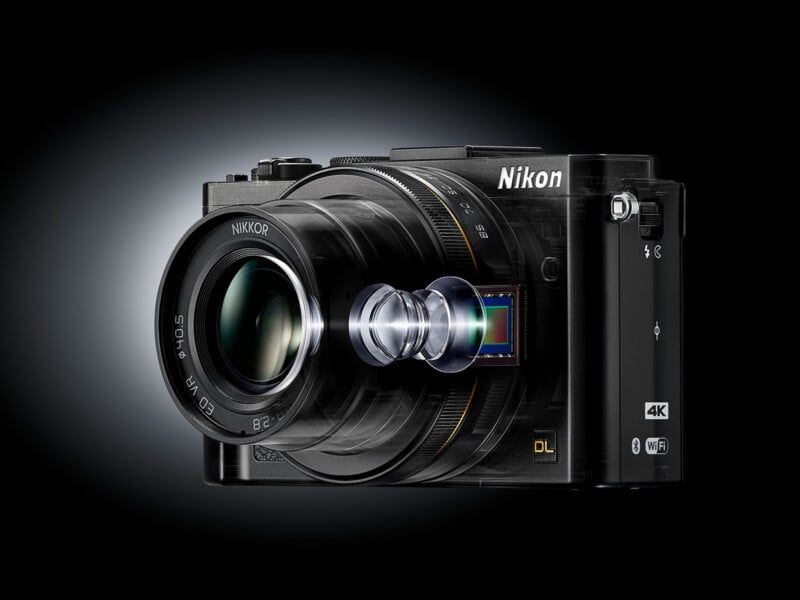
The official announcement of the DL Series on February 23, 2016, came hot on the heels of the D5 and D500 launches, indicating a strategic diversification by Nikon into the burgeoning premium compact segment. Each of the three DL models was engineered around a 20.8-megapixel Nikon CX-format Type 1 BSI CMOS image sensor, coupled with the Expeed 6A image processor. This combination promised impressive performance, including continuous shooting capabilities of up to 60 frames per second (fps) without continuous autofocus, or a still-remarkable 20 fps with continuous autofocus engaged.
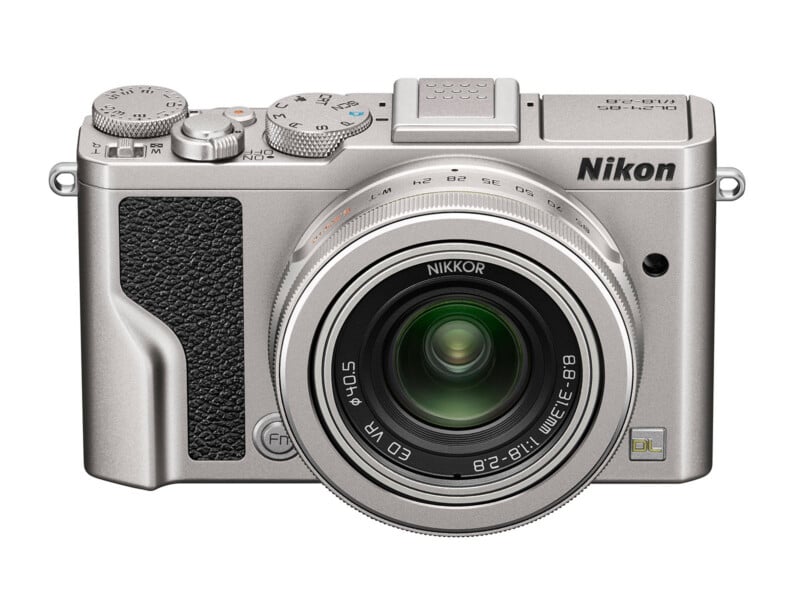
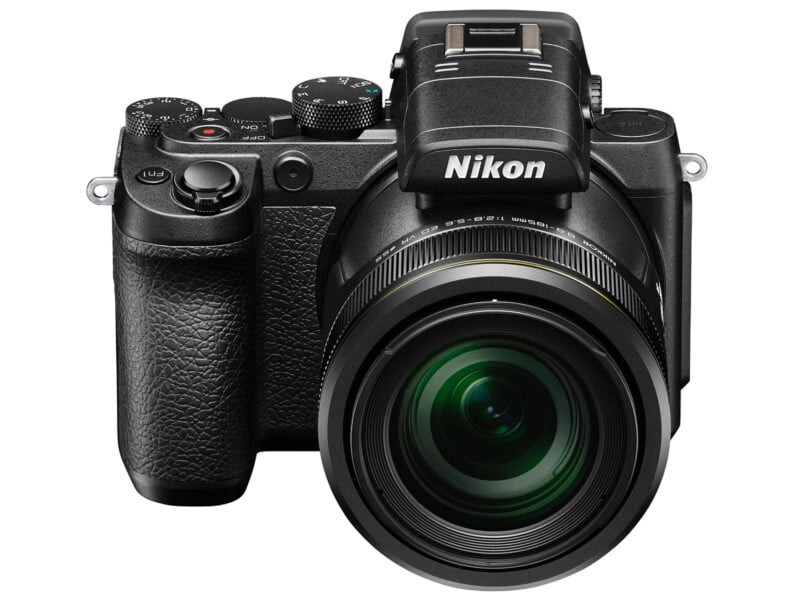
The DL 18-50mm f/1.8-2.8 was designed with an ultra-wide to standard zoom lens, catering to landscape and street photographers. The DL 24-85mm f/1.8-2.8 offered a versatile standard zoom range suitable for everyday photography and portraits. The DL 24-500mm f/2.8-5.6 stood out as a superzoom option, providing an extensive focal range for travel, sports, and wildlife, while still maintaining a relatively fast aperture across its zoom.
Nikon emphasized the premium construction and high-end build quality of these cameras. While the two smaller point-and-shoots (DL 18-50mm and DL 24-85mm) featured an optional add-on electronic viewfinder (EVF), the DL 24-500mm integrated one directly into its design. The aesthetic appeal of the series was undeniable, largely credited to designer Kenji Abe, who later contributed to the Nikkor Z 24-50mm compact zoom lens released in 2020. The cameras were set to retail at competitive price points: $850 for the DL 18-50mm, $650 for the DL 24-85mm, and $1,000 for the DL 24-500mm, with an expected launch just a few months after their initial reveal. This ambitious entry into the premium compact market signaled Nikon’s intent to compete with established players like Sony’s RX100 series and Canon’s G-series.

A Fateful Turn: The Perfect Storm of Market Collapse and Financial Strain
The trajectory of the Nikon DL Series took an unforeseen turn, leading to its eventual cancellation less than a year after its grand announcement. On February 13, 2017, following numerous delays, Nikon formally announced that the DL series would not be released. This decision was not singular but rather the confluence of several critical factors impacting both the broader camera industry and Nikon’s internal operations.
The most significant external factor was the precipitous decline of the compact camera market. Data from the Camera & Imaging Products Association (CIPA) for 2016 revealed that approximately 12.6 million cameras with built-in lenses were shipped that year. While this figure might appear substantial, it represented a staggering tenfold decrease compared to the peak in 2010. The rise of smartphones, with their increasingly capable integrated cameras, had fundamentally disrupted the market for dedicated point-and-shoot cameras, rendering many models obsolete in the eyes of the general consumer. Nikon’s timing, entering this segment just as it was bottoming out, proved exceptionally unfortunate.
Simultaneously, Nikon was grappling with severe internal financial challenges. The company was experiencing significant losses, culminating in what was described as "extraordinary financial loss" and necessitating company-wide restructuring efforts. While Nikon has since navigated its way back to profitability, the mid-2010s were marked by dire financial straits, making any venture with uncertain returns exceptionally risky. The official cancellation notice cited these profitability concerns directly, acknowledging the "increase in development costs" and the "drop in the number of expected sales due to the slow-down of the market" as primary reasons.
Furthermore, Nikon’s statement also detailed specific technical hurdles that contributed to the delays. "Issues with the integrated circuit for image processing" were identified as a core problem, pushing back the initially planned June 2016 release indefinitely. These technical difficulties, combined with escalating development expenses and a rapidly shrinking market, made the projected profitability of the DL series increasingly untenable. The combination of internal development issues and an external market collapse created a "perfect storm" that ultimately doomed the project.
Official Responses and the Shadow of KeyMission
Nikon’s official statement regarding the cancellation of the DL series, dated February 13, 2017, remains accessible online, underscoring the gravity of the decision. The company expressed its sincere apologies to customers who had eagerly awaited the cameras and to retailers whose businesses would be affected. This transparent communication, while somber, provided a clear rationale for the difficult choice.
Beyond the DL series, Nikon faced another significant product misstep around the same period: the KeyMission series of action cameras. Unveiled later in 2016, the KeyMission cameras, unlike the DL series, actually made it to market. However, they promptly flopped, becoming a more public and arguably larger commercial failure. The KeyMission 360, KeyMission 170, and KeyMission 80, despite their innovative features, struggled to gain traction in a market dominated by GoPro. The article notes that the KeyMission series was described as Nikon’s "worst misstep of the 21st century," and its colossal failure likely overshadowed the cancellation of the DL series in public memory. Within less than three years of its splashy debut, the KeyMission series was effectively discontinued, relegated to a mere footnote in Nikon’s 2017 annual financial report. This sequence of events paints a picture of a company navigating a turbulent period, making ambitious but ultimately ill-fated product diversification attempts.
The Shifting Sands: A Resurgence in the Compact Camera Market
Fast forward to the present day, and the landscape of the compact camera market has undergone an unexpected, yet significant, transformation. While it has not returned to its pre-smartphone boom popularity, premium and even ultra-cheap compact cameras are experiencing a remarkable resurgence in sales. This trend, which has solidified over the past few years, presents a stark contrast to the market conditions that prevailed when the DL series was conceived and subsequently canceled.
Several models exemplify this renewed interest. Fujifilm’s X100V and its successor, the X100VI, have achieved cult status, with the latter remaining notoriously difficult to find in stock long after its launch. The Ricoh GR Series continues to enjoy consistent popularity among street photographers and enthusiasts who value its discreet design and exceptional image quality. Even high-end, expensive models like the Leica Q3 are selling well, demonstrating a willingness among consumers to invest in specialized, high-quality compact cameras.
The resurgence isn’t limited to the premium segment. On the more accessible end of the spectrum, Kodak-branded PixPro models, such as the FZ55, have reportedly become best-sellers in certain markets, like Map Camera in Japan in 2025 (as projected in the original source article). This indicates a broad-based demand for dedicated compact cameras, driven by factors ranging from nostalgia and a desire for a different photographic experience than a smartphone offers, to the appreciation of specific form factors and tactile controls. This evolving market presents a fundamentally different environment than the one Nikon faced a decade ago.
The Case for a DL Revival: Opportunities and Challenges for Nikon
Against this backdrop of a revitalized compact camera market, "rumblings" suggest that Nikon might be contemplating a resurrection of the DL series, potentially focusing on a premium build and a fast, stacked Type 1 image sensor. However, such a move would entail both compelling opportunities and significant challenges for the company.
Arguments against a revival are considerable. Nikon’s current financial situation, while improved, is not without its pressures, and the company remains heavily invested in expanding its Z-series mirrorless camera ecosystem and growing its cinema portfolio. A substantial investment in the compact camera space, particularly given the previous failed attempt, could be seen as a risky diversion of resources. Other major players, like Canon, have also adopted a cautious approach to re-entering the compact market in a significant way.
Yet, there are equally compelling reasons for Nikon to reconsider. The success of its vintage-inspired Zf and Zfc mirrorless cameras demonstrates that leveraging Nikon’s rich heritage with appealing aesthetics resonates strongly with consumers. A compact, all-in-one camera imbued with similar "retro" vibes and modern specifications could undoubtedly find a receptive audience. Competitors like Fujifilm and Ricoh are demonstrating that there is substantial profit to be made in the premium compact sector, with cameras often retailing for upwards of $2,000.
Furthermore, a notable gap exists in the market for new premium compact point-and-shoot cameras with smaller sensors. Sony has not released a new RX100 model since the RX100 VII in 2019, and Canon’s PowerShot G7X Mark III, still a strong seller, also debuted in the same year. This leaves a vacuum that Nikon could potentially fill. A new DL camera could combine a fast lens (perhaps a 24-100mm f/2-2.8 type zoom), a vintage-inspired design, and premium materials, offered at a competitive price point around $1,000. Such a camera, equipped with modern photo and video features, class-leading performance, and an integrated or even detachable EVF (as initially planned for the original DLs), could be truly distinctive. Re-engaging designer Kenji Abe to capture the original series’ acclaimed craftsmanship would also be a strategic move.
When the original Nikon DL Series was announced and subsequently canceled, Nikon was attempting to enter a crowded, collapsing market. Today, the market is demonstrating renewed growth, and there are fewer dominant players actively innovating in the premium compact space. The conditions have changed dramatically, presenting Nikon with a unique window of opportunity. The Nikon DL Series, a project with immense potential that was cut short by unfortunate timing and unforeseen circumstances, deserves a second chance at a happier, more successful ending.