The industrial drone landscape has reached a significant milestone as the DJI Matrice 30 (M30) series receives enhanced safety validation for operations in densely populated environments. This advancement is primarily driven by the seamless integration of the PRS-M30 parachute system, developed by Aerial Vehicle Safety Solutions Inc. (AVSS). By providing a fail-safe mechanism that allows the DJI M30 to fly over crowds, this technology effectively bridges the gap between high-performance aerial data collection and the stringent safety requirements mandated by civil aviation authorities worldwide. For public safety agencies, infrastructure inspectors, and emergency responders, this development transforms the M30 from a powerful tool into a ubiquitous asset capable of operating where traditional drones were previously restricted.
The Technical Foundation of Safe Over-Crowd Flight
The ability for a drone weighing nearly four kilograms to operate over people is not merely a matter of pilot skill but a requirement of rigorous engineering and regulatory compliance. The AVSS PRS-M30 system is an ASTM F3322-18 compliant parachute recovery system designed specifically for the DJI M30 and M30T models. This compliance is critical; the ASTM standard ensures that the parachute has undergone dozens of successful deployment tests in various failure scenarios, including motor cuts and uncontrolled descents.
The PRS-M30 consists of three primary components: an electronics module, a parachute pod, and a flight termination system (FTS). The electronics module serves as the "brain," constantly monitoring the drone’s telemetry for signs of catastrophic failure. If the system detects an abnormal pitch or roll, or a sudden loss of altitude that exceeds pre-defined safety parameters, it triggers the parachute autonomously in less than a fraction of a second. Simultaneously, the FTS cuts power to the drone’s motors. This is a vital safety step, as it prevents the parachute lines from becoming entangled in spinning propellers and ensures that the drone does not continue to fly under power while descending.
Enhancing the DJI M30 Enterprise Ecosystem
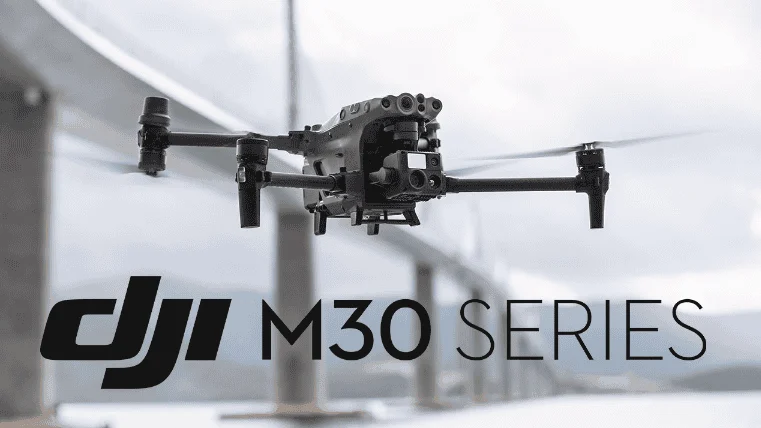
The DJI M30 series was already a formidable platform before the addition of parachute technology. Launched as a middle-ground solution between the ultra-portable Mavic 3 Enterprise and the heavy-lift Matrice 300 RTK, the M30 balances power with agility. It features a foldable design that allows it to be deployed from a backpack, yet it retains the ruggedness necessary for industrial use.
One of the key features supporting its use in crowded areas is the comprehensive 360-degree obstacle avoidance system. Utilizing dual-vision and ToF (Time of Flight) sensors on all six sides, the M30 can detect obstacles up to 38 meters away. This capability is augmented by the DJI Pilot 2 app, which provides operators with a clear visual representation of nearby hazards. In urban environments where power lines, signage, and buildings present constant risks, these sensors act as the first line of defense, while the AVSS parachute serves as the ultimate safety net.
Furthermore, the M30T (the thermal-equipped variant) offers a multi-sensor payload that includes a 48-megapixel 1/2" CMOS zoom camera, a 12-megapixel wide camera, and a 640×512 radiometric thermal camera. This suite allows operators to maintain a safe standoff distance while still capturing high-resolution imagery. When flying over a crowd for security purposes, the zoom capability ensures that the drone can remain at a high altitude—reducing noise and visual distraction—while the parachute system provides the legal and safety clearance to be there in the first place.
Regulatory Implications and Global Standards
The integration of the PRS-M30 is particularly significant in the context of the Federal Aviation Administration (FAA) in the United States and the European Union Aviation Safety Agency (EASA). Under the FAA’s Part 107 rules, flying over people is strictly regulated. Drones are categorized based on the kinetic energy they would transfer upon impact. A drone the size of the M30 typically falls into Category 2 or 3, which requires the manufacturer to demonstrate that the aircraft will not cause injury above a certain threshold.
By utilizing a parachute, the terminal velocity of the M30 is drastically reduced. In the event of a failure, the parachute ensures the drone drifts slowly to the ground, bringing the impact energy down to levels that are often acceptable for "over-people" waivers. This opens the door for complex missions in cities like New York, London, or Tokyo, where avoiding crowds is often physically impossible during large-scale events or emergency scenarios.
Impact on Public Safety and Emergency Services
Public safety agencies have emerged as the primary beneficiaries of the M30’s ability to fly over crowds. During large-scale public gatherings, such as festivals, marathons, or protests, police departments use drones for "situational awareness." Previously, pilots had to navigate carefully around the perimeter of a crowd to remain compliant with safety protocols. With the AVSS system, they can now position the drone directly over the center of an event to gain the best vantage point.
In search and rescue (SAR) operations, every second counts. If a person is reported missing in a crowded park or a coastal area, the M30 can be deployed immediately. The thermal camera can detect heat signatures through foliage or in low-light conditions, while the parachute ensures that if a mechanical failure occurs over a group of volunteers or bystanders, the risk of secondary casualties is virtually eliminated.
Fire departments also utilize the M30 for "over-the-shoulder" views of active structure fires. In urban environments, these fires often occur in buildings surrounded by sidewalks full of pedestrians and first responders. The parachute integration allows the drone to hover over the scene, providing the incident commander with real-time data on fire spread and structural integrity without endangering the personnel working below.
Industrial Inspections and Urban Infrastructure
Beyond public safety, the industrial sector is finding new uses for the M30 in urban centers. Infrastructure such as bridges, cell towers, and high-rise facades require regular inspections. Traditionally, these tasks involved scaffolding, cranes, or rope access, all of which are expensive and pose significant risks to workers and the public.
Drones have simplified this process, but the risk of "fly-aways" or power failures in a city center remained a deterrent. The DJI M30, equipped with the PRS-M30, mitigates these concerns. An engineering firm can now inspect a bridge in the heart of a city during peak hours, knowing that the drone’s redundant systems and parachute provide a multi-layered safety approach. The IP55 weather resistance rating further ensures that these inspections can continue even in light rain or wind, conditions that are common in many industrial environments.
Chronology of Development: From Concept to Compliance
The journey toward the M30’s current status began with the evolution of the DJI Matrice line. The larger M300 RTK was the first to see widespread parachute adoption, but its size made it cumbersome for rapid response. When DJI launched the M30 in early 2022, the industry immediately recognized the need for a similar safety solution for the smaller, more agile frame.
AVSS began the engineering process for the PRS-M30 shortly after the drone’s release. The challenge was to create a system that was light enough not to significantly impact the M30’s 41-minute flight time, yet robust enough to deploy in high winds. By mid-2023, the system had completed the rigorous ASTM testing. Today, the integration is considered a standard "add-on" for enterprise users, often bundled by dealers who specialize in providing "turnkey" solutions for government and industrial clients.
Future Outlook: The Path Toward Full Autonomy
The ability to fly over crowds is a stepping stone toward more advanced drone operations, such as Beyond Visual Line of Sight (BVLOS) and autonomous docking. DJI has already introduced the DJI Dock, a "drone-in-a-box" solution that allows the M30 to launch, land, and recharge automatically.
When combined with parachute technology, these autonomous docks can be placed in urban areas to provide 24/7 surveillance or inspection services. As regulators become more comfortable with the safety data provided by parachute-equipped drones, the requirement for a human pilot to be physically present may eventually be relaxed for certain low-risk missions. This would lead to a future where drones are integrated into the "smart city" infrastructure, performing routine tasks with minimal human intervention.
Conclusion: A New Standard for Aerial Safety
The DJI M30’s capability to fly over crowds, enabled by the AVSS PRS-M30 parachute system, represents the current gold standard in drone safety. It reflects a shift in the industry from "innovation at all costs" to "innovation through responsibility." By addressing the primary concern of regulators and the public—the risk of a falling drone—this technology has unlocked the full potential of the M30 platform.
As more agencies and corporations adopt these systems, the sight of a drone overhead will likely become as commonplace as a patrol car on the street or a crane on a construction site. The integration of advanced sensors, rugged design, and fail-safe parachute technology ensures that while the drone’s capabilities are elevated, the safety of the people below remains the absolute priority. The DJI M30 is no longer just a flying camera; it is a sophisticated, reliable, and, most importantly, safe component of the modern industrial and public service toolkit.