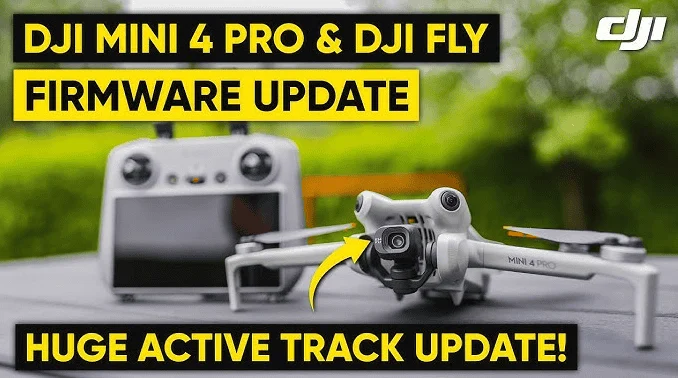
The recent rollout of the DJI Mini 4 Pro firmware update marks a pivotal moment for the unmanned aerial system (UAS) industry, particularly within the sub-250g category that dominates both hobbyist and entry-level professional markets. As regulatory environments in the United States and Europe become increasingly stringent, DJI’s commitment to iterative software improvement ensures that its flagship mini-drone remains compliant while simultaneously pushing the boundaries of what a lightweight aircraft can achieve. This latest update is not merely a routine patch but a comprehensive overhaul that introduces advanced navigational tools, refines the imaging pipeline, and optimizes the integration between the aircraft and its peripheral ecosystem, including the DJI RC 2 and RC-N2 controllers. By addressing user feedback and leveraging the hardware’s internal processing power, DJI has effectively extended the lifecycle of the Mini 4 Pro, reinforcing its position as the premier choice for creators who require portability without compromising on safety or visual fidelity.
The Evolution of the Mini Series: Context and Background
Since the inception of the Mavic Mini in 2019, DJI has focused on the "249-gram" threshold to bypass specific registration and operational requirements in various jurisdictions, such as the Federal Aviation Administration (FAA) in the U.S. and the European Union Aviation Safety Agency (EASA). However, as the hardware matured, the expectations for these "category-free" drones shifted from simple flying cameras to sophisticated tools capable of autonomous flight and high-dynamic-range cinematography. The DJI Mini 4 Pro, launched in late 2023, was the first in this weight class to feature omnidirectional obstacle sensing, a feat previously reserved for much larger platforms like the Air and Mavic series.
The necessity for continuous firmware updates arises from the complexity of this omnidirectional system. Unlike its predecessors, the Mini 4 Pro utilizes four fisheye vision sensors and two downward binocular vision sensors to create a real-time 3D map of its surroundings. The latest firmware iterations focus heavily on optimizing the data throughput of these sensors, reducing latency in obstacle detection, and improving the "Vision Assist" interface, which provides pilots with a visual representation of blind spots during complex maneuvers.
Key Feature Analysis: Vision Assist and Augmented Safety
One of the most significant additions introduced in the recent update cycle is the "Vision Assist" feature. Previously restricted to the enterprise-grade Mavic 3 series, Vision Assist allows pilots to view the environment through the drone’s auxiliary obstacle-sensing cameras. By tapping the directions on the remote controller’s screen, users can see high-contrast, black-and-white feeds from the front, back, left, and right sensors. This is particularly crucial for "side-slipping" or "orbit" shots where the main gimbal-mounted camera is focused on the subject, leaving the drone vulnerable to lateral collisions.
Furthermore, the firmware update has refined the Advanced Pilot Assistance Systems (APAS 5.0). Data from field tests suggests that the updated algorithms are significantly more adept at identifying thin objects, such as power lines and tree branches, which have historically been the "Achilles’ heel" of ultrasonic and visual sensors. The integration of improved "Auto-Landing" logic also ensures that the drone can more accurately identify a safe, flat surface during its Return to Home (RTH) sequence, utilizing the downward sensors to detect water or uneven terrain with higher precision than previous software versions.
Imaging Pipeline Enhancements and Color Science
Beyond safety, the firmware update introduces critical improvements to the Mini 4 Pro’s 1/1.3-inch CMOS sensor performance. While the hardware remains unchanged, the Image Signal Processor (ISP) tuning has been adjusted to better handle high-contrast scenes. For professional videographers, the update provides more stability when shooting in 10-bit D-Log M and HLG (Hybrid Log-Gamma).
Supporting data indicates that the latest firmware reduces noise in the shadows during low-light operations, a common pain point for small-sensor drones. By optimizing the "Night Mode" algorithm, DJI has managed to increase the effective ISO range while maintaining a cleaner image. Additionally, the update addresses the "True Vertical Shooting" feature, ensuring that the transition between horizontal and vertical modes is faster and that the gimbal calibration remains consistent even after multiple rotations. This is an essential fix for social media content creators who rely on the Mini 4 Pro for high-quality 4K vertical video for platforms like Instagram and TikTok.
Regulatory Compliance and Remote ID Integration
In the current geopolitical and regulatory climate, firmware updates are the primary vehicle for maintaining legal compliance. For users in the United States, the firmware ensures full adherence to the FAA’s Remote ID requirements. For European users, the update includes the necessary parameters for C0 or C1 certification under EASA regulations.
A notable point of discussion within the drone community has been the 120-meter altitude limit imposed on C0-labeled drones in the EU. Recent firmware updates have clarified these limitations, providing users with the necessary on-screen prompts to understand their local legal boundaries. This proactive approach by DJI prevents inadvertent legal violations by pilots and ensures that the "Mini" ecosystem remains a responsible participant in the global airspace.
Chronology of the Update and Technical Deployment
The deployment of these features follows a structured timeline designed to ensure system stability. Typically, DJI releases the firmware in stages:
- Aircraft Firmware: Updates the internal flight controller, ISP, and sensor modules.
- Remote Controller Firmware: Updates the DJI RC 2 or RC-N2 to support new UI elements like Vision Assist.
- DJI Fly App Update: The interface through which the user interacts with the new features.
To perform the update, users are advised to follow a strict protocol to avoid "bricking" the device. The process requires a stable internet connection and a battery level of at least 75% on both the drone and the controller. The update can be performed via the DJI Fly App over Wi-Fi or through the "DJI Assistant 2 (Consumer Drones Series)" software on a PC or Mac. The latter is often recommended for major version jumps to ensure a clean installation of the firmware package.
Peripheral Compatibility: Goggles 3 and Motion Controller 3
An unexpected but highly welcomed aspect of the recent updates is the expanded compatibility with DJI’s FPV (First Person View) ecosystem. The Mini 4 Pro now supports the DJI Goggles 3 and the DJI RC Motion 3 controller. This integration allows the Mini 4 Pro to be flown with an immersive "cockpit" view, utilizing the "Easy ACRO" features that were previously exclusive to the DJI Avata 2. This cross-compatibility demonstrates a strategic shift in DJI’s philosophy, moving toward a unified ecosystem where hardware from different product lines can interact seamlessly. The technical challenge of streaming an O4 (OcuSync 4.0) signal from a standard camera drone to FPV goggles with low latency was a major hurdle addressed in this firmware cycle.
Professional Implications and Market Impact
The enhancement of the Mini 4 Pro via software has significant implications for the commercial sector. Real estate photographers, roof inspectors, and environmental researchers often prefer the Mini 4 Pro for its low acoustic footprint and ease of deployment. The addition of features like "Vision Assist" and improved 10-bit color makes the drone a viable "B-roll" camera for high-end productions, where it can be used in tight spaces where a Mavic 3 Pro or an Inspire 3 would be too large or dangerous to operate.
Market analysts suggest that DJI’s strategy of "software-defined hardware" helps maintain high resale values for their products. By continuously adding features that were not present at launch, DJI creates a sense of "value-add" that keeps users within their ecosystem. This is particularly important as competitors like Autel and Potensic attempt to gain market share by offering similar hardware specs at lower price points; DJI’s superior software support and frequency of updates remain its most formidable competitive advantage.
Conclusion: Maximizing the Potential of the Mini 4 Pro
In conclusion, the DJI Mini 4 Pro firmware update represents a holistic improvement of an already industry-leading platform. By focusing on the pillars of safety, imaging, and compliance, DJI has provided users with a tool that is more capable today than it was on its release date. For the operator, these updates translate to increased confidence during flight, higher quality deliverables for clients, and the peace of mind that comes with regulatory adherence.
As the UAS landscape continues to evolve, the Mini 4 Pro stands as a testament to the power of iterative development. Pilots are encouraged to stay vigilant regarding future firmware releases, as each update serves as a building block toward a more autonomous and creative aerial future. Whether for hobbyist exploration or professional cinematic production, the Mini 4 Pro, bolstered by its latest software, remains the definitive benchmark for the sub-250g drone category.