Southwestern Alaska’s rugged coastline and glacier-carved river valleys become the stage for one of nature’s most awe-inspiring and ecologically crucial spectacles: the annual salmon run. For approximately five months, from late May through mid-October, an estimated 30 million salmon embark on an arduous journey upstream to their natal streams. This migration is not merely a biological imperative; it is a lifeline for the region’s iconic brown bears, transforming the pristine wilderness into a vibrant feeding ground.
The Ursine Feast: A Critical Annual Event
The annual salmon run represents the most vital period for brown bears in this region to accumulate the substantial fat reserves necessary for surviving the long, harsh Alaskan winter. As autumn approaches, a physiological state known as hyperphagia takes hold, compelling the bears to consume vast quantities of calories, often hundreds of thousands daily. This intense feeding period is critical for their survival, enabling them to endure months of dormancy.
The salmon migration is not monolithic; different species arrive in succession, each offering a unique dietary contribution. The sockeye salmon initiate the run, followed by pink salmon, then coho, chum, and finally, the largest and most prized, the chinook salmon. This staggered arrival ensures a continuous food source for the bears throughout the five-month period.
A Hierarchy of Hunger: Bear Behavior During the Run
The feeding grounds along the rivers are not democratic spaces. A distinct social hierarchy governs the bears’ access to the most productive fishing spots. Alpha males, often weighing up to 1,500 pounds (680 kg), are typically the first to claim these prime locations. Their sheer size and strength allow them to stand their ground against the powerful currents, effectively intercepting salmon as they navigate the waterways. This dominance ensures they secure the most nutrient-rich fish, vital for maintaining their formidable physiques.
Subordinate bears, including younger males and females, exhibit a more cautious approach. While not always possessing the same level of physical dominance as the alpha males, they demonstrate a keen understanding of social dynamics. They often position themselves in less contested areas or employ agility to snatch fish that elude the larger bears. Many younger bears also utilize the dense vegetation lining the riverbanks as cover, allowing them to hunt with greater stealth and efficiency.
Maternal Instincts Amidst Peril: Mothers and Cubs
Perhaps the most compelling narrative within this natural drama is that of mother bears and their cubs. For these females, the salmon run is a period of heightened vigilance and unwavering dedication. Their primary objective is to provide sustenance for their offspring while simultaneously safeguarding them from the numerous dangers present in the environment.
Mother bears must be exceptionally attuned to their surroundings. They guide their young to the river’s edge, a location fraught with risks. The cubs, often only five to six months old, are particularly vulnerable. They are still reliant on their mothers for nourishment and protection and are only beginning to learn the complex skills required for survival. During this stage, they may still be nursing but are also developing a taste for other protein-rich food sources, such as grasses.
The Shadow of Infanticide: A Harsh Reality of the Wild
Nature, while often breathtakingly beautiful, also presents stark realities. One of the most significant threats faced by mother bears and their cubs is infanticide. Male bears, particularly dominant alpha males, have been observed to kill cubs, sometimes even their own. While the precise reasons remain a subject of ongoing scientific research and observation, several theories prevail. These include reducing competition for scarce food resources, a component of sexual selection, and in some instances, cubs may be consumed as a food source.
For a mother bear, the instinct to protect her young from such threats is paramount. Her survival strategy is intricately linked to her cubs’ safety. She must constantly assess the presence of larger, aggressive males and employ all her maternal instincts to deter them, a challenging and often dangerous endeavor.

A Photographer’s Encounter: A Moment of Serene Observation
The profound impact of this natural spectacle is captured by individuals who immerse themselves in its environment. In late August, at the zenith of the salmon run, an observer found themselves on a tranquil stretch of riverbank in southwestern Alaska. The air was filled with the sounds of salmon splashing in the nearby river, a counterpoint to the otherwise quiet and gentle atmosphere. Larger bears were visible upstream, engrossed in their fishing activities.
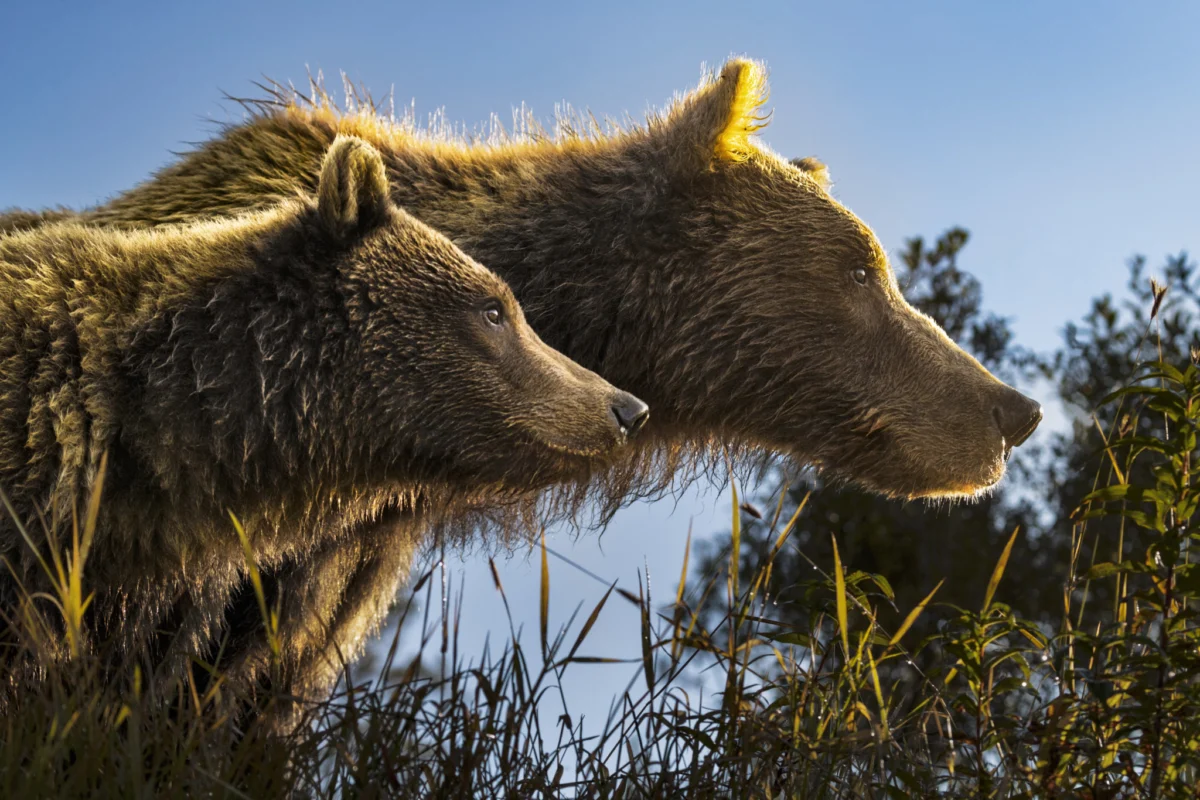
A subtle shift in the underbrush, approximately eight feet away, signaled the presence of another entity. Slowing their breathing and adopting a posture of humility, the observer witnessed the emergence of a mother brown bear and her cub. The cub, estimated to be around eight months old, cautiously followed its mother.
The mother bear, exhibiting remarkable awareness, surveyed her surroundings. Her attention was primarily focused on a large male bear fishing upstream, seemingly oblivious to their presence. Despite this, she remained alert, listening and learning, a testament to her constant state of preparedness. The observer, armed with only a wide-angle lens, understood the delicate nature of the encounter.
The photographer described the experience as a moment where "everything slows down." The practice of moving with extreme deliberation and gentleness, akin to Tai Chi, is essential when navigating the presence of these powerful animals. This approach is not merely about caution; it is about respecting the animal’s space and acknowledging their dominance in their natural habitat.
With immense care, the camera was raised, the shutter released only twice in an effort to preserve the sanctity of the moment without disturbing the bears. One of these captures, the photographer later reflected, became one of the most "pleasing images" they had ever taken. This photograph represents a rare instance where an animal implicitly accepts human presence, dictating the terms of engagement. The mother bear and her cub recognized the observer, but their primary concern remained the potential threat posed by the larger male bear upstream. The photograph, therefore, encapsulates a fleeting intersection of luck, timing, and happenstance, captured in the fading light of day.
Broader Ecological Significance and Conservation Implications
The salmon run is not just a local phenomenon; it is a cornerstone of the Alaskan ecosystem. The salmon that undertake this arduous journey are a critical food source for numerous species, including bears, eagles, seals, and other marine mammals. Furthermore, the salmon themselves are a vital link in the marine food web, transporting nutrients from the ocean to the terrestrial environment.
The health of the salmon runs is intrinsically tied to the health of the ocean and the freshwater systems they inhabit. Pollution, habitat degradation, overfishing, and climate change all pose significant threats to these populations. The ongoing decline of salmon stocks in some regions raises serious concerns about the long-term viability of the ecosystems that depend on them, including the brown bear populations that have come to rely on this annual bounty.
The visual documentation of events like the salmon run and the bears that depend on it, as exemplified by the photographer’s experience, plays a crucial role in raising public awareness about the importance of these ecosystems and the need for their conservation. These images serve as powerful reminders of the intricate web of life and the delicate balance that sustains it.
Supporting data from organizations like the Alaska Department of Fish and Game highlights the cyclical nature of salmon populations and the environmental factors that influence their success. For instance, studies often correlate river temperatures, stream flow, and the availability of spawning habitat with the number of salmon returning each year. The brown bear population’s health is directly monitored in relation to these salmon returns, with biologists observing changes in bear body condition and reproductive success based on the abundance of their primary food source.
The implications of a diminished salmon run extend far beyond the immediate impact on bears. It affects the entire food chain, potentially leading to cascading effects throughout the Alaskan wilderness. Conservation efforts, therefore, often focus on protecting critical salmon habitats, managing fisheries sustainably, and mitigating the impacts of human activities on these vital waterways. The annual salmon run, with its dramatic displays of nature’s power and the intricate relationships it fosters, serves as a potent symbol of the wild beauty of Alaska and the urgent need to preserve these precious natural resources for generations to come.