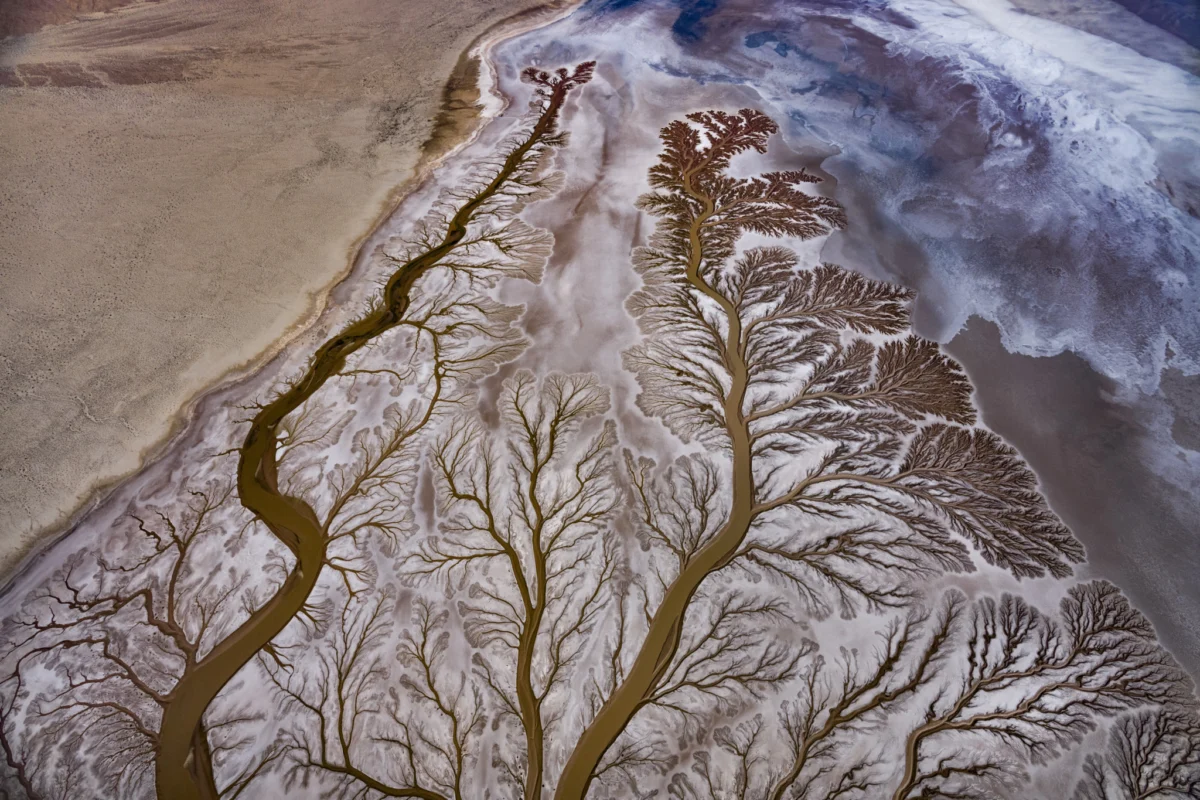
The Colorado River Delta, a region once a vibrant testament to the life-giving power of one of North America’s most vital waterways, now stands as a stark symbol of both environmental degradation and nascent hope. From the high alpine forests of the Rocky Mountains, this mighty river once traversed over 1,500 miles through seven U.S. states and into northwestern Mexico, culminating in its historic confluence with the Sea of Cortez. However, decades of intensive human use, coupled with the most severe drought in 1,200 years, have dramatically altered this landscape. Yet, a recent surge of binational cooperation has begun to breathe life back into this parched delta, offering a powerful narrative of renewal and the potential for ecological restoration.
The sheer scale and intricate beauty of the Colorado River Delta, when viewed from above, are breathtaking. Thousands of miles from the Canadian north where the photographer’s journey began, the initial aerial perspective revealed a landscape of unparalleled grandeur. Flying at altitudes ranging from 200 to 1,000 feet, the delta unfolded as a vast, three-dimensional canvas. The patterns etched into the land by the receding waters resembled a "quilted mosaic of silt and sediment," described as the "lungs of the Earth." These intricate formations, akin to veins, capillaries, and branches, evoke the concept of the "tree of life," a complex and interconnected system that sustains diverse ecosystems. This visual spectacle, a powerful reminder of nature’s artistry, presented a profound photographic challenge: to capture its immense beauty while simultaneously conveying a message of life and renewal against a backdrop of ecological stress.
A Lifelong Journey of Exploration and Connection
The photographer’s early experiences provided a foundational understanding of the natural world. At the age of nine, granted the independence to operate a snowmobile alone, the journey of exploration began. This early immersion into the wilderness allowed for intimate connections with wild animals and their vast habitats, fostering a deep appreciation for the "weave of this great fabric of life." This profound connection to nature, cultivated over a lifetime, informed the artist’s approach to documenting the Colorado River Delta. The desire was not merely to record the visual splendor but to translate the essence of ecological vitality and the inherent drive for regeneration into tangible photographic moments.
The Arid Reality: Decades of Over-Extraction and Drought
The narrative of the Colorado River since the mid-20th century is largely one of diminishment. Decades of burgeoning human populations and intensive industrial activity have led to the overburdening of the river, a phenomenon that has critically impacted its ability to reach the sea. The demand for water, driven by agriculture, urban development, and industry across the seven states it flows through, has resulted in significant diversions and reduced flows. This over-extraction, compounded by the relentless grip of a prolonged drought, has transformed once-fertile floodplains into arid landscapes.
The current drought gripping the region is not merely a temporary dry spell; it is an unprecedented climatic event. Scientific data indicates that the current drought is the most severe in 1,200 years, a timeline that underscores the magnitude of the environmental challenge. This extended period of reduced precipitation and snowpack in the Rocky Mountains, the primary source of the Colorado River’s water, has had cascading effects downstream. Reservoirs like Lake Mead and Lake Powell, critical indicators of the river’s health, have experienced historically low levels, raising alarms about water security for millions of people and the ecological stability of the entire basin.
The Delta’s Decline: A Legacy of Human Impact
The Colorado River Delta, once a vast expanse of riparian forests, wetlands, and marshes, has suffered immensely from the river’s diminished flow. The natural pulse of the river, which historically replenished the delta’s ecosystems and supported a rich biodiversity, was largely severed. This ecological decline led to the loss of critical habitats for numerous species of plants and animals, impacting everything from migratory birds to native fish populations. The once-lush environment transformed into a dry, degraded landscape, a stark visual testament to the consequences of unsustainable water management practices.
A Glimmer of Hope: Binational Restoration Efforts
Despite the grim reality of environmental degradation, the story of the Colorado River Delta is now being rewritten by a remarkable act of binational cooperation. In recent years, a concerted effort involving conservation groups, the governments of the United States and Mexico, and local communities in the Mexicali Valley has initiated a groundbreaking restoration project. This unprecedented initiative, often referred to as a "pulse flow" or environmental flow, aims to reintroduce water into the delta in a controlled and strategic manner.
The concept behind these environmental flows is to mimic the natural flooding patterns that once sustained the delta. By releasing significant, albeit temporary, volumes of water, these efforts seek to:
- Rehydrate Soils: The influx of water revitalizes parched soils, allowing for the germination of native plant seeds and the reestablishment of vegetation.
- Restore Riparian Habitats: The creation of temporary wetlands and the inundation of floodplains provide crucial habitat for a variety of wildlife, including endangered species.
- Replenish Groundwater: The water percolates into the ground, helping to recharge local aquifers that are vital for both ecological and human needs.
- Enhance Biodiversity: The renewed availability of water and habitat attracts a wider range of species, contributing to the overall health and resilience of the delta’s ecosystem.
The success of these binational efforts is directly linked to agreements such as Minute 323 of the International Boundary and Water Commission (IBWC), signed in 2017. This agreement, a landmark in U.S.-Mexico water cooperation, explicitly allocated water for environmental purposes in the delta, underscoring a shared commitment to ecological restoration. These releases, often timed to coincide with the growing season for native vegetation, have demonstrably revitalized sections of the delta, transforming barren landscapes back into vibrant, albeit smaller, ecosystems.
Data and Evidence of Renewal
The impact of these environmental flows is not merely anecdotal; it is supported by scientific monitoring and data. Studies have documented the return of native plant species, such as cottonwood and willow trees, in areas that received pulsed water releases. Bird surveys have recorded an increase in the diversity and abundance of migratory and resident bird species utilizing the newly restored habitats. For instance, the return of the endangered southwestern willow flycatcher, a species heavily reliant on healthy riparian ecosystems, has been observed in areas benefiting from these restoration efforts.
Furthermore, the visible transformation of the landscape itself provides compelling evidence. Aerial and satellite imagery clearly depicts the reemergence of green vegetation in areas that were previously arid. These visual changes, coupled with ground-level ecological assessments, paint a picture of a delta slowly but surely coming back to life.
Reactions and Perspectives from Stakeholders
The restoration efforts in the Colorado River Delta have garnered significant attention and varied reactions from different stakeholders. Conservation organizations, often at the forefront of advocating for such initiatives, have expressed profound optimism. They view these projects as crucial steps towards mitigating the ecological damage and demonstrating the potential for nature-based solutions to environmental challenges.
Government agencies involved in the binational agreements, such as the U.S. Bureau of Reclamation and Mexico’s National Water Commission (CONAGUA), have highlighted the collaborative spirit and the importance of international cooperation in addressing transboundary environmental issues. They emphasize the commitment to sustainable water management and the long-term vision for the basin.
Local communities within the Mexicali Valley, many of whom have historically relied on the river and its surrounding lands, have also played a vital role. Their involvement in conservation efforts and their understanding of the local environment are considered indispensable. While the immediate benefits of the restoration might be ecological, the long-term vision includes the potential for ecotourism and the sustainable use of restored natural resources.
Broader Implications: A Model for Environmental Stewardship
The story of the Colorado River Delta holds significant implications that extend far beyond its arid borders. It serves as a powerful case study for addressing the complex interplay between human water demands, environmental degradation, and the urgent need for ecological restoration.
Analysis of Implications:
- Proof of Concept for Environmental Flows: The success of the Colorado River Delta restoration efforts provides tangible evidence that strategically managed environmental flows can effectively revitalize degraded ecosystems, even in severely water-scarce regions. This serves as a blueprint for similar initiatives in other river basins facing similar challenges.
- The Power of Binational Cooperation: The project underscores the critical importance of transboundary collaboration in managing shared natural resources. The Colorado River basin is a prime example of how cooperation between nations can lead to more sustainable and equitable outcomes for both human populations and the environment.
- Resilience in the Face of Climate Change: While the drought is a formidable challenge, the restoration efforts demonstrate a capacity for adaptation and resilience. By actively working to restore ecological functions, the region is building a more robust and adaptable environment capable of withstanding future climatic pressures.
- Reimagining Water Management: The success of these restoration efforts challenges traditional paradigms of water management that solely prioritize human consumption. It advocates for a more holistic approach that integrates ecological needs into water allocation and planning, recognizing that healthy ecosystems are fundamental to human well-being.
- Inspiration for Global Environmental Action: The narrative of the Colorado River Delta, from its desiccation to its nascent revival, offers a compelling message of hope and the potential for positive change. It inspires a belief that even in the face of seemingly insurmountable environmental challenges, dedicated human effort and collaboration can lead to meaningful ecological recovery.
The journey of the Colorado River Delta is a dynamic and ongoing one. While the challenges of drought and historical overuse remain, the recent surge of water and the renewed ecological vigor in the delta represent a profound shift. It is a testament to the resilience of nature and the growing understanding that human prosperity is inextricably linked to the health of our planet’s vital waterways. The intricate patterns of life emerging once again in this vast landscape serve as a powerful reminder of what is at stake and the enduring possibility of renewal.