A professional photographer has initiated legal proceedings against a Utah-based coffee shop, alleging that the establishment unlawfully utilized a derivative, cartoon version of her copyrighted image of a protestor on its marketing materials, including coffee cups and merchandise bags, without obtaining proper consent. The lawsuit, filed in federal court, underscores the growing legal challenges faced by businesses in navigating intellectual property rights in the digital age, particularly when repurposing content found online.
The Genesis of the Dispute: From Protest to Product Label
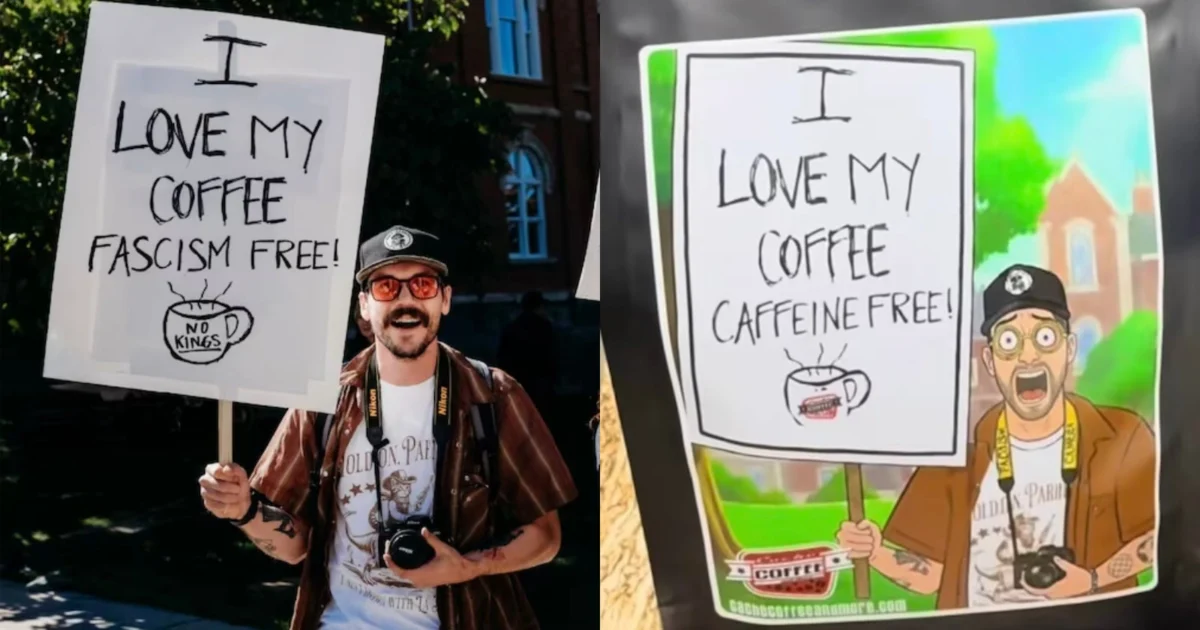
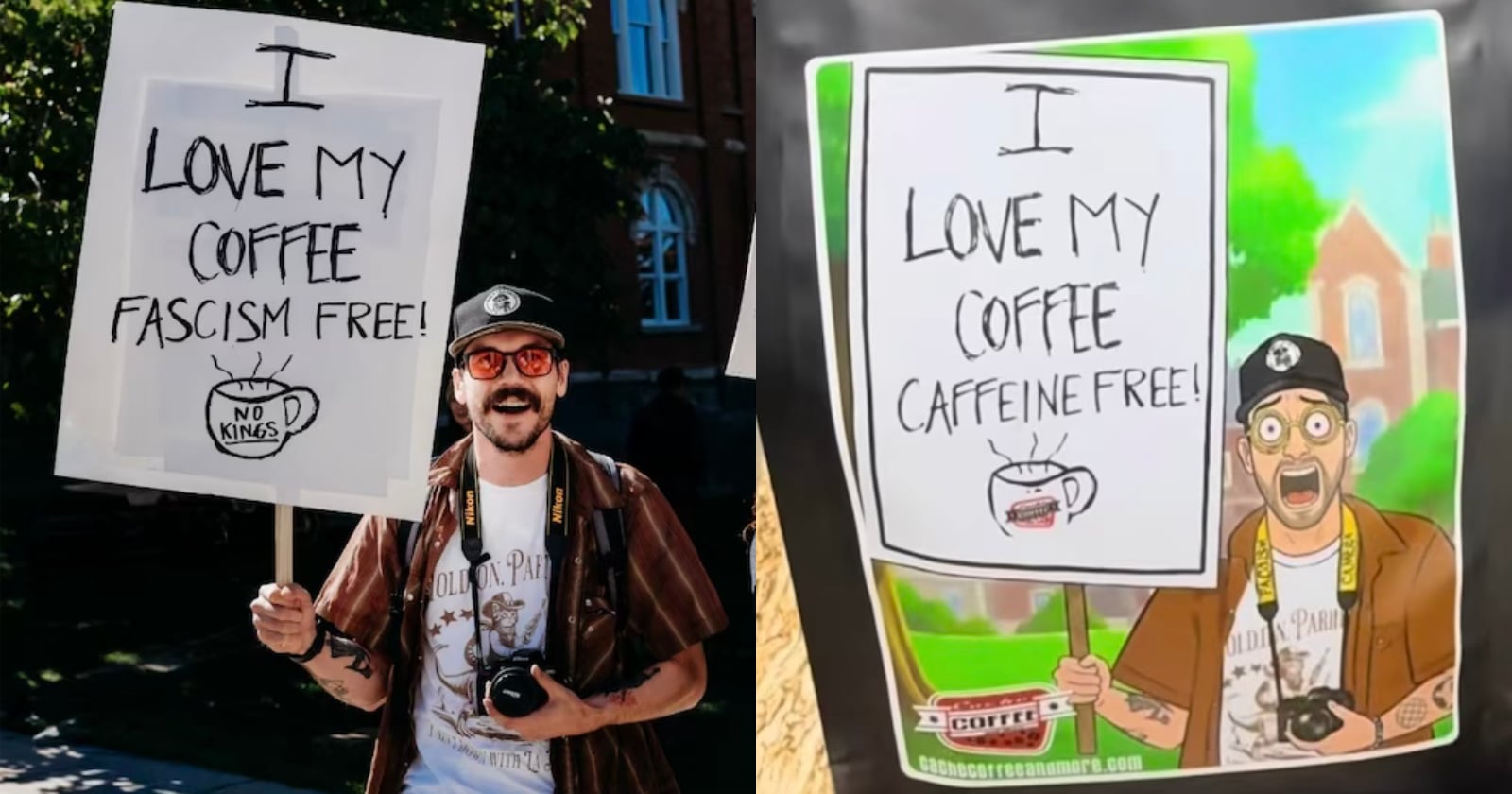
The legal battle centers around an image captured by professional photographer Sharon Rose Vanygriff Christenson. In October, Christenson documented a "No Kings" rally held in Cache Valley, Northern Utah. During the event, she photographed a specific protestor holding a handwritten sign that boldly declared, "I love my coffee fascism free." This image, depicting a moment of public expression and dissent, became the subject of the subsequent legal dispute.
According to court documents and reports from The Salt Lake Tribune, Cache Coffee and More, a business based in Logan, Utah, and self-described as "patriot-owned," allegedly shared Christenson’s original photograph on its Facebook page. The version posted by the coffee shop reportedly featured the protestor’s face obscured or "scribbled over." Accompanying this edited image was a caption from the coffee shop stating, "I normally don’t feed the trolls, however, he went out of his way to make a special sign just for Jamie." Jamie Buttars, one of the owners of Cache Coffee and More, is also named as a defendant in the lawsuit, indicating direct involvement in the alleged infringement.
Christenson, upon discovering the unauthorized use of her work, promptly filed a request with Facebook to have the image removed, asserting her copyright. The social media platform reportedly complied, leading to the deletion of the post from Cache Coffee and More’s account. Furthermore, the complaint alleges that Christenson directly informed the coffee shop of her copyright ownership and explicitly warned against any further use of the image without her express permission. This direct communication is a critical element in the lawsuit, as it forms the basis for the plaintiff’s claim of willful infringement, which carries significantly higher penalties under U.S. copyright law.
The Heart of the Matter: Copyright Infringement Allegations
Despite the explicit warning and the removal of the initial post, the photographer contends that Cache Coffee and More continued to exploit her intellectual property. The core of the lawsuit hinges on the coffee shop’s alleged creation and distribution of a cartoon rendition of Christenson’s original photograph. This cartoon, while clearly derived from the original image, featured a crucial alteration: the protestor’s sign was changed to read, "I love my coffee caffeine free." This altered image was then purportedly incorporated into the coffee shop’s marketing materials, specifically as a label for its decaffeinated roast, and further used on cups and bags distributed by the business.
The transformation of the original image into a cartoon and the modification of the protestor’s message are central to the legal arguments. Under U.S. copyright law, a "derivative work" is a work based upon one or more preexisting works, such as a translation, musical arrangement, dramatization, fictionalization, motion picture version, sound recording, art reproduction, abridgment, condensation, or any other form in which a work may be recast, transformed, or adapted. A work consisting of editorial revisions, annotations, elaborations, or other modifications which, as a whole, represent an original work of authorship, is a "derivative work." Critically, the right to prepare derivative works is an exclusive right of the copyright holder.
The plaintiff’s legal team will argue that the cartoon version, despite its stylistic changes and the altered text on the sign, is unmistakably derived from Christenson’s original photograph. The distinctive pose, features of the protestor, and overall composition are alleged to be directly copied, making the cartoon an unauthorized derivative work. The modification of the sign’s message from "fascism free" to "caffeine free" is seen not as a transformative use that would exempt it from copyright infringement, but rather as an attempt to adapt the image for commercial purposes while retaining its identifiable core elements.
A Detailed Chronology of Events
To provide a clearer understanding of the progression of this legal dispute, a timeline of key events can be constructed based on the available information:
- October (Year not specified, but context suggests previous year relative to lawsuit filing): Professional photographer Sharon Rose Vanygriff Christenson captures an image of a protestor holding a sign reading "I love my coffee fascism free!" at a "No Kings" rally in Cache Valley, Northern Utah. This marks the creation of the copyrighted work.
- Shortly thereafter (estimated): Cache Coffee and More allegedly obtains Christenson’s photograph and posts an edited version, with the protestor’s face scribbled over, on its Facebook page. The post includes a caption referencing the protestor and Jamie Buttars.
- Discovery and Notification (estimated): Christenson discovers the unauthorized use of her image on Facebook. She proceeds to file a Digital Millennium Copyright Act (DMCA) takedown request with Facebook.
- Facebook’s Action (estimated): Facebook removes the infringing post from Cache Coffee and More’s page, acknowledging the validity of the copyright claim.
- Direct Warning (estimated): Christenson directly contacts Cache Coffee and More, informing them of her copyright and explicitly instructing them to cease and desist from any further use of the photograph.
- Continued Alleged Infringement (estimated, prior to lawsuit): Despite the warnings, Cache Coffee and More allegedly proceeds to create a cartoon version of the protestor’s image, altering the sign to read "I love my coffee caffeine free!" This cartoon is then used on coffee labels for decaf roasts, as well as on cups and bags.
- Saturday (leading up to lawsuit, year not specified): The Salt Lake Tribune reports that the coffee shop’s website was still selling a decaf roast featuring the cartoon image on its label, though it has since been removed.
- Date of Lawsuit Filing (not explicitly stated, but implied by news date): Sharon Rose Vanygriff Christenson files a lawsuit against Cache Coffee and More, LLC, and Jamie Buttars in the U.S. District Court for Utah, alleging copyright infringement.
Understanding U.S. Copyright Law and Derivative Works
The foundation of Christenson’s claim rests on Title 17 of the United States Code, which governs copyright law. Under this statute, original works of authorship, including photographs, are granted protection from the moment they are fixed in a tangible medium of expression. Copyright ownership confers several exclusive rights upon the creator, including the right to reproduce the work, to prepare derivative works, to distribute copies, and to display the work publicly.
For a photographic work, these rights mean that only the photographer (or whoever owns the copyright) can decide who can make copies of the photo, who can create new works based on it (like a cartoon version), and who can distribute or display it. Without explicit permission, typically granted through a license, any unauthorized use constitutes infringement.
The concept of "fair use" is often invoked as a defense in copyright infringement cases. Fair use allows limited use of copyrighted material without permission for purposes such as criticism, comment, news reporting, teaching, scholarship, or research. However, for a commercial entity using an image for marketing its products, especially when the use is clearly promotional and directly competes with the potential licensing market for the original work, a fair use defense is typically difficult to establish. The four factors considered for fair use (purpose and character of the use, nature of the copyrighted work, amount and substantiality of the portion used, and effect of the use upon the potential market) would likely weigh against Cache Coffee and More in this scenario, particularly given the commercial nature of the use and the direct derivation from the original work.
The alteration of the sign’s message from "fascism free" to "caffeine free" in the cartoon version, while a modification, does not automatically transform the work into something entirely new or sufficiently different to avoid infringement. Courts generally look at whether the new work "transforms" the original by adding new expression, meaning, or message, rather than merely repackaging or reusing it. In this instance, the core visual identity of the protestor and the act of protesting, albeit with an altered message, remain. This makes it challenging for the defendant to argue that their use was sufficiently transformative to fall outside the scope of derivative works requiring a license.
The Role of Social Media Platforms in Content Governance
The initial phase of the dispute involved Facebook’s role in content moderation and copyright enforcement. Social media platforms, under the Digital Millennium Copyright Act (DMCA), are generally protected from liability for user-posted content, provided they promptly remove infringing material when notified by the copyright holder. This "notice and takedown" system is a cornerstone of online copyright enforcement.
Christenson’s successful DMCA takedown request on Facebook demonstrates the effectiveness of this mechanism for copyright holders. It also serves as crucial evidence in the lawsuit, establishing that Cache Coffee and More was aware of the copyright claim against their use of the image. The subsequent alleged continued use, especially in a commercial context, despite this notification, significantly strengthens the plaintiff’s claim of willful infringement. This sequence of events highlights the responsibility of online businesses to understand and respect intellectual property rights, even when content is initially sourced from social media.
The Stakes: Damages Sought and Legal Precedent
The lawsuit filed in the U.S. District Court for Utah seeks substantial damages. Christenson is reportedly seeking up to $30,000 in statutory damages for copyright infringement. Statutory damages, outlined in 17 U.S.C. § 504(c), allow copyright holders to choose between actual damages (lost profits or licensing fees) and statutory damages, which can range from $750 to $30,000 per infringed work. This provides a clear path to recovery even when actual damages are difficult to quantify.
Furthermore, the lawsuit seeks up to an additional $150,000 in damages, alleging that Cache Coffee and More willfully infringed her copyright. A finding of willful infringement allows courts to increase statutory damages up to $150,000 per work. "Willful" infringement typically means the infringer knew or should have known that their actions constituted copyright infringement. The fact that Christenson allegedly directly warned the coffee shop about her copyright and that Facebook removed the initial post would strongly support a claim of willful infringement, as the defendants were clearly put on notice.
Beyond monetary damages, a successful copyright infringement lawsuit can also result in an injunction, compelling the infringing party to cease all unauthorized use of the copyrighted material. This would mean Cache Coffee and More would be legally prohibited from using the cartoon image on any of its products or marketing materials.
This case, if it proceeds to judgment or settlement, could establish an important precedent, particularly for small businesses that might mistakenly believe content found online is free to use or that minor alterations sufficiently circumvent copyright law. It reinforces the principle that professional photographers’ works are valuable assets that must be respected and licensed.
Broader Implications for Content Creators and Businesses
The Cache Coffee lawsuit is not an isolated incident but rather a reflection of broader trends in intellectual property enforcement in the digital era. As more businesses leverage online content for marketing, the line between inspiration and infringement can become blurred. For photographers and other content creators, cases like Christenson’s highlight the critical importance of:
- Copyright Registration: While copyright exists automatically upon creation, registering a copyright with the U.S. Copyright Office provides significant legal advantages, including the ability to sue for statutory damages and attorney’s fees, and establishing a public record of ownership.
- Vigilance and Monitoring: Creators must actively monitor how their work is being used online. Reverse image searches and content monitoring tools are becoming indispensable.
- Enforcement: Promptly sending cease and desist letters and, if necessary, pursuing legal action is crucial to protecting intellectual property and deterring future infringement.
- Clear Licensing Practices: Establishing clear terms for licensing and usage of their work can help creators monetize their art while preventing unauthorized use.
For businesses, the implications are equally significant:
- Due Diligence: Businesses must exercise extreme caution when sourcing images or other creative content for their marketing and products. Assuming content is "free to use" because it’s publicly available online is a costly misconception.
- Obtain Proper Licenses: Always secure explicit permission or a license from the copyright holder before using any third-party content. Reputable stock photo agencies or direct communication with creators are the safest routes.
- Understand Derivative Works: Modifying an existing copyrighted work, even significantly, does not automatically make it legal to use. The creation of derivative works is an exclusive right of the copyright holder.
- Respond to Takedown Notices: Ignoring copyright claims or DMCA notices can escalate simple infringement into willful infringement, leading to dramatically higher legal penalties.
This case also echoes similar instances of photographers defending their intellectual property. PetaPixel previously reported on a professional photographer who initiated legal action against a university coffee shop over the alleged unauthorized use of her photograph of a blueberry muffin. Such cases underscore a persistent challenge within the commercial sector: the widespread, often unwitting, misappropriation of copyrighted visual content for commercial gain, and the subsequent legal repercussions.
Navigating the Digital Landscape: Lessons from the Case
The legal proceedings initiated by Sharon Rose Vanygriff Christenson against Cache Coffee and More serve as a potent reminder of the enduring power of intellectual property law in the digital age. In an environment where images proliferate rapidly across social media and the internet, the temptation for businesses to repurpose readily available content for their marketing efforts is considerable. However, this case starkly illustrates the significant legal and financial risks associated with such practices when proper permissions are not secured.
For professional photographers like Christenson, the lawsuit is not merely about financial compensation; it is fundamentally about asserting ownership, protecting their creative output, and upholding the value of their profession. Each instance of unauthorized use undermines the economic viability of photography and the broader creative industry. Conversely, for businesses, the situation at Cache Coffee and More provides a sobering lesson in corporate responsibility and the necessity of rigorous due diligence regarding content acquisition. The cost of legal defense and potential damages far outweighs the perceived savings of bypassing licensing fees.
As the lawsuit proceeds through the U.S. District Court, its outcome will be closely watched by both the photography community and the business sector. It will undoubtedly contribute to the ongoing dialogue about intellectual property rights, fair use, and the ethical use of digital content in commerce, further shaping the landscape of copyright enforcement in an increasingly interconnected world. The case underscores that creative works, regardless of their subject matter or initial context, carry inherent rights that demand respect and legal adherence.