The stark beauty of Norway’s Arctic coast, a realm often shrouded in twilight for significant portions of the year, recently became the stage for an extraordinary wildlife spectacle. A pod of orcas, known for their intelligence and hunting prowess, delivered a breathtaking display of power and agility, a moment captured by wildlife photographer Paul Nicklen and his team. This event, occurring after weeks of challenging conditions and elusive sightings, offers a compelling glimpse into the lives of these apex predators in their natural habitat and highlights the dedication required to document such ephemeral moments.
A Prolonged Quest in the Polar Twilight
The expedition, which had been underway for several weeks, was focused on observing orcas in Norwegian waters. The prevailing conditions were far from ideal for both the wildlife and the observers. The Arctic winter brought with it extended periods of darkness, with the sun rarely rising above the horizon. The limited daylight hours were characterized by a brief, pale pink glow that marked the zenith of the day, often referred to as "high noon." The rest of the time was spent in near-perpetual twilight or complete darkness. This low-light environment, coupled with cold, moody weather and often rough seas, presented significant obstacles to consistent observation and photography.
"On this occasion, we had spent weeks following orcas in Norway, and we were coming up short more often than not," Nicklen recounts in his field notes, emphasizing the perseverance required. "The days were dark. The sun rarely, if ever, climbed above the horizon, and that was on a good day. We would see a pink glow in the evening – and by evening, I mean high noon. The rest of the time, it was dark. It was cold. It was moody. And when we would see the black fin of an orca against the dark sky, slicing through the water, the conditions were almost always rough."
The Unexpected Eruption: A Feeding Frenzy Ignites
The turning point in the expedition came one morning, described by Nicklen as a moment of profound revelation. While tracking a distant pod of orcas, an unexpected surge of activity erupted. Initially, the group appeared calm, with the presence of large males being the only discernible feature. This initial stillness was particularly noteworthy, as Norwegian orcas are known to be less acrobatic than their counterparts in British Columbian waters, where breaching is a more common behavior.
"Then, one morning, as we were following a pod of orcas, something wonderful happened," Nicklen’s account reveals. "The group was away from us, in the distance. At first, it seemed as if nothing was happening. We could see there were a few big males in the group, but aside from that everything appeared to be quiet."
Suddenly, an unseen stimulus triggered a dramatic shift in the pod’s behavior. The distant activity escalated, indicating a feeding frenzy and a state of heightened excitement among the orcas. This transformation immediately galvanized the observation team.
"And yet, without warning, something suddenly triggered them. They were still distant, but it was clear that something was happening – had happened. Something that excited them. They were in a feeding frenzy. We came alive, our senses suddenly alert and active, as if flicked on by a switch."
A Dance of Power and Precision
The team accelerated their boat, meticulously maintaining a safe distance from the energized pod. They matched the orcas’ speed, estimated to be around 20 knots, to keep pace with the unfolding spectacle. For the first time during the expedition, the conditions proved favorable, with the sea surface calming and the water cooperating, allowing for clearer observation and photography.

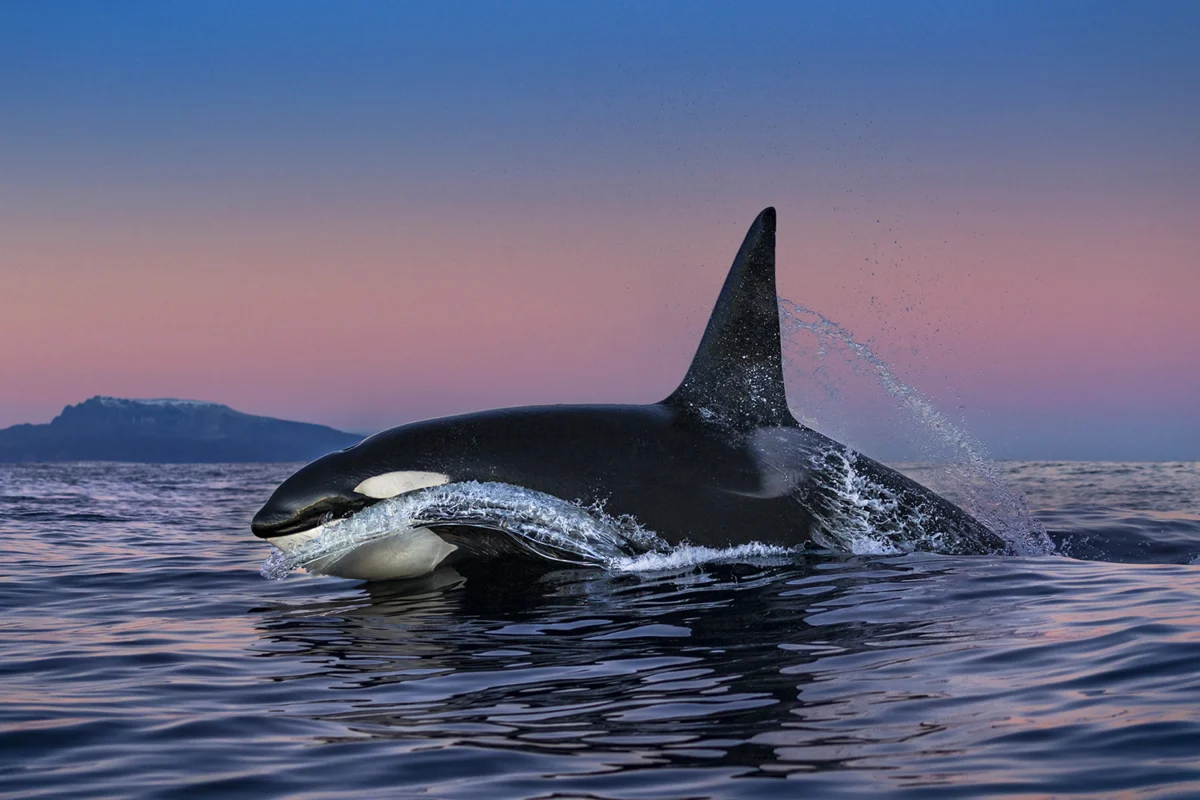
It was at this juncture that a particularly massive male orca, estimated to weigh around 12,000 pounds and measure approximately 25 feet in length, initiated a series of powerful leaps, a behavior known as porpoising. This athletic display was characterized by immense speed and force, with water cascading off its body with each surge. The sheer power of these movements was described as explosive.
"Things were coming together. The conditions were calm – for once – and the water was cooperating. We kept our cameras steady. Then this one huge male started to porpoise with furious speed and power. It seemed as if explosions of water were streaming off his body with each leap."
The Photographer’s Challenge: Capturing the Ephemeral
The low-light conditions presented a formidable challenge for Nicklen and his photographic equipment. The ambient light was a critical factor, demanding a swift and precise calibration of camera settings. The objective was to achieve a shutter speed fast enough to freeze the intense action, preventing motion blur, while simultaneously capturing sufficient detail in the dim light.
"The light is almost always low in these kinds of situations. You have to make a tricky calculation, and do it quickly. You want a shutter speed that is fast enough to freeze a snapshot in time, otherwise the action will be blurred. Luckily, on this occasion, there was just enough light. The sky had turned pink, with hints of orange against a pink hue, with towering mountains forming a natural backdrop on the horizon."
The immense size of the male orca, with its towering dorsal fin and car-hood-sized pectoral fins, added to the challenge of framing the shot. Using single-lens reflex (SLR) cameras, Nicklen experienced moments of uncertainty, as the mirror mechanism momentarily obscured the view and the rapid firing of ten frames per second meant brief periods of blindness.
"And this enormous male orca – 12,000 pounds, 25 feet long, with a six-foot-tall dorsal fin and pectoral fins the size of a car hood – was porpoising along with such force that it was hard to put the camera to my eye without losing sight of the whole image. With single-lens reflex cameras, it was always hard to tell I was getting the shot or not. I was shooting at ten frames a second, which means that ten times every second I was blind because the mirror has to lift, the shutter has to rise, and the image is exposed. Essentially, I had no clue if I had captured the shot or not."
The Reward: A Perfect Frame
The intensity of the moment was such that it passed in a "split second." However, the true reward came later, when Nicklen, back on the boat, reviewed the captured images. The precision of the boat’s handling, orchestrated by his colleague Goran, had been crucial in maintaining the optimal distance and angle.
"It was one of those occasions when, after it is over – a split second that passes by in the blink of an eye – I was able to sit down quietly in the back of the boat, safe in the knowledge that I likely did get the shot. In the past, I would have worried that this shot was not going to be sharp, with all this low, moody light and such an explosion of speed. Somehow my friend Goran, who was driving the boat that day, had paced us perfectly. Everything came together."
Upon reviewing the images on his camera’s LCD screen, Nicklen experienced a moment of profound satisfaction. The photograph perfectly encapsulated the scene: the dynamic splash of water, the details of the orca’s eye, the atmospheric light, the moody ambiance, and the vibrant colors. The sharpness of the image exceeded his expectations, especially given the challenging photographic conditions.

"Sitting in the back of the boat, I held up my camera so I could see the back, with the picture on my LCD screen, and I immediately saw that the whole package was there. It was beautiful. The water splashing off the eye of the orca, running down its body – the light, the mood, the color . . . perfect. At the time, I thought there was no way I would be able to zoom in on the eye of the orca. There was no way it would be sharp. And yet, when I tapped that button, I saw that the eye was sharp. The whole image was sharp. I scrolled down and up, up and down, just waiting for that mistake that told me I had failed somehow. It never came."
The Enduring Significance of Wildlife Photography
This extraordinary encounter underscores the intrinsic value of dedicated wildlife photography. Moments like these, captured through painstaking effort and technical expertise, serve as vital conduits for understanding and appreciating the natural world. They translate the raw beauty and power of nature into a tangible form that can be shared and preserved.
"These are the gifts of nature that transform the beauty of the natural world into your camera. You realize, in that moment of clarity and epiphany, that you have captured this perfect little bottle of light and time that will live on forever."
The successful documentation of this rare orca behavior in the challenging Arctic environment highlights the dedication of individuals like Paul Nicklen and the importance of their work in raising awareness and fostering a deeper connection with the planet’s most magnificent creatures. The images serve not only as a testament to the power of nature but also as a reminder of the critical need for conservation efforts to protect these species and their habitats for future generations.
Background Context: Orcas in Norwegian Waters
Orcas (Orcinus orca), also known as killer whales, are highly intelligent marine mammals found in every ocean on Earth. In Norway, they are particularly known for their association with the herring runs along the coast, especially during the winter months. These pods often engage in cooperative hunting techniques.
Timeline of the Event (as inferred from the article):
- Weeks Prior: The expedition team had been actively searching for orcas in Norway, encountering difficult conditions including prolonged darkness, cold weather, and rough seas. Sightings were infrequent.
- The Morning of the Event: While tracking a distant pod, the team observed a period of apparent inactivity.
- Sudden Change: An unspecififed stimulus triggered a feeding frenzy and a dramatic increase in activity within the pod.
- The Spectacle: A large male orca began porpoising with immense power and speed.
- Photography in Action: Nicklen captured the action using SLR cameras, navigating low-light conditions and rapid shooting sequences.
- Post-Capture Review: Back on the boat, Nicklen reviewed the images, confirming the successful capture of a sharp and evocative photograph.
Supporting Data and Scientific Context
- Orca Size: The male orca described was approximately 12,000 pounds (5,443 kg) and 25 feet (7.6 meters) long. This places it within the typical size range for mature male orcas.
- Dorsal Fin Height: A six-foot (1.8 meters) dorsal fin is characteristic of large adult male orcas, providing stability and aiding in thermoregulation.
- Norwegian Orca Behavior: The article notes a difference in behavior compared to British Columbian orcas, with Norwegian pods being less prone to breaching. This can be attributed to various factors, including prey availability, hunting strategies, and social dynamics specific to their environment. Norwegian orcas are often observed employing specialized feeding techniques, such as "carousel feeding" or "cracking," to herd and consume herring.
- Low-Light Photography: Arctic environments present unique challenges for photographers due to the low angle of the sun and extended periods of twilight. Achieving sharp images requires high ISO sensitivity, wide apertures, and fast shutter speeds, all of which must be balanced to avoid noise and motion blur.
Broader Impact and Implications
The successful capture of such a dynamic and rare moment holds significant implications:
- Conservation Awareness: High-quality imagery of wildlife plays a crucial role in raising public awareness about the importance of marine conservation. These images can inspire empathy and a desire to protect the species and their habitats.
- Scientific Understanding: While this account is anecdotal, detailed observations and photographs can contribute to scientific understanding of orca behavior, especially in challenging environments. The difference in behavior between populations, as noted, is a subject of ongoing research.
- Artistic and Cultural Value: Beyond scientific data, these images hold immense artistic and cultural value, showcasing the awe-inspiring beauty and power of the natural world. They serve as a reminder of the wild places that still exist and the creatures that inhabit them.
- Technological Advancement: The ability to capture such images in adverse conditions also reflects the advancements in photographic technology, enabling photographers to document previously inaccessible or fleeting moments.
This extraordinary event, born from perseverance in the face of challenging conditions, serves as a powerful testament to the wonders of the natural world and the dedication of those who strive to document and share them.