For three decades, I have lived amidst the world’s densest cougar population on Vancouver Island, yet only a handful of fleeting glimpses have marked my encounters. The elusive nature of these apex predators, their powerful musculature, silent tread, and masterful camouflage, create an aura of constant observation. It is this pervasive feeling of being watched, coupled with a profound desire to witness these magnificent felines in their natural habitat, that fueled my expedition to the famed pumas of Chilean Patagonia. Despite a challenging start, involving a lost passport and an unexpected detour to a Brazilian embassy, my arrival in Chile marked the beginning of an unforgettable photographic pursuit.
The lodge, a former estancia nestled on the fringes of Torres del Paine National Park, exuded a rustic charm, its operational farming and livestock equipment a testament to its heritage. The region, increasingly a magnet for ecotourists drawn by the park’s breathtaking granite spires, has witnessed a burgeoning ecotourism industry. The estancia’s owners exemplify this shift, having transitioned from viewing wildlife as a threat to livestock to coexisting with the very animals that once posed a challenge. Their staff, a vibrant ensemble of local individuals, embody the deeply ingrained values of gaucho culture: honesty, diligent work, and unwavering generosity. This ethos extends to their approach to conservation, fostering an environment where the majestic pumas can thrive alongside human activity.
The Quest for Patagonian Pumas
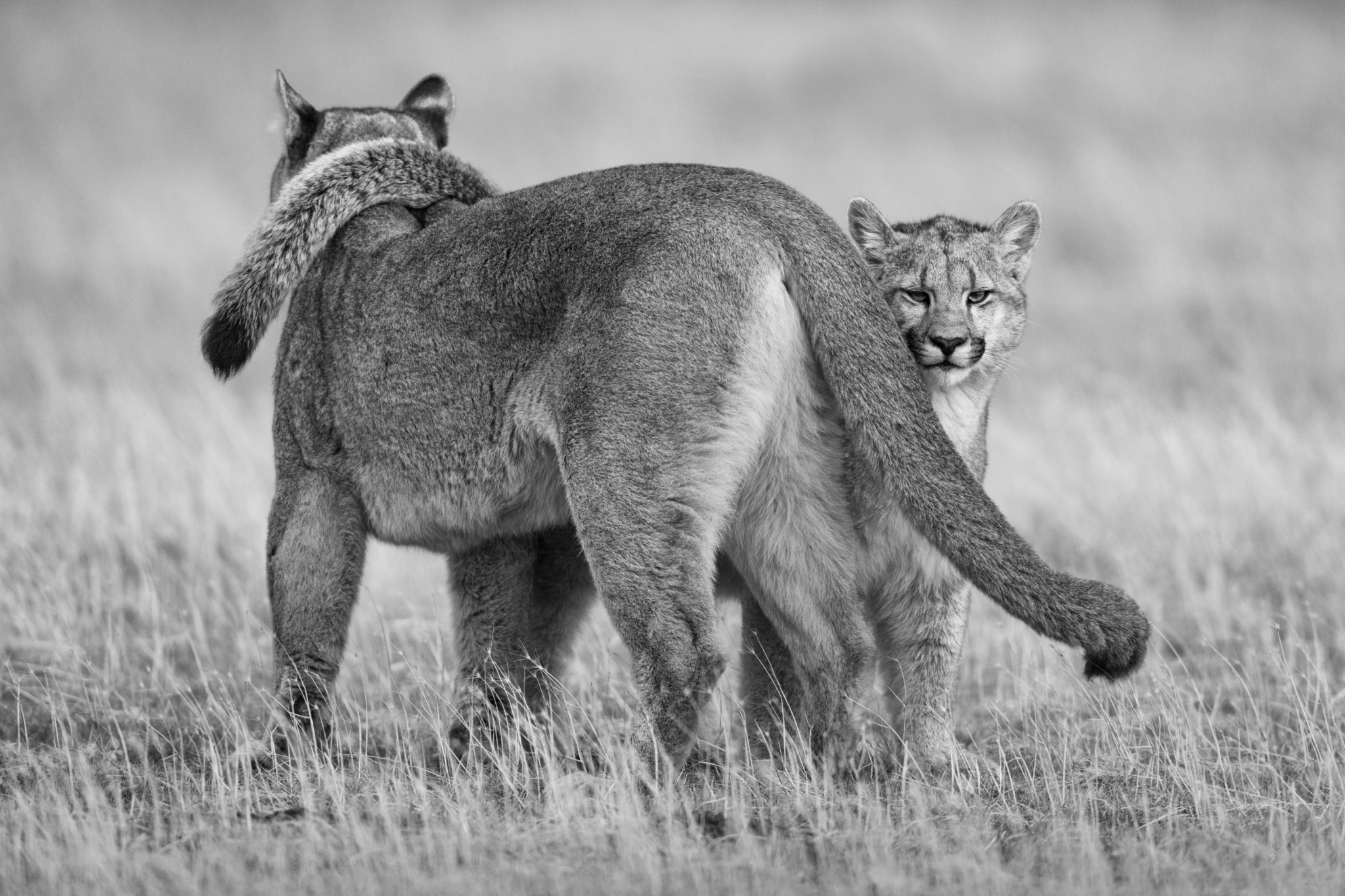
My journey into the heart of puma territory was guided by Rodrigo, a local expert renowned for his intimate knowledge of the region’s feline inhabitants. As we ventured deeper, the cultivated fields gave way to a dramatic landscape of striking rock formations, glacial lakes fed by snowmelt, and expansive grasslands, or pampas. Towering granite peaks of the Andes served as a constant backdrop to our trek. It was in this awe-inspiring setting, under the shadow of these colossal mountains, that we encountered our first subject: a female puma of considerable local renown, known as Petaka, accompanied by her two kittens.
Petaka’s presence was characterized by a serene, commanding demeanor. Her apparent indifference to human observers has cemented her status as a legend among those who frequent Torres del Paine and its surrounding areas. Unlike in neighboring Argentina, where historical conflicts with livestock owners led to significant declines in puma populations, Chile has implemented robust conservation measures. Pumas are designated as a protected species, with hunting largely prohibited. This protective status has allowed some populations, like Petaka’s, to adapt to the presence of humans, largely ignoring them as they go about their daily lives. For a photographer and naturalist, observing such a wild animal exhibit complete tranquility and contentment in the proximity of humans is a profound experience, a testament to successful conservation efforts and the animal’s own acclimatization.
A Photographer’s Privilege
The privilege of observing Petaka as she nurtured her young was an emotionally resonant experience. Sitting a respectful distance away, I was captivated by the playful interactions of the kittens as they tumbled and wrestled in the grass, their mother watching with a quiet intensity. This intimate glimpse into the maternal bonds of these powerful predators underscored the vital importance of preserving their habitat and ensuring their continued survival. The scene, captured through my lens, was a powerful reminder of the delicate balance of nature and the profound beauty of undisturbed wildlife.
The Unforeseen Encounter in the Blizzard
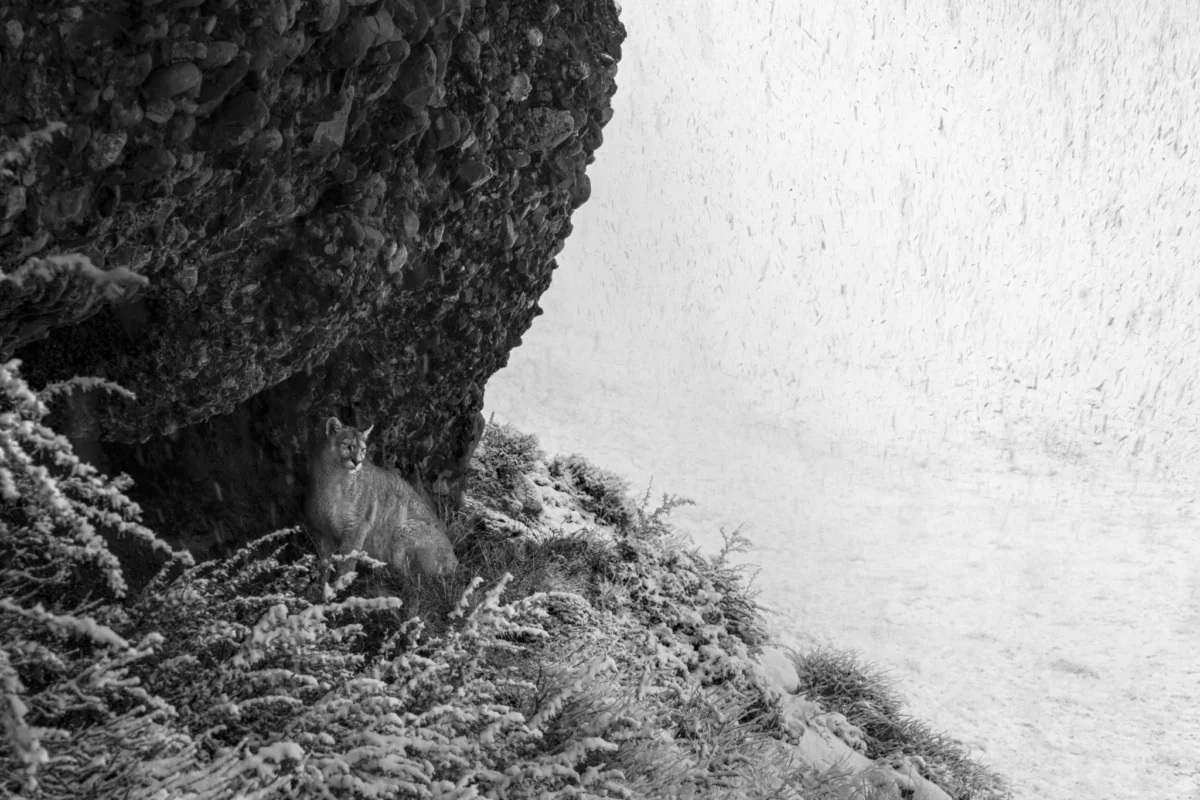
Shortly after our encounter with Petaka and her family, the notoriously capricious Patagonian weather took a dramatic turn. The winds intensified, and the first snowflakes began to fall, heralding the onset of a significant blizzard. The storm rapidly enveloped the landscape, muffling all sounds and drawing the world into a hushed, white expanse. Seeking refuge from the elements, I found shelter within the natural recesses of a mountainside cave. It was here, in this unexpected sanctuary, that an extraordinary encounter unfolded.
Emerging from the swirling snow, a large puma appeared, settling down just a few meters from my position, seemingly seeking the same respite from the storm. Instinctively, I held my breath, my heart pounding with a mixture of awe and adrenaline. My hands, though trembling slightly, managed to keep my camera steady, poised to document this surreal moment. For an extended period, we shared the confined space in perfect, silent communion. The storm raged outside, blanketing the willow thickets below in deepening drifts of snow, while within the cave, an unlikely truce held between predator and observer. The puma, a creature of immense power and wildness, never once acknowledged my presence, its keen eyes remaining fixed on the environment, a constant vigilance that defines its existence.
This silent vigil continued until the storm began to abate and the weather cleared. As the snow-covered landscape emerged from the whiteout, my feline companion quietly slipped away over the fresh canvas of snow, leaving behind only the imprint of its paws. It was only after the cat had disappeared into the vastness of the Patagonian wilderness that the dam of my pent-up emotions broke. Tears welled up, a profound release of the exhilaration and gratitude I felt. This experience, a fleeting moment of shared solitude with a wild creature in one of Earth’s most breathtaking ecosystems, was a profound testament to the power of nature and the rewards of patient observation.
The Broader Implications of Conservation
The ability to witness such intimate moments with wildlife is directly linked to effective conservation strategies. The protection afforded to pumas in Torres del Paine National Park, a significant factor in their increased tolerance of human presence, highlights the critical role of policy and protected areas. Data from organizations like the International Union for Conservation of Nature (IUCN) consistently shows that species in well-managed reserves exhibit healthier populations and greater adaptability. For instance, studies in regions with strong anti-poaching laws and habitat preservation initiatives, such as parts of North America and Africa, have demonstrated a correlation between these measures and increased sighting opportunities for elusive wildlife.
The economic impact of this thriving wildlife population is also significant. Ecotourism, as observed at the estancia, generates substantial revenue, providing local communities with alternative livelihoods that are intrinsically linked to conservation. This economic incentive can shift local perspectives, transforming former adversaries of wildlife into staunch protectors. The reported increase in visitor numbers to Torres del Paine National Park over the past decade, with projections indicating continued growth, underscores the financial viability of a nature-based economy. This model offers a sustainable pathway for development, ensuring that the natural heritage of Patagonia is preserved for future generations.
The philosophical implications of such encounters are equally profound. As the original quote by John Vaillant suggests, "The tiger will see you a hundred times before you see him once." This adage speaks to the inherent stealth and superior sensory capabilities of apex predators. My experience with Petaka and the puma in the blizzard reinforces this, emphasizing that our interactions with the wild are often a privilege, not a right. When we afford nature the space and respect it deserves, we become witnesses to its untamed magnificence. The wild, raw, and utterly captivating experiences, like the one I had in Patagonia, are a direct consequence of allowing ecosystems to recover and thrive. These moments are a reminder of our place within the natural world, not as its dominators, but as humble observers and custodians.
A Hopeful Future for Wildlife Photography
The ability to capture these moments through photography serves a dual purpose: it allows for personal reflection and artistic expression, but more importantly, it acts as a powerful tool for conservation advocacy. Images of healthy, thriving wildlife can inspire public support, raise awareness, and influence policy decisions. The ongoing efforts in regions like Chilean Patagonia, which prioritize the protection of iconic species like the puma, offer a beacon of hope. These initiatives demonstrate that a harmonious coexistence between humans and wildlife is not only possible but also essential for the long-term health of our planet’s biodiversity. The quiet companionship in the snowstorm, a moment of shared existence with a creature of the wild, was more than a photographic opportunity; it was a profound affirmation of the wild spirit that still thrives when given the chance.
With deep gratitude and enduring hope for the future of these magnificent creatures and their habitats,
Paul Nicklen