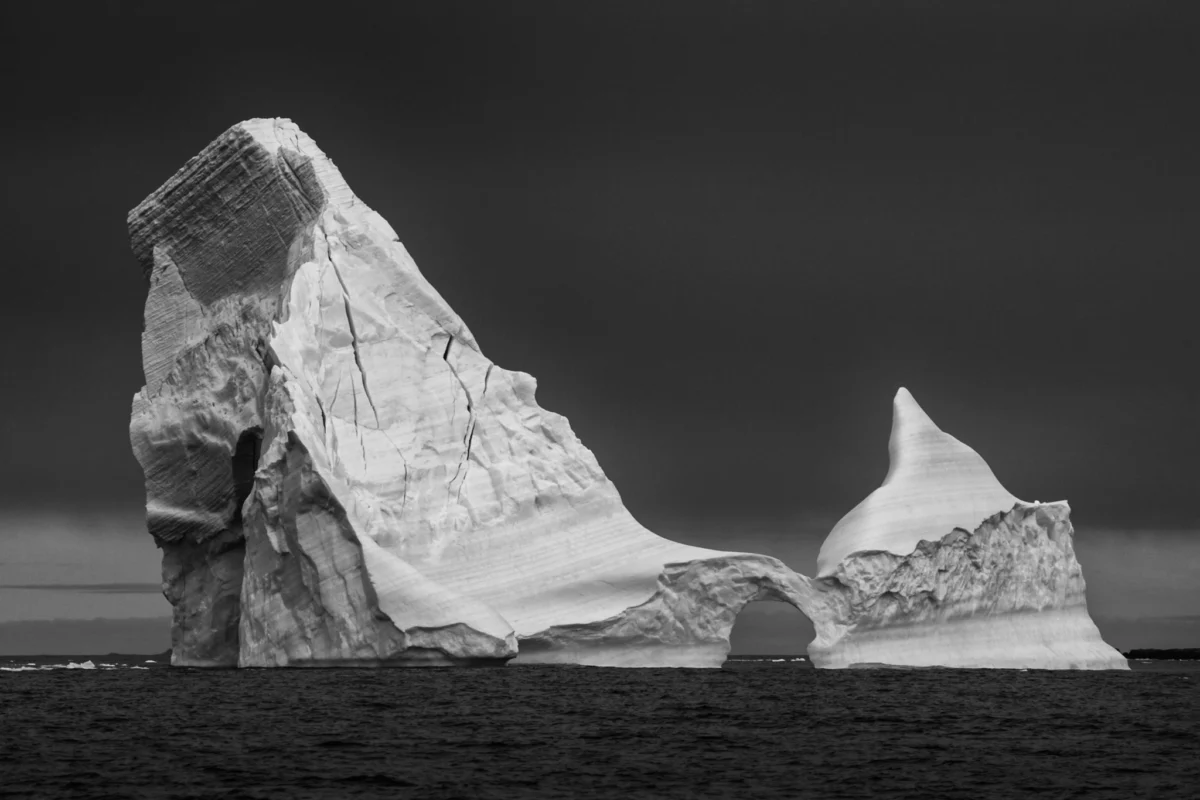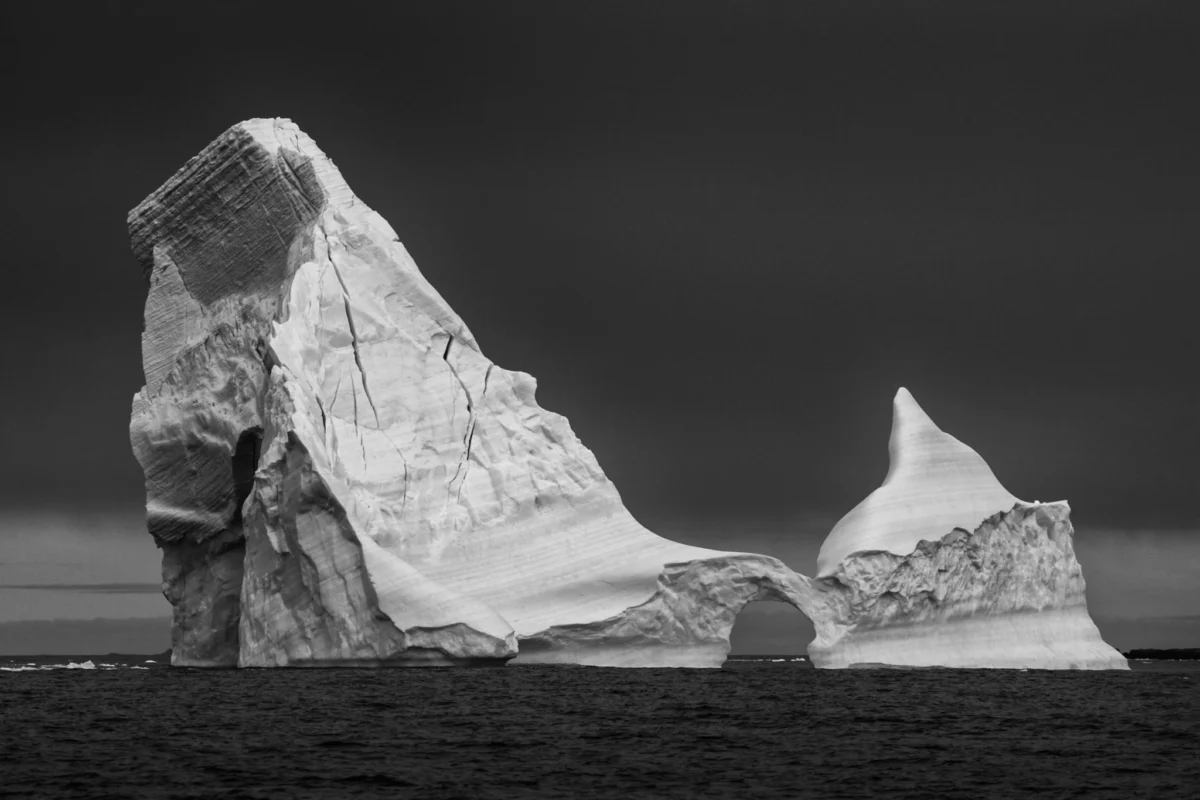
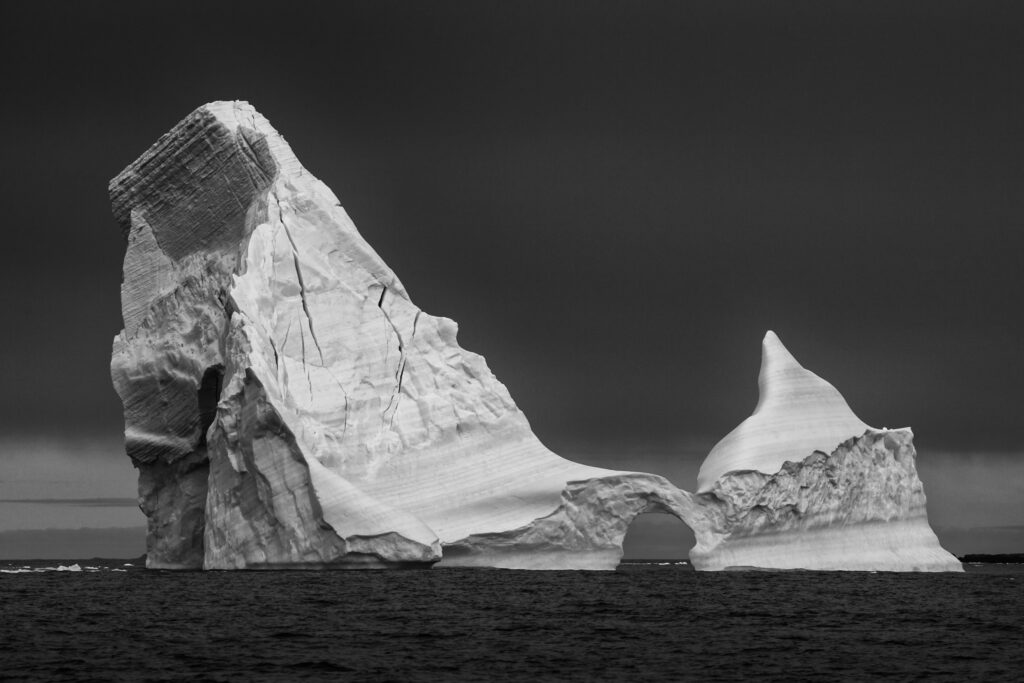
A land of ice is a realm of constant transformation, with new patterns and structures emerging through the clash of natural forces. During one of my earlier expeditions to the remote shores of the last continent, I observed a particularly delicate ice arch and diligently adjusted my camera. After finally settling on a composition, framing the delicate arch between two towering spires of ice, a rumble echoed across the water. Within seconds, the entire structure gave way and plunged into the sea, crackling like thunder and generating a cascade of waves. One of the most spectacular displays of nature’s artistry, carved by tumultuous seas, long winters, and raging winds, vanished before my eyes.
For those who have been sharing in my journey, you are probably already aware of, and likely share, my deep fascination with our planet’s polar regions. My love for the icy landscapes of the far north and south took root at the age of four when my family moved to Baffin Island. That was when I first began to see the world through the ever-changing lens of ice. Despite our remoteness, I felt intimately connected to the vast, untamed world surrounding me. Ours was one of the few non-Inuit households in our community, and those formative years were spent navigating a frozen realm. Guided by the elders, I learned to track animals through the snow, avoid treacherous ice, and endure extreme cold—skills that would ultimately lead to my role as a National Geographic photographer. My life’s trajectory has been irreversibly shaped by ice and the warmth of Inuit culture, which is why places like the Arctic and Antarctic regions will always be a favourite subject of mine.
When photographing ice, the creative possibilities are limitless. Light bends, refracts, and scatters through frozen crystals in surprising ways, crafting intricate patterns and textures. You could be photographing the same iceberg from the same vantage point, yet every click of the shutter yields a different image. These ever-shifting conditions present their challenges; an overcast sky, for example, can obscure details, turning a looming iceberg into a featureless mass against a dull horizon. Nonetheless, I’ve always found a peculiar sense of freedom within the environmental constraints of our planet’s icy kingdoms. They urge us to explore creative paths we might never have traversed otherwise, resulting in more compelling images and often a better story behind the frame.
The Fragility of Antarctic Ice Formations
The dramatic collapse of the ice arch, as described during an expedition to the Antarctic, serves as a stark reminder of the impermanence and inherent fragility of polar ice formations. These seemingly colossal structures, sculpted over millennia by relentless natural forces, can disintegrate with astonishing speed. The phenomenon underscores the dynamic nature of these environments, where beauty and ephemerality coexist. The photographic capture of such transient moments, like the image titled "The Last Stand," aims to preserve a fleeting spectacle, highlighting the delicate balance that defines these landscapes. This particular photograph, featuring a delicate arch poised before its inevitable plunge into the sea, encapsulates the captivating yet vulnerable essence of Antarctica.
A Lifelong Connection to Polar Environments
The profound connection to polar regions, deeply ingrained from childhood experiences on Baffin Island, forms the bedrock of the photographer’s artistic and conservationist endeavors. Growing up in an environment dominated by ice and snow, and learning from Indigenous knowledge holders, instilled an unparalleled understanding of the intricate ecosystems and the resilience of life in extreme conditions. This upbringing provided not only the foundational skills for wildlife photography but also a deep-seated respect for the cultural heritage of the Inuit people, whose lives are inextricably linked to the health of the Arctic. The early exposure to the ever-changing canvas of ice shaped a unique perspective, one that continues to inform the visual narratives of the polar world.
The Alarming Realities of Climate Change in Polar Regions
The assertion that a land of ice is a realm of constant transformation is now being amplified by the accelerating impacts of climate change. Scientific consensus indicates that polar regions are warming at rates significantly higher than the global average, leading to unprecedented melting of ice sheets, glaciers, and sea ice.
Supporting Data and Scientific Observations:
- Arctic Amplification: The Arctic is warming at least twice as fast as the rest of the planet. This phenomenon, known as Arctic amplification, is driven by feedback loops, primarily the reduction of reflective ice and snow cover, which leads to increased absorption of solar radiation by darker land and ocean surfaces.
- Sea Ice Decline: Data from the National Snow and Ice Data Center (NSIDC) shows a significant long-term decline in Arctic sea ice extent, particularly during the summer months. The lowest extent on record was observed in September 2012, and recent years have continued to exhibit below-average ice cover. This loss of sea ice has profound implications for Arctic ecosystems, weather patterns, and indigenous communities.
- Greenland Ice Sheet Melt: The Greenland Ice Sheet is losing mass at an accelerating rate. According to NASA’s data, Greenland lost an average of 279 billion tons of ice per year between 1993 and 2019, with the rate of loss accelerating in recent decades. This meltwater contributes significantly to global sea-level rise.
- Antarctic Ice Shelf Instability: While the Antarctic is more complex, with some regions experiencing ice gain, significant concerns exist regarding the stability of its ice shelves, particularly in the West Antarctic Ice Sheet. The collapse of the Larsen B ice shelf in 2002, a massive area of ice the size of Rhode Island, demonstrated the rapid disintegration of these crucial buttresses that hold back land-based ice.
The Interdependence of Polar Wildlife and Their Habitats
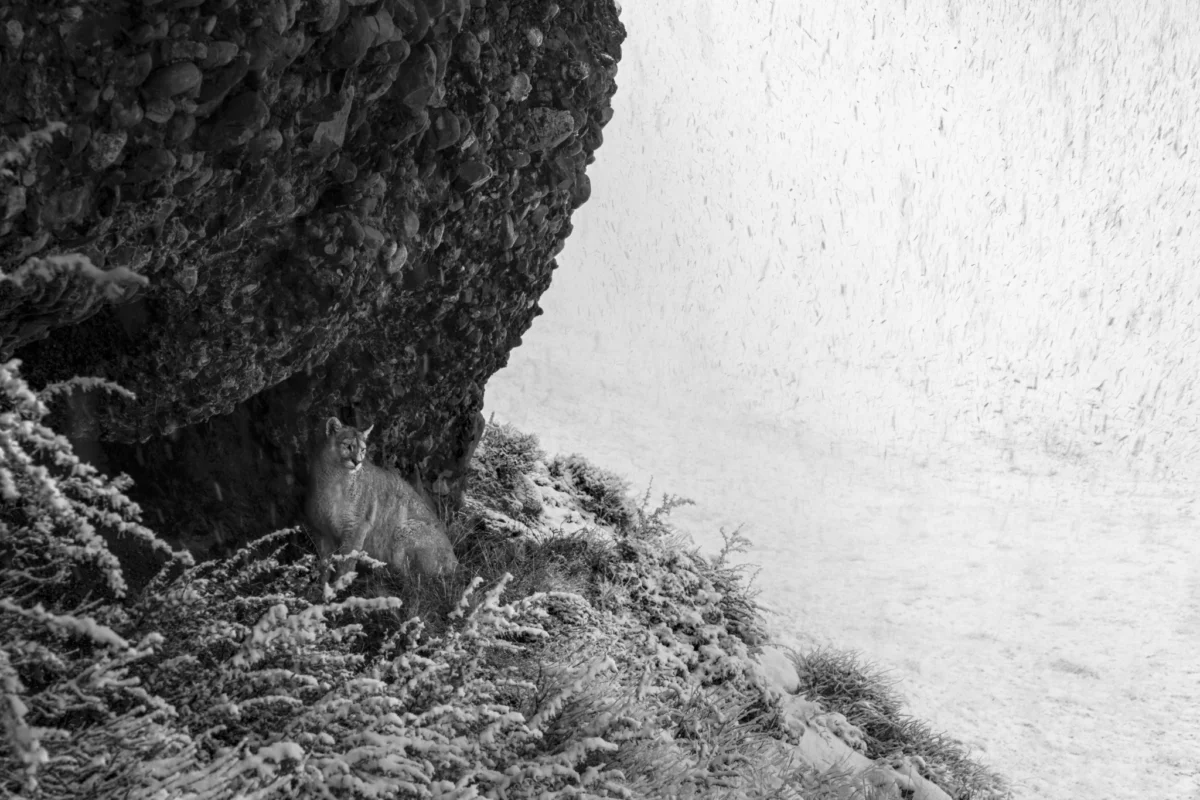
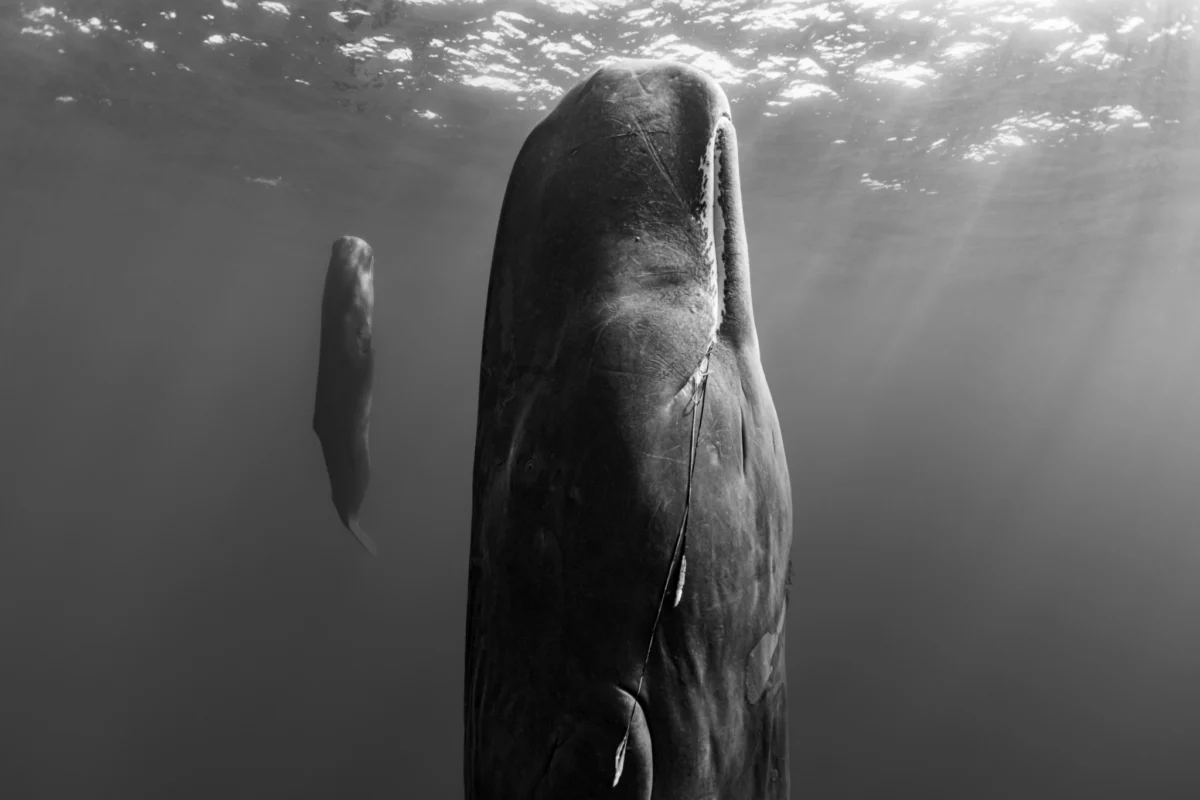
The observation that life in polar regions thrives beneath the snow and icy seas highlights the remarkable adaptations of species to extreme environments. Animals such as seals, polar bears, and various seabirds have evolved to depend on the cyclical nature of ice for critical life processes, including reproduction, foraging, and migration. The precarious existence of these animals is intrinsically tied to the stability of their icy habitats.
Implications of Habitat Loss:
- Polar Bears: The iconic polar bear is critically dependent on sea ice for hunting seals, its primary food source. As sea ice diminishes, polar bears face longer periods of fasting, reduced hunting success, and increased energy expenditure as they must swim greater distances. This directly impacts their ability to survive and reproduce.
- Seals: Many seal species, such as ringed seals and bearded seals, rely on sea ice for resting, pupping, and molting. Reduced sea ice extent and thickness can lead to increased pup mortality due to premature births, lack of stable platforms, and increased predation.
- Seabirds: Numerous seabird species depend on the productivity of polar marine ecosystems, which are influenced by sea ice dynamics. Changes in ice cover can alter the distribution and abundance of their prey, impacting breeding success and survival rates.
The increasing uncertainty surrounding the future of these species underscores the vulnerability of polar ecosystems to environmental shifts. The interconnectedness of these life forms with their icy domain means that any significant alteration to the ice regime poses an existential threat.
"Ice Waterfall": A Symbol of Art, Storytelling, and Conservation
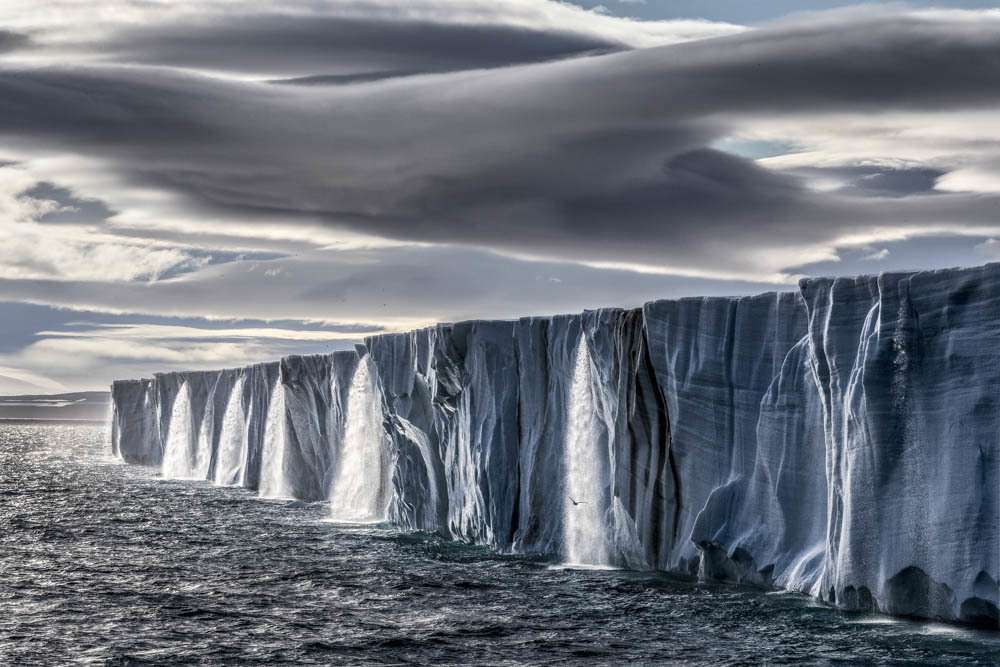
The photograph, "Ice Waterfall," transcends its aesthetic appeal to embody a powerful narrative of the changing Arctic. As described by the artist, it encapsulates the confluence of art, storytelling, and conservation, finding its way into homes and influential platforms worldwide. The image’s composition, featuring dark clouds and cascading ice falls against the vast Nordaustlandet ice cap, serves as a visual testament to the environmental transformations occurring in the Arctic.
Cultural and Political Resonance:
- Advocacy and Awareness: The photograph’s use by notable figures like Al Gore signifies its impact in raising awareness about climate change and advocating for polar region protection. It has become a visual symbol for climate action.
- Media Presence: Its prominent placement as the gatefold opening spread in National Geographic’s “Cool It” Issue in 2015 highlighted its significance in communicating the urgency of climate issues to a broad audience.
- Artistic Recognition: The photograph’s inclusion on the cover of Pearl Jam’s "Gigaton" album further amplifies its message, demonstrating how art can serve as a powerful medium for conveying critical environmental concerns to diverse audiences.
- Enduring Impact: Regardless of the display format, from small screens to large-scale gallery prints, the photograph’s inherent power remains undiminished, offering a timeless yet urgent call to action regarding the preservation of polar regions.
A Plea for Collective Action and Hope
The photographer’s reflections on witnessing the Arctic evolve underscore a personal and profound connection to this rapidly changing environment. The evolution of his childhood home, the first place where he felt a true sense of belonging, has been a source of deep concern. This intimate perspective fuels a passionate plea for collective action to safeguard these vital ecosystems.
Analysis of Implications and Future Outlook:
The diminishing ice in the Arctic and Antarctic seas is not merely an environmental issue; it has far-reaching geopolitical, economic, and ecological implications. The melting of ice sheets contributes to global sea-level rise, threatening coastal communities worldwide. Changes in Arctic ice cover also influence global weather patterns, potentially leading to more extreme weather events in temperate regions. Furthermore, the opening of new shipping routes and access to previously inaccessible resources in the Arctic raises complex questions about governance, environmental protection, and international cooperation.
Despite the escalating challenges posed by a warming planet, the enduring message conveyed is one of hope and the potential for positive change. The call for collective responsibility, supported by individuals who share a love for the natural world, emphasizes the belief that concerted efforts can alter the current trajectory. The photographer’s concluding sentiment, "We are in this together, and we will solve this together," reflects a commitment to collaborative solutions and a vision for a sustainable future for Earth’s polar frontiers. This sentiment resonates with the growing global movement for climate action, highlighting the crucial role of individual engagement and shared commitment in addressing one of the 21st century’s most pressing challenges.