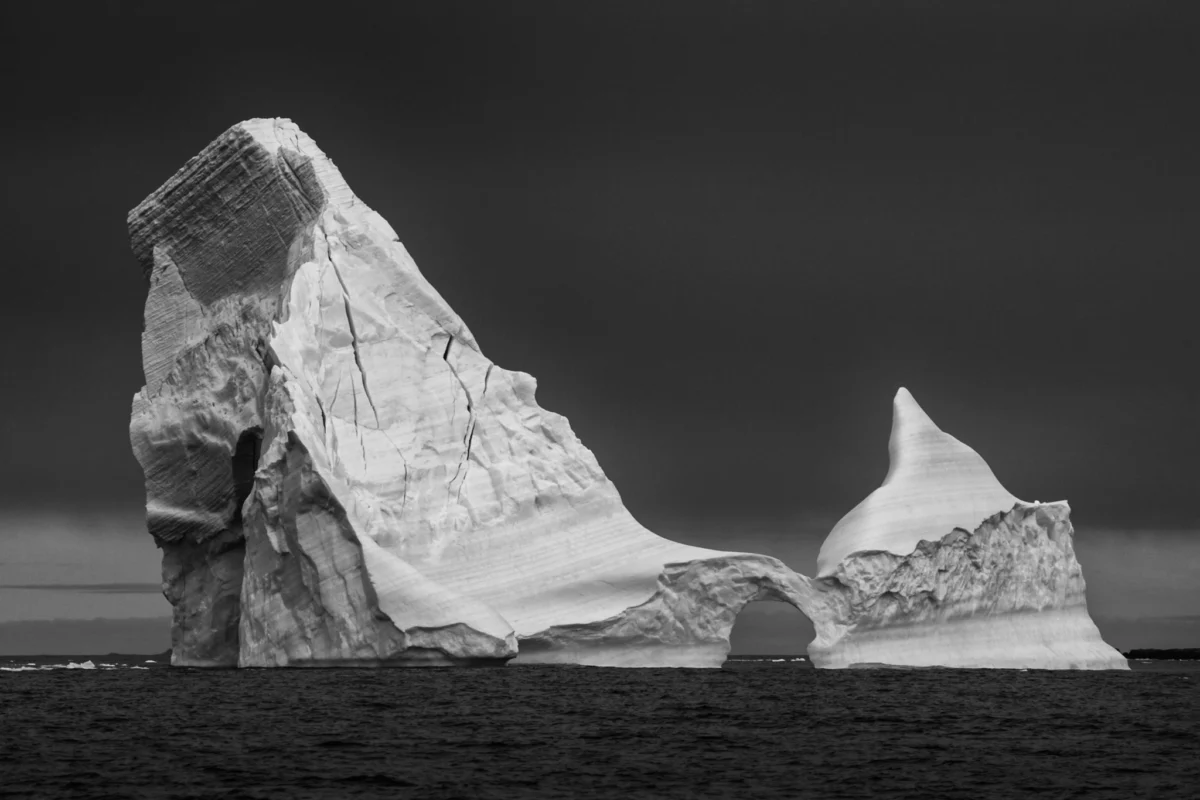
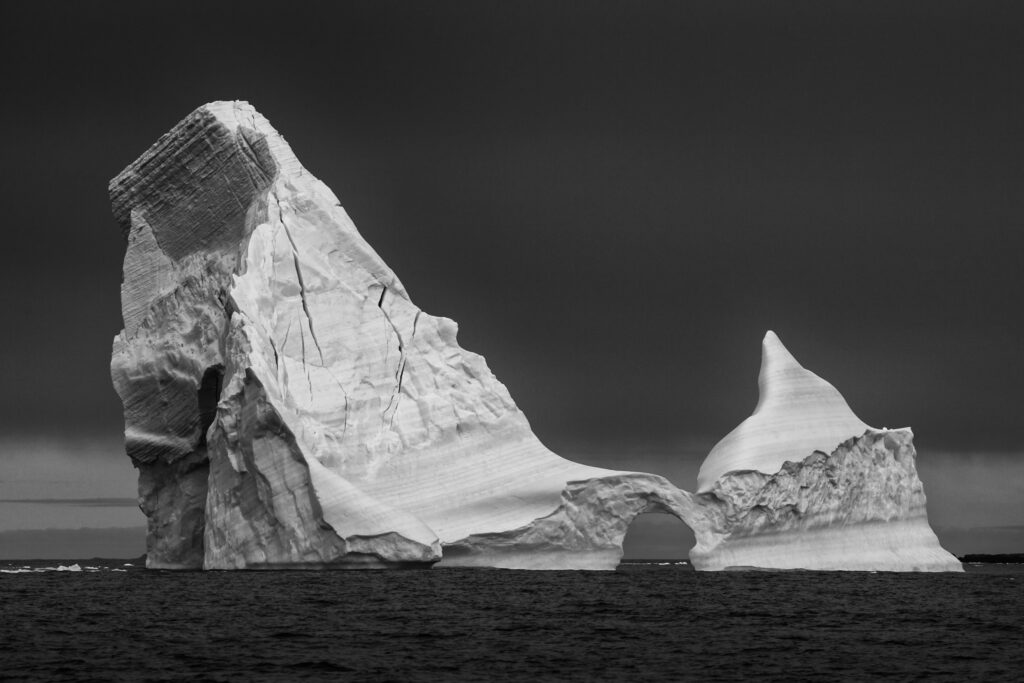
A land of ice is a realm of constant transformation, with new patterns and structures emerging through the clash of natural forces. During one of my earlier expeditions to the remote shores of the last continent, I observed a particularly delicate ice arch and diligently adjusted my camera. After finally settling on a composition, framing the delicate arch between two towering spires of ice, a rumble echoed across the water. Within seconds, the entire structure gave way and plunged into the sea, crackling like thunder and generating a cascade of waves. One of the most spectacular displays of nature’s artistry, carved by tumultuous seas, long winters, and raging winds, vanished before my eyes.
For those of you who have been sharing in my journey, you are probably already aware of (and likely share) my deep fascination with our planet’s polar regions. My love for the icy landscapes of the far north and south took root at the age of four when my family moved to Baffin Island. That was when I first began to see the world through the ever-changing lens of ice.
Despite our remoteness, I felt intimately connected to the vast, untamed world surrounding me.
Ours was one of the few non-Inuit households in our community, and those formative years were spent navigating a frozen realm. Guided by the elders, I learned to track animals through the snow, avoid treacherous ice, and endure extreme cold—skills that would ultimately lead to my role as a National Geographic photographer. My life’s trajectory has been irreversibly shaped by ice and the warmth of Inuit culture, which is why places like the Arctic and Antarctic regions will always be a favourite subject of mine.
The Dynamic Canvas of Polar Ice
When photographing ice, the creative possibilities are limitless. Light bends, refracts, and scatters through frozen crystals in surprising ways, crafting intricate patterns and textures. You could be photographing the same iceberg from the same vantage point, yet every click of the shutter yields a different image. These ever-shifting conditions present their challenges; an overcast sky, for example, can obscure details, turning a looming iceberg into a featureless mass against a dull horizon. Nonetheless, I’ve always found a peculiar sense of freedom within the environmental constraints of our planet’s icy kingdoms. They urge us to explore creative paths we might never have traversed otherwise, resulting in more compelling images and often a better story behind the frame.
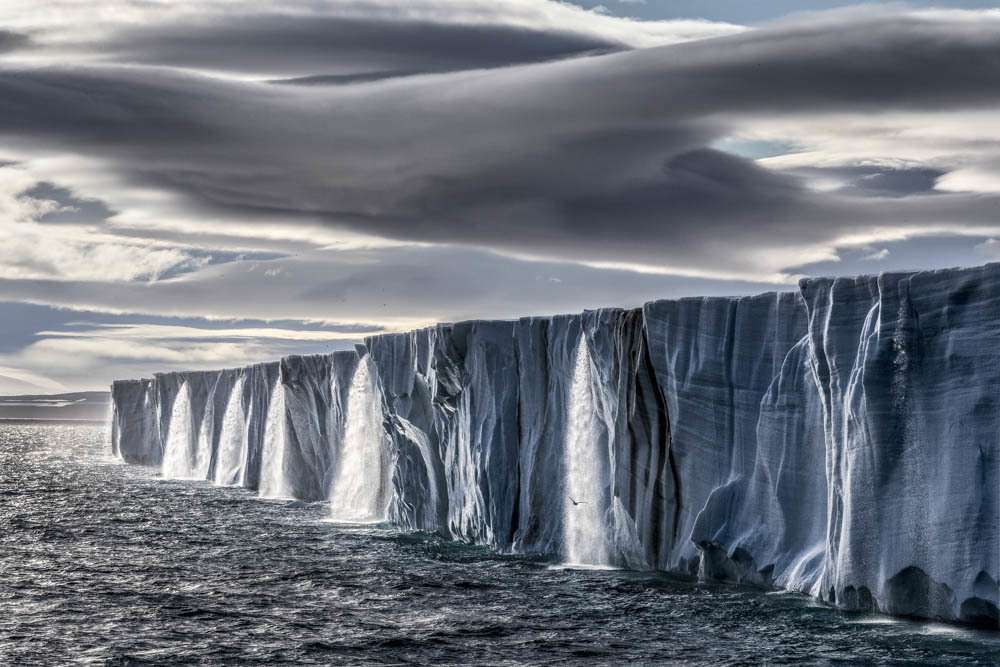
This inherent dynamism is powerfully captured in acclaimed photographic works that have transcended mere imagery to become potent symbols of conservation. One such iconic piece, titled "Ice Waterfall," encapsulates the confluence of art, storytelling, and conservation. This striking image, featuring dark clouds, dramatic ice falls, and the vast Nordaustlandet ice cap, serves as a stark narrative of a vanishing Arctic. Its profound impact has led it to grace homes worldwide and advocate for the preservation of polar regions. Notably, "Ice Waterfall" has been utilized by prominent figures in the environmental movement, including former U.S. Vice President Al Gore. Its significance in raising awareness was further amplified when it served as the gatefold opening spread in National Geographic’s "Cool It" Issue in 2015. More recently, the photograph achieved widespread recognition by gracing the cover of Pearl Jam’s 2020 album, "Gigaton," underscoring its resonance across cultural spheres. Whether viewed on a small digital screen or displayed as a monumental 60-by-90-inch art print in a gallery setting, the photograph’s power remains undiminished, acting as a timeless piece with an urgent call to action.
A Fragile Ecosystem Under Threat
I learned early in life that, even in the heart of a polar winter, there’s a hidden reservoir of life beneath the snow and the icy seas. Animals like seals, polar bears, and certain species of seabirds have not only adapted to the capricious and unforgiving nature of the frozen world; they rely on its ebb and flow for raising their young, hunting for food, and finding mates. Somewhere in their evolutionary journey, the harshest aspects of their habitat became the source of their survival and resilience. Sadly, this is also what renders their polar ecosystems so fragile. With diminishing ice in the Arctic and Antarctic seas, the future of some of Earth’s most iconic animals becomes increasingly uncertain.
The dramatic changes occurring in these polar regions are not merely anecdotal observations; they are supported by extensive scientific data. For instance, the Arctic sea ice extent has been declining at a rate of approximately 13% per decade relative to the 1981-2010 average, according to the National Snow and Ice Data Center (NSIDC). This trend is particularly alarming during the summer months, when the ice cover reaches its minimum. The loss of multi-year ice, which is thicker and more resilient, is a critical concern, as it is being replaced by thinner, seasonal ice that melts more readily. Similar patterns are being observed in Antarctica, although the dynamics are more complex due to differing oceanic and atmospheric currents. Recent studies, such as those published in Nature Climate Change, have highlighted the accelerated melting of Antarctic ice shelves, which act as buttresses to the massive ice sheets. The implications of this melting are far-reaching, contributing to global sea-level rise and impacting marine ecosystems that depend on the unique conditions of these frozen environments.
Witnessing Change: A Personal and Scientific Imperative
Over the decades, I have witnessed the Arctic, my childhood home and the first place where I truly belonged, evolve before my eyes. This personal observation is echoed by decades of scientific research and monitoring. The Arctic is warming at a rate two to three times faster than the global average, a phenomenon known as Arctic amplification. This accelerated warming has profound consequences, including thawing permafrost, which releases potent greenhouse gases like methane and carbon dioxide, further exacerbating climate change. The changes are not confined to the ice itself; they are fundamentally altering the delicate balance of the entire ecosystem.
The ramifications of these changes extend beyond the polar regions. The melting of Arctic sea ice, for example, can influence weather patterns in lower latitudes, potentially leading to more extreme weather events. The thawing of permafrost threatens infrastructure in Arctic communities and can disrupt traditional ways of life for Indigenous populations who have inhabited these regions for millennia. Furthermore, the loss of polar habitats directly impacts the survival of species uniquely adapted to these environments, such as polar bears, seals, and Arctic foxes, raising concerns about biodiversity loss and the potential for extinctions.
"The Last Stand": A Symbol of Antarctic Fragility
The ephemeral nature of ice formations is powerfully illustrated by another significant photographic work, "The Last Stand." This image, captured in Antarctica, depicts a delicate ice arch that, despite its breathtaking beauty, was destined for collapse. The photographer’s hurried efforts to capture its essence before it plunged into the sea underscore the inherent fragility of Antarctica’s captivating landscapes. This particular scene serves as a poignant metaphor for the precarious state of many polar ecosystems. The beauty of Antarctica, while immense and awe-inspiring, is increasingly recognized as being as fragile as it is captivating, a sentiment that resonates deeply within the scientific community and among conservationists.
The Antarctic region, like the Arctic, is experiencing significant environmental shifts. While the continent as a whole is largely covered by a vast ice sheet, the surrounding waters and coastal areas are susceptible to rising ocean temperatures and changes in sea ice dynamics. The formation and disintegration of ice arches and shelves are natural processes, but the rate at which they are occurring is a subject of intense scientific scrutiny. Researchers are particularly focused on the stability of the West Antarctic Ice Sheet, which is considered more vulnerable to warming ocean waters. The potential collapse of this ice sheet could lead to a substantial increase in global sea levels, posing a significant threat to coastal populations worldwide. The visual documentation of these natural processes, such as in "The Last Stand," provides a tangible and emotionally resonant connection to these abstract scientific concerns, making the urgency of conservation efforts more palpable to a broader audience.
A Call for Collective Action and Hope
Despite the growing pressures of a warming world, I still feel we can change our course and protect our fellow wildlife—especially with the support of readers like you who share my love for the natural world. This sentiment is not merely one of personal conviction but is bolstered by the growing body of evidence that demonstrates the efficacy of conservation initiatives when supported by widespread public engagement and robust policy. International agreements, such as the Paris Agreement, aim to limit global warming, and ongoing scientific research continues to inform and refine conservation strategies.
The role of photography and art in driving environmental action cannot be overstated. Images like "Ice Waterfall" and "The Last Stand" serve as powerful conduits for conveying the beauty and vulnerability of polar regions to a global audience. They can inspire empathy, foster a deeper understanding of the ecological challenges, and motivate individuals to take action. This can range from personal lifestyle choices that reduce carbon footprints to advocating for stronger environmental policies and supporting organizations dedicated to conservation. The interconnectedness of our planet means that the fate of the polar regions is intrinsically linked to the well-being of all its inhabitants.
We are in this together, and we will solve this together.
The challenges facing our polar regions are immense, but so too is the capacity for human innovation and collective action. Continued scientific research, coupled with effective communication and a shared commitment to sustainability, offers a pathway toward safeguarding these vital ecosystems for future generations. The visual narratives presented through these powerful photographs serve as a constant reminder of what is at stake and the imperative to act decisively.
With gratitude and hope for a better future,
[Paul Nicklen’s Signature]