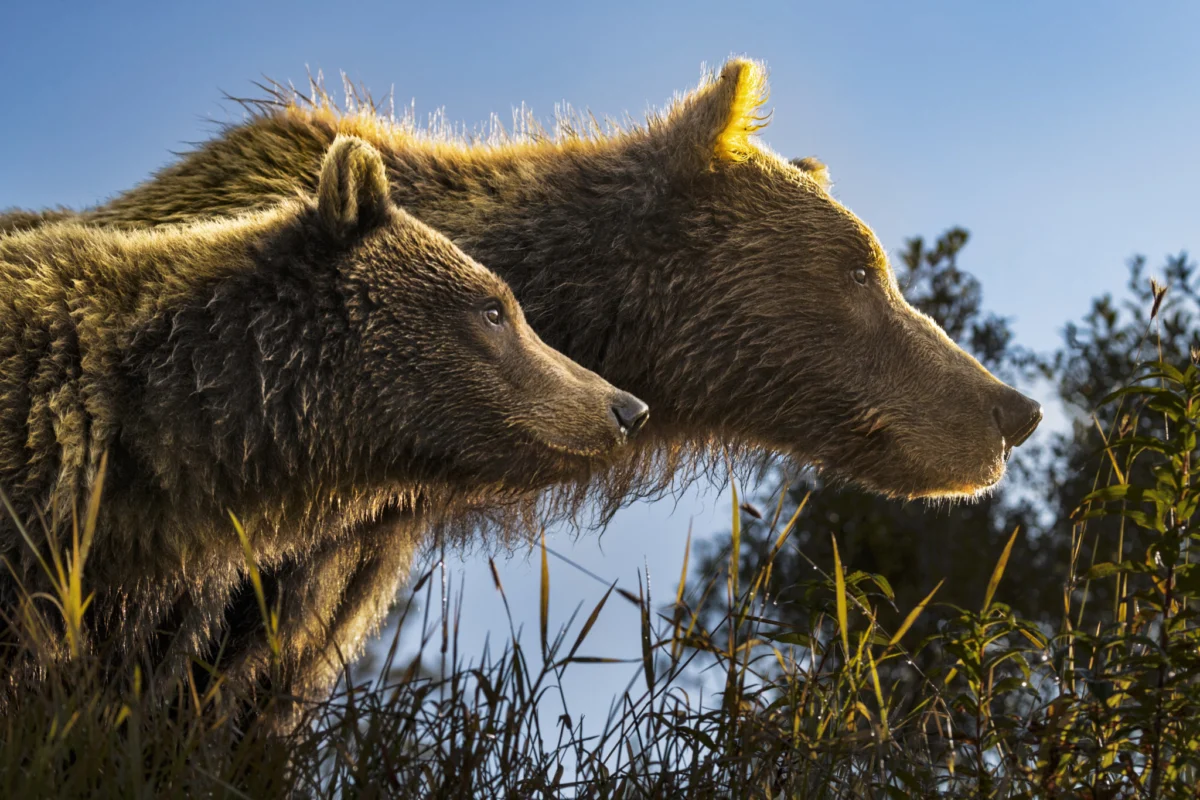
The echoes of the Canadian heartland, a region defined by its unyielding work ethic inherited from generations of farming families, were the backdrop to a life-altering decision. For the author, this meant an abrupt transition from the predictable rhythms of Saskatchewan to the stark, remote beauty of the Arctic. This profound geographical and cultural shift, undertaken by his parents, represented not an abandonment of comfort, but a deliberate embrace of a grander adventure. The initial trade-off involved relinquishing the ease of readily accessible family connections, the gentle caress of mild summer evenings, and the comforting certainty of seasonal cycles. Yet, as the family settled into their new, wilder existence, the author discovered that the profound benefits of a life lived in close proximity to nature far surpassed the familiar pleasures left behind. This immersion in the raw, untamed world would ultimately shape his life’s trajectory, leading him to a career dedicated to capturing the essence of Earth’s most magnificent creatures.
A Lens on the Wild: From Arctic Wildlife to Ocean Giants
The transformative power of nature became a guiding principle in the author’s life. His early years, steeped in the Arctic’s rugged grandeur, fostered a deep appreciation for its inhabitants. This nascent connection evolved into a passion, culminating in his pursuit of photography. His camera became an extension of his desire to understand and document the planet’s diverse wildlife. His lens has since captured the majestic presence of wolves, the tenacious spirit of penguins, the elusive grace of lynx, the formidable power of sharks, and the ethereal beauty of spirit bears. This photographic journey is underpinned by a fundamental belief: the greatest privilege of existence is to inhabit a planet teeming with an almost incomprehensible diversity of life and an abundance of beauty that defies complete human comprehension. Among the myriad of extraordinary encounters with wildlife across the globe, his experiences with whales, the true titans of Earth, stand out as particularly profound gifts.
Dispelling Myths: The Gentle Giants of the Ocean
Creatures like orcas and sperm whales, much like the Arctic wildlife that populated the author’s childhood – wolves and polar bears – evoke a potent mixture of awe and trepidation in the human psyche. Their sheer size and their status as apex predators of the marine world often overshadow a more nuanced reality. Contrary to popular perception, there are no definitive documented instances of orcas or sperm whales intentionally causing human fatalities. The author’s personal encounters have consistently revealed a remarkably gentle nature and a profound intelligence, aspects frequently obscured by sensationalized myths and ingrained misconceptions.
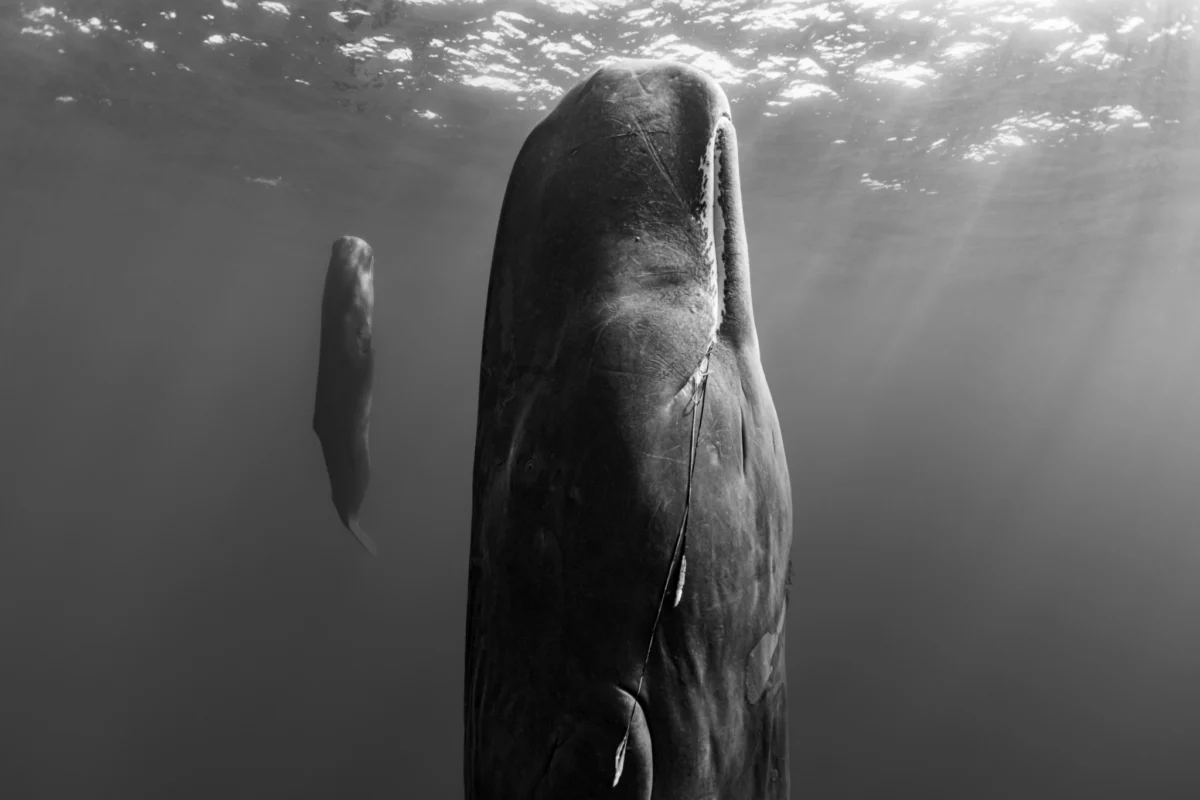
Sperm whales, in particular, have been subject to a narrative shaped significantly by works of fiction, folklore, and legend. These portrayals often lean into their formidable appearance, neglecting the deeper complexities of their behavior and social structures. However, the author’s most cherished whale encounter, a truly eye-opening experience, occurred off the coast of Dominica. Here, he had the opportunity to free-dive with a snorkel alongside a pod of sperm whales. This allowed for an unprecedented proximity to these magnificent creatures as they engaged in their characteristic resting behavior. Sperm whales typically spend the majority of their lives in the ocean’s depths, surfacing primarily to breathe and rest, often suspending themselves vertically in the water column with their heads pointed towards the surface.
The Curious Calf: An Unforgettable Encounter
The photographic session was proceeding smoothly, with the matriarch and her pod exhibiting a palpable sense of awareness and comfort in the photographer’s presence. It was during a moment of ascent for a much-needed breath that the youngest member of the group, a calf affectionately nicknamed "Ariel" by local residents, unexpectedly captured the author’s attention. Apparently unburdened by the languid pace of her mother’s rest, Ariel, a juvenile measuring approximately 20 feet in length, launched herself directly towards the author at considerable speed. With a sense of bracing anticipation, he observed as the calf, thankfully without teeth at this stage, opened her mouth. In a moment that defied expectations, Ariel proceeded to playfully gum the camera housing, exhibiting a behavior akin to an overgrown toddler exploring a new toy. The author’s extensive experience with large, unpredictable wildlife allowed him to maintain composure, calmly retreating to create space. Far from the monstrous depiction of Moby Dick, Ariel embodied a spirited, inquisitive, and remarkably gentle spirit.

Ariel: A Playful Encounter in Dominica
The accompanying photograph, titled "Ariel," captures this remarkable interaction. The image depicts the young sperm whale emitting a playful stream of bubbles as she glides past the photographer. This moment, frozen in time, serves as a powerful testament to the intelligence and curiosity of these marine mammals.
The Enduring Gift of Nature
Reflecting on his life’s journey, the author recognizes that his formative years, spent exploring alongside the natural world, provided an unparalleled foundation for his connection with Earth’s wildest inhabitants. This early immersion in the Arctic, learning from the movements of bears and foxes, paved the way for deeper engagement with creatures like Ariel and her pod. The fundamental insight gained is that increased time spent immersed in nature acts as a catalyst, unlocking a world of novel experiences and profound understanding. Beyond the transient comforts and superficial luxuries offered by the relentless pace of modern society, nature offers something far more enduring: genuine connection. This profound, unmediated connection with the natural world, the author posits, is the most valuable gift of all.
Scientific and Ecological Context
The observed behavior of sperm whales, particularly their vertical resting state and the curiosity displayed by young calves, aligns with extensive scientific observations. Sperm whales are known for their complex social structures, often led by matriarchal pods. Their deep-diving capabilities are crucial for their primary food source: giant squid and other deep-sea cephalopods. Studies published in journals such as Marine Mammal Science have documented the communication patterns and social interactions within sperm whale populations, highlighting their intelligence and capacity for learning.
The species Physeter macrocephalus is the largest toothed whale and possesses the largest brain of any animal on Earth. Their migratory patterns are influenced by food availability and breeding seasons, making locations like the waters off Dominica significant for their life cycle. Recent research has also focused on the impact of anthropogenic noise pollution and ocean plastic on these species, underscoring the importance of conservation efforts. The International Union for Conservation of Nature (IUCN) lists sperm whales as "Vulnerable," a designation that emphasizes the ongoing threats they face from human activities, including entanglement in fishing gear and historical whaling.
Implications for Conservation and Human Perception
Encounters like the one described with Ariel offer a powerful counter-narrative to the often-fearful perceptions of large marine predators. By showcasing their gentle and curious natures, such experiences can foster empathy and a greater sense of stewardship towards these animals. Conservation organizations frequently leverage such compelling personal narratives to advocate for protective legislation and marine sanctuaries.
The author’s journey from the agricultural landscapes of Saskatchewan to the forefront of wildlife photography underscores a broader societal trend: a growing reconnection with the natural world. As urbanization continues and digital immersion intensifies, there is an increasing recognition of the psychological and emotional benefits derived from spending time in nature, often referred to as "nature deficit disorder" and its antidote. This renewed appreciation for the wild is crucial for driving public support for conservation initiatives and promoting sustainable practices that ensure the long-term survival of species like the sperm whale. The scientific data corroborates the author’s personal conviction that understanding and appreciating wildlife, rather than fearing it, is the most effective path towards protecting it. The gentle gumming of a camera by a young sperm whale is not merely an anecdote; it is a potent symbol of the profound, reciprocal relationship that can exist between humanity and the natural world when we approach it with respect, curiosity, and an open heart.