Southwestern Alaska’s rugged coastline and glacial valleys transform into a breathtaking theater of nature’s raw power each year with the commencement of the annual salmon run. This monumental event, a critical ecological cornerstone, witnesses an estimated 30 million salmon battling upstream to their ancestral spawning grounds, creating an awe-inspiring and vital wildlife spectacle. The event draws the majestic brown bears, emerging from their mountain retreats to capitalize on this unparalleled feeding opportunity, a testament to the intricate dance between predator and prey.
The Annual Migration: A Rhythmic Feast for Alaska’s Giants
The salmon run is not a monolithic event but a carefully orchestrated sequence of arrivals, each species contributing to the extended feeding window for the region’s apex predators. The sockeye salmon initiate the arduous journey, followed by pink, coho, chum, and finally, the largest and most prized, the chinook salmon. This migration spans an impressive five months, beginning in late May and extending through mid-October, providing a consistent and rich food source for the brown bear population. This period is crucial for the bears, marking their most significant opportunity to accumulate the vital fat reserves and nutritional stores necessary to endure the harsh, long winter months. As autumn approaches, bears enter a state of hyperphagia, an intense period of overeating where they consume hundreds of thousands of calories daily, preparing for their extended hibernation.
Bear Hierarchy and Feeding Strategies
The brown bear population exhibits a distinct social hierarchy that significantly influences their access to the prime feeding locations during the salmon run. Alpha males, often weighing up to 1,500 pounds (approximately 680 kilograms), assert their dominance and are typically the first to claim the most advantageous fishing spots along the rivers. Their sheer size and immense strength allow them to wade into the powerful currents, bracing themselves against the rushing water while efficiently ambushing passing salmon. This formidable presence often deters lesser bears from challenging their territorial claims.
Subordinate bears, comprising younger males and females, display a more cautious approach. While not always possessing the experience of their elder counterparts, they exhibit a keen understanding of the social dynamics. They strategically position themselves in areas that minimize conflict with the larger, more aggressive males, often seeking out less contested stretches of the river or utilizing quicker, more agile tactics to snatch fish.
The Protective Instinct of Mother Bears
Among the most compelling narratives of the salmon run is the role of mother bears and their cubs. For these mothers, the season is an exercise in constant vigilance and unwavering dedication. Their primary objective is to provide sustenance for their offspring while simultaneously safeguarding them from the numerous dangers that permeate their environment. The riverbanks, while offering access to food, represent a particularly perilous territory for mothers and their young cubs.
Young cubs, often only five to six months old, are exceptionally vulnerable. They rely entirely on their mothers for protection and nourishment, still nursing and beginning to explore solid food sources, such as protein-rich grasses. The mother’s responsibility extends beyond mere foraging; it encompasses an acute awareness of potential threats, with the constant need to protect her cubs from both environmental hazards and the aggressive behaviors of other bears.
The Grim Reality of Infanticide in the Wild
A stark and unfortunate reality of the wild, particularly during periods of intense competition for resources like the salmon run, is the phenomenon of infanticide. Male bears, especially the dominant alpha males, are known to kill cubs, a behavior that can include their own offspring. While the precise motivations remain a subject of ongoing scientific research and observation, several theories have emerged. These include the reduction of competition for limited food resources, sexual selection driven by the possibility of bringing a receptive female back into estrus sooner, and in some instances, cubs may even be consumed as a supplementary food source.

For a mother bear, this threat is a constant, pervasive danger. Her protective instincts are heightened, and her every action is geared towards shielding her young from such a grim fate. The presence of a large male bear upstream, even if seemingly oblivious, necessitates a heightened state of alert for the mother, who continuously observes, listens, and learns, assessing the immediate risks to her family.
A Moment of Serene Coexistence: A Photographer’s Encounter
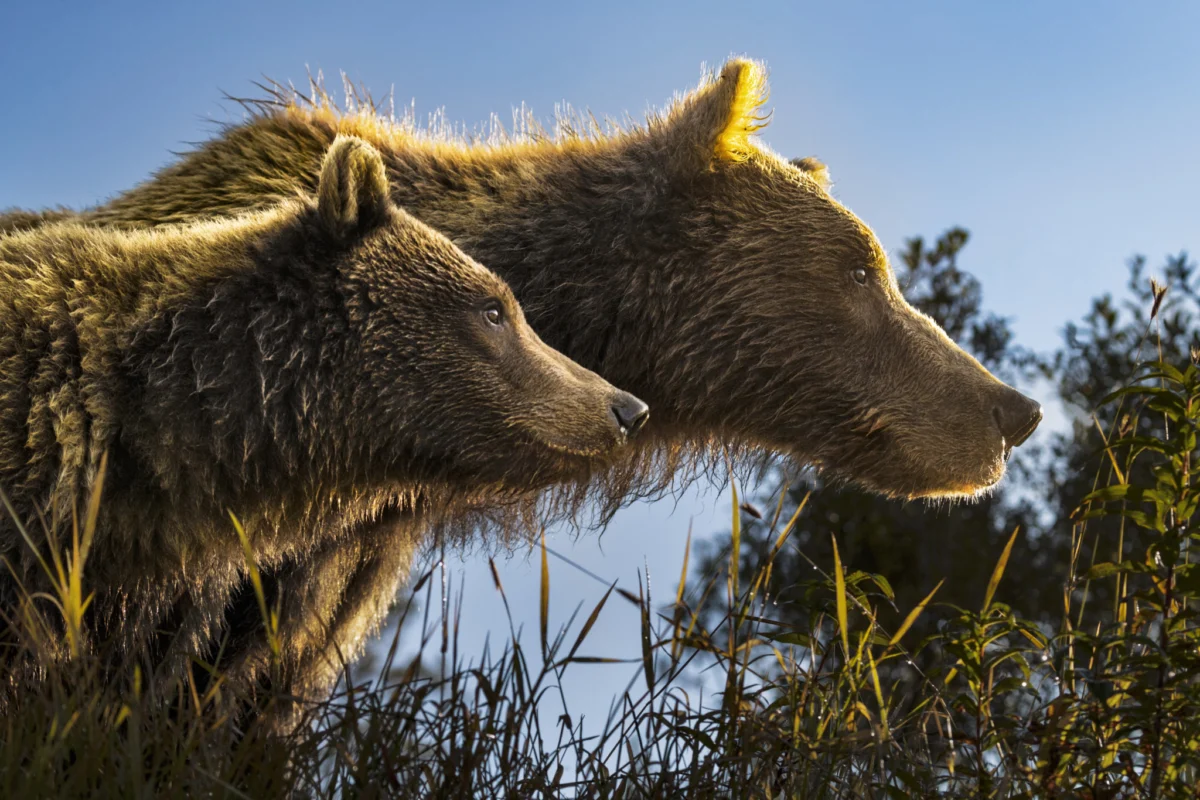
One late August evening, at the zenith of the salmon run, a wildlife photographer found himself immersed in the tranquil beauty of a pristine Alaskan riverbank. The air was filled with the distant sounds of salmon splashing and the gentle murmur of the water, creating an atmosphere of profound peace. A few large bears were visible upstream, focused on their predatory endeavors.
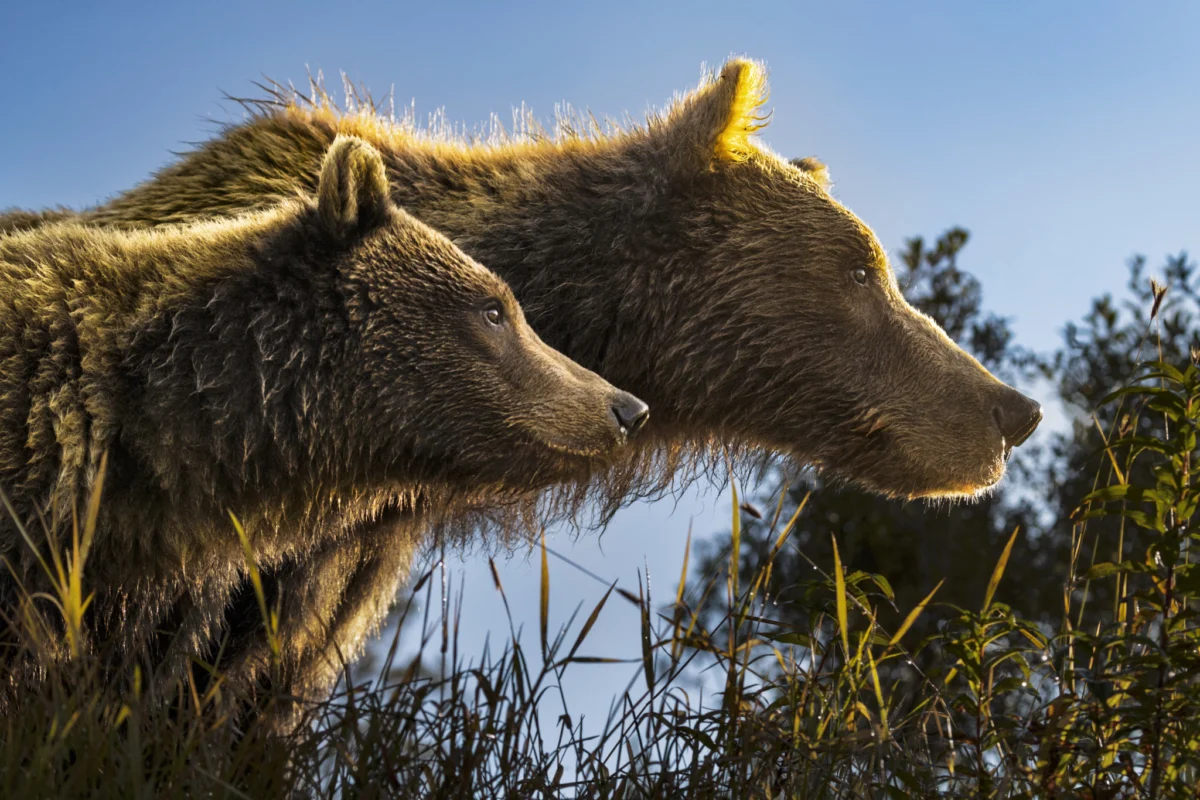
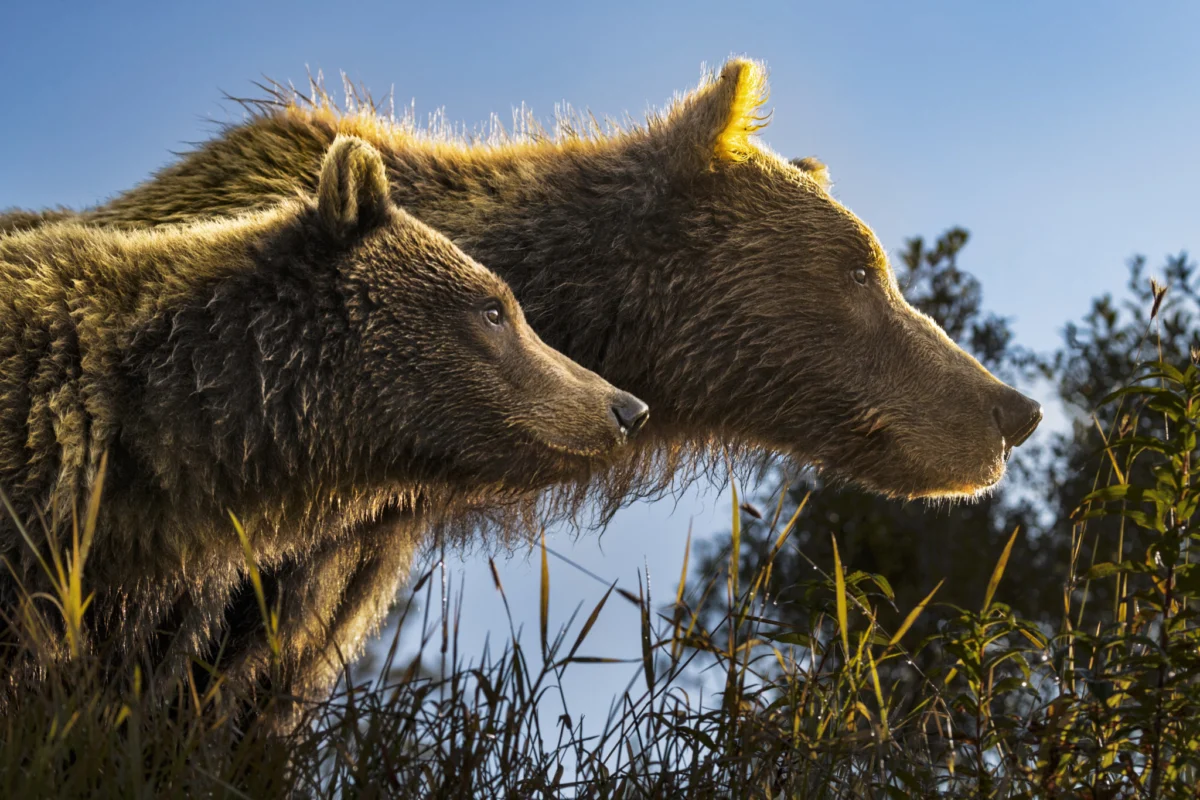
It was in this serene setting that the photographer experienced a profound moment of connection with the wild. A subtle rustling in the underbrush nearby signaled the presence of something significant. Slowing his breathing and consciously adopting a posture of humility, the photographer became aware of a mother bear and her cub emerging from the dense foliage. The cub, estimated to be no more than eight months old, cautiously appeared alongside its mother.
The photographer, equipped only with a wide-angle lens, understood the delicate nature of the encounter. He intentionally avoided direct eye contact and maintained a non-threatening body language, aiming to convey a sense of respect for their space. The mother bear, acutely aware of her surroundings, stepped into the open, her attention primarily fixed on a large male bear fishing further upstream. She displayed remarkable composure, seemingly unperturbed by the photographer’s presence, her focus entirely on assessing the potential threat posed by the dominant male.
The Art of Patience and Respect in Wildlife Photography
In such intimate encounters with wildlife, patience and a deep understanding of animal behavior are paramount. The photographer recounted his methodology, emphasizing the importance of slow, deliberate movements, akin to practicing Tai Chi, even when the urge to adjust equipment or reposition is strong. This measured approach is crucial for maintaining the trust and calm of the animals, preventing any sudden actions that could be perceived as a threat.
With immense care, the photographer raised his camera, determined not to disrupt the fragile harmony of the moment. He managed to capture two images, a testament to his skill and the serendipitous nature of the encounter. One of these photographs has since become a deeply cherished image, representing the profound beauty of an animal’s acceptance into its presence, where the rules of engagement are dictated by the wild itself. The mother bear and her cub, sensing no threat, allowed the photographer to bear witness to their existence. The true danger, the photographer noted, was the large male bear upriver, and his presence was merely a fortunate intersection of luck, timing, and circumstance, allowing him to document this fleeting moment as the day’s last light painted the sky.
Ecological Significance and Conservation Implications
The annual salmon run is far more than a visually stunning natural phenomenon; it is a linchpin of the Alaskan ecosystem. The sheer biomass of salmon returning to their natal streams represents a critical transfer of oceanic nutrients inland, supporting a vast array of terrestrial and avian wildlife, including bears, eagles, and various other mammals. The health of these salmon populations is intrinsically linked to the health of the entire Alaskan wilderness.
The challenges faced by salmon, from ocean acidification and warming waters to habitat degradation in their freshwater spawning grounds, have direct implications for the wildlife that depends on them. The intricate balance observed during the salmon run, where bears and fish coexist in a cycle of life and death, underscores the fragility of these ecosystems. Conservation efforts aimed at protecting both the salmon and their critical habitats are therefore essential for maintaining the ecological integrity of southwestern Alaska and ensuring the continuation of these spectacular natural events for generations to come. The ongoing monitoring of salmon populations, the preservation of critical riverine habitats, and the management of human activities that could impact the run are vital components of this broader conservation strategy. The continued presence of healthy brown bear populations, thriving on the bounty of the salmon run, serves as a powerful indicator of a well-functioning ecosystem.