A groundbreaking camera system, developed by the Norwegian startup Muybridge, is transforming the landscape of live sports broadcasting, captivating audiences with its exceptionally smooth, almost dreamlike motion capture. This innovative technology, which recently garnered significant attention during its deployment at the Madrid Open, delivers an unprecedented fluidity that some viewers have likened to a high-definition video game, often attributing the seamless shots to a remarkably skilled human camera operator. The surprising reality, however, is that no human operator is involved in achieving these distinctive visuals. The system, aptly named after Eadweard Muybridge, the pioneering "Father of the Motion Picture," relies on a sophisticated array of strategically placed, relatively small cameras and advanced computational software to stitch together a continuous, blur-free, and delay-free visual stream.
The immediate impact of the Muybridge system has been a dramatic enhancement of the spectator experience, offering a dynamic perspective previously unattainable with conventional broadcasting methods. While traditional sports coverage often involves a combination of fixed cameras, handheld units, and specialized equipment like cable cams or rail cams, the Muybridge approach presents a radically different paradigm. Its ability to create a "floaty aesthetic" through the seamless integration of numerous individual shots without perceptible transitions marks a significant leap in visual storytelling for live events. This development not only redefines viewer immersion but also prompts critical discussions about the future of human roles within the rapidly evolving sports broadcasting industry.
The Genesis of Seamless Motion: A Nod to Eadweard Muybridge
The conceptual foundation of the modern Muybridge camera system draws direct inspiration from its namesake, Eadweard Muybridge, whose revolutionary work in the late 19th century laid the groundwork for motion pictures. Born in England in 1830, Muybridge embarked on a photographic journey that would fundamentally alter human perception of movement. His most famous experiment, commissioned by former California Governor Leland Stanford in 1872, aimed to definitively prove whether all four hooves of a horse leave the ground simultaneously during a gallop. At a time when photographic exposures typically lasted several seconds, freezing rapid motion was considered impossible.
Muybridge’s ingenious solution involved setting up a series of 24 cameras along a racetrack, each equipped with specialized shutters he had developed, capable of extremely fast exposure times. These cameras were triggered sequentially as the horse galloped past, capturing a series of discrete moments. By employing a then-novel and more sensitive photographic process, he drastically reduced exposure times, successfully freezing the horse’s motion. He then mounted these successive images on a rotating disk and projected them through his invention, the zoopraxiscope, onto a screen using a "magic lantern." This pioneering display, first showcased in 1878, presented the illusion of continuous motion, effectively giving birth to the motion picture and confirming Stanford’s hypothesis. Muybridge’s profound insight was in dissecting continuous movement into a sequence of discrete, captured moments, then reassembling them to create a fluid visual narrative.
Håkon Espeland, co-founder of the Norwegian startup Muybridge, explicitly acknowledges this historical parallel. "400 years of camera history is ending here," Espeland boldly declared in an interview with Fast Company. "I see a lot of resemblance to what he [Muybridge] did with sequenced triggers to actually create motion." Espeland’s reflection underscores the core philosophy behind their system: to distribute sensors intelligently and leverage the resulting data to reconstruct movement in a way that transcends the limitations of single-point capture. This philosophical link is not merely symbolic; it is foundational to the technological approach of the contemporary Muybridge system, demonstrating how historical ingenuity continues to inspire modern innovation.
From Sequential Stills to Real-Time Flow: The Muybridge Technology Unpacked
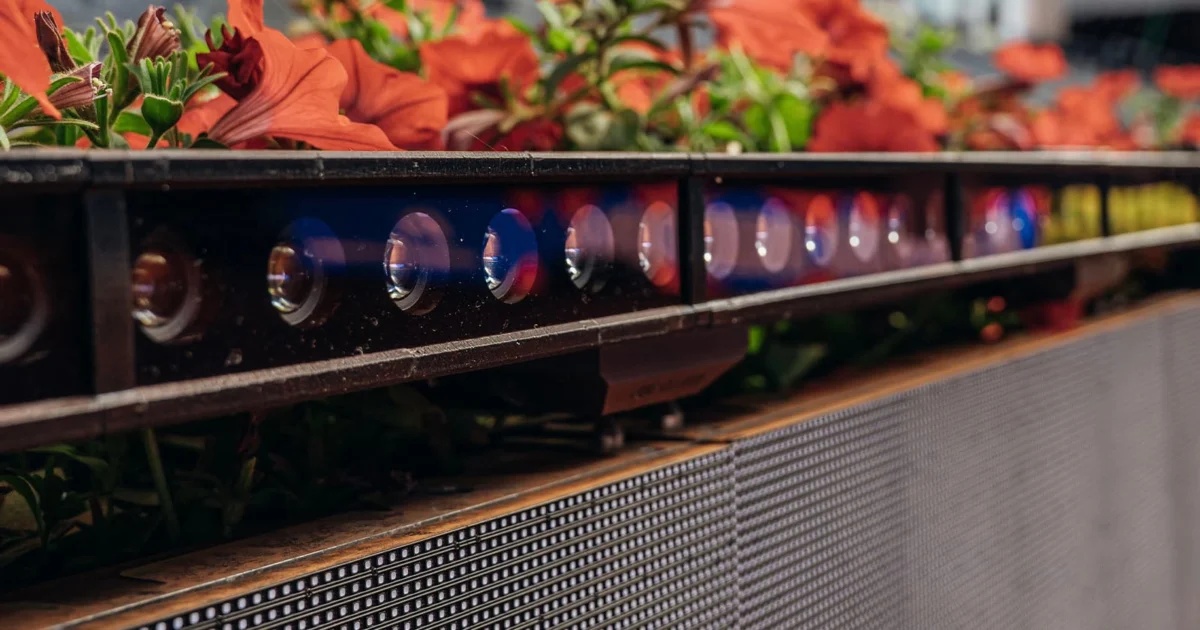
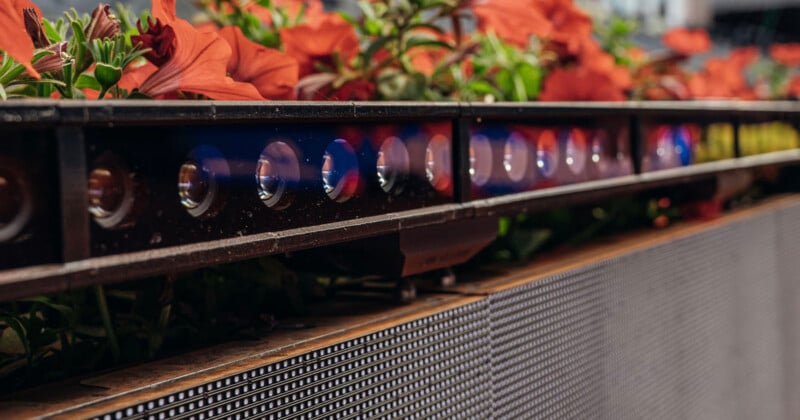
The operational prowess of the Muybridge camera system lies in its sophisticated combination of hardware innovation and advanced computational photography. Unlike bulky, traditional broadcast cameras, the Muybridge units are designed for discretion and scalability. They resemble sleek, extended speaker bars, each approximately two meters (6.5 feet) in length, housing a linear array of small, high-resolution camera lenses akin to those found in modern smartphones. This choice of components is deliberate and strategic. "We are lucky that the consumer [electronics] and mobile industry consume so [many] cameras," Espeland noted. "They’ve taken the costs down. There’s a reason why there are three cameras on an iPhone now." By leveraging the massive economies of scale and rapid advancements in the mobile camera industry, Muybridge can deploy a multitude of high-quality sensors at a significantly lower cost than custom-built broadcast equipment.
The modular design is a critical feature, allowing multiple two-meter units to be seamlessly linked together. This enables the creation of what effectively functions as a single, continuous camera system of almost any desired length, capable of spanning vast areas of a court, field, or rink. This scalability is a game-changer for sports venues, offering unprecedented flexibility in coverage. Espeland envisions a future where "We’re going to build future digital stadiums full-360." This vision suggests an era where every angle of an event could be simultaneously captured and processed, providing directors with an unparalleled range of dynamic perspectives.

The true magic of the Muybridge system, however, resides in its software. The numerous feeds from the distributed camera array are not simply spliced together; they are processed in real-time by powerful algorithms that perform advanced computational stitching. This process goes far beyond basic video editing, employing techniques to ensure precise synchronization, color correction, perspective alignment, and motion interpolation. The goal is to eliminate any perceptible delay or blur, creating an output that is not just a sequence of images but a fluid, continuous visual stream. This computational photography approach leverages the raw data from multiple sensors to construct a more complete and dynamic representation of the scene than any single camera could achieve. The result is the signature "floaty aesthetic" – a smooth, almost gliding motion that gives viewers an immersive experience akin to navigating a virtual environment in a video game. The system’s ability to maintain this level of seamlessness during fast-paced action, such as a tennis rally or a hockey play, is a testament to its advanced processing capabilities.
Redefining the Viewer Experience and Operational Advantages
The adoption of the Muybridge system brings a multitude of benefits, fundamentally altering both the viewer experience and the operational logistics of live sports broadcasting.
Enhanced Viewer Immersion: The most immediate and noticeable impact is on the audience. The ultra-smooth, "video game" aesthetic provides a level of immersion previously unavailable. Viewers are no longer confined to the often-jerky movements of a human-operated camera or the static nature of a fixed shot. Instead, they are presented with a continuous, flowing perspective that mimics the natural movement of the eye across a scene, or even the controlled motion of a virtual camera in a digital world. This could be particularly appealing to younger demographics accustomed to the fluid visuals of gaming and virtual reality, potentially expanding the reach and engagement of traditional sports broadcasts.
Discreet and Unobtrusive Installation: Unlike conventional broadcast equipment, which often includes large cameras, tripods, and operators that can block sightlines for live spectators or interfere with the flow of an event, the Muybridge arrays are designed to be discreet. They attach seamlessly to existing structures like stadium walls, railings, or overhead gantries, blending into the environment. This minimal visual footprint is a significant advantage, preserving the live experience for in-person attendees while still providing comprehensive coverage for broadcasters. This also reduces safety concerns associated with large equipment on the sidelines of fast-moving sports.
Unprecedented Scalability and Versatility: The modular nature of the system allows for unparalleled flexibility in deployment. From a short segment covering a specific action zone to a full 360-degree perimeter of an arena, the Muybridge system can be scaled to meet diverse broadcasting needs. This adaptability opens up new possibilities for dynamic camera angles and perspectives that were previously either too complex, too expensive, or physically impossible to achieve. For instance, capturing an entire tennis court with a single, unbroken tracking shot becomes feasible, offering a unique strategic overview alongside close-up action.
Cost-Effectiveness and Resource Optimization: By leveraging widely available consumer electronic components, the Muybridge system significantly reduces hardware costs compared to bespoke professional broadcast cameras. This democratization of high-quality sensor technology allows for the deployment of a far greater number of cameras for the same budget, leading to more comprehensive coverage. Furthermore, while the initial setup and software integration require expertise, the day-to-day operation demands fewer human camera operators on-site, potentially leading to long-term operational efficiencies for broadcasters. The focus shifts from manual operation to intelligent monitoring and virtual camera direction, optimizing human resources towards higher-level production roles.
Early Triumphs and Future Horizons
The Muybridge system’s capabilities were prominently showcased during the Madrid Open, one of the premier clay-court tennis tournaments globally. Its deployment during such a high-profile event provided a real-world demonstration of its potential, generating considerable buzz among viewers and industry professionals alike. Social media platforms, particularly YouTube, saw viewers commenting on the unusually smooth and captivating shots, often praising the "cameraman" for their perceived dexterity, unaware that the fluidity was the product of algorithms, not human hands. This initial public reception validates the system’s ability to deliver a superior visual experience.
Building on this success, Muybridge is actively engaging with some of the world’s most prominent sports organizations, indicating a strong industry interest in adopting this transformative technology. Discussions are reportedly underway with Formula 1, renowned for its high-speed action and global viewership, where dynamic and precise tracking shots are paramount. Similarly, major soccer leagues, which command immense global audiences and require extensive stadium coverage, are exploring the system’s potential for enhancing their broadcasts. The National Hockey League (NHL), with its fast-paced, enclosed arena environment, also presents an ideal use case for the discreet, scalable, and immersive capabilities of the Muybridge system. These ongoing dialogues underscore the broad applicability and perceived value of the technology across diverse sporting disciplines, each with its unique broadcasting challenges and requirements. The potential for these systems to create entirely new viewing experiences, such as "virtual replay" capabilities where viewers can control the perspective, is a powerful draw for future fan engagement strategies.
The Human Element: Navigating Automation’s Impact on Sports Broadcasting Careers
While the technological advancements brought forth by the Muybridge system are undeniably exciting, they also raise a critical and uncomfortable question about the future of human camera operators. For decades, these skilled professionals have been the backbone of sports broadcasting, honing their craft on the sidelines, anticipating plays, framing shots, and adding an invaluable human element of artistic interpretation and emotional resonance to live coverage. Their expertise goes beyond simply pointing a lens; it involves an intuitive understanding of the sport, the narrative, and the subtle nuances that capture the drama and excitement of competition.
The prospect of a system that can seamlessly capture motion without direct human intervention naturally sparks concerns about job displacement. As automation increasingly permeates various industries, the media and entertainment sectors are not immune. If systems like Muybridge become widespread, the demand for traditional camera operators could diminish significantly. This could lead to a restructuring of production teams, potentially reducing the number of on-site personnel required for live broadcasts.
However, the future is not necessarily one of complete elimination. Instead, it might involve a significant evolution of roles. Human operators might transition from physically operating cameras to directing the virtual cameras within the Muybridge system, choosing angles, guiding the algorithmic focus, and maintaining creative control over the narrative flow. New roles could emerge in system maintenance, data management, and the development of even more sophisticated computational photography algorithms. Unions representing broadcast professionals will likely play a crucial role in advocating for retraining programs and negotiating new job descriptions that accommodate these technological shifts, ensuring that human expertise remains central, albeit in transformed capacities. The challenge for the industry will be to integrate these advanced automated systems in a way that augments human creativity and efficiency rather than simply replacing it, finding a symbiotic balance between algorithmic precision and human artistic vision.
The Evolving Landscape of Sports Production
The introduction of the Muybridge system is more than just an incremental upgrade; it represents a significant shift in the philosophy of sports production, aligning with broader trends in digital media and artificial intelligence. It hints at a future where the distinction between live broadcast and digitally rendered content blurs, offering unprecedented creative possibilities.
The concept of "future digital stadiums full-360," as envisioned by Espeland, suggests an era where every moment of a sporting event is captured from all conceivable angles. This wealth of data could power not only seamless broadcasts but also interactive fan experiences, virtual reality applications, and personalized highlight reels. Imagine a viewer being able to dynamically shift their perspective, replaying a crucial goal from the striker’s viewpoint, the goalkeeper’s, or even an overhead drone-like angle, all rendered with the same fluidity. This level of control and immersion is increasingly demanded by modern audiences, particularly those raised on interactive digital content.
Furthermore, the Muybridge system’s reliance on computational photography and widely available components signals a move towards more accessible and adaptable production tools. This could democratize high-end broadcasting capabilities, making sophisticated coverage available to a broader range of sports and events that might not have the budget for traditional, expensive setups. This decentralization of camera technology, coupled with intelligent software, could foster an explosion of new content formats and viewing experiences.
In conclusion, the Muybridge camera system stands at the forefront of a technological revolution in sports broadcasting. By drawing inspiration from the past while leveraging cutting-edge computational photography and distributed sensor networks, it delivers an unparalleled level of visual fluidity and immersion. While promising to redefine how audiences experience live sports, offering discrete, scalable, and cost-effective solutions for broadcasters, it also ignites important conversations about the evolving role of human professionals in an increasingly automated world. As this technology continues to develop and gain traction across major sporting leagues, it is clear that the future of sports broadcasting will be a dynamic interplay between human creativity and algorithmic precision, ushering in an exciting, albeit complex, new era for live event coverage.