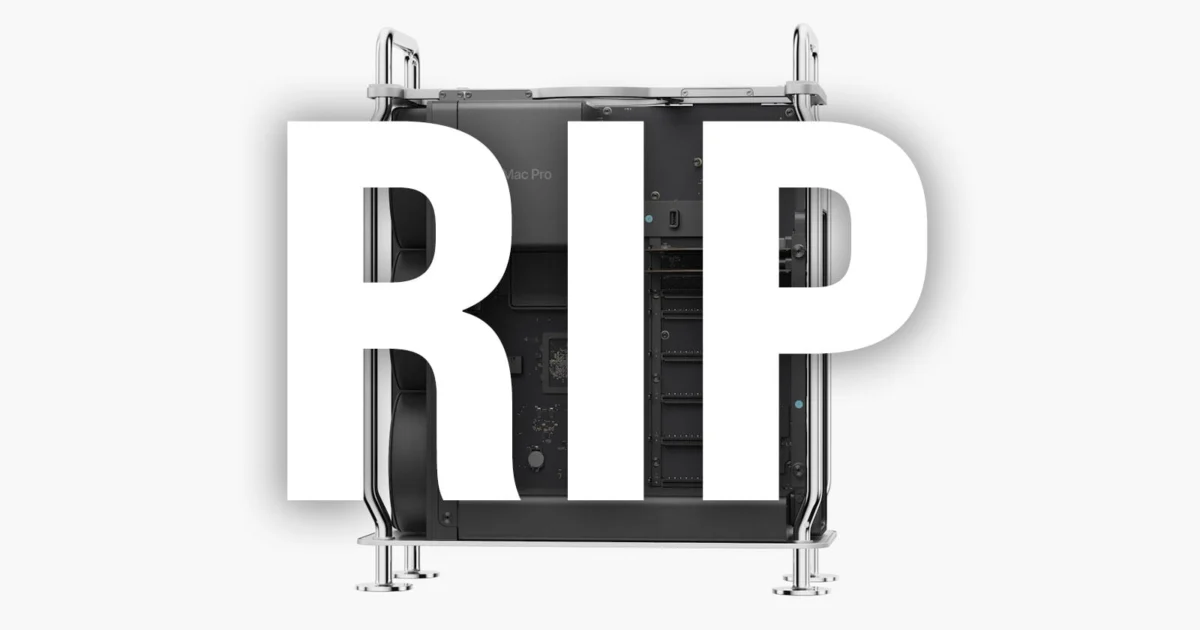
Apple has officially confirmed the discontinuation of its venerable Mac Pro line, announcing to 9to5Mac that there are no plans to offer future hardware in this long-standing professional desktop series. This decision marks a significant shift in Apple’s strategy for high-end workstations, effectively concluding a product lineage that has spanned over two decades and evolved through several architectural transformations. The last iteration, introduced in 2023, was perceived by many as a puzzling offering, struggling to carve out a distinct identity in an increasingly integrated Apple ecosystem.
Immediately following the announcement, the Mac Pro was removed from Apple’s official website. Any previous direct links to purchase the machine now redirect users to a general navigation page showcasing Apple’s broader Mac portfolio, conspicuously devoid of its former flagship professional tower. This swift digital erasure underscores the finality of the company’s decision, signaling a decisive pivot away from a product that, for a generation of creative and technical professionals, epitomized uncompromising power and expandability.
A Legacy of Power and Performance: The Mac Pro’s Storied History
The journey of the Mac Pro began not with that name, but with its spiritual predecessor, the Power Mac G5, introduced in 2003. This machine, renowned for its distinctive aluminum tower and liquid-cooling options, was Apple’s answer to the most demanding computational tasks of its era. When Apple transitioned from PowerPC to Intel processors in 2006, the Power Mac G5 evolved into the first Intel-based Mac Pro. This initial Mac Pro, with its capacious internal bays and multiple PCIe slots, became the workstation of choice for professionals in video editing, 3D rendering, scientific computing, and audio production. Its modular design allowed users unparalleled flexibility to upgrade components like graphics cards, storage drives, and specialized accelerator cards, making it a true workhorse in environments where customization was key.
This traditional tower design persisted for several years, receiving iterative updates that kept it competitive. However, by the early 2010s, Apple’s design philosophy began to favor sleekness and integration over raw internal expandability. This shift culminated in the radical redesign of the Mac Pro in late 2013. Colloquially dubbed the "trash can" due to its distinctive cylindrical, highly polished black aluminum enclosure, this model aimed for a revolutionary thermal architecture. While aesthetically striking and compact, its limited internal expandability and reliance on external Thunderbolt peripherals for most upgrades proved contentious. Professionals, particularly those requiring multiple internal PCIe cards or easy component swaps, found themselves constrained. The 2013 Mac Pro became notorious for its lack of upgrade paths and its inability to easily accommodate newer, more powerful GPUs, leading to a period of stagnation for Apple’s high-end desktop offering. The company eventually acknowledged missteps with this design, a rare "mea culpa" that hinted at a course correction.
The much-anticipated return to a more traditional, modular tower design came in 2019. This Intel Xeon-based Mac Pro was a direct response to the criticisms leveled against its predecessor, offering extensive PCIe expansion, user-upgradeable components, and a robust thermal design. It was a powerful machine, but also came with a formidable price tag, starting at $5,999 and quickly escalating into tens of thousands of dollars for fully configured systems. It served a highly specialized niche, primarily within film studios, high-end audio production, and scientific research, where its specific combination of processing power and internal expansion was indispensable.
The Apple Silicon Revolution and the Mac Pro’s Identity Crisis
The true beginning of the Mac Pro’s identity crisis can be traced to Apple’s seismic shift to its proprietary Apple Silicon architecture, starting with the M1 chip in 2020. This transition fundamentally re-engineered the paradigm of personal computing, particularly for professional workflows. The M-series chips, with their integrated CPU, GPU, Neural Engine, and unified memory architecture, delivered unprecedented performance-per-watt and dramatically reduced the need for many traditional discrete components.
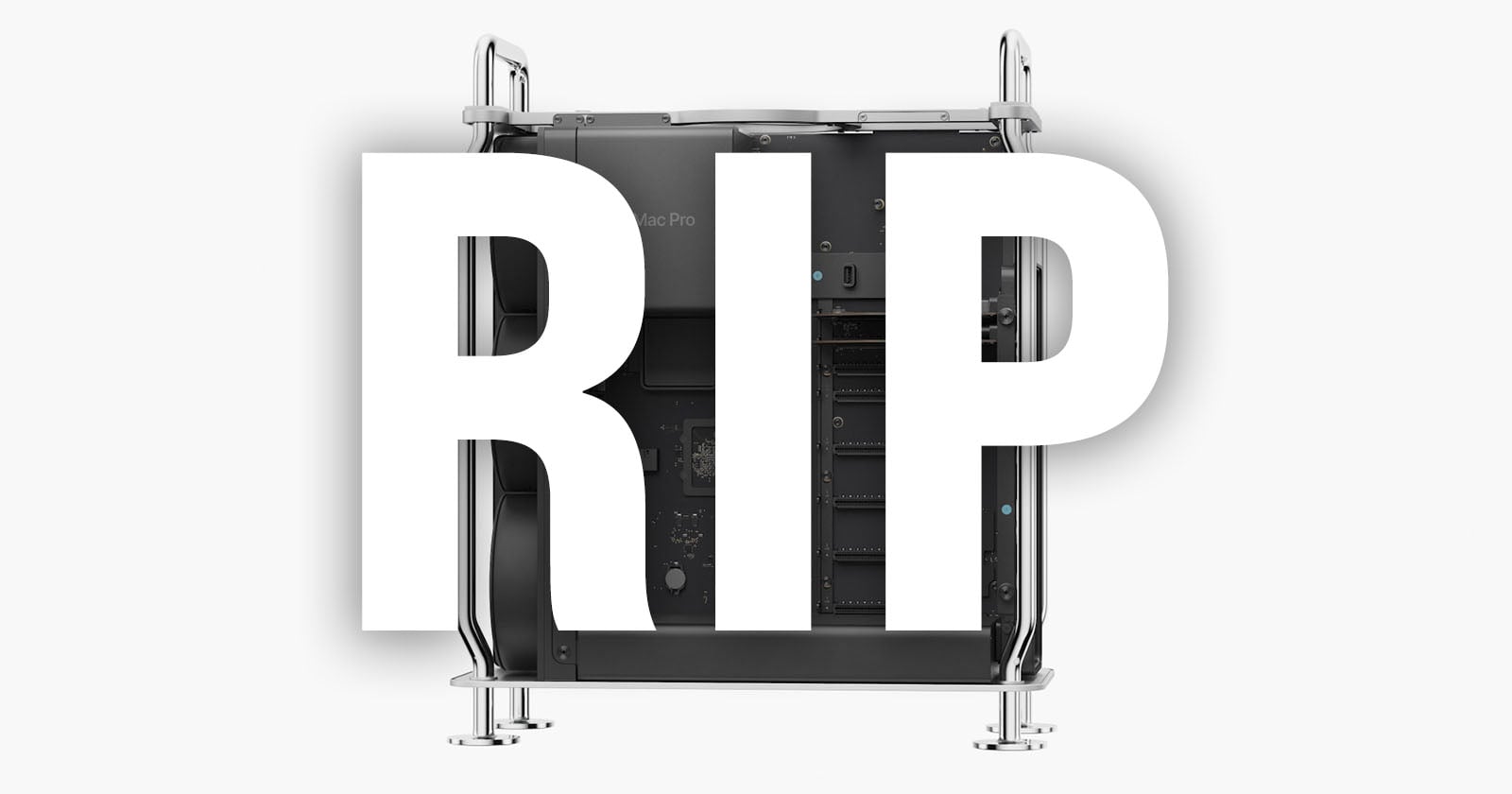
When Apple finally announced the Apple Silicon-powered Mac Pro in June 2023, it was a moment of both anticipation and confusion. The new Mac Pro was equipped with the M2 Ultra chip, Apple’s then-most powerful processor, featuring a 24-core CPU, up to a 76-core GPU, and support for up to 192GB of unified memory. However, the Mac Pro was announced simultaneously with the Mac Studio, a significantly smaller, more compact desktop machine, also powered by the very same M2 Ultra chip. This created an immediate dilemma: what, precisely, was the compelling value proposition of the larger, more expensive Mac Pro?
The stark reality revealed itself quickly: the hulking tower design of the 2023 Mac Pro, which had migrated back to a form factor resembling its 2019 Intel predecessor, was largely empty. Unlike the Intel Mac Pros that housed multiple CPUs, RAM modules, and full-length PCIe cards, the Apple Silicon architecture’s integrated nature meant that the M2 Ultra chip contained virtually all core computational components. The extensive internal space of the Mac Pro tower, previously essential for cooling and expansion, now largely served only to accommodate a few PCIe 4.0 expansion slots and provide space for a modest SSD upgrade.
During its unveiling at Apple Park, many observers, including myself, noted the vast empty spaces within the Mac Pro’s chassis. The visual impact was striking: a small, self-contained black square in the upper left corner of the tower housed the M2 Ultra system-on-a-chip (SoC), with the rest of the voluminous enclosure designated almost entirely for PCIe expansion. This contrasted sharply with the densely packed internals of previous Mac Pro generations.
"There will be a lot of people who won’t even pay close attention to the Mac Pro because they’ll think it’s way more computer than they’ll ever need, and they would be right – but probably not for the reasons they think. If you were to show them the Mac Studio with M2 Ultra, their reaction would probably not be as extreme simply because they have been conditioned to believe the Mac Pro sits high, high above all other Apple computers," I wrote at the time. "Today, it just doesn’t." This sentiment, it turns out, encapsulated the entirety of the Apple Silicon Mac Pro’s short lifespan.
The Diminishing Returns of Expansion: Mac Pro vs. Mac Studio
The core issue for the M2 Ultra Mac Pro was its near-identical performance profile to the Mac Studio, despite a substantial price difference. For a premium of approximately $3,000, the Mac Pro offered essentially two additional features over the Mac Studio: a few PCIe 4.0 slots and the ability to upgrade the internal SSD post-purchase. Beyond these, the performance derived from the M2 Ultra chip – for CPU, GPU, and unified memory-intensive tasks – was effectively the same across both machines.
The value of PCIe expansion, while critical for a very specific subset of professional users, has been steadily shrinking. Many traditional functions of PCIe cards have been absorbed by the powerful integrated GPUs of modern SoCs or migrated to external, high-bandwidth Thunderbolt peripherals. For instance, high-speed external SSDs via Thunderbolt can often match or exceed the performance of internal PCIe NVMe drives for many data-intensive tasks. Specialized video capture cards, audio DSP accelerators, and Fibre Channel cards for enterprise storage systems represented the primary remaining use cases for internal PCIe. However, even these markets are seeing a gradual shift towards Thunderbolt-native solutions or alternative network-based workflows.
Industry reviews and user forums reflected this confusion and skepticism. While the raw power of the M2 Ultra was lauded, the Mac Pro’s form factor and price point struggled to justify its existence for most potential buyers. The consensus among many technology analysts was that Apple Silicon’s architecture had fundamentally changed the equation for high-end computing, making the traditional, expansive tower less relevant for all but the most niche applications. The "need for PCIe expansion is already shrinking," I concluded in my 2023 analysis, predicting that "once that is no longer needed, the Mac Pro might finally be retired." That prediction has now come to fruition, albeit perhaps sooner than some anticipated.
Apple’s Evolving Professional Strategy and Broader Implications

The discontinuation of the Mac Pro signifies a clear strategic direction from Apple: a consolidation of its professional desktop offerings around the Mac Studio. The Mac Studio, with its compact design, impressive performance from Apple Silicon, and more accessible price point (starting at $1,999 for the M2 Max model, $3,999 for M2 Ultra), is now the undisputed flagship desktop for most creative and technical professionals. It offers a powerful, integrated solution that aligns perfectly with Apple’s hardware and software ecosystem.
This move also highlights Apple’s confidence in the future of Thunderbolt technology for external expandability. With Thunderbolt 4 offering 40Gb/s bandwidth, multi-port hubs, and the ability to connect multiple high-resolution displays, external GPU enclosures (though less necessary with Apple Silicon), and a vast array of peripherals, Apple seems to believe that the vast majority of professional needs can be met without internal PCIe slots. For the absolute extreme edge cases that still demand internal expansion, alternative workstation platforms or cloud-based solutions may become the de facto choice.
The impact on third-party hardware developers, particularly those specializing in PCIe cards for macOS, will be notable. While the market for such cards was already shrinking, this definitive move from Apple will accelerate the shift towards Thunderbolt-native devices or software-based solutions. Companies like Blackmagic Design, AJA, and Universal Audio, which have historically produced PCIe cards for Mac Pro users, have already diversified their offerings to include Thunderbolt interfaces, indicating an industry-wide recognition of this trend.
From a broader perspective, Apple’s definition of "pro" has clearly evolved. It no longer hinges on extensive internal modularity but rather on maximizing the efficiency and performance of its integrated silicon, coupled with a seamless user experience within its ecosystem. This strategy emphasizes raw processing power, advanced machine learning capabilities via the Neural Engine, and industry-leading power efficiency, all within a tightly controlled hardware and software environment.
Reactions and the Road Ahead
While Apple itself has not issued a detailed statement beyond confirming the discontinuation, technology analysts have largely viewed this as an inevitable, albeit symbolic, step. "The Mac Pro had become a bit of an anachronism in the age of Apple Silicon," remarked one industry pundit, "its form factor no longer matched its function, and the premium it commanded was hard to justify given the Mac Studio’s capabilities."
Among the professional user community, reactions are likely to be mixed. A small, dedicated segment of users who genuinely relied on the Mac Pro’s unique PCIe capabilities may feel a sense of loss, facing a choice between adapting to external peripherals or exploring other platforms. However, for the majority of creative professionals, the Mac Studio already offers more than enough power and flexibility.
The road ahead for Apple’s professional desktop line appears firmly paved by the Mac Studio. Future iterations of Apple Silicon, such as potential "M3 Ultra" or even more powerful variants, are expected to further push the boundaries of performance in a compact form factor, making the case for a large, empty tower even weaker. The Mac Pro’s quiet exit, after a 20-year run that saw it define professional computing for a generation, serves as a poignant reminder of the relentless pace of technological evolution and Apple’s unwavering commitment to its integrated vision for the future.