Christopher Nolan’s latest cinematic epic, The Odyssey, is at the center of a burgeoning global controversy, facing significant backlash, particularly from Gen Z audiences, who contend that the film’s exclusive IMAX 70mm presentation format fosters an elitist viewing experience. This debate highlights a stark divide in access, with a vast majority of global cinemagoers reportedly experiencing a visually diminished version of the film compared to the select few who can access its premium large-format screenings. The controversy underscores the tension between a director’s artistic vision and the imperative of universal accessibility in an increasingly digital world.
The Visionary Scale of The Odyssey
Hailed as a landmark achievement, The Odyssey stands as the first major Hollywood feature film to be shot entirely using IMAX film cameras, a testament to director Christopher Nolan’s unwavering commitment to the analog medium and grand-scale storytelling. Since its highly anticipated release in July 2026, Nolan, alongside stars Matt Damon and Anne Hathaway, has consistently championed the IMAX 70mm format as the definitive way to experience the film. Their message has been clear and resolute: The Odyssey was meticulously crafted for IMAX 70mm, and its full artistic impact can only be realized in this immersive, high-fidelity format. The film, an ambitious adaptation of Homer’s ancient Greek epic, reportedly leverages the expansive canvas of IMAX to bring to life the mythical journeys and epic battles with unparalleled detail and scope, from the vastness of the Aegean Sea to the intricate designs of ancient palaces. Early critical reception, while generally positive regarding the film’s ambition and visual grandeur, has often qualified praise with mentions of the optimal viewing format.
The Scarcity of a Premium Experience
The crux of the controversy lies in the extreme scarcity of the preferred IMAX 70mm exhibition format. Globally, a mere 41 theaters possess the specialized projectors and screens capable of showcasing the film in its intended 15-perforation, 70mm format. This limited availability creates significant geographic and economic barriers for moviegoers. For instance, IMAX Melbourne in Australia remains the sole venue in the entire Southern Hemisphere equipped to project the colossal 70mm film reels, forcing enthusiasts from across continents to undertake extensive travel to experience Nolan’s "true vision."
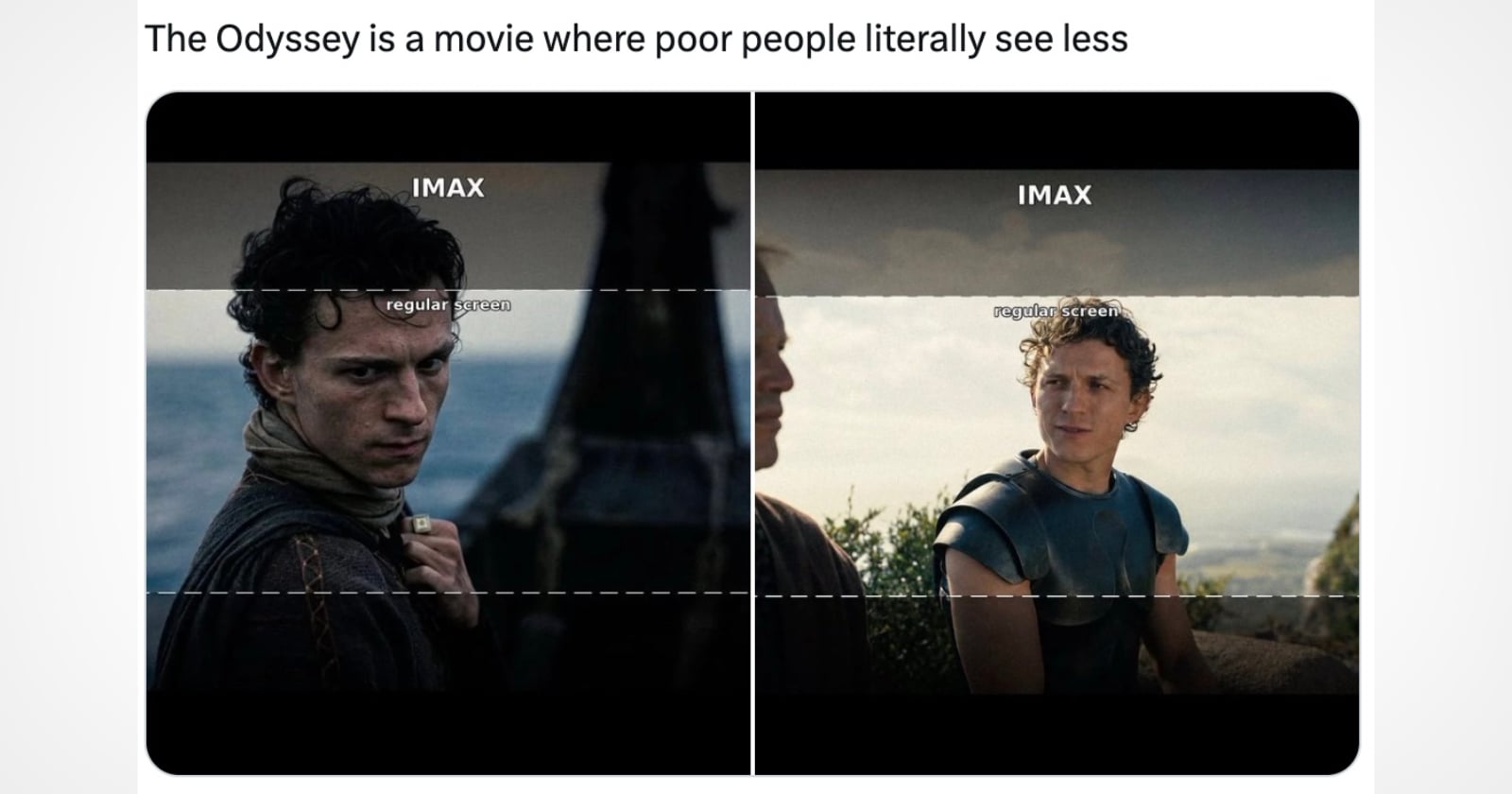
This logistical challenge is not merely inconvenient; it translates into a tangible disparity in the viewing experience. Standard digital cinema presentations, and even some digital IMAX theaters, project cropped versions of the film. While digital IMAX screens often boast a 1.90:1 aspect ratio, they still fall short of the towering 1.43:1 ratio offered by true IMAX 70mm, meaning a significant portion of the original frame captured by Nolan’s cameras is simply not visible to the majority of audiences. This visual compromise is central to the growing outcry, with many feeling that they are paying for a complete experience but receiving an abridged one.
Social Media Erupts: "Poor People See Less"
The stark visual differences between the formats, amplified by side-by-side comparison images shared online, have ignited a firestorm on social media platforms, particularly among Gen Z. This digitally native generation, accustomed to instant access and high-definition content across various devices, has voiced strong complaints regarding what they perceive as an exclusionary cinematic practice. Hashtags such as #IMAXElitism and #SeeLessPayMore have trended, capturing the frustration of a demographic that values both quality and equity.
A post by X user @arkavx, featuring a comparison image illustrating the cropped view on standard screens, quickly went viral, accumulating over 26 million views. The accompanying caption, "The Odyssey is a movie where poor people literally see less," resonated deeply, articulating the class dimension of the debate. Another user, @venom1s, echoed this sentiment, stating, "So much of the film is lost on a regular screen. Nolan did a disservice to the majority of viewers who don’t have access to IMAX." These posts, often accompanied by visual evidence of the cropped frames, have fueled a broader discussion about access, privilege, and the evolving nature of the cinematic experience.
The debate extends beyond mere image size. Critics argue that the scarcity creates an economic divide, as tickets for the rare IMAX 70mm screenings are not only more expensive but often become targets for scalpers, with reports of tickets being listed for as much as $1,500 on secondary markets like eBay. This pricing strategy, coupled with the necessity of travel for many, effectively bars a significant portion of the population from experiencing the film as intended, leading to accusations of an "anti-art" approach that prioritizes a select few over mass artistic enjoyment.
The Technical Realities and Historic Challenges
The limited availability of IMAX 70mm projectors is rooted in the complex technical and historical realities of film exhibition. Unlike modern digital projection systems, which are relatively standardized and easier to maintain, IMAX 70mm projectors are massive, intricate machines that have largely ceased production. As IMAX CEO Richard Gelfond explained in a recent interview with Variety, the company hasn’t manufactured new IMAX film projectors in approximately 50 years. "There’s certainly more demand. The problem is they haven’t made new IMAX film projectors in about 50 years," Gelfond stated, acknowledging the surge in demand while highlighting the practical constraints. "So we retrofit them, rebuild them and part of our strategy is to see how far we can take it. But certainly, demand-driven, I’d like to see more."
Maintaining these vintage behemoths is an arduous and expensive endeavor. Each projector requires specialized parts, many of which must be custom-fabricated, and a highly skilled projectionist capable of handling the colossal film reels – which can weigh hundreds of pounds and span miles in length. The process of threading, projecting, and maintaining these films is a dying art, with a dwindling pool of experienced operators. This expertise gap further complicates the expansion of IMAX 70mm screenings, as even if a theater could acquire a retrofitted projector, finding qualified staff to operate it presents another significant hurdle. The environmental impact of producing, transporting, and storing thousands of feet of film stock for a limited number of prints also adds a layer to the complexity, contrasting with the comparatively lighter footprint of digital distribution.
Nolan’s Legacy and the Future of Film
Christopher Nolan’s dedication to film, particularly large formats, is well-documented and has been a hallmark of his career. From Interstellar to Dunkirk and the immensely successful Oppenheimer, Nolan has consistently pushed for the use of IMAX film, arguing for its superior resolution, dynamic range, and unparalleled immersive quality compared to digital alternatives. His pursuit is often seen by cinephiles as a noble effort to preserve the tactile and visceral experience of celluloid in an era dominated by digital projection and streaming. For The Odyssey, this commitment was elevated, making it the first major Hollywood production to be entirely shot on IMAX film, signaling an even deeper immersion into the format.
However, this artistic purism now clashes directly with the practicalities of modern cinema distribution and the expectations of a global audience. The debate surrounding The Odyssey is not just about one film; it reflects a broader industry-wide struggle over the future of theatrical exhibition. While many filmmakers and purists laud the aesthetic qualities of film, the economic realities and technological convenience of digital projection have led to its widespread adoption. The vast majority of cinemas worldwide are now equipped with digital projectors, offering consistency and ease of distribution that film reels simply cannot match. This creates a challenging paradox for directors like Nolan: how to achieve an uncompromising artistic vision without alienating a significant portion of their audience.
Broader Implications and the Shifting Landscape of Cinema
The controversy surrounding The Odyssey has far-reaching implications. It highlights the growing tension between artistic integrity and commercial viability, between niche premium experiences and mass accessibility. For audiences, it raises questions about what constitutes a "complete" viewing experience and whether they should be penalized for geographical or economic limitations. For filmmakers, it forces a re-evaluation of how their work is consumed and whether a singular, ideal presentation format is sustainable in a diverse global market.
The discussion also intersects with generational viewing habits. Gen Z, having grown up with streaming services and immediate access to a plethora of content, often prioritize convenience and affordability. The idea of traveling long distances or paying exorbitant prices for a "better" version of a film, especially when a more accessible version is widely available, can seem counterintuitive. This contrasts with older generations of cinephiles who might view the pilgrimage to a specialized theater as part of the cinematic ritual.
Ultimately, the Odyssey debate may serve as a critical inflection point for the industry. While the demand for unique, immersive cinematic experiences remains high, the logistical and financial hurdles associated with maintaining archaic, high-quality formats like IMAX 70mm are significant. The challenge for Hollywood and filmmakers like Nolan will be to find a harmonious balance: to continue innovating and pushing the boundaries of cinematic artistry, while simultaneously ensuring that these groundbreaking experiences are accessible to as broad an audience as possible. The current uproar over The Odyssey serves as a powerful reminder that in the digital age, exclusivity, no matter how artistically driven, can easily be perceived as inequity.