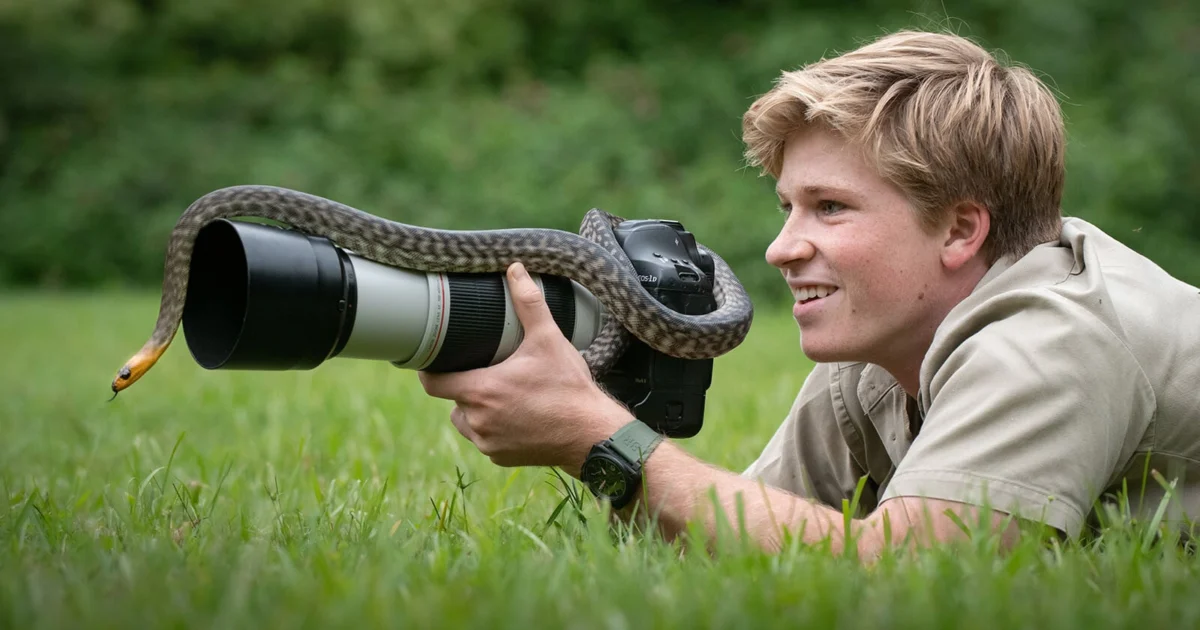
Renowned conservationist, accomplished television presenter, and acclaimed wildlife photographer Robert Irwin recently articulated a profound defense of traditional photography and issued a stern warning regarding the proliferation and environmental impact of artificial intelligence in a revealing interview with Parade magazine. The 22-year-old scion of the legendary Irwin family, known globally for their unwavering commitment to wildlife conservation, shared insights into his lifelong photographic journey, his diverse professional endeavors—including a notable victory on Dancing With the Stars—and, critically, his philosophical stance on generative AI, particularly as it pertains to the art and ethics of image creation.
Robert Irwin’s Enduring Passion for the Lens
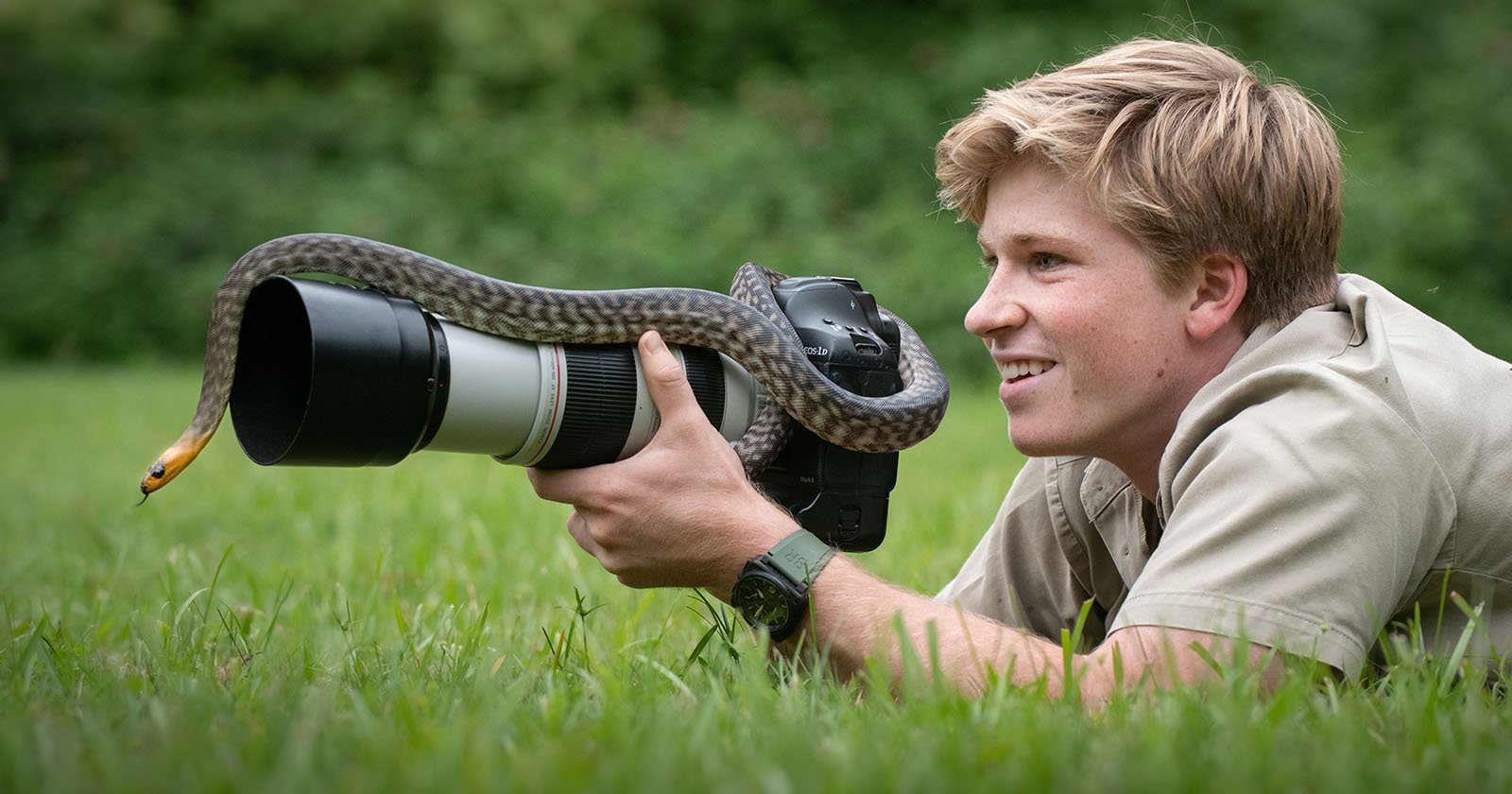
Irwin’s connection to photography is not merely a hobby but a foundational element of his identity and mission. He underscored this deep-seated passion during his discussion with Parade, stating, "This has been a passion project of mine and ours for a very long time. A lot of people might not realize this, but there’s this part of my life that’s been really probably the most formative part of my life and really created the person I am today, which is photography." This sentiment echoes earlier conversations, including a 2023 interview with PetaPixel, where he similarly highlighted the integral role photography plays in his life. Since that time, Irwin has continued to expand his repertoire of expertise, yet his fervent dedication to capturing the natural world through a lens remains undiminished.
His photographic journey began at a young age, inspired by the desire to share the wonders of the animal kingdom and further the conservation message championed by his late father, Steve Irwin. He explained, "So I picked up a camera, and I started looking at it from an artistic perspective. It just became the biggest part of my life from about age ten, all the way through my teenage years. I’ve always got a camera with me. Now it’s about I know that feeling that it gave me as a kid, and I want to give other kids that feeling." This personal evolution from childhood fascination to a powerful tool for advocacy underscores the depth of his commitment. "I’ve spent many, many years of my life capturing nature through photography. And growing up, [it] was my kind of individual way of spreading this conservation message that I’m so passionate about," he added, illustrating the symbiotic relationship between his art and his activism.
A Critical Lens on Artificial Intelligence
While undeniably a skilled and accomplished photographer, Irwin is also keenly attuned to the seismic shifts occurring within the photographic industry, particularly concerning the rise of generative artificial intelligence. His critique extends beyond mere aesthetic preference, delving into environmental and ethical considerations that are increasingly central to global discourse.
"As with any advancement in technology, I think we sometimes forget about the environmental destruction that it can cause," Irwin stated, drawing a direct link between technological progress and ecological responsibility. This perspective is particularly pertinent given the growing awareness of the energy consumption associated with AI. Training large language models and image generation algorithms requires immense computational power, often running on energy-intensive data centers. Studies have indicated that the carbon footprint of training a single large AI model can be equivalent to the lifetime emissions of several cars, raising significant environmental concerns about the sustainability of current AI development trends. While specific figures can vary widely depending on the model size and hardware used, the cumulative energy demand of the rapidly expanding AI sector is a point of increasing scrutiny for environmental advocates and technologists alike.
Beyond the environmental toll, Irwin voiced profound concerns about AI’s impact on the integrity and perceived value of photography itself. "With AI, I think not only does it take away from the artistry of photography, but it also dilutes what is impressive," he asserted. His argument posits that the proliferation of hyper-realistic, yet entirely fabricated, images undermines the appreciation for genuine, hard-won photographic achievements. "Because we’ve seen so many incredible things, we don’t realize that what is real and that’s more amazing because it’s real, you know?" he questioned, highlighting the erosion of distinction between reality and simulation.
He elaborated on this point with a vivid example: "When you see the image of the, I don’t know, eagle riding the elephant or whatever ridiculousness it is that people genuinely think is real, when there is the actual real amazing photo, it almost dilutes it because we’ve seen so many incredible things." This phenomenon, where AI-generated fantasies desensitize viewers to the extraordinary beauty of authentic moments, poses a significant challenge to the appreciation of true artistry and the arduous efforts involved in capturing genuine wildlife scenes. The ability to discern what is real from what is synthetically created is becoming increasingly difficult for the average viewer, leading to a potential devaluation of genuine photographic skill and patience.
The Broader Discourse: AI’s Impact on the Photography Industry
Irwin’s concerns are not isolated but resonate with a growing chorus of professional photographers, artists, and ethical bodies within the creative industries. The rapid advancements in generative AI, which allow users to create sophisticated images from text prompts (e.g., via platforms like Midjourney, DALL-E, and Stable Diffusion), have ignited a global debate on authorship, copyright, and the future of creative professions.
Many photographers fear that AI-generated images, often created by scraping vast databases of existing human-made artwork without explicit consent or compensation, threaten their livelihoods and intellectual property. The ease with which AI can produce aesthetically pleasing, if soulless, visuals at minimal cost poses an existential threat to commercial photography, stock image libraries, and even photojournalism, where the authenticity of an image is paramount.
In response, major photography competitions and organizations worldwide have begun to establish clear policies regarding AI. Some have outright banned AI-generated images, particularly in categories focused on documentary or nature photography, to uphold the integrity of the medium. Others have introduced dedicated AI categories, acknowledging the technology as a new form of digital art while ensuring it does not contaminate traditional photographic divisions. Robert Irwin’s staunch stance, particularly through the Crikey! Magazine Photography Competition, aligns firmly with those advocating for the absolute preservation of authenticity in wildlife photography. His position highlights a broader industry movement to protect the value of human skill, effort, and real-world experience in image creation.
A Legacy of Conservation Through Imagery
Robert Irwin’s photographic advocacy is deeply rooted in the legacy of his family. The Irwin family, led by the iconic "Crocodile Hunter" Steve Irwin, has always leveraged media to connect people with wildlife and inspire conservation. Steve Irwin’s documentaries and television shows were masterful examples of using visual storytelling to foster empathy and understanding for animals. Robert, alongside his mother Terri and sister Bindi, continues this tradition, with photography serving as his primary personal medium for outreach.
Australia Zoo, the family’s renowned wildlife park and conservation hub, actively supports various conservation projects globally. The family’s approach has always been hands-on, emphasizing direct engagement with wildlife and natural habitats. This philosophy naturally extends to photography, where the genuine capture of a moment in the wild is seen not just as an artistic endeavor but as a crucial act of bearing witness and advocating for the environment.
The power of wildlife photography in conservation cannot be overstated. Iconic images of endangered species, pristine landscapes, or animals impacted by human activity have historically played a vital role in raising public awareness, influencing policy, and galvanizing support for conservation initiatives. From the striking portraits of mountain gorillas by Dian Fossey to Sebastião Salgado’s monumental black-and-white documentation of the natural world, powerful photographs have transcended mere aesthetics to become potent symbols of environmental urgency. Robert Irwin’s commitment to "true and raw state" photography directly contributes to this legacy, ensuring that the visual narratives used for conservation are unimpeachable in their authenticity.
Untamed Horizons: Irwin’s Photography Aspirations
Despite his considerable travels and extensive encounters with diverse wildlife, Irwin remains an avid explorer with a lengthy list of animals and locations he dreams of photographing in their natural habitats. He acknowledges that many people assume he has seen nearly every animal imaginable, but he clarifies, "Anyone who has a passion for wildlife will tell you they have a list that’s a mile of long of what they want to see next."
His personal "bucket list" includes several elusive and captivating species. Having never visited South America, he expressed a particular desire to witness "sloths in the wild," an animal known for its unique arboreal lifestyle and slow movements. The Galapagos Islands also feature prominently, a destination famed for its extraordinary biodiversity and the unique evolutionary adaptations of its fauna, which would undoubtedly offer unparalleled photographic opportunities.
Irwin also harbors a deep affection for Komodo dragons, stating, "I’ve never photographed them in the wild. That is absolutely top of my list." These formidable reptiles, endemic to a few Indonesian islands, represent a significant challenge for any wildlife photographer. "Obviously, snow leopards," he added, acknowledging a common aspiration among wildlife photographers, as these elusive big cats of the high mountains are considered "the pinnacle" of wildlife subjects due to their rarity and the extreme conditions of their habitat. Finally, "Polar bears! That’s another one that I’ve always wanted to see. A polar bear in the wild. I think I would just squeal with excitement if I saw one of them," he enthused, underscoring that even for a photographer as accomplished and well-traveled as himself, the natural world continues to hold boundless wonders yet to be captured through his lens. These aspirations reinforce his dedication to experiencing and documenting real wildlife, a stark contrast to the simulated realities offered by AI.
The Crikey! Magazine Photography Competition: A Call for Authenticity
In a powerful demonstration of his commitment to authentic wildlife photography, Robert Irwin and the Australia Zoo are spearheading the 10th-anniversary edition of the Crikey! Magazine Photography Competition. This global platform serves as a vital avenue for showcasing stunning, conservation-minded photography and, significantly, explicitly rejects the inclusion of AI-generated imagery.
The competition is a testament to the enduring value of human skill, patience, and direct engagement with nature. It seeks to celebrate "storytelling that shows nature as it’s intended. You’re not meddling with anything. You’re letting nature take its course, and you’re photographing it in its true and raw state," Irwin explained. This emphasis on unadulterated reality stands in direct opposition to the synthetic perfection often achievable with AI.
Irwin articulated the profound difference between real and artificial imagery: "I don’t care how many AI photos you see. When you see a real, true representation of nature, there is a visceral feeling that hits you in the heart; you just can’t deny it." This "visceral feeling" is precisely what he believes is lost when authenticity is compromised. "I think storytelling and art has to be authentic, and that is just so important. In wildlife photography, we need a true and authentic representation of nature."
His stance on AI in the competition is unequivocal: "In our competition at least, there is no room for AI, that’s for sure. It ain’t happening." This firm policy sends a clear message to photographers worldwide about the values upheld by the Irwin family and Australia Zoo. The competition is open to all photographers globally, regardless of their experience level, from aspiring young enthusiasts picking up a camera for the first time—much like Irwin himself over a decade ago—to established professionals. "There’s a category for you to tell your story," Irwin encouraged prospective entrants, emphasizing inclusivity while maintaining stringent standards for authenticity. Competition entries are open until August 31, 2026, providing a substantial window for photographers to capture and submit their genuine wildlife narratives.
Implications for Wildlife Storytelling and Public Trust
Robert Irwin’s vocal advocacy for authentic wildlife photography and his principled stand against AI in the Crikey! Magazine Photography Competition carry significant implications for the broader discourse on technology, art, and conservation. In an era increasingly grappling with misinformation and the blurring of lines between reality and simulation, figures like Irwin play a crucial role in championing truth and integrity.
His position reinforces the idea that true value in photography, particularly wildlife photography, lies not just in the visual output but in the process—the patience, skill, knowledge, and respect for nature required to capture a genuine moment. This emphasis on process and ethical conduct is vital for maintaining public trust in visual media, especially when it comes to reporting on environmental issues and species conservation. If images used to advocate for endangered animals or highlight ecological crises are perceived as potentially fabricated, it could undermine the credibility of conservation efforts themselves.
The Crikey! Magazine Photography Competition, by explicitly banning AI, serves as a beacon for ethical photographic practice. It provides a platform where the human element of observation, patience, and artistic interpretation is celebrated, encouraging photographers to hone their craft in the field rather than through algorithms. This commitment to authenticity ensures that the stories told through these photographs are not just beautiful but also true, inspiring genuine connection and action for the natural world. As the digital landscape continues to evolve, the distinction between human creativity and algorithmic generation will become increasingly important, and Robert Irwin’s stance provides a clear ethical framework for future generations of wildlife storytellers.