
Shantanu Narayen, the long-serving Chief Executive Officer of Adobe, announced this week his decision to step down after an impactful 18-year tenure at the helm and nearly three decades with the company. His departure marks the end of an era defined by a dramatic transformation of Adobe’s business model and significant financial growth, yet it also highlights a growing divergence in perception between shareholders, who largely celebrated his leadership, and a segment of the core creative community, who frequently expressed concerns about the company’s strategic direction under his stewardship. The announcement comes at a pivotal moment for Adobe, as it navigates the complex and rapidly evolving landscape of artificial intelligence (AI) and faces intensified competition across its product portfolio.
Narayen’s leadership, which began in December 2007, propelled Adobe from a purveyor of licensed software into a formidable software-as-a-service (SaaS) giant. This strategic pivot, primarily through the introduction and aggressive promotion of the Creative Cloud subscription model, reshaped the company’s financial profile, ensuring predictable recurring revenue streams. From a stock price of approximately $40 in late 2007, Adobe’s shares soared to an all-time high of $688.37 in 2021, representing an extraordinary return for investors. This sustained period of growth solidified Narayen’s reputation as one of the most successful CEOs in the technology sector, frequently lauded by financial analysts and the company’s board for his visionary leadership in this transformation.
A Tale of Two Legacies: Shareholders vs. Creatives

The narrative surrounding Narayen’s legacy is distinctly bifurcated. For shareholders and the broader financial market, his tenure is unequivocally marked by immense success. Under his guidance, Adobe not only successfully transitioned its flagship products like Photoshop, Illustrator, and Premiere Pro to a cloud-based subscription model but also significantly expanded its enterprise software offerings, particularly in marketing and analytics. This strategic diversification and the shift to SaaS led to consistent revenue growth, increased profitability, and a substantial boost in market capitalization, cementing Adobe’s position as a software powerhouse. In his farewell letter to employees, Narayen himself emphasized the company’s remarkable revenue growth, a testament to the financial milestones achieved during his leadership. The visual evidence of Adobe’s stock performance, showing a steep upward trajectory throughout much of his time as CEO, underscores this financial triumph.
However, a significant portion of Adobe’s core customer base – individual photographers, graphic designers, video editors, and other creative professionals – viewed Narayen’s era with a more critical eye. Many artists expressed dissatisfaction with the forced transition to a subscription model, citing concerns about perpetual ownership, escalating costs over time, and a perceived shift in the company’s focus from individual creators to larger enterprise clients. While the Creative Cloud undeniably facilitated continuous software updates and new feature rollouts, the mandatory subscription was often seen as an imposition rather than an enhancement for those who preferred one-time purchases. This sentiment was exacerbated by a feeling among some creatives that their needs and feedback were increasingly sidelined in favor of broader business objectives and the pursuit of market expansion into B2B sectors.
The Strategic Shift to Subscription and Market Dominance
The most defining strategic move of Narayen’s tenure was the radical shift from perpetual licenses to the Creative Cloud subscription model, officially launched in 2012. This decision, initially met with considerable resistance and skepticism from a loyal user base accustomed to buying software outright, proved to be a masterstroke from a business perspective. It provided Adobe with stable, recurring revenue, allowed for more frequent software updates, and fostered a deeper, continuous engagement with its user base. The company’s annual revenue, which was around $3.5 billion when Narayen took over, surged to over $19 billion by 2023, largely fueled by the success of the Creative Cloud and its enterprise solutions.

Under Narayen, Adobe also pursued a strategy of strategic acquisitions to bolster its portfolio. Notable purchases included Omniture (digital marketing and analytics) in 2009, Day Software (enterprise content management) in 2010, Magento (e-commerce platform) in 2018, and Workfront (work management software) in 2020. These acquisitions were instrumental in expanding Adobe’s reach beyond its traditional creative tools into the broader digital experience and enterprise markets, aligning with the company’s vision to be a comprehensive solution provider for digital transformation. The attempted acquisition of Figma, a collaborative design platform, for $20 billion in 2022, though ultimately blocked by regulators, further illustrated Adobe’s aggressive growth ambitions and its intent to maintain market leadership by absorbing potential competitors.
The AI Era: A New Frontier and Emerging Challenges
The latter part of Narayen’s leadership was increasingly dominated by the advent of generative AI, a technological wave that presented both immense opportunities and significant challenges for Adobe. The company committed substantial resources to developing its own AI capabilities, most notably with the introduction of Adobe Firefly, a suite of generative AI models for image and text creation, announced in March 2023. Firefly was initially positioned as an "ethical" AI model, trained on Adobe Stock content and public domain images, aiming to provide a "commercially safe" alternative to other generative AI tools that faced scrutiny over copyright and data sourcing.
Despite these efforts, Adobe faced an uphill battle in the rapidly evolving AI landscape. Competitors, both established tech giants and nimble startups, quickly innovated, often outpacing Adobe in terms of the quality and speed of AI model development. This competitive pressure, combined with the immense expectations of the market, reportedly forced Adobe to re-evaluate its initial "walled garden" approach. In a significant strategic shift, Adobe eventually opened its Creative Cloud ecosystem to third-party AI models, a move that, while increasing functionality, somewhat undercut its earlier promise of an exclusively "ethical" and proprietary AI environment. This pivot reflected the intense pressure to remain competitive and deliver cutting-edge AI features to its users, even if it meant compromising on initial strategic differentiators.
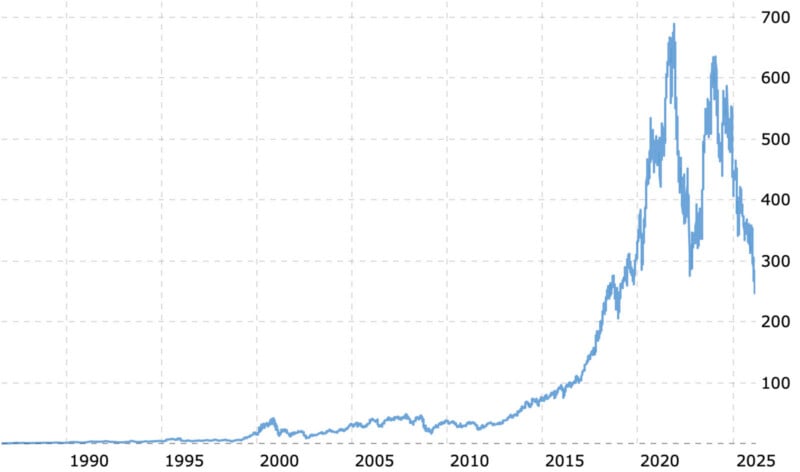
The stock market’s reaction to Adobe’s performance in the AI era has been volatile. While the initial success of Firefly and continued revenue growth helped the stock rebound over $600 in 2024 after a dip, the trend has largely been downhill since February 2024. Adobe’s stock prices hit their lowest point in over five years just last month, dropping to around $244. This recent downturn, juxtaposed with the broader tech industry’s fervent embrace of AI, fueled speculation regarding the timing of Narayen’s departure. While Adobe and Narayen have framed his exit as a personal decision, the confluence of tumbling share prices and the intense scrutiny of the company’s AI strategy inevitably raises questions about whether these factors accelerated existing succession plans.
Competitive Landscape and Future Outlook
Under Narayen, Adobe maintained a dominant position in many creative software categories, but the competitive landscape has become increasingly fragmented and challenging. DaVinci Resolve, for instance, has gained significant traction against Premiere Pro in video editing, offering a robust feature set and a compelling free tier. Affinity Photo and Designer have emerged as credible, one-time purchase alternatives to Photoshop and Illustrator, appealing to users disenchanted with the subscription model. Even Apple, with its long-awaited "Creator Studio," is reportedly entering the creative software suite business, posing a potential threat by integrating hardware and software. In the enterprise space, Canva has proven to be a formidable competitor to Adobe Express, particularly in the rapidly growing market for accessible design tools. These developments indicate that Adobe is facing more diverse and potent threats than it has in many years.
Narayen’s vision for Adobe in the AI era, as articulated in his farewell message, underscores the company’s commitment to leading this "next chapter" of creativity. "Our mission, Empower Everyone to Create, represents an even larger opportunity in the AI era. By delivering an innovative roadmap aligned to our audience strategy, we are positioning Adobe to lead this next chapter," he wrote. He expressed confidence in Adobe’s technology and, more importantly, its people, believing their "ingenuity, resilience and commitment to customers" would define this moment.

Frank Calderoni, Lead Independent Director of Adobe and chair of the special committee tasked with selecting Narayen’s successor, echoed this sentiment, acknowledging Narayen’s contributions as the "architect of Adobe’s transformation" and for "positioning Adobe for success in the AI-driven era." He emphasized the board’s focus on selecting the "right leader for this next exciting chapter of the company’s growth" and thanked Narayen for ensuring a smooth transition.
However, the question remains whether this AI-centric vision truly aligns with the desires of Adobe’s foundational creative user base. While there is undeniable potential for AI to empower artists and streamline workflows, as seen in successful implementations within tools like Lightroom, a segment of the creative community harbors concerns that Adobe’s grandest AI ambitions are less about augmenting human creativity and more about enabling corporations to potentially reduce their reliance on human artists altogether. This perceived tension between maximizing shareholder value through enterprise AI solutions and nurturing the individual creative professional remains a critical challenge for Adobe and its incoming leadership.
Implications for Adobe’s Future Direction
Narayen’s departure initiates a period of significant transition for Adobe. The selection of his successor will be closely watched, as the new CEO will inherit the dual challenge of appeasing investors eager for accelerated AI innovation and rebuilding trust and engagement with a sometimes-disgruntled creative community. The immediate implications include potential shifts in strategic priorities, particularly regarding the pace and direction of AI development, the balance between enterprise and individual customer focus, and the competitive positioning against emerging rivals.

Investors, currently exhibiting skepticism about Adobe’s approach to AI, will be looking for clear signals that the new leadership can effectively navigate the complexities of generative AI, capitalize on its opportunities, and restore robust stock growth. Conversely, creative professionals will be hoping for a renewed emphasis on core product stability, user-centric feature development, and a more transparent and collaborative approach to AI integration that genuinely empowers rather than displaces human artists.
While the financial metrics of Narayen’s tenure paint a picture of extraordinary success, his legacy is undeniably complex. He transformed Adobe into a modern software powerhouse, achieving unprecedented financial growth and market dominance. Yet, for many of the photographers and artists who built Adobe’s brand through their reliance on its tools, his era represents a period where the company’s focus shifted, leading to a feeling of being increasingly overlooked, and potentially, in the age of AI, deemed less essential. The incoming CEO will face the daunting task of reconciling these divergent perspectives and charting a course that sustains growth while reaffirming Adobe’s commitment to the diverse creative community it serves.
Image credits: Adobe, Macrotrends