In an unusual act of investigative journalism, a Rhode Island-based photographer and educator, Todd Vorenkamp, deliberately purchased a high-value camera from a highly suspicious eBay listing, knowing it was likely a scam. His objective was to dissect the mechanics of a prevalent online fraud scheme, shedding light on the tactics employed by scammers and the efficacy of eBay’s buyer protection mechanisms. What he uncovered was a sophisticated operation designed to exploit loopholes in e-commerce and shipping systems, ultimately concluding with an unexpectedly swift resolution from eBay.

The Landscape of Online Marketplace Fraud
Online marketplaces like eBay have revolutionized commerce, offering unparalleled access to goods globally. However, this accessibility also creates fertile ground for fraudulent activities. "Too-good-to-be-true" deals, characterized by significantly discounted prices on high-end, new, or rare items, are a perpetual red flag for experienced online shoppers. These listings frequently originate from sellers with zero feedback ratings, signaling either a genuinely new vendor or, more often, a freshly created account by a scammer. Industry data consistently shows that low-feedback or new seller accounts are disproportionately involved in fraudulent transactions, particularly when paired with improbable pricing.

Scammers often target high-value electronics, luxury goods, and collectibles, which command substantial prices and can entice buyers to overlook obvious warnings. The allure of a bargain can override common sense, leading many to fall victim to schemes that promise significant savings but deliver nothing, or an item of no value.
The Calculated Risk: Engaging with a Suspicious Listing
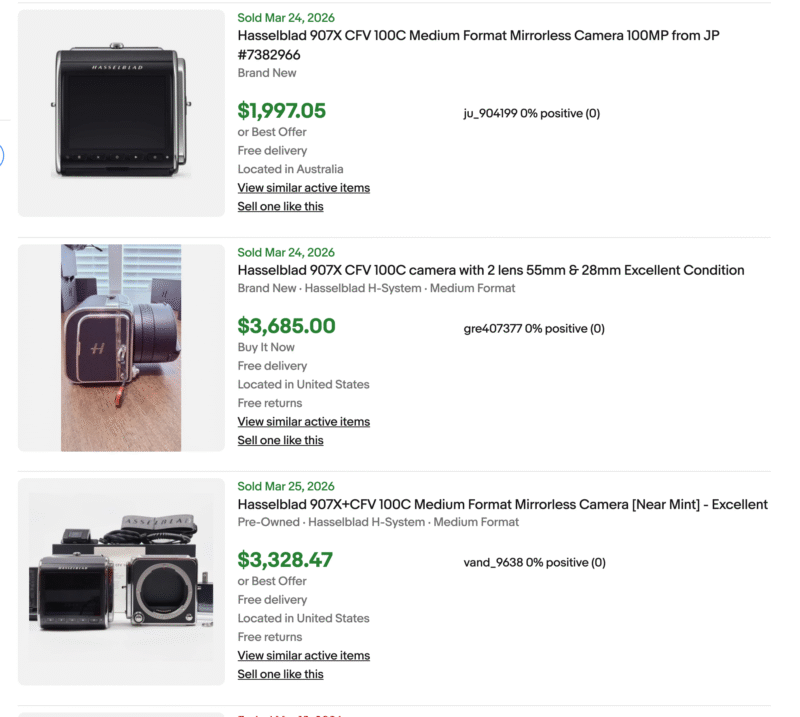
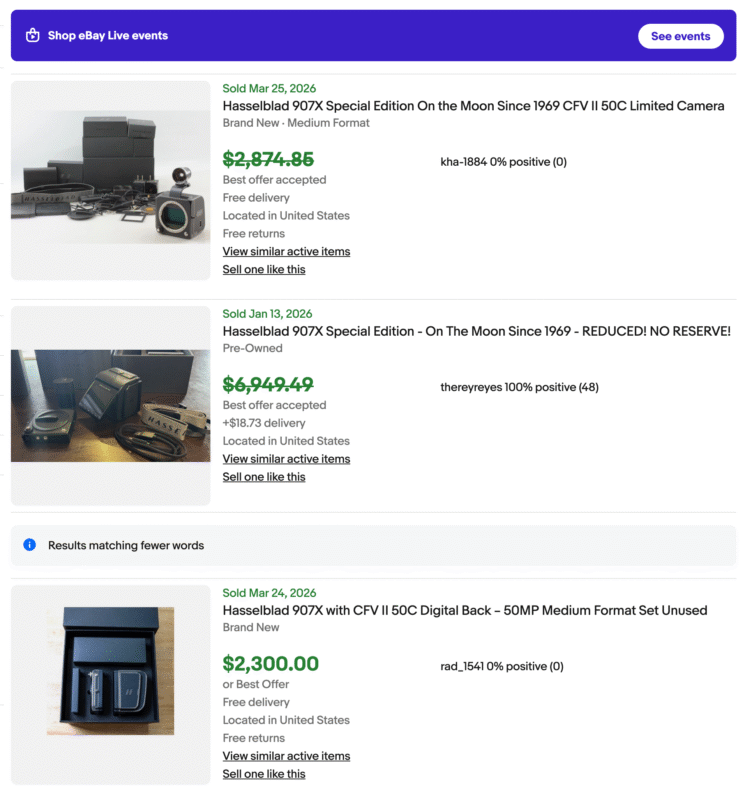
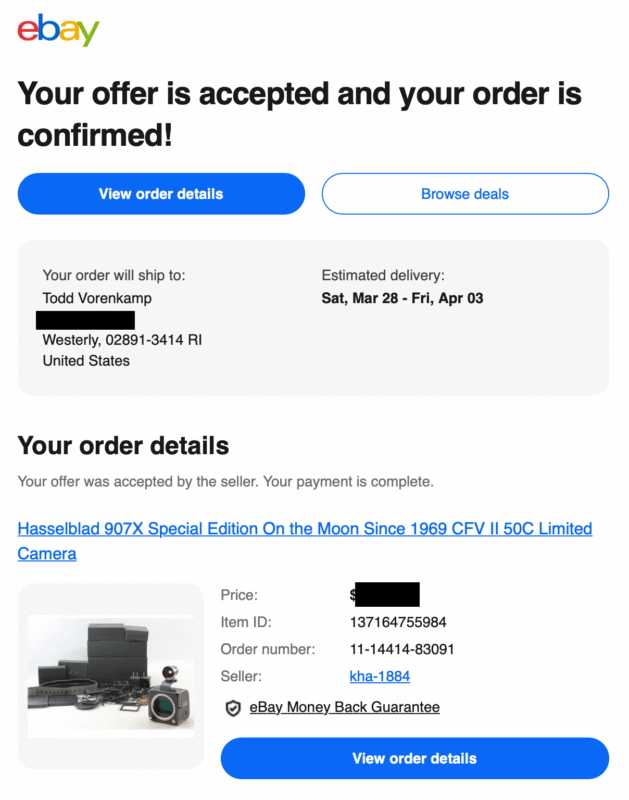
Vorenkamp, a photography teacher at Rhode Island School of Design Continuing Education, had frequently observed these dubious listings while browsing cameras on eBay. Driven by professional curiosity and a desire to understand the scam firsthand, he decided to engage. The target item was a Hasselblad 907x Special Edition "On the Moon Since 1969" CFV II 50C, a limited-edition medium format digital camera known for its premium price tag. The listing’s price was "tantalizingly low," a clear indicator of potential fraud.
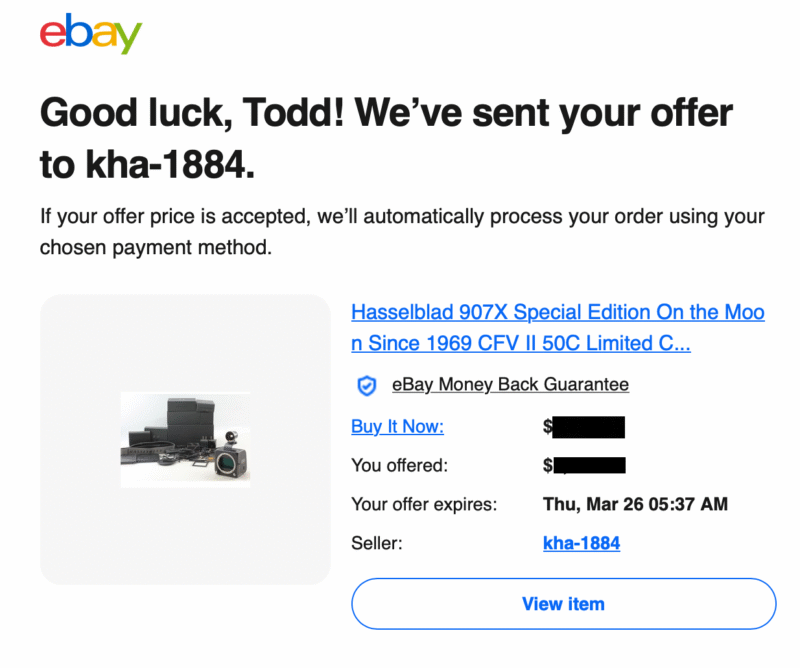
The seller’s profile exhibited the classic red flag: a zero-feedback rating. Further investigation into the seller’s account revealed an incongruous mix of items, including a pair of pillows, and a listed location in New Jersey. This seemingly trivial detail, later proven significant, added another layer of suspicion. Confident in eBay’s stated Money Back Guarantee policy, which is designed to protect buyers from such situations, Vorenkamp placed a "low-ball, but not absurd" offer for the camera. His offer was accepted just 15 hours later, and his PayPal account was debited, initiating the transaction.
A Chronology of Deception and Discovery
The events that unfolded painted a clear picture of a carefully orchestrated scam:
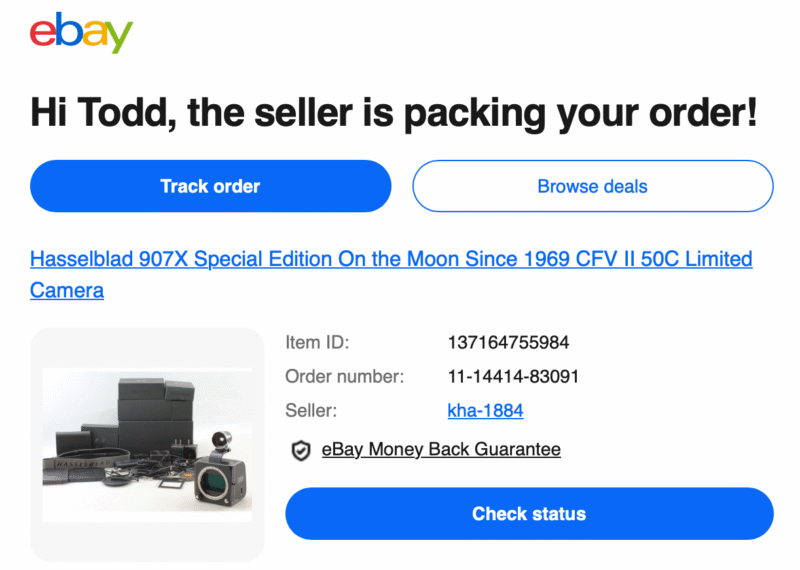
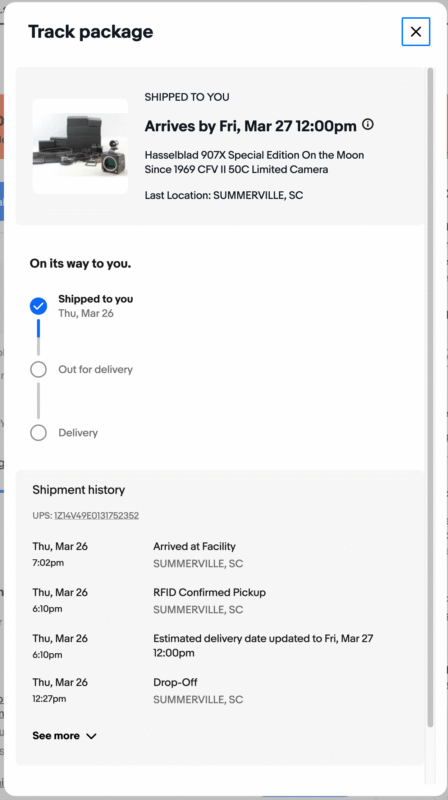
- Initial Anomaly (Day 1 – Offer Acceptance): Immediately after the offer was accepted, a UPS tracking number appeared on eBay. However, a crucial detail emerged: the tracking information indicated the package originated in South Carolina, not the seller’s stated New Jersey location. This discrepancy was the first concrete sign that the transaction was not legitimate.
- Seller Vanishes (Day 2 – Post-Acceptance): As Vorenkamp monitored the tracking, he attempted to revisit the seller’s eBay profile. He was met with a stark message: "No longer a registered user." Concurrently, the specific listing page for the Hasselblad camera he had purchased also disappeared, displaying a "page missing" error. This abrupt vanishing act is a hallmark of sophisticated scams, where perpetrators create ephemeral accounts to execute transactions before dissolving their digital footprint.
- Duplicate Listings Emerge (Day 2 – Post-Acceptance): Further investigation revealed an identical Hasselblad camera, using the exact same product images, listed by a legitimate, highly-rated seller in Japan. Later, another identical listing appeared from a new, zero-feedback seller based in Hamburg, Germany. This pattern suggested the scammer was using stolen product images to create multiple fraudulent listings across different accounts and geographical locations, maximizing their reach and potential victims.
- The Phantom Delivery (Day 3 – Delivery Date): The UPS tracking information updated, indicating the package was "in transit" and even "overnighted" to Vorenkamp’s town. On March 27th, at 11:40 AM, Vorenkamp received an email and notification from eBay stating the item had been delivered at 11:08 AM. Despite being home and having a motion-detecting camera at his front door, there was no doorbell ring, no knock, and no package present.
- UPS Confirms Discrepancy (Day 3 – Post-Delivery): Vorenkamp immediately contacted UPS. After navigating automated systems, he spoke with a customer service agent who, while unable to provide specific details due to privacy concerns, confirmed that the mailing address and name associated with the tracking number did not match Vorenkamp’s information. This confirmed a key element of the scam: the tracking number provided corresponded to a package sent to a different recipient at an unknown address in the same town. This tactic, known as a "phantom package" or "brushing" scam, aims to generate a "delivered" status for a cheap, unrelated item, thereby creating false proof of delivery for the high-value item supposedly purchased, complicating refund claims.
Navigating eBay’s Money Back Guarantee
With a vanished seller and a phantom delivery, Vorenkamp initiated a "not received" claim through eBay’s system. The initial automated response directed him to contact the seller directly, an impossible task given the seller’s disappearance. eBay’s policy stipulates a three-day waiting period for seller response before the buyer can escalate the issue.
Vorenkamp, anticipating potential difficulties in "proving a negative" (i.e., proving something was not delivered), diligently gathered evidence. He took screenshots of the vanished seller profile, the missing listing page, his Ring doorbell logs (demonstrating no delivery activity), and documented his conversations with UPS. He even prepared to escalate the matter to local police, the FBI Internet Crime Complaint Center (IC3), and Interpol, underscoring the serious implications of such organized online fraud. Tales from online forums often recount how buyers struggle to get refunds in similar "item not received" cases when tracking shows "delivered," emphasizing the critical importance of robust evidence.
The Swift and Unexpected Resolution
On March 30th, just three days after the supposed delivery, Vorenkamp received an email from eBay stating, "The seller asked eBay Customer Service to review this case and make a final decision. We will get back to you within 48 hours." This was a surprising development, given the seller’s "unregistered" status.
Remarkably, only 17 minutes later, a second email arrived: "Your case for this item has been resolved. Unfortunately, we didn’t receive valid proof of delivery from the seller. We’re sorry you had a problem with your purchase." The email confirmed a full refund would be processed within three to five days, which indeed appeared in his account on April 2nd.
The rapid resolution suggested that eBay’s internal fraud detection systems or customer service protocols quickly identified the fraudulent nature of the transaction. The inability of the scammer (or their defunct account) to provide valid proof of delivery—proof that matched the buyer’s name and address, not just a random delivery in the same zip code—was likely the deciding factor. This highlights a crucial strength of eBay’s Money Back Guarantee when sufficient evidence of fraud is present, and when the scammer fails to provide legitimate counter-evidence.
Broader Implications and Lessons for Consumers

Vorenkamp’s investigative purchase, while successful in recovering his funds, served as a potent warning. His experience provides a clear blueprint of a sophisticated online scam and valuable insights for other consumers:
- Beware of "Too-Good-To-Be-True" Deals: Exorbitantly low prices for high-demand items are almost always indicative of fraud. If a deal seems implausible, it likely is.
- Scrutinize Seller Profiles: Always check seller feedback, history, and the types of items they sell. Zero feedback, newly created accounts, or incongruous listings (like a high-end camera alongside household pillows) are major red flags.
- Verify Shipping Details: Pay close attention to shipping origin and tracking information. Discrepancies between the seller’s stated location and the package’s origin, or a tracking number that appears unusually fast, warrant immediate suspicion.
- Document Everything: Maintain meticulous records of the listing, seller communications, tracking updates, and any interaction with shipping carriers or the marketplace’s customer service. Photographic or video evidence (e.g., doorbell camera footage) can be invaluable.
- Understand Buyer Protection Policies: Familiarize yourself with the terms and conditions of buyer protection programs offered by online marketplaces. Knowing your rights and the steps to take in case of an issue is crucial.
- Act Promptly: Report suspicious activity and non-delivery issues immediately. Delays can complicate the resolution process.
While eBay’s system ultimately protected Vorenkamp, his case demonstrates the intricate efforts scammers employ to circumvent these protections. The "phantom package" strategy is designed to create a false sense of legitimacy and confuse buyers, hoping they will give up or fail to provide sufficient counter-evidence. This incident underscores the ongoing arms race between online fraudsters and e-commerce platforms, requiring continuous vigilance from both consumers and platforms to maintain a secure online shopping environment. Vorenkamp’s advice is unequivocal: "Do not do what I did. If you think something doesn’t feel right, don’t risk it." His journey, however, offers a vital educational tool, empowering potential victims with the knowledge to recognize and respond to similar scams effectively.