For three decades, photographer Paul Nicklen has lived amidst the world’s highest density of cougars on Vancouver Island, yet a clear sighting of the elusive feline has remained a rare privilege. His personal quest for such an encounter, fueled by a profound respect for these apex predators and their masterful camouflage, finally led him to the dramatic landscapes of Chilean Patagonia. This journey, marked by initial travel setbacks, culminated in a series of profound experiences with the region’s famed pumas, offering a unique glimpse into the delicate balance between wildlife and human presence in a thriving ecotourism destination.
The Journey to Torres del Paine
Nicklen’s expedition to photograph the pumas of Chilean Patagonia was preceded by a series of logistical challenges, including the loss of his passport and an unexpected detour through Brazil. Upon finally arriving in Chile, he was hosted at a converted estancia on the periphery of Torres del Paine National Park. This historic ranch, still equipped with functional farming and livestock apparatus, serves as a microcosm of the region’s evolving relationship with its wildlife. As Torres del Paine’s pristine peaks draw an increasing number of international visitors, ecotourism has emerged as a significant economic driver. The estancia’s owners exemplify a growing movement towards coexistence, actively choosing to live in harmony with the very animals once perceived as threats to their livelihood. The staff, deeply rooted in the values of gaucho culture—honesty, hard work, and generosity—provide a warm and authentic welcome to visitors.
Introduction to Puma Country
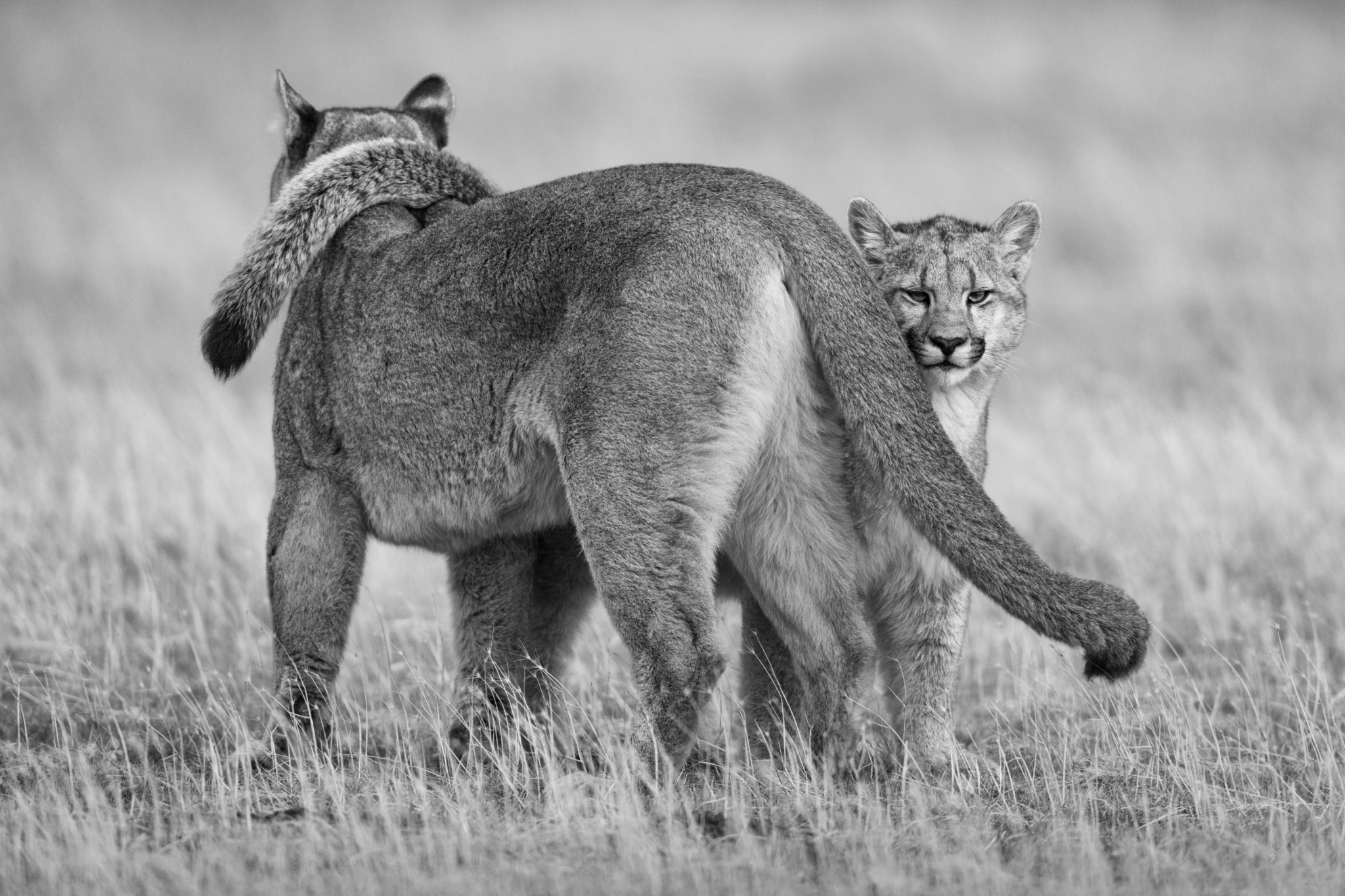
The true immersion into the pumas’ world began under the guidance of Rodrigo, a local guide renowned for his expertise and intimate knowledge of the area’s feline inhabitants. Rodrigo’s familiarity with the pumas, described as akin to knowing family members, provided Nicklen with unparalleled access. Their excursions ventured deep into territories where cultivated lands yielded to the dramatic geological formations of the Andes, interspersed with glacial lakes and vast expanses of pampas. As they journeyed deeper, the towering granite peaks of the Andes served as a majestic backdrop to their search. It was within this awe-inspiring landscape that Nicklen encountered his first puma: a female known locally as Petaka, accompanied by her two young kittens.
Petaka: A Symbol of Coexistence
Petaka, a puma of considerable renown, exhibits a remarkable serenity and an almost complete indifference to human observers. This behavior has cemented her legendary status among those who frequent the mountains of Torres del Paine and its environs. This tolerance is largely attributed to Chile’s protective stance on pumas, where hunting is largely prohibited, a contrast to some neighboring regions. Consequently, many pumas in this area have adapted to the presence of people, learning to coexist without perceived threat. For Nicklen, witnessing this calm acceptance was profoundly moving, a testament to the possibility of peaceful coexistence between humans and wild animals. He described the experience of watching Petaka care for her kittens, the young cats playfully tumbling in the grass, as an emotionally overwhelming privilege, conducted in silent admiration from a respectful distance.
The Unexpected Blizzard Encounter
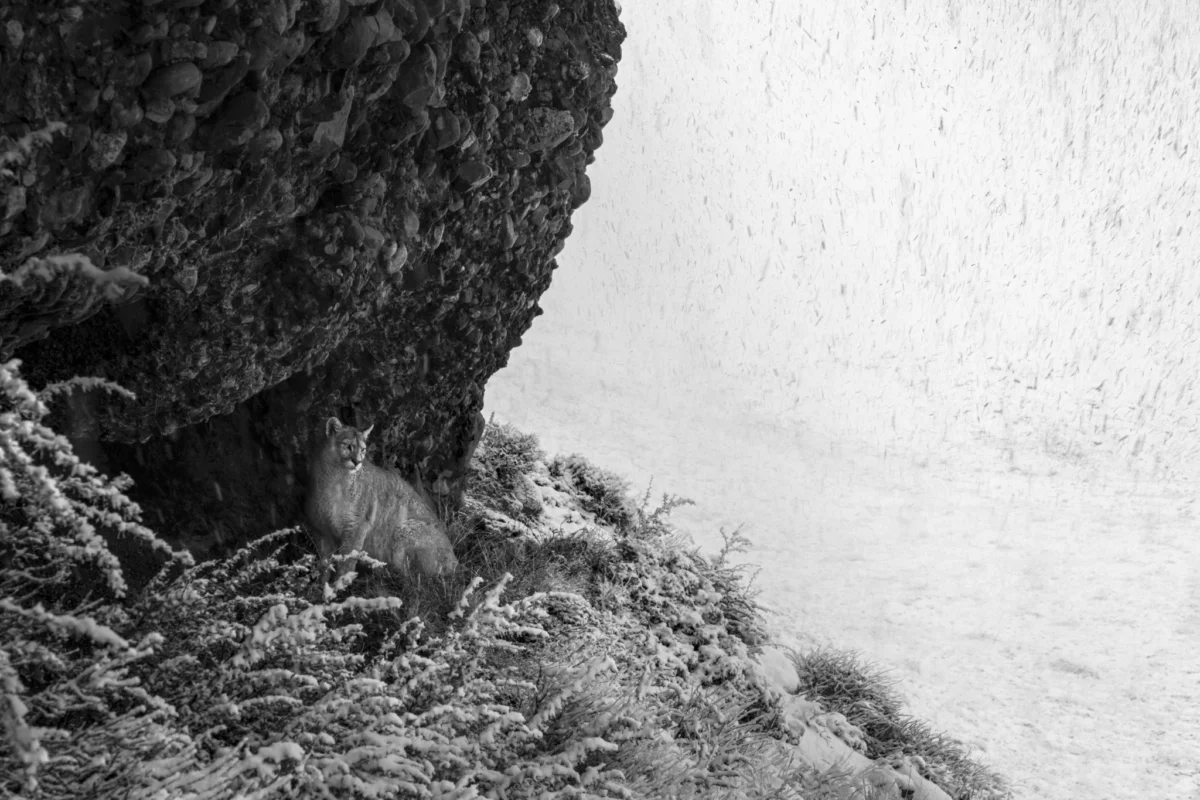
The serene atmosphere of Patagonia can shift dramatically, and the region’s unpredictable mountain weather soon made its presence known. As winds intensified and the first snowflakes began to fall, a sudden blizzard descended, blanketing the landscape and muffling all sound. Seeking refuge from the storm, Nicklen found shelter in a mountainside cave. It was within this temporary sanctuary that an extraordinary event unfolded: a large puma emerged from the swirling snow and settled mere feet away, also seeking protection from the elements.
Nicklen instinctively held his breath, his hands steadying his camera, his chest filled with a mixture of awe and adrenaline. For a prolonged period, they shared the cave in absolute silence, the snow creating a pristine white canvas over the willow thickets below. The puma, a creature of immense power and stealth, remained entirely unfazed by Nicklen’s presence, its attention fixed on the surrounding environment. It was only after the storm subsided and the world outside began to reveal itself once more that Nicklen allowed the profound emotions of the encounter to surface. As the puma silently departed over the fresh snow, Nicklen reflected on the deep significance of the moment. This shared, unexpected solitude with a wild predator underscored the profound beauty that emerges when nature is given the space to thrive, revealing life in its most untamed and magnificent form.
The Ecological Significance of Puma Conservation
The encounters in Torres del Paine highlight the crucial role of conservation efforts in fostering the recovery of apex predator populations. Pumas, as apex predators, play a vital role in maintaining the health and balance of their ecosystems. By preying on herbivores such as guanacos, they help regulate prey populations, preventing overgrazing and promoting vegetation diversity. This, in turn, supports a wider array of species within the Patagonian landscape.
The success of puma conservation in areas like Torres del Paine, where protected status has led to increased tolerance from local wildlife, offers a compelling model for other regions. The economic benefits derived from ecotourism, which relies on the presence of charismatic megafauna, provide a tangible incentive for local communities to support conservation initiatives. Data from the National Parks of Chile indicate a stable or increasing population of pumas within protected areas, a direct result of stringent anti-poaching measures and habitat preservation.
Broader Implications for Ecotourism and Wildlife Photography
Nicklen’s experience underscores the evolving landscape of wildlife photography and ecotourism. The ability to photograph pumas, once considered an almost impossible feat due to their elusive nature, is becoming more accessible in certain well-managed conservation areas. This shift is not merely a photographer’s boon; it signifies a broader societal acknowledgment of the intrinsic value of wildlife and the potential for economic development through its protection.
However, this increased accessibility also brings responsibilities. Ethical wildlife photography practices, emphasizing minimal disturbance to animals and their habitats, are paramount. The passive observation of pumas like Petaka, who have habituated to human presence without compromising their wildness, serves as an ideal. This approach ensures that the animals’ natural behaviors are not altered by human intervention, preserving the authenticity of the wildlife experience for both the animals and the observers.
The economic implications are significant. The revenue generated by ecotourism in regions like Patagonia directly contributes to local economies, providing employment and funding for conservation projects. For instance, studies by organizations such as the International Union for Conservation of Nature (IUCN) have shown that well-managed ecotourism can provide a more sustainable economic alternative to resource extraction industries, thereby incentivizing the preservation of natural landscapes.
A Testament to Nature’s Resilience
The culmination of Nicklen’s journey, sharing a silent, unexpected vigil with a wild puma during a Patagonian blizzard, transcends a mere photographic achievement. It represents a profound connection with the natural world, a moment of shared existence that illustrates the extraordinary outcomes of dedicated conservation. The experience serves as a powerful reminder that when humanity grants nature the space and respect it deserves, the Earth reveals its enduring capacity for wildness, raw beauty, and an untamed spirit that continues to inspire awe and wonder. This fleeting moment of camaraderie, shared in one of the planet’s most breathtaking ecosystems, is a gift that resonates with the deep, often unspoken, connection between humanity and the wild. It is a testament to the resilience of nature and the profound rewards of witnessing it in its purest, most magnificent state.