The rapid proliferation of generative artificial intelligence has fundamentally altered the landscape of visual content creation, reducing the time required to move from a conceptual draft to a finished image from days to seconds. For modern marketing departments, the ability to iterate on complex visual directions without the traditional overhead of multi-day photo shoots or extensive post-production has introduced unprecedented agility. However, as the volume of AI-generated content surges, a critical divide has emerged between visuals that are merely aesthetically pleasing and those that are "commercial-ready." This distinction, once a technicality managed by legal and creative departments, has now become a central strategic challenge for brands operating in a high-speed, digitally saturated marketplace.
Commercial readiness encompasses a complex matrix of licensing, provenance, technical quality, and brand consistency. While generative AI solves the problem of content scarcity, it introduces new risks regarding intellectual property, trademark infringement, and technical scalability. Consequently, the role of professionally produced stock media is evolving from a source of finished imagery to a vital foundation for safe, scalable, and legally sound marketing campaigns.
The Evolution of Creative Production Bottlenecks
Historically, the primary constraint in visual marketing was production capacity. A comprehensive global campaign required a significant investment in photographers, models, stylists, and location scouts. The advent of digital stock photography in the early 2000s mitigated some of these constraints, providing a repository of high-quality, pre-cleared assets.
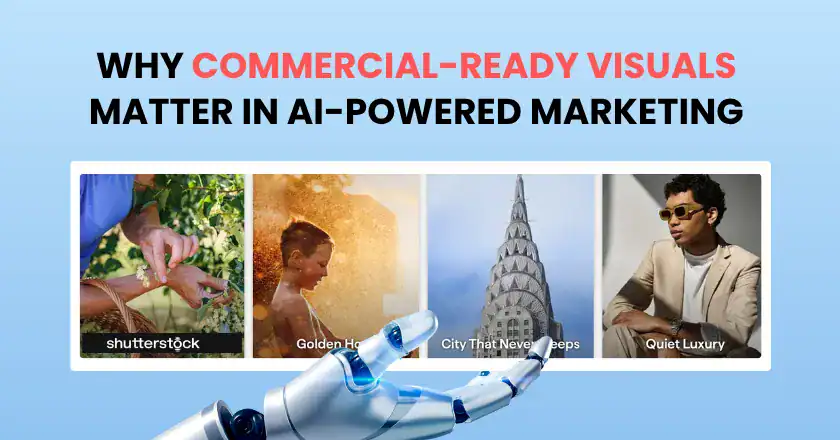
The current era of generative AI has shifted the bottleneck further down the pipeline. The challenge for today’s creative teams is no longer "How do we create this image?" but rather "Can we legally and technically deploy this image across all our channels?" As brands move away from single "hero" images toward a high-velocity model requiring hundreds of variations for social media, localized advertisements, and personalized email marketing, the need for governance has overtaken the need for raw production speed.
Industry data suggests that the demand for visual content has increased fourfold over the last five years, yet marketing budgets have not grown at the same rate. AI offers a solution to this "content gap," but only if the output can pass the rigorous standards of corporate legal teams and international advertising regulations.
Defining the Pillars of Commercial Readiness
A visual asset is considered commercial-ready only when it satisfies several criteria that go beyond surface-level appearance. In a professional newsroom or agency setting, these criteria are non-negotiable:
1. Legal Provenance and Indemnification
The most significant hurdle for AI-generated visuals is the "black box" nature of many training models. If an AI was trained on copyrighted material without the consent of the original creators, the resulting output may carry significant legal risks. Commercial-ready visuals, such as those found in established libraries like Shutterstock, come with explicit licensing agreements and, in many cases, legal indemnification that protects the brand from copyright claims.

2. Trademark and Property Clearance
AI tools often inadvertently recreate recognizable logos, architectural designs, or proprietary products. Using such an image in a paid advertisement can lead to immediate "cease and desist" orders. Commercial-ready assets are meticulously vetted to ensure that all recognizable trademarks, private properties, and sensitive locations are either cleared via a release or digitally removed.
3. Model Releases and Ethical Sourcing
For images featuring people, a model release is the bedrock of commercial use. It ensures the individual has consented to their likeness being used for promotional purposes. Generative AI often creates "synthetic" humans, which avoids the need for a traditional release but raises ethical questions regarding deepfakes and representation. Brands are increasingly prioritizing assets where the human element is either authentically captured or generated via ethically sourced datasets.
4. Technical Scalability
A visual that looks acceptable on a smartphone screen may fail when scaled for a 4K display or a physical billboard. Issues such as "artifacting," inconsistent pixel density, and color profile mismatches are common in raw AI outputs. Commercial-ready visuals are provided in high-resolution formats with standardized color metadata, ensuring they remain crisp and accurate across all media formats.
The Shift Toward a Hybrid Creative Workflow
As the industry matures, the "AI vs. Human" debate is being replaced by a more nuanced hybrid model. This approach views professional stock content and generative AI not as competitors, but as complementary tools within a single production system.

In this modular workflow, a professionally produced stock image often serves as the "anchor" or source material. Because the base image is high-resolution and legally cleared, creative teams can use AI-powered editing tools to expand backgrounds, change the color of a subject’s clothing, or adapt the composition for different social media aspect ratios. This ensures that the core of the visual remains grounded in reality and legal safety, while the AI provides the flexibility needed for multi-channel distribution.
Major industry players have already signaled this shift. For example, Shutterstock has integrated generative AI tools directly into its library, allowing users to "remix" professional photography. This provides a "safe-start" environment where the underlying data used to generate new variations is derived from a library of known, licensed assets.
Brand Consistency and the Risk of Visual Noise
One of the hidden costs of uncontrolled AI usage is the erosion of brand identity. Brand recognition is built on consistency—specific lighting styles, color palettes, and recurring visual themes that signal a brand’s presence to a consumer.
Generative AI, by its nature, introduces high levels of variance. Without a controlled source of truth, a brand’s visual output can quickly become fragmented, with different campaigns looking as though they belong to different companies. This "visual noise" weakens the emotional connection between the brand and the consumer.

To combat this, enterprise marketing teams are utilizing "curated collections" from stock platforms as a stylistic baseline. By starting with a set of images that share a common aesthetic, and then using AI to generate variations within those parameters, brands can maintain a coherent visual language even as they scale their content production.
The Global Impact: Localization and Cultural Nuance
For global brands, the stakes are even higher. A visual that resonates in Western Europe may be culturally inappropriate or irrelevant in Southeast Asia. AI tools can help localize content by changing backgrounds or environmental cues, but they often struggle with the subtle nuances of cultural representation, such as traditional dress, local architecture, or social customs.
Professional stock libraries have spent decades building diverse, global contributor networks. This allows marketing teams to source authentic, culturally accurate imagery for different regions while maintaining a centralized creative strategy. Using AI to then "finish" these assets—such as adding localized text or adjusting lighting to match a specific season—represents the current gold standard in global marketing efficiency.
The Economic Reality of Professional Content
Despite the rise of synthetic media, the economic value of professional photography and videography remains robust. A report from market analysts indicates that while the volume of "free" or AI-generated imagery is skyrocketing, the "premium" segment of the market—consisting of high-quality, legally protected assets—continues to see steady demand from the enterprise sector.

This is largely due to the "cost of failure." For a major corporation, the financial and reputational damage of a copyright lawsuit or a botched global campaign far outweighs the cost of licensing professional content. In this context, commercial-ready visuals are increasingly viewed as a form of "creative insurance."
Future Implications: Authenticity as a Premium Asset
Looking ahead, the market is likely to place a premium on "provenance-backed" content. Technologies like the Content Authenticity Initiative (CAI) and C2PA (Coalition for Content Provenance and Authenticity) are creating digital "nutrition labels" for images, showing exactly how an asset was created and modified.
As consumers become more skeptical of synthetic content, the ability to prove that an image features a real person in a real location may become a competitive advantage for brands in industries like travel, hospitality, and food and beverage. In these sectors, the "truth" of the image is part of the product’s value proposition.
Conclusion: The Strategic Integration of AI and Stock
The integration of generative AI into marketing is not a story of replacement, but one of professionalization. The technology has removed the barriers to entry for high-speed content creation, but it has simultaneously raised the bar for what constitutes professional-grade output.

Commercial-ready visuals matter more than ever because they provide the structural integrity that AI-powered marketing requires to function at scale. By combining the creative judgment and legal security of professional stock media with the speed and adaptability of artificial intelligence, marketing teams can achieve a level of efficiency that was previously impossible. In a world of infinite images, the most valuable asset is not the ability to create something new, but the ability to ensure that what is created is fit for the brand, the law, and the audience.