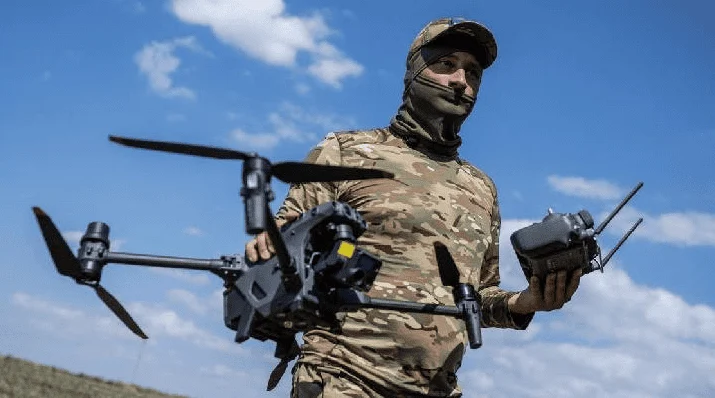
The landscape of modern conflict has been fundamentally altered by the rapid industrialization of unmanned aerial systems, specifically First-Person View (FPV) drones, which have transitioned from hobbyist toys to indispensable precision-guided munitions. In Ukraine, the surge in domestic production of these systems represents a paradigm shift in defense procurement and battlefield tactics, as the nation aims to produce upwards of 4.5 million units by the end of 2025. This massive scaling of production is supported by an unprecedented government allocation of over $2.6 billion, signaling a strategic commitment to technological superiority in an increasingly asymmetric environment. As conventional artillery shells remain subject to supply chain bottlenecks and international political cycles, the FPV drone has emerged as a cost-effective, highly adaptable alternative capable of delivering precision strikes against armored vehicles, infantry positions, and logistical hubs.
The Strategic Imperative for FPV Proliferation
The impetus for the rapid expansion of FPV drone production in Ukraine stems from the early realization during the 2022 invasion that traditional military doctrines were ill-equipped for the sheer scale of modern high-intensity warfare. While high-end military hardware like the Bayraktar TB2 or Switchblade loitering munitions garnered early headlines, their high cost and limited numbers made them difficult to sustain in a war of attrition. Consequently, Ukrainian engineers and defense planners turned to FPV drones—small, agile quadcopters typically controlled via virtual reality goggles that allow the pilot to see exactly what the drone sees in real-time.
By 2024, the FPV drone had become the primary tool for tactical strikes. The ability of these drones to maneuver into open hatches of tanks or strike moving targets with high precision has forced a complete rethinking of armored warfare. The Ukrainian government’s decision to centralize and subsidize this industry was a response to the need for a "long-arm" capability that could be produced locally, bypassing the bureaucratic delays often associated with international arms transfers.
Chronology of Development: From Workshops to Industrial Giants
The evolution of the Ukrainian drone industry can be categorized into four distinct phases, each marked by increasing sophistication and scale:
- The Grassroots Phase (Early 2022): In the immediate aftermath of the full-scale invasion, volunteer groups and tech enthusiasts began modifying civilian drones, such as the DJI Mavic series, for reconnaissance. These early efforts were decentralized and relied heavily on crowdfunding.
- The FPV Revolution (Late 2022 – Early 2023): As Russian electronic warfare (EW) began to effectively ground civilian GPS-dependent drones, the focus shifted to FPV systems. These drones use analog video signals and manual flight controls, making them more resilient to certain types of jamming. Small workshops across the country began assembling FPV "kamikaze" drones using imported components and 3D-printed parts.
- The "Army of Drones" Initiative (2023): The Ukrainian Ministry of Digital Transformation, in collaboration with the General Staff, launched the "Army of Drones" project. This initiative streamlined the certification process for domestic manufacturers, reducing the time required for a new drone model to be approved for frontline use from months to mere weeks.
- Mass Industrialization and AI Integration (2024 – Present): The current phase is defined by the scaling of production to millions of units and the integration of artificial intelligence (AI) for terminal guidance. This allows drones to hit targets even if the connection with the pilot is severed by electronic warfare in the final meters of flight.
Economic and Industrial Scaling
The financial commitment to this sector is staggering. The $2.6 billion allocated for drone procurement in the current fiscal cycle is not merely a purchase order; it is an investment in a new industrial base. More than 200 Ukrainian companies are now involved in the production of unmanned systems, ranging from large-scale state-owned enterprises to agile startups.
The Brave1 platform, a government-led defense tech cluster, has played a pivotal role in this ecosystem. By providing grants and facilitating communication between developers and the military, Brave1 has ensured that the drones being produced meet the specific, evolving needs of the soldiers on the front lines. This feedback loop is a critical component of Ukraine’s competitive advantage, allowing for rapid iterations of hardware and software to counter Russian adaptations.
Technical Advantages and Battlefield Impact
The primary advantage of the FPV drone lies in its cost-to-kill ratio. A standard FPV drone, equipped with a customized warhead (often a modified RPG-7 anti-tank round), costs between $400 and $600 to produce. In contrast, a modern main battle tank can cost upwards of $5 million. This economic asymmetry allows Ukrainian forces to launch dozens of drones against a single high-value target, ensuring its destruction at a fraction of the cost of a single Javelin missile or artillery round.
Beyond the economic factors, FPV drones offer several tactical advantages:
- Precision and Maneuverability: Unlike traditional artillery, which follows a ballistic trajectory, an FPV drone can be flown into bunkers, under tree canopies, or through the doorways of buildings.
- Psychological Warfare: The constant presence of "suicide drones" creates a high level of stress for enemy personnel, restricting their movement and complicating logistics.
- Real-time Intelligence: Even if a drone is lost in a strike, it provides real-time reconnaissance until the moment of impact, giving commanders a clear view of the battlefield.
Recent data underscores the effectiveness of this strategy. Reports from February 2025 indicate a 22% month-on-month increase in successful FPV drone strikes conducted by Ukrainian forces. This surge is directly correlated with the increased output from domestic factories and the deployment of specialized "strike drone" companies within the Ukrainian Armed Forces.
Challenges in the Supply Chain and Electronic Warfare
Despite the rapid growth, the Ukrainian drone industry faces significant hurdles. The most pressing of these is the reliance on foreign-made components, particularly from China. Microchips, flight controllers, motors, and batteries are largely sourced from Asian markets. Any disruption in these supply chains—whether due to geopolitical pressure or export restrictions—poses a direct threat to production targets. To mitigate this, Ukraine is increasingly looking to localize the production of critical components, such as brushless motors and carbon fiber frames.
The second major challenge is the "radio frequency war." As FPV drones become more prevalent, the Russian military has deployed extensive electronic warfare systems designed to jam the signals between the drone and the pilot. This has led to a constant cat-and-mouse game where Ukrainian developers must frequently change the frequencies their drones operate on or implement advanced signal-hopping technologies. The shift toward AI-driven autonomous terminal guidance is the latest attempt to bypass these EW barriers.
Official Responses and International Implications
The Ukrainian government has been vocal about its desire to become a global leader in drone technology. President Volodymyr Zelenskyy has emphasized that the "Drone Force" is now a separate branch of the military, reflecting its strategic importance. Government officials have also called on international partners to invest directly in Ukrainian defense firms, arguing that the country has become the world’s largest "living laboratory" for unmanned technology.
International observers and NATO defense planners are closely monitoring the situation. The success of FPV drones in Ukraine is already influencing military procurement in other nations. Countries like Poland, the Baltic states, and even the United States are reassessing their tactical requirements, recognizing that the era of uncontested airspace and traditional armored dominance may be ending. The "democratization" of precision airpower, where small units can wield the destructive force previously reserved for air forces, is a trend that will define 21st-century warfare.
The Future of FPV Production in Ukraine
Looking toward the remainder of 2025 and beyond, the trajectory of Ukrainian drone production is set to focus on three key areas:
- Swarm Intelligence: Developing the software necessary for a single pilot to control multiple drones simultaneously, or for drones to communicate with one another to coordinate a mass attack.
- Night Operations: Equipping FPV drones with low-cost thermal imaging cameras to allow for 24/7 strike capabilities, a move that would significantly degrade the enemy’s ability to rotate troops or resupply under the cover of darkness.
- Deep Strike Capabilities: Extending the range of FPV drones from the current 5–10 kilometers to 30 kilometers or more, allowing them to target reserve forces and command posts far behind the front lines.
The transformation of Ukraine into a "drone superpower" is not merely a temporary wartime measure but a long-term economic and security strategy. By fostering a robust defense-tech sector, Ukraine is building an industry that will likely remain a cornerstone of its economy in the post-war era, with significant potential for the export of combat-proven technology to allies worldwide.
Conclusion
The massive scale-up of FPV drone production in Ukraine represents one of the most significant industrial mobilizations in recent history. Through a combination of government investment, private-sector innovation, and frontline necessity, Ukraine has built a decentralized yet highly efficient military-industrial complex capable of producing millions of advanced weapons. While challenges in supply chain security and electronic warfare remain, the continued evolution of these systems ensures that they will remain a central pillar of Ukrainian defense. The lessons learned on the battlefields of Ukraine are currently rewriting the rules of engagement, proving that in the modern age, the most effective weapon is often the one that can be innovated, produced, and deployed at the speed of the digital world.