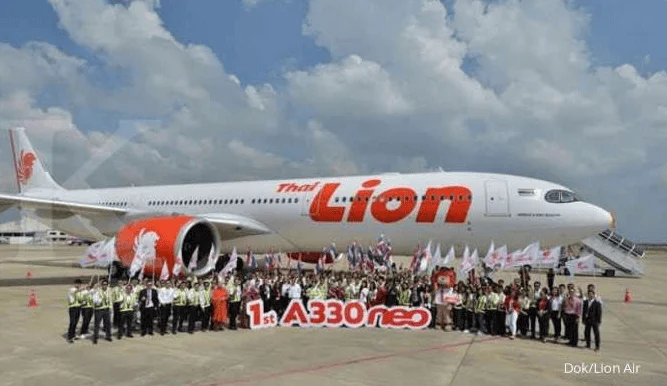
The arrival of two Airbus A330neo aircraft at Don Mueang International Airport in Bangkok marks a pivotal transformation for Thai Lion Air, signaling the carrier’s transition into a more robust long-haul competitor within the Southeast Asian aviation market. On October 7, 2021, the airline officially took delivery of its first pair of A330-900 units, which arrived directly from the Airbus final assembly line in Toulouse, France. This delivery is not merely a fleet addition but a strategic maneuver designed to enhance the airline’s operational efficiency, expand its international reach, and capitalize on the burgeoning demand for both low-cost long-haul travel and air cargo services. The welcoming ceremony was a high-profile event, attended by the Ambassador of France to Thailand, the Head of Airbus Thailand, and various aviation dignitaries, underscoring the diplomatic and economic significance of this fleet renewal.
The Evolution of the A330neo: Engineering and Efficiency
The Airbus A330neo, which stands for "New Engine Option," represents the pinnacle of the A330 family’s evolution. By integrating the latest technology from the A350 XWB, Airbus has created a wide-body aircraft that offers significantly lower operating costs compared to previous generations. For an airline like Thai Lion Air, which operates on a low-cost carrier (LCC) model, the economics of the A330neo are particularly attractive.
Central to the aircraft’s performance are the Rolls-Royce Trent 7000 engines. These powerplants are engineered to deliver a 14% improvement in fuel burn per seat compared to the original A330ceo (Current Engine Option). When combined with aerodynamic enhancements—such as the increased wingspan and the addition of composite "sharklets" inspired by the A350—the A330neo provides a total fuel efficiency gain of nearly 25% over older competing aircraft in the same category. For Thai Lion Air, these savings translate directly into the ability to offer more competitive ticket pricing while maintaining healthier profit margins on routes that span eight to twelve hours.
Furthermore, the A330-900 variant chosen by Thai Lion Air offers a range of approximately 7,285 nautical miles (13,500 km). This capability allows the airline to connect Bangkok with virtually any destination in the Asia-Pacific region, as well as parts of Europe and the Middle East, without the need for technical stops. This range is a critical component of the airline’s strategy to bypass the limitations of narrow-body aircraft, such as the Boeing 737, which have traditionally formed the backbone of the Thai Lion Air fleet.
Cabin Innovation: The Airspace by Airbus Experience
While efficiency drives the bottom line, passenger experience drives brand loyalty. Thai Lion Air has configured its A330neo aircraft with a high-density, single-class layout capable of seating 436 passengers. While this configuration maximizes capacity, the discomfort often associated with high-density seating is mitigated by the "Airspace by Airbus" cabin philosophy.
The Airspace cabin is designed around four key pillars: Comfort, Ambiance, Service, and Design. Passengers on Thai Lion Air’s A330neo will benefit from wider seats, a quieter cabin environment—achieved through advanced insulation and engine noise reduction—and the latest generation of LED mood lighting. This lighting system is synchronized with the phases of the flight to reduce jet lag, a crucial feature for long-haul international journeys.
Additionally, the A330neo features redesigned overhead bins that are significantly larger than those on older wide-body models, allowing for more carry-on luggage and reducing boarding congestion. The incorporation of modern lavatories with antimicrobial surfaces and updated aesthetics further enhances the premium feel of the low-cost offering. For the modern traveler, the aircraft is also equipped with advanced in-flight entertainment options and the infrastructure for high-speed Wi-Fi connectivity, ensuring that the "low-cost" label does not equate to a "low-quality" experience.
Strategic Chronology and the Impact of Global Challenges
The journey toward the delivery of these aircraft was not without its hurdles. The initial orders and planning phases occurred prior to the global upheaval caused by the COVID-19 pandemic. As the aviation industry faced an unprecedented crisis in 2020 and early 2021, many airlines were forced to cancel or defer aircraft deliveries. However, Thai Lion Air’s decision to proceed with the A330neo delivery in late 2021 reflects a calculated optimism regarding the recovery of the Thai tourism sector.
The timeline of the delivery is significant:
- Pre-2021: Strategic planning for wide-body expansion to compete with regional rivals such as Thai AirAsia X and Scoot.
- October 7, 2021: The simultaneous arrival of the first two A330-900 units at Don Mueang International Airport.
- Late 2021 – Early 2022: Regulatory certification and crew training phases, conducted under strict health protocols.
- Post-Delivery Phase: Strategic deployment on high-demand regional routes to test operational readiness while waiting for international borders to fully reopen.
The pandemic necessitated a temporary pivot in the airline’s operational focus. During the period when international passenger travel was restricted, Thai Lion Air utilized its wide-body capacity to bolster its cargo operations. The A330neo’s lower deck cargo hold provides substantial volume for freight, allowing the airline to transport medical supplies, e-commerce goods, and perishables across Asia, thereby generating essential revenue during a time of depressed passenger demand.
Market Positioning and Competitive Landscape
The introduction of the A330neo places Thai Lion Air in a formidable position within the "Long-Haul Low-Cost" (LHLC) segment. Historically, Don Mueang International Airport has served as the primary hub for LCCs in Bangkok, while Suvarnabhumi Airport handled full-service carriers. By basing the A330neo at Don Mueang, Thai Lion Air offers a seamless connection for passengers traveling from domestic Thai cities to international destinations like Tokyo, Seoul, and Shanghai.
The competitive landscape in Thailand is intense. Thai Lion Air must contend with the established presence of Thai AirAsia X, which also utilizes the A330 platform. However, by opting for the "neo" version, Thai Lion Air gains a technological edge in terms of fuel burn and environmental impact. This efficiency is a critical differentiator in an era of fluctuating oil prices and increasing carbon taxes.
Industry analysts suggest that the A330neo will allow Thai Lion Air to explore "secondary long-haul" markets—cities that are too far for narrow-body jets but do not have enough demand to justify a 500-seat full-service jumbo jet. This niche is where the A330neo excels, providing the right capacity at the right cost.
Economic and Environmental Implications for Thailand
The arrival of these aircraft is a boost for the broader Thai economy. Aviation is a cornerstone of Thailand’s GDP, primarily through its support of the tourism industry. As the country implemented various reopening schemes—such as the "Phuket Sandbox" and the "Test & Go" programs—the availability of modern, efficient aircraft was vital to bringing international tourists back to the Kingdom.
From an environmental perspective, the A330neo aligns with global aviation’s commitment to sustainability. The aviation industry is under increasing pressure to reduce its carbon footprint. The A330neo’s 25% reduction in CO2 emissions per seat compared to previous-generation aircraft helps Thai Lion Air comply with international standards such as CORSIA (Carbon Offsetting and Reduction Scheme for International Aviation). By investing in newer, cleaner technology, the airline is future-proofing its operations against tightening environmental regulations in Europe and North Asia.
Official Reactions and Corporate Vision
During the blessing ceremony at Don Mueang, officials emphasized that the A330neo is a symbol of the airline’s resilience. The French Ambassador to Thailand highlighted the strong aerospace partnership between France and Thailand, noting that the delivery of Airbus aircraft strengthens bilateral economic ties.
The management of Thai Lion Air expressed that the A330neo is the "backbone of the future." The airline’s vision involves a multi-hub strategy, utilizing both Don Mueang and Suvarnabhumi to maximize connectivity. While the initial focus remains on the Asia-Pacific region, the long-term roadmap includes potential flights to the Australian market and expansion into the Indian subcontinent, where the demand for affordable wide-body travel is growing exponentially.
Conclusion: A New Chapter for Thai Lion Air
The induction of the Airbus A330neo into the Thai Lion Air fleet is more than a simple upgrade; it is a declaration of intent. It signals that the airline is ready to move beyond its domestic and short-haul roots to become a significant player on the international stage. With its combination of the Rolls-Royce Trent 7000 engines, the passenger-centric Airspace cabin, and superior fuel economics, the A330neo provides the ideal platform for sustainable growth.
As the global aviation industry continues its post-pandemic recovery, Thai Lion Air’s investment in the A330neo positions it to capture a larger share of the market. By offering long-range travel at low-cost prices, the airline is democratizing air travel across the region, making distant cultures and markets more accessible than ever before. For passengers, the arrival of these aircraft means more choices, better comfort, and the opportunity to explore the world with an airline that is clearly looking toward the horizon.