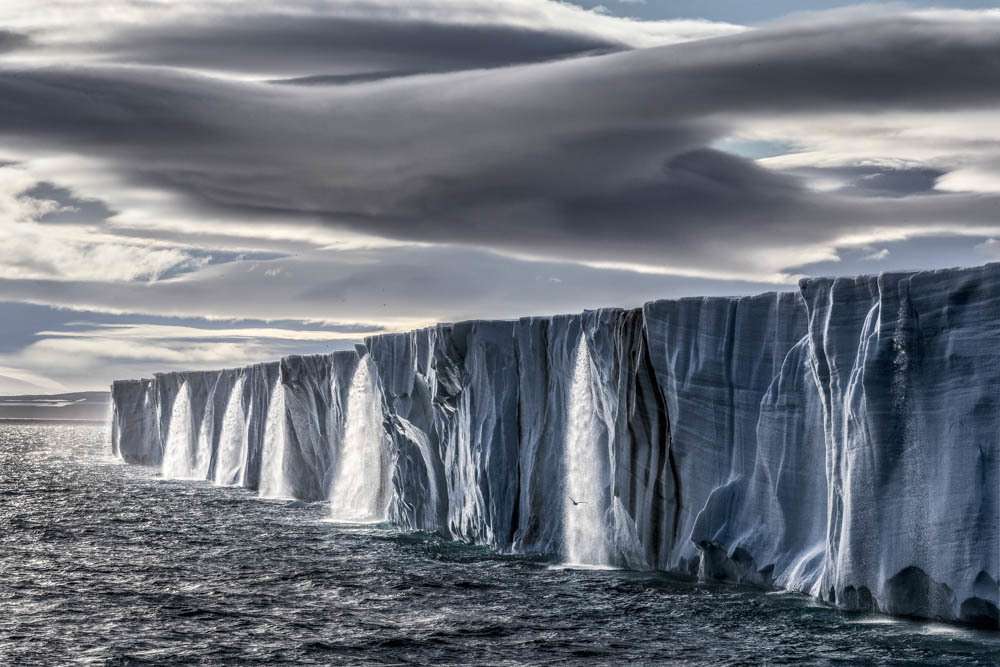
A land of ice is a realm of constant transformation, with new patterns and structures emerging through the clash of natural forces. Renowned wildlife photographer and conservationist Paul Nicklen’s evocative imagery, particularly his striking photograph “Ice Waterfall,” serves as a poignant visual testament to the impermanence of Earth’s polar regions and an urgent call to action against the accelerating impacts of climate change. The photograph, which captures a dramatic ice fall against a backdrop of dark clouds and the vast Nordaustlandet ice cap, encapsulates not only the raw beauty of the Arctic but also the profound narrative of a region under siege. This piece, featured in prominent publications and even gracing the cover of Pearl Jam’s "Gigaton" album, has resonated globally, reaching individuals from former Vice President Al Gore to everyday art collectors, underscoring its power as a symbol of environmental advocacy.
Nicklen’s personal connection to these frozen landscapes is deeply rooted. His fascination began at the tender age of four when his family relocated to Baffin Island. This formative experience, immersed in the ever-changing canvas of ice and snow, laid the groundwork for his lifelong dedication to documenting and protecting polar environments. Growing up in a community predominantly of Inuit heritage, Nicklen learned invaluable survival skills and gained a profound respect for the resilience of life in extreme conditions. He was guided by elders, learning to navigate treacherous ice, track elusive wildlife, and endure the biting cold – skills that would ultimately shape his career as a National Geographic photographer. This intimate upbringing has instilled in him a deep-seated understanding of the delicate balance that sustains polar ecosystems and the profound connection between human culture and the natural world.
The Ephemeral Artistry of Ice
The dynamic nature of ice formations presents both a photographic challenge and an unparalleled creative opportunity. Light interacts with frozen crystals in mesmerizing ways, refracting, bending, and scattering to create an infinite spectrum of patterns and textures. Nicklen describes the experience of photographing ice as one of constant discovery, where even the same subject, viewed from the identical vantage point, can yield a dramatically different image with each shutter click. This inherent variability, however, is also susceptible to environmental shifts. An overcast sky, for instance, can mute the dramatic contours of an iceberg, transforming a majestic spectacle into a formless mass against a somber horizon. Yet, it is precisely these environmental constraints that Nicklen finds liberating, pushing him to explore novel photographic approaches that often result in more compelling narratives and impactful imagery.
A Fleeting Moment Captured: “The Last Stand”
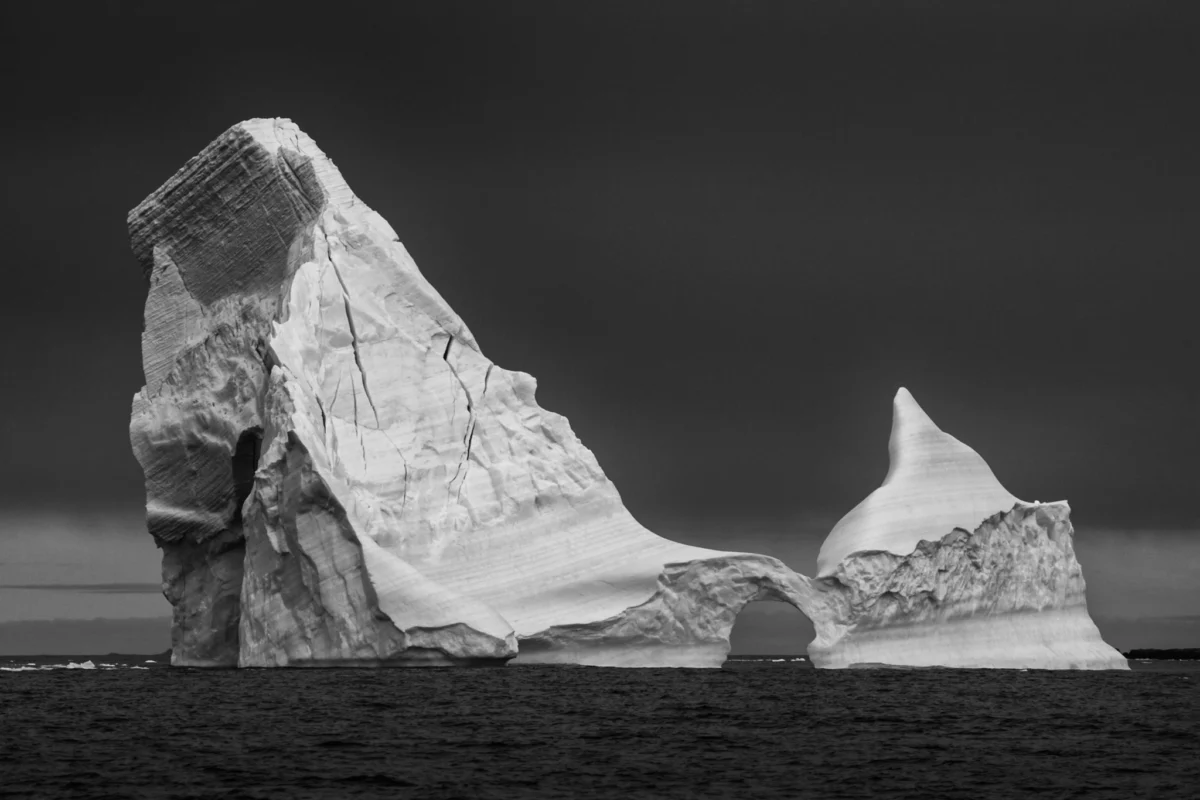
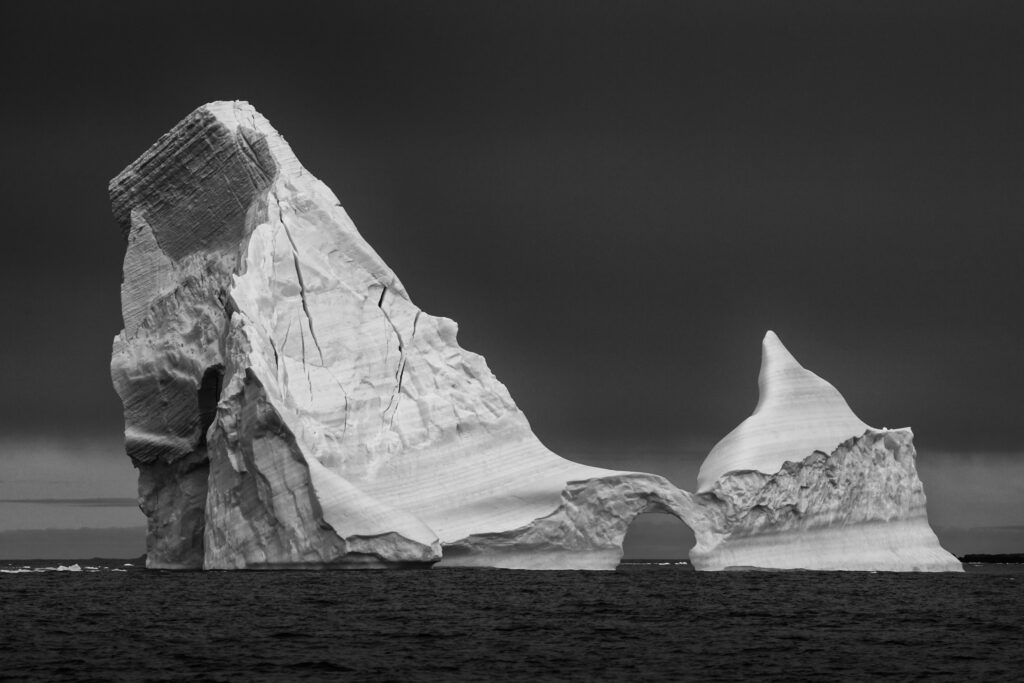
During an expedition to the remote shores of Antarctica, Nicklen witnessed firsthand the dramatic and often instantaneous changes that characterize these frozen landscapes. He recounts the experience of framing a particularly delicate ice arch, a fleeting masterpiece sculpted by the relentless forces of nature – tumultuous seas, harsh winters, and fierce winds. As he meticulously adjusted his camera, composing the shot between two towering ice spires, a thunderous rumble reverberated across the water. In a matter of seconds, the entire ice arch, a testament to nature’s ephemeral artistry, collapsed into the sea, its descent heralded by a crackling crescendo and a surge of waves. This dramatic event, captured in his photograph titled “The Last Stand,” serves as a stark reminder of the fragility of these environments. The caption accompanying the image emphasizes this, stating, “I hurried to capture the delicate arch before it plunged into the sea below. The beauty of Antarctica is as fragile as it is captivating.” This incident, though personally witnessed, reflects a broader phenomenon occurring across the polar regions.
The Interconnectedness of Life in Polar Regions
Beneath the seemingly barren expanse of snow and ice, the polar regions teem with life, intricately adapted to the harsh yet life-sustaining environment. Nicklen highlights the remarkable resilience of species such as seals, polar bears, and various seabirds, which have not only evolved to survive but depend on the ebb and flow of the icy conditions for their very existence. These animals utilize the frozen seas for critical life stages, including raising their young, foraging for sustenance, and finding mates. Their evolutionary journey has transformed the most challenging aspects of their habitat into the very foundation of their survival and remarkable resilience.
However, this profound interdependence also renders polar ecosystems exceptionally vulnerable. The diminishing ice cover in both the Arctic and Antarctic oceans poses an increasingly grave threat to the future of many of Earth’s iconic species. Scientific data underscores the alarming rate of ice melt. According to the National Snow and Ice Data Center (NSIDC), Arctic sea ice extent has been declining at an average rate of 13.1% per decade since 1979. Similarly, the Antarctic ice sheet is losing mass at an accelerating rate, with recent studies indicating that it has lost an average of 150 billion tons of ice per year over the past two decades. This rapid reduction in sea ice directly impacts the hunting grounds of polar bears, the breeding platforms for seals, and the overall availability of prey for numerous marine species.
A Witness to Arctic Transformation
Nicklen’s perspective is particularly poignant given his personal history. He has been a witness to the profound changes occurring in the Arctic, his childhood home and a place he once felt a deep sense of belonging. He articulates a profound sense of loss as he has observed his beloved Arctic evolve before his eyes, impacted by the escalating pressures of a warming planet. This firsthand observation amplifies the urgency of his conservation message. The Arctic, once a symbol of enduring cold and stability, is now on the front lines of climate change, experiencing warming at more than twice the global average, a phenomenon known as Arctic amplification. This accelerated warming leads to a cascading series of environmental consequences, including permafrost thaw, sea-level rise, and alterations in weather patterns that extend far beyond the polar circle.
Data and Implications: The Scientific Consensus
The scientific community overwhelmingly attributes these alarming changes to anthropogenic climate change, driven by the emission of greenhouse gases from human activities. The Intergovernmental Panel on Climate Change (IPCC) has consistently reported that human influence has warmed the atmosphere, ocean, and land, with direct consequences for the cryosphere, the frozen parts of the Earth. Projections indicate that if current emission trends continue, the Arctic Ocean could be virtually ice-free in the summer months within decades, a scenario with profound implications for global climate systems and biodiversity.
The loss of Arctic sea ice, for instance, has a significant impact on global weather patterns. The reduced ice cover means less sunlight is reflected back into space, leading to greater absorption of heat by the ocean, further accelerating warming. This can influence the jet stream, leading to more extreme weather events in temperate regions, including prolonged heatwaves, intense storms, and severe droughts. Furthermore, the thawing of permafrost releases vast amounts of stored carbon and methane, potent greenhouse gases that can further exacerbate global warming, creating a dangerous feedback loop.
The Role of Iconic Imagery in Conservation
Nicklen’s work, exemplified by "Ice Waterfall" and "The Last Stand," plays a crucial role in bridging the gap between scientific data and public understanding. These powerful visual narratives transcend statistics and technical jargon, allowing individuals to connect emotionally with the plight of polar regions and their inhabitants. By showcasing the breathtaking beauty and inherent vulnerability of these environments, Nicklen’s photographs serve as a potent form of advocacy. They compel viewers to recognize the intrinsic value of these ecosystems and the urgent need for their protection. The widespread recognition of his work, from its inclusion in prestigious journals to its adoption by influential figures and artists, demonstrates its efficacy in raising awareness and fostering a sense of shared responsibility.
A Collective Path Forward: Hope and Action
Despite the sobering realities and the daunting challenges posed by climate change, Nicklen expresses a persistent sense of hope, grounded in the belief that collective action can indeed alter the trajectory of environmental degradation. He emphasizes the vital role of informed and engaged citizens who share his profound love for the natural world. The support of individuals who advocate for the protection of wildlife and wild places is crucial in driving policy changes and promoting sustainable practices.
The urgency of the situation demands immediate and decisive action on a global scale. This includes transitioning to renewable energy sources, reducing carbon emissions, protecting vital ecosystems, and investing in climate adaptation strategies. International cooperation and policy frameworks, such as the Paris Agreement, are essential in coordinating these efforts. However, individual actions also contribute significantly. From making conscious consumer choices to supporting conservation organizations and advocating for stronger environmental policies, every effort plays a part in safeguarding the future of our planet.
Nicklen concludes with a message of solidarity and shared purpose: "We are in this together, and we will solve this together." This sentiment underscores the interconnectedness of humanity and the natural world, recognizing that the fate of polar regions is inextricably linked to our own. His work, imbued with both artistic brilliance and a deep commitment to conservation, continues to inspire and mobilize individuals worldwide to become active participants in the critical mission of preserving Earth’s precious icy kingdoms for generations to come. The call to action is clear: the time to act is now, before these magnificent landscapes and the life they sustain become mere memories.