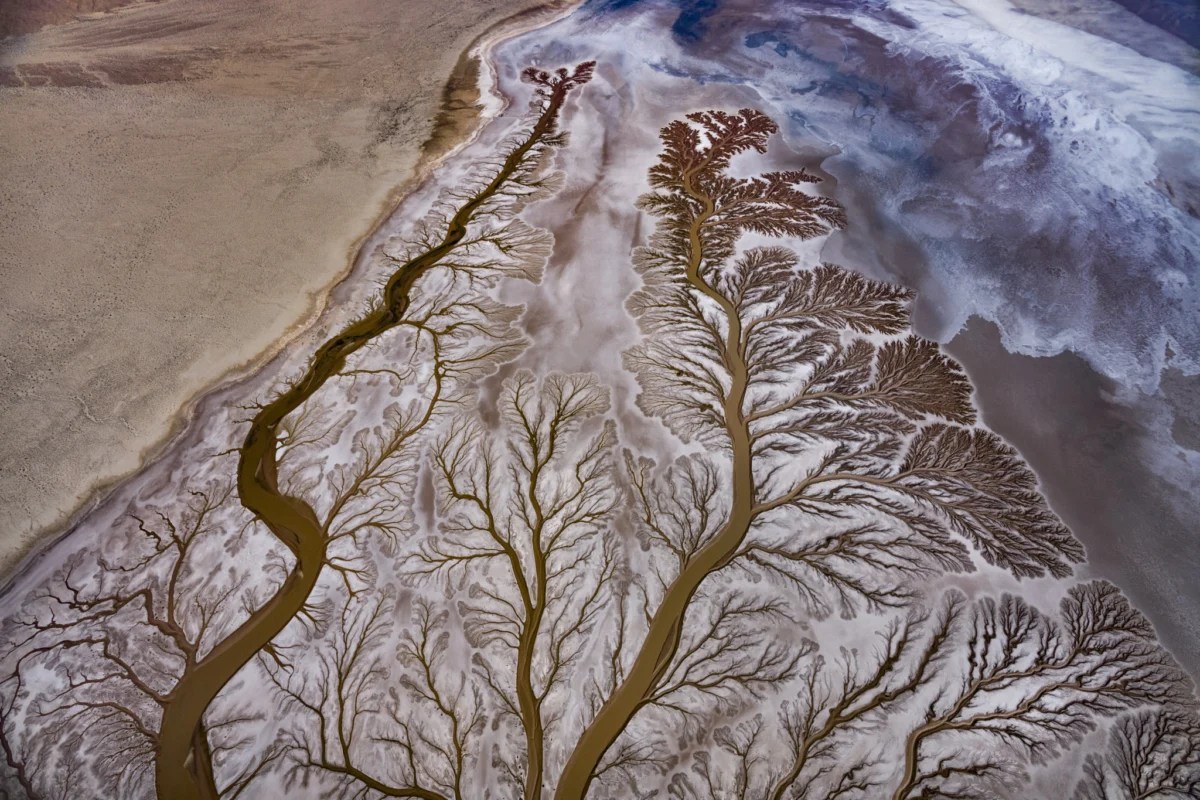
The stark beauty of the Colorado River Delta, a vast expanse of intricate waterways and arid landscapes, offers a profound visual testament to the fragility and resilience of nature. From a bird’s-eye perspective, thousands of feet above the earth, the delta unfurls not as mere "fingers" of a river, but as a sprawling, five-mile panorama of sheer, breathtaking beauty. This intricate network of channels, silt, and sediment, resembling a "quilted mosaic" and the very "lungs of the Earth," presents a complex canvas for photographers and environmentalists alike. The visual spectacle, however, belies a deeply troubled history, one of ecological strain and human impact, yet it now harbors a nascent hope for renewal, driven by a remarkable binational restoration effort.
A Lifelong Quest for Connection and Understanding
The author’s journey to capture the essence of the Colorado River Delta began with a lifelong pursuit of understanding humanity’s place within the natural world. This quest was ignited in early childhood, with formative experiences of independent exploration. At the age of nine, entrusted with a snowmobile in Canada’s far north, the author experienced a profound sense of liberation, an opportunity to connect intimately with the wild. These early ventures fostered a deep appreciation for the intricate "weave of this great fabric of life," leading to an early and enduring love for the natural world. This foundational connection to nature’s grandeur and complexity directly informed the author’s approach to documenting the Colorado River Delta. The challenge was not merely to photograph a landscape, but to translate its overwhelming beauty into images that could convey a powerful message of life and renewal, a message that could resonate deeply with viewers.
The Vanishing Veins: A River’s Descent
The Colorado River’s story is intrinsically linked to the growth of human civilization in the American West and Northwest Mexico. Originating in the Rocky Mountains, this vital waterway historically traversed over 1,500 miles through seven U.S. states—Wyoming, Colorado, Utah, Arizona, New Mexico, Nevada, and California—before reaching the Sea of Cortez in Mexico. Its journey carved through diverse ecosystems, from alpine forests and iconic red rock canyons to vast desert floodplains, sustaining a rich tapestry of life.
However, since the mid-20th century, the Colorado River has become a stark example of an overburdened natural resource. An ever-increasing demand for water, driven by burgeoning populations and intensive agricultural and industrial development, has led to the construction of numerous dams and reservoirs. These structures, including the Hoover Dam and Glen Canyon Dam, have fundamentally altered the river’s natural flow, diverting vast quantities of water for municipal use, irrigation, and hydroelectric power generation. This extensive water management system, while supporting the development of arid regions, has progressively diminished the river’s flow downstream.
The Drying Delta: A Crisis Unfolds
By the early 2000s, the consequences of decades of upstream diversion became critically apparent. For extended periods, the Colorado River ceased to reach the Sea of Cortez altogether, leaving its delta a parched and ecologically degraded landscape. This cessation of flow had devastating impacts on the delta’s unique ecosystem, which relied on the annual influx of freshwater and sediment to sustain its wetlands, riparian habitats, and the biodiversity they supported.
Compounding the issue of water diversion has been the region’s susceptibility to prolonged periods of drought. The current drought gripping the Colorado River Basin is described as the worst in 1,200 years, according to scientific studies. This extended dry spell, exacerbated by climate change, has further strained the river’s already diminished water resources, intensifying the ecological crisis in the delta. The combination of human-induced water scarcity and natural climatic variability has led to the denuding, draining, and decay of what was once a vibrant natural waterway.
A Moment of Revival: The Minute 319 Agreement
Despite the dire circumstances, a significant turning point emerged in the early 2010s. In 2012, the United States and Mexico, through a landmark agreement known as Minute 319 of the Treaty of 1944, committed to a binational restoration effort for the Colorado River Delta. This agreement, a testament to collaborative environmental stewardship, authorized a "pulse flow" – a controlled release of water from the Morelos Dam.
This pulse flow, a carefully managed surge of water, was designed to mimic the river’s historical flooding patterns, reintroducing water and sediment to the delta’s dry riverbed. The primary objective was to reconnect the river to the sea, even if temporarily, and to begin the process of ecological restoration. The effort involved extensive coordination between conservation organizations, local communities in the Mexicali Valley, and the governments of both nations.
The initial pulse flow in 2014 was a historic event. For the first time in decades, water from the Colorado River reached the Sea of Cortez. This success, however, was contingent on ongoing cooperation and favorable hydrological conditions. Subsequent agreements, building on the foundation of Minute 319, have continued to facilitate managed water releases, allowing for periods of flow into the delta.
Data and Observations: Quantifying the Impact and Hope
The impact of these restoration efforts, while ongoing, has been measurable. Scientific monitoring has documented the return of riparian vegetation in areas that had previously been arid. The presence of bird species, reliant on wetland habitats, has increased in restored zones. Studies have also indicated a partial rehydration of groundwater in the delta, a crucial component for sustaining any emergent ecosystem.
- Water Flow Data: While precise figures vary year to year based on negotiated releases and available water, the pulse flows have ranged from tens of thousands to over 100,000 acre-feet of water over specific periods. This is a fraction of the river’s historical flow but significant in its ecological impact on the delta.
- Biodiversity Monitoring: Organizations like the Sonoran Institute and Pronatura Noroeste have been instrumental in monitoring the ecological response. Their reports have cataloged the return of over 70 species of birds, including migratory species that depend on the delta’s habitats.
- Vegetation Recovery: Satellite imagery and ground surveys have shown the resurgence of native plant species, such as cottonwoods and willows, in areas where water has been reintroduced. This vegetation provides critical habitat and food sources for wildlife.
- Community Involvement: Local communities have played a vital role, participating in planting efforts, monitoring water flow, and advocating for continued restoration. Their engagement is crucial for the long-term sustainability of the delta’s revival.
Official Responses and International Cooperation
The binational nature of this restoration effort is its most defining characteristic. The U.S. Bureau of Reclamation and Mexico’s National Water Commission (CONAGUA) are key governmental bodies involved in managing water releases and coordinating efforts. Conservation groups, such as the Walton Family Foundation and The Nature Conservancy, have provided significant funding and technical expertise.
A spokesperson for the U.S. Bureau of Reclamation, speaking anonymously due to policy, stated, "The Colorado River Delta restoration is a complex but essential undertaking. It exemplifies what can be achieved through sustained international cooperation and a shared commitment to environmental stewardship. We are encouraged by the early signs of ecological recovery and remain dedicated to this long-term project."
Similarly, a representative from Mexico’s National Water Commission highlighted the importance of community involvement. "The success of this initiative hinges not only on water management but also on the active participation of the people who live in and depend on the delta. Their knowledge and dedication are invaluable assets in this endeavor."
Broader Implications: A Model for Arid Region Resilience
The story of the Colorado River Delta’s delicate renaissance holds profound implications far beyond its geographical boundaries. It serves as a potent case study for other arid and semi-arid regions grappling with water scarcity, population growth, and the impacts of climate change. The success of Minute 319 and subsequent agreements underscores the power of diplomacy and collaborative environmental management in addressing transboundary water resource challenges.
The delta’s revival demonstrates that even in the face of severe ecological degradation, a concerted and sustained effort can lead to tangible ecological improvements. It highlights the importance of:
- Binational Cooperation: Shared water resources necessitate shared responsibility and collaborative management strategies.
- Adaptive Management: The restoration process is iterative, requiring ongoing monitoring, evaluation, and adjustments to strategies based on observed results.
- Community Engagement: Local buy-in and participation are critical for the long-term success and sustainability of any environmental restoration project.
- Ecological Restoration as a Tool for Climate Resilience: By restoring natural ecosystems, regions can enhance their capacity to adapt to changing environmental conditions and mitigate the impacts of climate change.
The intricate patterns observed from the sky, once a stark reminder of a dying river, now represent a fragile but persistent symbol of hope. The Colorado River Delta’s journey from ecological crisis to nascent revival is a testament to human ingenuity, international collaboration, and the enduring power of nature to respond to restorative action. It offers a compelling narrative of possibility for a world increasingly defined by environmental challenges, suggesting that even in the most arid of landscapes, life and renewal can find a way.