In a stark illustration of the escalating challenges posed by artificial intelligence and misinformation, De Telegraaf, the largest daily newspaper in the Netherlands, published and subsequently retracted an article featuring an AI-generated photograph alongside a fabricated narrative about a Dutch national attempting to organize a private evacuation flight from the Middle East. The incident, which unfolded in early March 2026, highlighted critical vulnerabilities within journalistic verification processes, especially concerning the increasingly sophisticated nature of AI-generated content and the heightened geopolitical tensions that create fertile ground for disinformation.
The Fabricated Narrative Unveiled: "Tamara Harema" and the Private Evacuation
The controversy began on March 5, 2026, when De Telegraaf published a report under the header "Dutch people rent their own plane." The article detailed the purported efforts of a woman identified as "Tamara Harema" to charter an Airbus A321 aircraft. According to the story, Harema was attempting to facilitate the return of herself and other Dutch citizens from Muscat, Oman, back to the Netherlands, without detours. This alleged evacuation was set against the backdrop of a broader geopolitical crisis: a U.S.-Israel war with Iran, a conflict that had understandably stirred anxiety among expatriates and travelers in the Middle East.
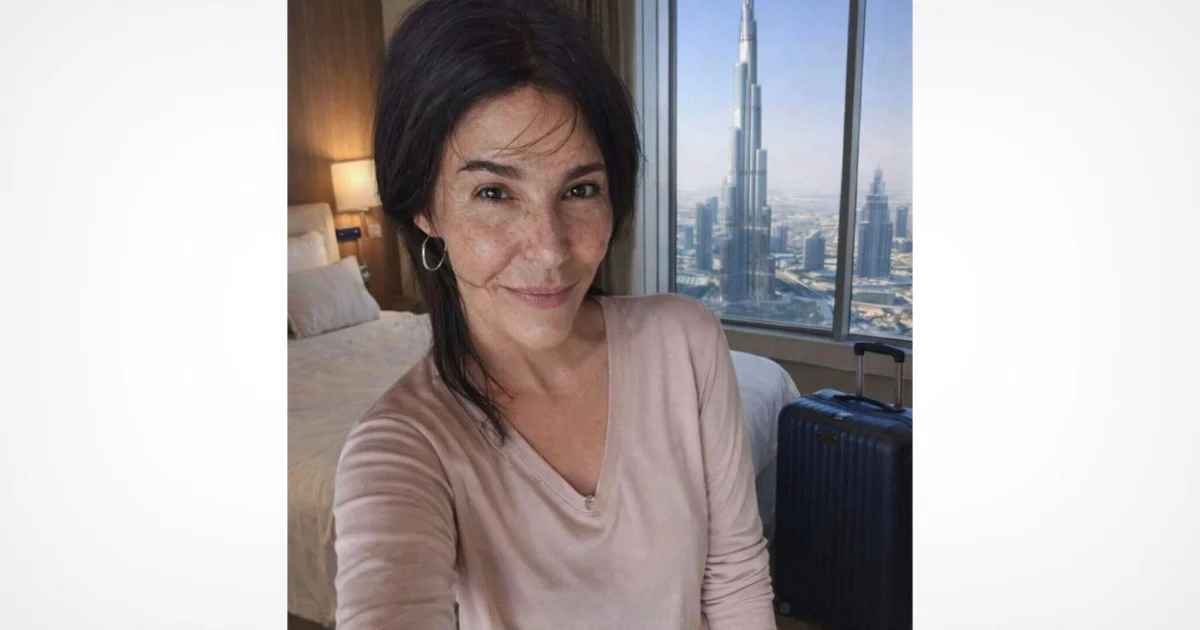
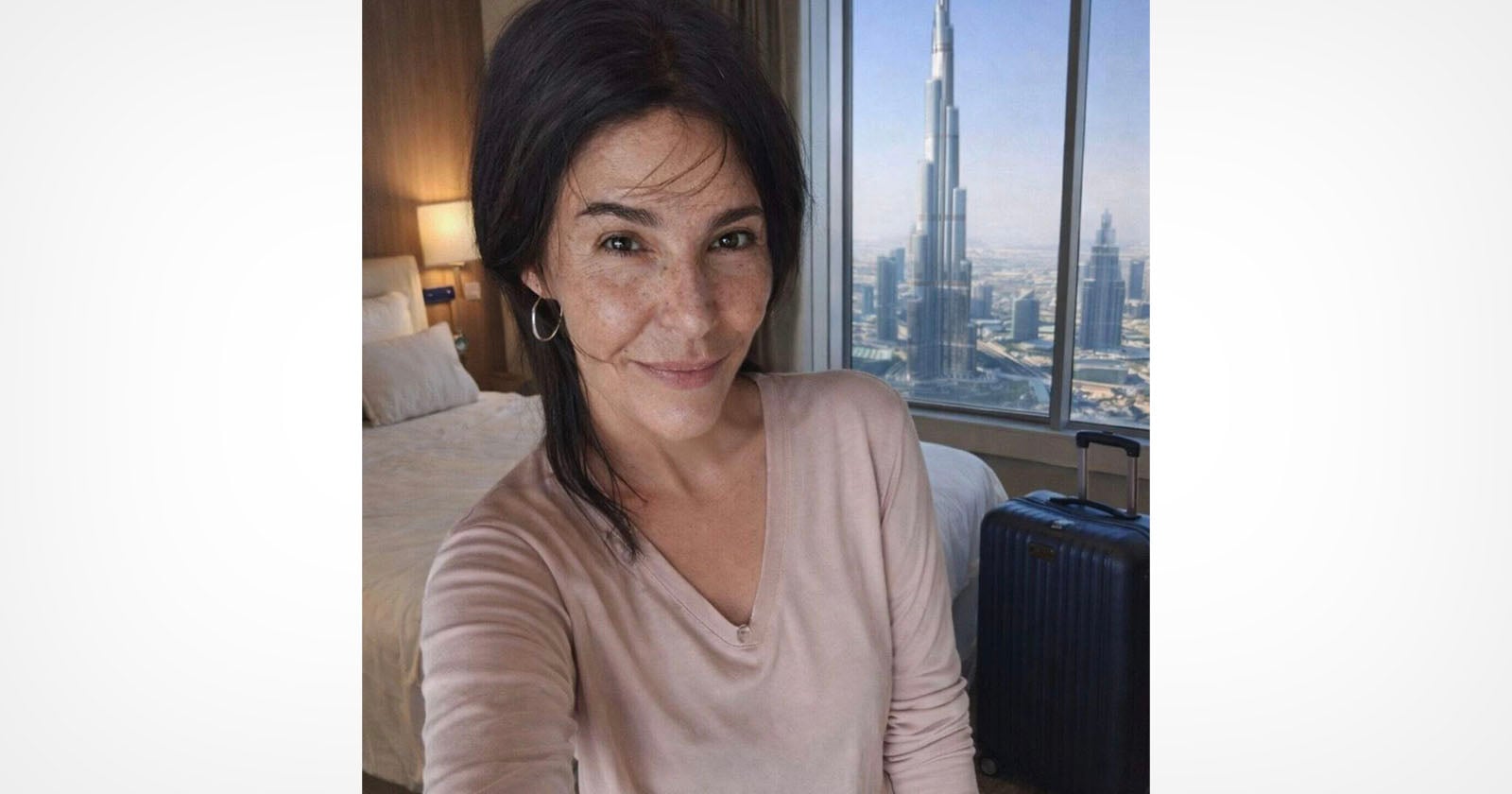
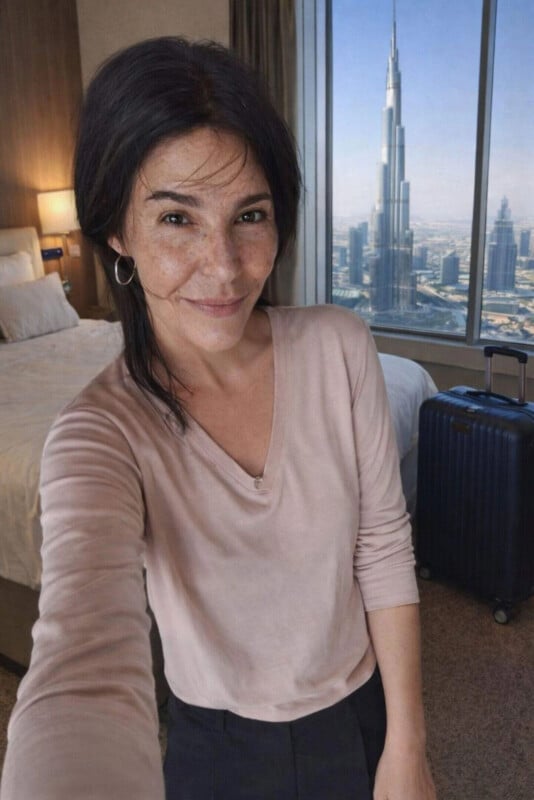
The report was accompanied by a striking selfie photograph of "Tamara Harema," ostensibly taken in a hotel room. In the background, the iconic Burj Khalifa, the world’s tallest building, and a portion of the sprawling Dubai skyline were prominently visible through a window, lending an air of authenticity and immediacy to the personal account. The image, depicting a woman with dark hair and freckles smiling, appeared to be a genuine depiction of a person caught in a precarious situation, adding emotional weight to the narrative of Dutch citizens feeling abandoned by their government and taking matters into their own hands.
However, the compelling story and its accompanying photograph soon drew the attention of Bellingcat, the renowned investigative journalism collective specializing in open-source intelligence (OSINT). Their meticulous analysis, detailed in a report published on March 12, 2026, began to unravel the inconsistencies and ultimately expose the elaborate deception.
The Digital Deception: Identifying AI Artifacts in the Image
Bellingcat‘s investigators quickly identified several tell-tale signs within the photograph that strongly suggested it was not a genuine image but rather an artifact of artificial intelligence generation. While AI models have become incredibly adept at creating photorealistic images, they often struggle with subtle details and the consistent rendering of complex objects or textures, leading to what are often referred to as "AI tells" or "artifacts."
Upon closer inspection, the image of "Tamara Harema" revealed several such anomalies:
- The Bedside Lamp: A prominent feature in the background was a bedside lamp. Bellingcat pointed out that its stem appeared visibly broken or unnaturally distorted, a common characteristic in AI-generated images where the model struggles with structural integrity or coherent physics.
- Earrings and Apparel: The earrings worn by "Harema" were noted to "not sit right," exhibiting an unnatural attachment or form that defied realistic physics. Similarly, the V-neck shirt she was wearing showed areas of strange blurring, particularly around the neckline, suggesting a lack of crisp definition or inconsistent rendering often seen when AI attempts to simulate fabric folds or contours.
- Discrepancies in the Burj Khalifa: While the AI model had done an impressive job of recreating the Burj Khalifa, likely owing to the immense number of real-world images of the landmark it would have been trained on, Bellingcat still found subtle but significant errors. One of the building’s floors was depicted as being slightly lower than its actual position, and a distinctive water feature at the base of the skyscraper was conspicuously absent. These minute inaccuracies, while easily overlooked by a casual observer, are precisely the kind of details that well-trained AI models can misinterpret or omit.
These combined visual inconsistencies provided compelling evidence that the image was not a photograph of a real person in a real setting but rather a synthetic creation.
Bellingcat’s Meticulous Investigation: Unmasking the Narrative’s Holes
Beyond the visual evidence, Bellingcat‘s investigation extended to the narrative itself, uncovering significant factual holes in "Tamara Harema’s" story. The report claimed she was attempting to charter an Airbus A321 from Muscat to the Netherlands without detours. Bellingcat‘s researchers cross-referenced flight data for Airbus A321s departing from Muscat on the dates mentioned in De Telegraaf‘s article. Their findings were conclusive: while Airbus A321s did depart from Muscat on those days, none of them were destined for the Netherlands. This critical discrepancy debunked the central premise of the evacuation story.
The methodology employed by Bellingcat underscores the power of open-source intelligence in an age of proliferating digital content. By leveraging publicly available information, such as flight tracking data, satellite imagery, and forensic image analysis tools, OSINT investigators can systematically verify or debunk claims that might otherwise pass unchallenged in a fast-paced news cycle. Their work served as a crucial bulwark against the spread of this particular piece of misinformation.
The Source of the Story: Mr. Chizki Loonstein
The path to uncovering the deception led Bellingcat to the purported source of the story: Mr. Chizki Loonstein. De Telegraaf‘s deputy editor-in-chief, in response to Bellingcat‘s inquiries, confirmed that a "long-standing source," Mr. Chizki Loonstein, had provided one of their reporters with the story of "Tamara Harema."
Mr. Loonstein’s background itself raised questions. He is identified as a lawyer who reportedly emigrated to Dubai after his legal firm experienced bankruptcy. When Bellingcat contacted Mr. Loonstein directly regarding the "Tamara Harema" story, he initially insisted that he knew Harema. However, his cooperation ceased abruptly once Bellingcat pressed for specific details about her identity and contact information. This sudden reticence further fueled suspicions about the veracity of his claims and the existence of "Tamara Harema."
The revelation that a "long-standing source" provided fabricated information is particularly troubling for journalistic integrity. News organizations often rely on trusted sources, especially for sensitive or exclusive stories. When such trust is betrayed, it not only compromises the immediate story but also damages the credibility of the publication and its future ability to report accurately. It necessitates a rigorous re-evaluation of source vetting protocols, particularly when dealing with information that is difficult to independently corroborate or that originates from individuals with potentially questionable motives.
De Telegraaf’s Response and Retraction
Following Bellingcat‘s compelling findings, De Telegraaf acted to address the misinformation. The newspaper promptly removed both the AI-generated photograph and the accompanying text detailing "Tamara Harema’s" purported evacuation efforts from its website. In their place, a retraction note was added to the bottom of the article. The note read: "An earlier version of this article contained a passage about renting an an Airbus by the Dutch and a photo that presumably did not meet our journalistic guidelines. The passage and the photo in question have been deleted."
While the retraction acknowledged the error, its phrasing—particularly the use of "presumably did not meet our journalistic guidelines"—could be interpreted as somewhat understated given the gravity of publishing entirely fabricated content and an AI-generated image. In cases of outright fabrication, many media watchdogs and ethical guidelines advocate for more direct and unambiguous language, explicitly stating that the content was false or misleading. Nevertheless, the swift removal and the admission of a lapse in adherence to journalistic standards represent a critical step in maintaining transparency, albeit a reactive one. The incident underscores the inherent pressure on newsrooms to publish quickly, especially during crises, and the subsequent challenge of balancing speed with rigorous fact-checking.
Broader Context: The Rise of AI in News and Misinformation
This incident at De Telegraaf is not an isolated event but rather a symptom of a larger, evolving crisis in the digital information landscape. The rapid advancements in generative AI technologies have made it increasingly easy and inexpensive to produce highly convincing fake images, videos (deepfakes), and text. These tools empower individuals and groups, from malicious actors to careless sources, to create sophisticated disinformation campaigns that can quickly spread across social media and even penetrate established news outlets.
Statistics on misinformation underscore the urgency of the problem. Studies consistently show that false information often spreads faster and wider than factual reporting, particularly on social media platforms. The public’s ability to discern real from fake content is also waning, with surveys indicating a growing skepticism towards all forms of media, a phenomenon exacerbated by incidents like the one involving De Telegraaf. This erosion of trust poses an existential threat to credible journalism and democratic discourse.
News organizations worldwide are grappling with how to integrate AI responsibly into their operations while simultaneously developing robust defenses against its misuse. The incident serves as a stark reminder that even major, established news outlets are not immune to these challenges and must invest heavily in training, tools, and protocols for verifying digital content.
The Geopolitical Undercurrents: The US-Israel War with Iran
The context of the fabricated evacuation story—a purported U.S.-Israel war with Iran—is crucial. Geopolitical crises, especially those involving military conflict and regional instability, inherently create an environment of heightened fear, uncertainty, and a desperate need for reliable information. In such situations, individuals, particularly expatriates and their families, become highly susceptible to news about evacuations, travel advisories, and safety measures.
Disinformation campaigns often capitalize on these vulnerabilities. False reports of evacuations, as seen with "Tamara Harema," can cause unnecessary panic, divert resources, or even put individuals in harm’s way if they act on incorrect information. For the Dutch government, a false report of citizens feeling abandoned and having to organize private flights during a major regional conflict could also have significant diplomatic and public relations implications, even if quickly debunked. The episode highlights how geopolitical events are increasingly becoming battlegrounds for information warfare, where AI-generated content can be a potent weapon.
Erosion of Trust: Implications for Journalism
The De Telegraaf incident carries significant implications for the future of journalism and public trust in media. When a prominent newspaper publishes and then retracts a fabricated story featuring an AI-generated image, it contributes to a broader decline in public confidence. In an era already characterized by accusations of "fake news" and partisan media, such mistakes reinforce cynical views about journalistic integrity.
The core tenets of journalism—accuracy, verification, and accountability—are paramount. Incidents like this underscore the critical importance of rigorous fact-checking and robust editorial oversight at every stage of the news production process. The pressure to break news quickly, especially in a competitive 24/7 news cycle, must not override the fundamental responsibility to ensure accuracy. Media organizations face the dual challenge of adapting to new technologies while simultaneously upholding traditional ethical standards.
Ethical Frameworks and Future Safeguards
Moving forward, the journalism industry must confront the implications of generative AI head-on. This includes:
- Enhanced Verification Protocols: Newsrooms need to implement advanced training for journalists on how to identify AI-generated content, including visual, audio, and text-based fakes. This may involve dedicated fact-checking units equipped with specialized AI detection tools.
- Source Vetting Reinforcement: Re-evaluating and strengthening procedures for vetting sources, especially those providing sensitive or uncorroborated information, is crucial. The reliance on "long-standing sources" must be balanced with independent verification, particularly when the information is extraordinary.
- Transparency and Disclosure: Clear guidelines for the use of AI in journalistic content, including requirements for disclosure if AI tools are used in content creation (e.g., for translation, transcription, or even image manipulation for illustrative purposes, provided it’s clearly labeled).
- Industry Collaboration: Sharing best practices, developing common standards, and collaborating on AI detection technologies across news organizations can create a more resilient media ecosystem.
- Public Education: Empowering the public with media literacy skills to critically evaluate information and recognize signs of AI-generated content is also a vital long-term strategy.
The incident at De Telegraaf serves as a potent warning. While AI offers immense potential for innovation in journalism, its misuse, whether intentional or accidental, can have severe consequences for truth, trust, and the fundamental role of the press in society. As the digital landscape continues to evolve, the vigilance and ethical commitment of news organizations will be more critical than ever in safeguarding the integrity of information.