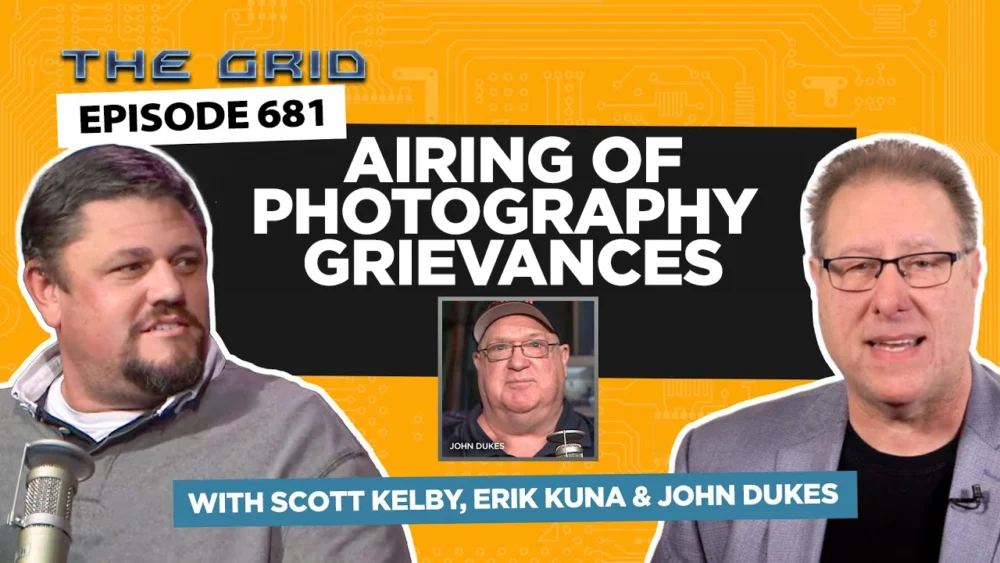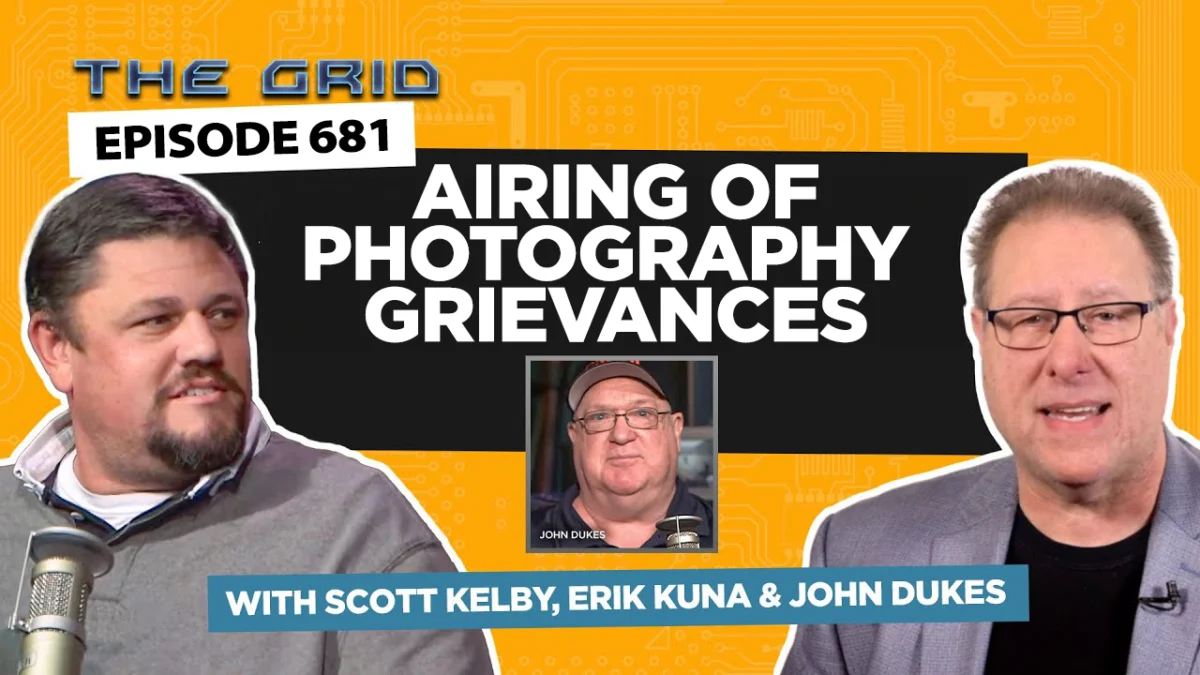
This week, the widely followed photography discussion program, The Grid, hosted by industry stalwarts Scott Kelby and Erik Kuna, dedicated its latest episode to an in-depth "airing of grievances" that resonate deeply within the global photography community. Joined by esteemed guest John Dukes, the trio meticulously unpacked a spectrum of industry quirks and persistent creative frustrations, offering both catharsis and critical commentary on the contemporary photographic profession. The discussion transcended mere complaints, evolving into a significant discourse on the ethical, economic, and technological forces shaping the art and business of photography today.
The episode, number 681 in its long-running series, provided a platform for experienced professionals to voice common frustrations, ranging from the economic undervaluation of creative work to the social dynamics of online communities and the pervasive myths surrounding photographic equipment. Simultaneously, the program offered a glimpse into the future of photographic technology with a sneak peek at an advanced, unreleased feature from Adobe Lightroom, underscoring the dynamic tension between enduring professional challenges and rapid technological advancement.
The Grid: A Forum for Photography Professionals
The Grid has established itself as a pivotal weekly webcast within the photography industry, co-hosted by Scott Kelby, a prolific author, educator, and CEO of KelbyOne, and Erik Kuna, a renowned photographer, educator, and COO of KelbyOne. Since its inception, the show has served as an accessible forum for discussions on photography techniques, gear reviews, industry news, and broader professional development topics. Its format typically includes expert insights, viewer Q&A sessions, and often features special guests who bring diverse perspectives to the table. The show’s enduring popularity stems from its hosts’ approachable yet authoritative style, fostering a sense of community and shared experience among photographers worldwide. This particular episode, focusing on grievances, tapped into a collective sentiment, demonstrating the program’s commitment to addressing the real-world challenges faced by its audience.
For this candid discussion, Kelby and Kuna invited John Dukes, a respected professional photographer known for his insightful commentary and extensive experience across various photographic disciplines. Dukes’ participation added an essential layer of seasoned perspective, validating the shared frustrations and enriching the dialogue with practical industry anecdotes. His presence underscored the universal nature of the grievances discussed, bridging the experiences of different segments within the photography community.
Unpacking the Grievances: A Deep Dive into Industry Frustrations
The core of the episode revolved around several prevalent issues that plague both emerging and established photographers. These grievances are not new but have been amplified by the digital age, social media, and the democratization of photography tools.
1. Unsolicited Critiques and the Digital Echo Chamber:
One of the primary frustrations highlighted was the prevalence of unsolicited critiques. In an era dominated by social media platforms and online forums, photographers frequently encounter subjective, often unconstructive, feedback on their work. While constructive criticism is vital for growth, the digital landscape has fostered an environment where anonymity can embolden individuals to deliver harsh or irrelevant comments without understanding context or intent. This phenomenon contributes to a challenging environment for artists, particularly those developing their style, and can stifle creativity. The discussion on The Grid implicitly touched upon the need for a more empathetic and education-focused approach to critique, emphasizing the difference between genuinely helpful feedback and mere negativity. Industry data suggests that a significant percentage of online creative communities struggle with maintaining positive and supportive environments, with 40% of artists reporting negative experiences with online critiques impacting their morale, according to a 2022 survey by the Creative Arts Guild.
2. The Persistent Request for RAW Files: Intellectual Property and Artistic Control:
Another significant point of contention is the frequent request from clients for unedited RAW image files. RAW files are the digital negatives of photography, containing unprocessed data directly from the camera sensor. They offer maximum flexibility for post-processing but represent an unfinished product. Professional photographers typically deliver edited JPEG or TIFF files, which reflect their artistic vision, skill, and brand. The demand for RAW files often stems from a client’s misunderstanding of the photographic process, a desire for perceived control, or an attempt to bypass the photographer’s post-processing expertise. This issue directly challenges a photographer’s intellectual property rights and artistic integrity. As Kelby, Kuna, and Dukes emphasized, providing RAW files is akin to a chef handing over raw ingredients instead of a finished dish. It undermines the value of the photographer’s complete workflow, from capture to final edit, which is integral to their professional service. Legal frameworks in many jurisdictions, including the United States, recognize the photographer as the copyright holder, granting them control over the final presentation of their work, making such requests a constant source of professional friction.
3. "Paid in Exposure": The Economic Devaluation of Creative Work:
Perhaps the most universally recognized grievance, "paid in exposure," resonated strongly with the hosts and guest. This refers to the common proposition where clients offer photographers visibility or "exposure" on social media or in print, in lieu of monetary compensation. While exposure can be valuable for emerging artists, its consistent offering as a substitute for fair payment is a significant issue contributing to the economic precarity of the creative industries. The gig economy, coupled with the ease of image sharing, has unfortunately normalized the idea that photography is a hobby rather than a skilled profession requiring substantial investment in equipment, education, and time.
Data from organizations like the Freelancers Union consistently highlight the struggle for fair compensation among creative professionals. A 2023 survey indicated that over 60% of freelance photographers have been offered "exposure" instead of payment, with nearly 30% reporting that such offers significantly impact their ability to sustain their business. This practice undermines professional rates, devalues the entire industry, and makes it challenging for photographers to earn a living wage, often forcing them to take on commercial work that does not align with their artistic aspirations. The Grid discussion served as a powerful reminder that creative work, like any other skilled labor, deserves equitable financial remuneration.
4. Gear Tribalism and the Cult of Equipment:
The conversation also delved into "gear tribalism"—the often-heated debates and fierce loyalties surrounding specific camera brands or types of equipment. This phenomenon often leads to photographers defining themselves by their gear rather than their artistic output or skill. While equipment choices are important and often personal, the excessive focus on brand loyalty can overshadow the fundamental principles of photography: light, composition, and storytelling. This tribalism is fueled partly by aggressive marketing campaigns and online communities that prioritize specifications over creative application. It fosters an environment where newer or more expensive gear is incorrectly equated with superior artistry, diverting attention from the photographer’s true craft.
5. The "Instant Pro" Branding Phenomenon:
With the proliferation of accessible, high-quality cameras (including smartphones) and readily available online tutorials, the barrier to entry into photography has significantly lowered. While this democratization has its benefits, it has also led to an "instant pro" branding phenomenon, where individuals with minimal experience quickly declare themselves professionals, often without a comprehensive understanding of business practices, client management, or advanced technical skills. This dilutes the market, sometimes leads to unrealistic client expectations, and creates competition that can be challenging for genuinely experienced professionals. The Grid hosts underscored the importance of skill, experience, and a robust portfolio—not just owning a camera—in defining professionalism.
6. The Myth: Better Cameras Automatically Make Better Photographers:
Closely related to gear tribalism and instant pro branding is the persistent myth that superior equipment automatically translates into superior photography. Kelby, Kuna, and Dukes debunked this misconception, emphasizing that a camera is merely a tool. True photographic excellence stems from a photographer’s vision, understanding of light, composition, mastery of technique, and ability to connect with subjects. A skilled photographer can create compelling images with even basic equipment, while an unskilled individual might produce mediocre results with the most advanced camera. This myth not only misguides aspiring photographers but also places undue pressure on professionals to constantly upgrade their gear, often at significant financial cost, when their efforts might be better spent honing their craft.
7. Minor Frustrations: A Touch of Reality
In a lighter vein, the discussion briefly touched upon "fast-food frustrations," an anecdotal point that highlighted the minor, everyday annoyances that can permeate even the most passionate professions. This brief interlude provided a moment of comedic relief, reminding viewers that creative professionals, like everyone else, navigate a world filled with small, irritating inconveniences.
Pioneering Workflow: A Sneak Peek at Lightroom’s AI-Powered Search
Amidst the discussion of industry challenges, Scott Kelby provided an exciting look into the future of photographic workflow with a sneak peek at an unreleased, powerful natural-language search tool destined for Adobe Lightroom’s cloud platform. This innovative feature represents a significant leap forward in digital asset management and underscores the increasing integration of artificial intelligence (AI) into creative software.
The demonstrated feature allows users to locate images within their cloud-stored libraries using detailed, conversational phrases rather than relying solely on traditional keywords or metadata tags. For instance, a photographer could search for "photos of a person wearing a red jacket standing next to a vintage car," or "stormtroopers in a desert landscape," or even "rows of olive oil bottles in a dimly lit market." The AI-driven engine interprets these complex queries to identify and retrieve highly specific images, even those not explicitly tagged with keywords.
Implications of AI-Powered Search:
This natural-language search capability holds profound implications for photographers:
- Enhanced Efficiency: Professionals often spend considerable time organizing and searching for images. This tool promises to drastically cut down search times, freeing up valuable hours for creative work.
- Deeper Discoverability: Images that might have been lost in vast archives due to incomplete tagging can now be easily discovered, maximizing the utility of a photographer’s entire collection.
- Intuitive Workflow: The move towards natural language interfaces makes software more accessible and user-friendly, allowing photographers to interact with their libraries in a more intuitive, human-like manner.
- Future of Asset Management: This feature signals a broader trend towards AI-driven intelligent asset management, where software actively understands and categorizes content based on visual cues and contextual information, rather than purely manual input. While currently limited to cloud-stored images, the technology’s potential expansion to local libraries could revolutionize desktop workflows as well.
This innovation aligns with Adobe’s broader strategy of integrating its Sensei AI technology across its Creative Cloud suite, aiming to automate tedious tasks and enhance creative possibilities. It represents a significant step towards a more intelligent, responsive, and efficient digital darkroom.
Beyond Grievances and Innovation: Community and Education
The episode also reinforced the community-centric ethos of The Grid and KelbyOne. Regular segments included giveaways, a popular feature that engages viewers and provides tangible benefits. Additionally, Kelby took the opportunity to plug the upcoming iPhone Photography Conference, an event that highlights the growing importance and artistic potential of mobile photography. This conference caters to a rapidly expanding segment of photographers who utilize their smartphones as primary photographic tools, further democratizing the art form and challenging traditional notions of "professional" equipment. The unscripted banter and genuine rapport between Scott, Erik, and John added an authentic, relatable layer to the episode, making the complex discussions accessible and engaging for a wide audience.
Broader Impact and Implications for the Photography Industry
The latest episode of The Grid serves as a microcosm of the contemporary photography industry—a landscape characterized by both enduring professional challenges and exhilarating technological advancements. The "airing of grievances" highlighted the critical need for greater industry standardization, improved client education, and a collective effort to uphold the economic value of creative work. The ongoing struggle against undervaluing photography, fueled by practices like "paid in exposure," necessitates stronger advocacy from professional organizations and a shift in cultural perception regarding artistic labor.
Conversely, the preview of Lightroom’s AI-powered search capability illustrates a future where technology actively assists and augments the creative process, making workflows more efficient and opening new avenues for creativity and organization. This dual narrative—addressing persistent human-centric problems while embracing cutting-edge technological solutions—defines the current state of photography.
The discussions on The Grid are not just about complaints; they are a call to action for photographers to educate clients, advocate for fair compensation, prioritize skill over gear, and adapt to an ever-evolving technological landscape. For clients and the broader public, such discussions offer crucial insights into the complexities and professionalism inherent in the art of photography, fostering a greater appreciation for the craft and its practitioners. As the industry continues to evolve, platforms like The Grid remain vital in navigating its complexities, fostering dialogue, and providing both solace and solutions for the global community of photographers. The replay of this episode offers invaluable insights for anyone engaged in or passionate about the art and business of photography, prompting reflection on which grievances resonate most deeply and how innovation continues to reshape the visual world.