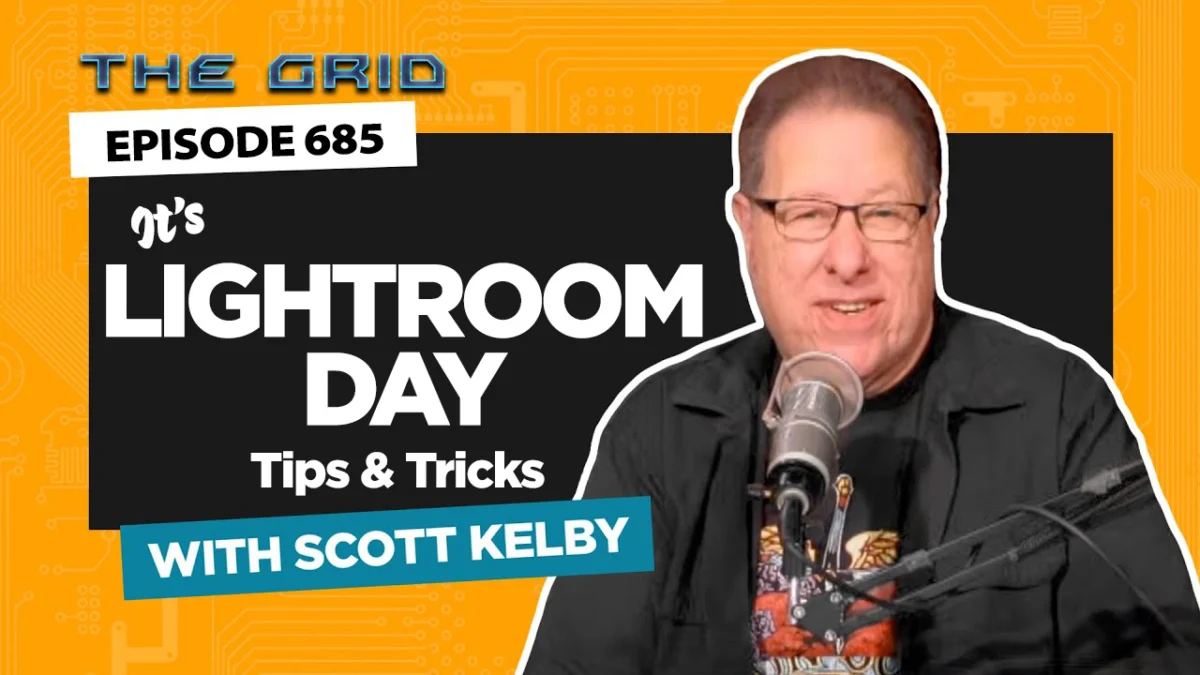
Episode 685 of The Grid, a cornerstone broadcast for digital photographers seeking expert guidance, recently dedicated its airtime to "Lightroom Day," featuring renowned photography educator Scott Kelby as the sole host. The absence of co-host Erik Kuna was attributed, with a touch of characteristic humor, to his purported mission at Cape Canaveral, tracking down cameras following the Artemis II launch. This engaging session provided viewers with a comprehensive array of practical tips for Adobe Lightroom Classic, interwoven with insights from Kelby’s recent international workshop and a dynamic Q&A segment. The episode underscored the enduring relevance of proficient post-processing skills in contemporary photography and highlighted Kelby’s commitment to accessible education through initiatives like his new Complete Lightroom Learning System.
The Context of The Grid and KelbyOne
The Grid broadcast, a flagship production of KelbyOne, has established itself as a pivotal resource within the global photography community. For over a decade, the weekly show has served as a digital town hall, bringing together industry experts, celebrated photographers, and a passionate audience to discuss trends, techniques, and tools. KelbyOne, founded by Scott Kelby, is an online educational platform dedicated to photography, Photoshop, and Lightroom training, offering a vast library of courses, tutorials, and resources. The platform’s mission is to empower photographers of all skill levels to enhance their craft, from fundamental concepts to advanced professional workflows. The Grid embodies this mission by offering free, live, and interactive content that often previews or supplements the deeper dives available to KelbyOne members. The format typically involves lively discussions, live demonstrations, and direct engagement with viewer questions, fostering a vibrant learning environment.
Scott Kelby, an influential figure in digital photography and graphic design, is a best-selling author, publisher of Photoshop User magazine, and CEO of KelbyOne. His accessible teaching style and ability to distill complex technical concepts into actionable advice have made him a trusted voice for millions of photographers worldwide. Erik Kuna, a respected astrophotographer, educator, and co-host of The Grid, often brings a unique perspective, particularly on subjects related to advanced photography techniques and hardware. Their dynamic interplay typically forms the backbone of the show, making Kelby’s solo appearance a notable deviation from the usual format.
A Humorous Absence: The Artemis II Connection
The lighthearted explanation for Erik Kuna’s absence—his pursuit of cameras at Cape Canaveral post-Artemis II launch—serves as a clever nod to his passion for space photography and the broader public interest in space exploration. While the Artemis II mission is a crucial upcoming lunar flyby test flight, it is currently slated for late 2024 or 2025, not having launched prior to this episode’s broadcast. This detail suggests the explanation was a jocular, improvised reason for Kuna’s unavailability, rather than a factual account of a post-launch recovery effort.
Nonetheless, the mention of Artemis II provides an opportunity to contextualize the significance of this space endeavor. Artemis II is NASA’s second mission in the Artemis program and the first crewed flight test of the Orion spacecraft with a human crew. It will carry four astronauts on a lunar flyby, paving the way for Artemis III, which aims to land humans on the Moon for the first time since 1972. Such missions invariably involve extensive photographic documentation, both for scientific data collection and public outreach. Photographers like Erik Kuna, deeply embedded in the space community, would indeed be keenly interested in the photographic opportunities and technical challenges associated with capturing such historic events. The humorous premise highlights the enduring link between cutting-edge technology, scientific exploration, and the art of photography.
A Journey to Vietnam: Scott Kelby’s Workshop Insights
The episode commenced with Scott Kelby sharing a selection of photographs from his recent Vietnam photography workshop. These workshops, a staple of Kelby’s educational offerings, provide participants with immersive, hands-on experiences in diverse and often exotic locations. A photography workshop in Vietnam, for instance, would typically expose photographers to a rich tapestry of cultural subjects, breathtaking landscapes, bustling street scenes, and unique architectural elements. Participants often learn to navigate challenging lighting conditions, engage with local communities for compelling portraits, and master compositional techniques suited to dynamic environments.
Kelby’s practice of showcasing workshop photos on The Grid serves multiple purposes: it offers a visual travelogue, inspires viewers with real-world examples of photographic success, and provides a practical context for the editing tips that follow. By presenting images captured under varying conditions—from the vibrant chaos of a market to the serene beauty of a rice paddy—Kelby effectively sets the stage for demonstrating how Lightroom Classic can transform raw captures into polished, impactful photographs. This segment implicitly reinforces the value of fieldwork combined with robust post-processing as integral components of a photographer’s journey towards mastery.
Mastering Lightroom Classic: Essential Techniques Unveiled
The core of the "Lightroom Day" episode was dedicated to a series of practical, immediately applicable tips for Lightroom Classic. Kelby meticulously covered several common challenges faced by photographers, demonstrating efficient solutions within the software.
-
Fixing White Balance: White balance is fundamental to accurate color representation in photography. Incorrect white balance can result in images with an undesirable color cast, making skin tones look unnatural or landscapes appear dull. Kelby likely demonstrated how to use Lightroom’s eyedropper tool to sample neutral tones, apply preset white balance settings (e.g., Daylight, Cloudy, Tungsten), or manually adjust temperature and tint sliders to achieve natural and aesthetically pleasing colors. This correction is crucial for maintaining the authenticity and mood of an image, especially when shooting in mixed or challenging lighting conditions.
-
Masking Skin Tones: For portrait photographers, precise control over skin tones is paramount. Kelby’s discussion on masking skin tones would have focused on Lightroom’s sophisticated local adjustment tools. Modern versions of Lightroom Classic incorporate AI-powered masking capabilities, allowing users to automatically select subjects, sky, or specific body parts, including skin. This enables photographers to make targeted adjustments—such as smoothing skin, evening out complexions, or subtly enhancing luminosity—without affecting other areas of the photograph. Such selective editing is vital for achieving professional-grade portrait retouching while preserving natural details.
-
Reducing Hotspots: Hotspots refer to areas of an image that are severely overexposed, resulting in a loss of detail and often appearing as pure white patches. These can occur from direct light sources, reflections, or incorrect exposure settings. Kelby would have showcased techniques to recover detail in blown-out highlights using the Highlight slider, or by employing local adjustments like the Adjustment Brush or Radial Filter to selectively reduce exposure or clarity in specific bright areas. Effectively managing hotspots is essential for maintaining dynamic range and visual information across the entire image.
-
Cutting Through Haze: Atmospheric haze, often present in landscapes or urban scenes, can reduce contrast and make images appear flat or desaturated. Lightroom Classic’s Dehaze slider, introduced in earlier versions, is a powerful tool specifically designed to combat this issue. Kelby likely demonstrated how to effectively use this slider to restore clarity, deepen colors, and enhance overall contrast, making distant subjects appear sharper and more defined. This technique is particularly beneficial for travel and landscape photographers operating in diverse environmental conditions.
-
Straightening Buildings: Architectural photography and urban landscapes often suffer from converging verticals or distorted perspectives, especially when shooting with wide-angle lenses or tilting the camera upwards. Lightroom’s Transform panel provides robust tools to correct these distortions. Kelby would have illustrated how to use guided upright tools, or manual sliders for vertical, horizontal, and aspect ratio corrections, to straighten buildings and correct perspective, ensuring that structures appear geometrically accurate and visually balanced. This attention to detail significantly enhances the professional quality of architectural imagery.
These tips, presented in a clear and actionable manner, exemplify Kelby’s pedagogical approach: demystifying complex editing challenges with straightforward, repeatable solutions that empower photographers to achieve immediate improvements in their workflow.
Interactive Learning: The Q&A Segment
A hallmark of The Grid is its interactive Q&A segment, allowing viewers to submit questions and receive direct answers from the experts. This episode’s Q&A tackled several pertinent topics reflecting common concerns among photographers:
-
Noise Reduction: Image noise, characterized by random speckles or grain, is a frequent byproduct of shooting in low light conditions or at high ISO sensitivities. Viewers likely sought advice on balancing noise reduction with detail preservation. Kelby would have discussed Lightroom’s Luminance and Color noise reduction sliders, explaining how to apply them judiciously to minimize distracting artifacts while retaining sharpness and texture. He might also have touched upon the trade-offs involved and best practices for different types of images.
-
Managing Catalog Size: Lightroom catalogs are databases that store information about images, including edits, metadata, and previews. As a photographer’s library grows, managing catalog size and performance becomes crucial. Kelby would have offered insights into optimizing catalog settings, consolidating multiple catalogs, regular backups, and potentially strategies for archiving older projects to maintain system responsiveness and data integrity. This topic is vital for long-term workflow efficiency and data security.
-
Cloud vs. Local Storage: The debate between cloud and local storage solutions is ongoing in the digital age. Kelby likely addressed the pros and cons of each. Local storage offers faster access, greater control, and no recurring subscription fees, but requires physical hardware management and robust backup strategies. Cloud storage provides accessibility from anywhere, built-in redundancy, and often simplifies sharing, but comes with subscription costs, reliance on internet connectivity, and potential concerns about data privacy. Kelby’s advice would have helped photographers make informed decisions based on their individual workflow, security needs, and budget.
Comprehensive Education: The Complete Lightroom Learning System
Throughout the episode, Scott Kelby took the opportunity to introduce his new Complete Lightroom Learning System. This initiative is designed to provide a structured, in-depth pathway for photographers looking to master Adobe Lightroom. Such a system typically encompasses a curated collection of video tutorials, practical exercises, downloadable resources, and possibly community support, guiding users from foundational concepts to advanced techniques. The launch of such a comprehensive system underscores the continuous demand for high-quality, organized educational content in the ever-evolving landscape of digital imaging. It caters to individuals seeking more than just isolated tips, but rather a holistic understanding and proficiency in Lightroom, aiming to build confidence and speed in their editing process.
The Broader Impact: Empowering Photographers in a Digital Age
"Lightroom Day" on The Grid serves as a microcosm of the larger trends in photography education and practice. The episode’s focus on practical, real-world editing challenges and solutions reflects the critical role post-processing plays in modern photography. In an era where digital capture is ubiquitous, the ability to refine, enhance, and correct images in software like Lightroom Classic is as important as the act of pressing the shutter.
The continued popularity of shows like The Grid and the development of comprehensive learning systems like Kelby’s highlight a persistent need among photographers for accessible, expert-led training. The democratizing power of online platforms allows a global audience to benefit from the insights of industry leaders, fostering a more skilled and engaged photographic community. By offering immediately applicable tips, fostering interactive learning through Q&A, and providing pathways for deeper study, KelbyOne and The Grid continue to empower photographers to elevate their craft, transform their visions into compelling images, and navigate the complexities of the digital workflow with greater confidence and efficiency. The replay of this episode remains a valuable resource for anyone seeking to "dial in their edits" and accelerate their journey toward Lightroom mastery.