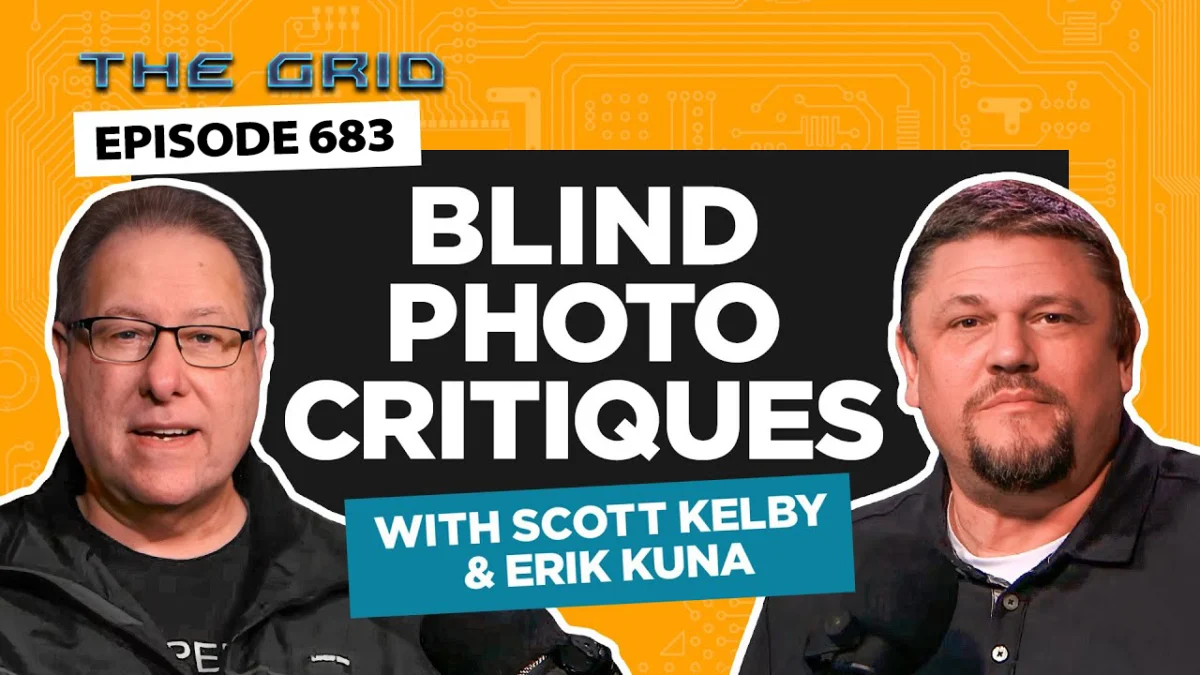
The latest installment of The Grid, the long-running and influential webcast series, delivered its highly anticipated Blind Photo Critiques episode (number 683) this week, featuring hosts Scott Kelby and Erik Kuna. The episode provided a comprehensive and often illuminating review of a diverse array of viewer-submitted images, drawing submissions from photographers spanning continents. This critically acclaimed segment is a cornerstone of The Grid‘s programming, designed to offer candid, constructive feedback on real-world photographic challenges and successes, thereby serving as a valuable educational resource for the global photography community.
The Enduring Legacy of "The Grid" and KelbyOne
The Grid, broadcast weekly, has established itself as a pivotal platform in digital photography education since its inception. A product of KelbyOne, a leading online educational community for photographers, designers, and illustrators, the show leverages the expertise of its hosts to demystify complex photographic concepts and techniques. Scott Kelby, a world-renowned photographer, author of numerous best-selling photography books, and CEO of KelbyOne, brings decades of industry experience and pedagogical acumen to the critiques. His co-host, Erik Kuna, a respected educator, photographer, and technical specialist, complements Kelby’s insights with his practical, hands-on approach and deep understanding of modern photographic workflows. Together, they have cultivated a loyal following, making The Grid an essential weekly destination for aspiring and professional photographers alike. The format’s longevity, evidenced by over 680 episodes, underscores its consistent relevance and the ongoing demand for high-quality, accessible photography instruction.
A Deep Dive into the Blind Critique Format
The "Blind Photo Critiques" format is particularly effective for several reasons. By presenting images without revealing the photographer’s identity, the hosts ensure objectivity in their evaluations, focusing solely on the merits and shortcomings of the photograph itself. This approach removes potential biases related to reputation or personal connection, allowing for an honest assessment based purely on compositional strength, technical execution, and artistic intent. The submissions, curated from a global pool, represent a wide spectrum of photographic genres and skill levels, transforming each episode into a dynamic learning experience. Participants and viewers alike gain invaluable insights not only from the direct feedback but also from observing how expert eyes analyze images from diverse cultural and technical contexts. This fosters a deeper understanding of universal photographic principles that transcend specific styles or subjects.
Mastering the Technical and Artistic Elements: Key Takeaways
The critiques on episode 683 delved into a range of fundamental and advanced photographic topics, offering actionable advice applicable across genres. The discussions frequently returned to critical elements that differentiate a good photograph from a truly exceptional one.
-
The Nuances of White Balance: A recurring theme in the critiques involved white balance, a foundational technical aspect that dictates the color accuracy and mood of an image. Scott and Erik meticulously explained how incorrect white balance can cast an undesirable color tint over an entire scene, making skies appear too blue, skin tones unnatural, or urban landscapes sterile. They demonstrated how subtle adjustments, often overlooked by less experienced photographers, could dramatically enhance the realism and emotional impact of a photo. For instance, a warmer white balance might evoke a sense of nostalgia or comfort, while a cooler tone could convey starkness or modernity. The hosts emphasized the importance of setting white balance correctly in-camera or meticulously correcting it in post-processing to ensure faithful color reproduction, especially crucial for genres like portraiture and product photography where color accuracy is paramount.
-
Strategic Cropping for Impact: Cropping, often perceived as a simple post-processing step, was highlighted as a powerful compositional tool. The hosts illustrated how intelligent cropping could eliminate distracting elements, improve subject isolation, and strengthen the overall composition by adhering to or strategically breaking traditional rules like the rule of thirds or leading lines. They showed examples where a tighter crop enhanced intimacy in a portrait, or a wider crop provided essential context in a landscape. Conversely, poor cropping decisions were shown to weaken an image, leading to awkward negative space or cutting off vital parts of the subject. The discussion underscored that cropping is not merely about trimming edges but about refining the narrative and visual flow of an image.
-
Elevating Images Through Post-Processing: Beyond basic adjustments, the episode explored various post-processing techniques, ranging from fundamental exposure and contrast adjustments to more advanced color grading and selective enhancements. The hosts demonstrated how careful use of tools like dodging and burning could sculpt light and shadow, adding depth and dimension. They also touched upon common pitfalls, such as over-processing, which can lead to an unnatural or "plastic" look, or the overuse of clarity and saturation sliders. The emphasis was on enhancing the existing qualities of an image rather than fundamentally altering its reality, maintaining a balance between artistic expression and photographic integrity. A few "handy Photoshop tricks" were also shared, likely demonstrating efficient workflows for tasks like noise reduction, sharpening, or object removal, providing practical solutions for common post-production challenges.
-
Developing a Signature Visual Style: Perhaps one of the most significant takeaways was the discussion on building a consistent visual style. This concept extends beyond individual technical adjustments, encompassing a photographer’s unique aesthetic voice. Scott and Erik elaborated on how consistency in color palette, tonal range, compositional preferences, and even choice of subject matter contributes to a recognizable brand identity. They argued that a distinct style helps a photographer’s work stand out in an increasingly saturated visual landscape, allowing viewers to identify their images without necessarily seeing their name. Achieving this consistency involves intentional choices in every stage, from capture to final edit, reflecting a cohesive artistic vision that resonates with an audience.
A Global Canvas: Diverse Genres Under Scrutiny
The strength of this particular Blind Photo Critiques episode lay in the sheer breadth of genres represented by the viewer submissions. This diversity not only kept the critique engaging but also allowed for a broad application of photographic principles.
-
Architectural Grandeur: Images of architecture often demand precision in perspective, line, and light. The critiques likely focused on maintaining vertical and horizontal integrity, managing dynamic range in challenging lighting conditions (e.g., bright exteriors and dark interiors), and using composition to highlight structural beauty or historical significance. Discussions might have included lens choices (e.g., wide-angle vs. telephoto), tilt-shift effects, and the importance of leading lines in drawing the viewer’s eye through a scene.
-
The Art of Street Photography: This genre thrives on candid moments, human interaction, and spontaneous composition. Feedback on street photography would typically revolve around capturing decisive moments, anticipating action, and creating compelling narratives within chaotic urban environments. The hosts might have addressed issues like depth of field to isolate subjects, the ethical considerations of photographing strangers, and the use of natural light to enhance mood and drama.
-
Capturing Wildlife: Wildlife photography presents unique challenges related to patience, technical prowess (fast autofocus, long lenses), and ethical engagement with subjects. Critiques would likely cover sharpness, focus on the eyes, ethical distances from animals, and composition that emphasizes the animal’s natural behavior and environment. Discussions on aperture, shutter speed, and ISO settings would be crucial for freezing motion and achieving optimal exposure in varying light conditions.
-
Portraits and Human Connection: Portrait photography is inherently about capturing personality and emotion. Feedback in this segment would focus on lighting (natural vs. artificial, key light, fill light), posing, expression, and establishing a connection with the subject. The importance of background control, depth of field for subject isolation, and flattering angles would also be key points of discussion, alongside post-processing techniques specific to skin tones and facial features.
-
Aviation Dynamics and Castle Majesty: The inclusion of aviation photography and a striking castle scene further diversified the episode. Aviation photography often requires specialized knowledge of aircraft, precise timing, and the ability to freeze high-speed action, potentially involving critiques on panning techniques, propeller blur, and clear skies. The castle scene, conversely, might have prompted discussions on landscape composition, historical context, dramatic lighting (e.g., golden hour or blue hour), and conveying a sense of grandeur and timelessness, perhaps touching upon elements like foreground interest, atmospheric perspective, and dynamic range.
Beyond the Critiques: Community Engagement and Educational Outreach
Beyond the core critiques, The Grid episode also touched upon several other initiatives by KelbyOne, reinforcing its role as a comprehensive educational hub.
-
The Rise of Mobile Photography: Highlights from the recent iPhone Photography Conference underscore the significant and growing impact of mobile devices on the photographic landscape. As smartphone cameras become increasingly sophisticated, they democratize photography, making it accessible to a broader audience. The conference likely addressed techniques for maximizing smartphone camera capabilities, mobile editing workflows, and the unique artistic opportunities presented by this ubiquitous tool. This acknowledgment by industry leaders like Scott Kelby validates mobile photography as a serious and evolving art form, integrating it into the broader discourse of high-quality image creation.
-
The Value of In-Person Learning: Mentions of upcoming workshops and travel plans by Scott Kelby and Erik Kuna emphasize the continued importance of immersive, hands-on learning experiences. While online content provides unparalleled accessibility, in-person workshops offer direct interaction, personalized instruction, and the opportunity for photographers to learn in specific environments (e.g., landscape workshops in scenic locations, studio lighting workshops). These events complement the online offerings by providing deeper, more tailored educational experiences.
-
Giveaways as Engagement Tools: The inclusion of giveaways serves as an effective mechanism for community engagement, rewarding loyal viewers and attracting new ones. Beyond the promotional aspect, giveaways foster a sense of community and appreciation, encouraging active participation and interaction with the show.
Implications for the Global Photography Community
The consistent delivery of high-quality, accessible content like The Grid‘s Blind Photo Critiques has profound implications for the global photography community. It contributes significantly to the democratization of photography education, breaking down geographical and financial barriers that once limited access to expert instruction. Amateur and emerging photographers from any corner of the world can now benefit from the insights of industry veterans, refining their skills and understanding without needing to attend expensive workshops or formal academic programs.
Furthermore, by consistently offering objective and constructive feedback, The Grid plays a vital role in raising the overall standard of photographic output. It instills a critical eye in its viewers, encouraging them to analyze their own work and the work of others with greater discernment. The emphasis on foundational techniques alongside artistic development ensures a holistic approach to skill improvement.
The show also fosters a vibrant, supportive community. Photographers who submit their work demonstrate courage and a desire to learn, while viewers learn vicariously, celebrating successes and understanding areas for improvement. This collective learning environment is crucial for artistic growth and collaboration in the digital age.
In conclusion, The Grid‘s 683rd episode, with its deep dive into blind photo critiques, serves as a testament to the enduring power of expert analysis combined with diverse, real-world examples. Through candid commentary, practical tips on white balance, cropping, post-processing, and the cultivation of a unique visual style, Scott Kelby and Erik Kuna continue to equip photographers worldwide with the tools and insights needed to elevate their craft. The episode, reinforced by discussions on mobile photography, workshops, and community engagement, solidifies The Grid‘s position as an indispensable resource for anyone passionate about photography. The replay of this episode, available for viewing, offers continued learning opportunities for those seeking to apply these invaluable lessons to their own photographic journey.