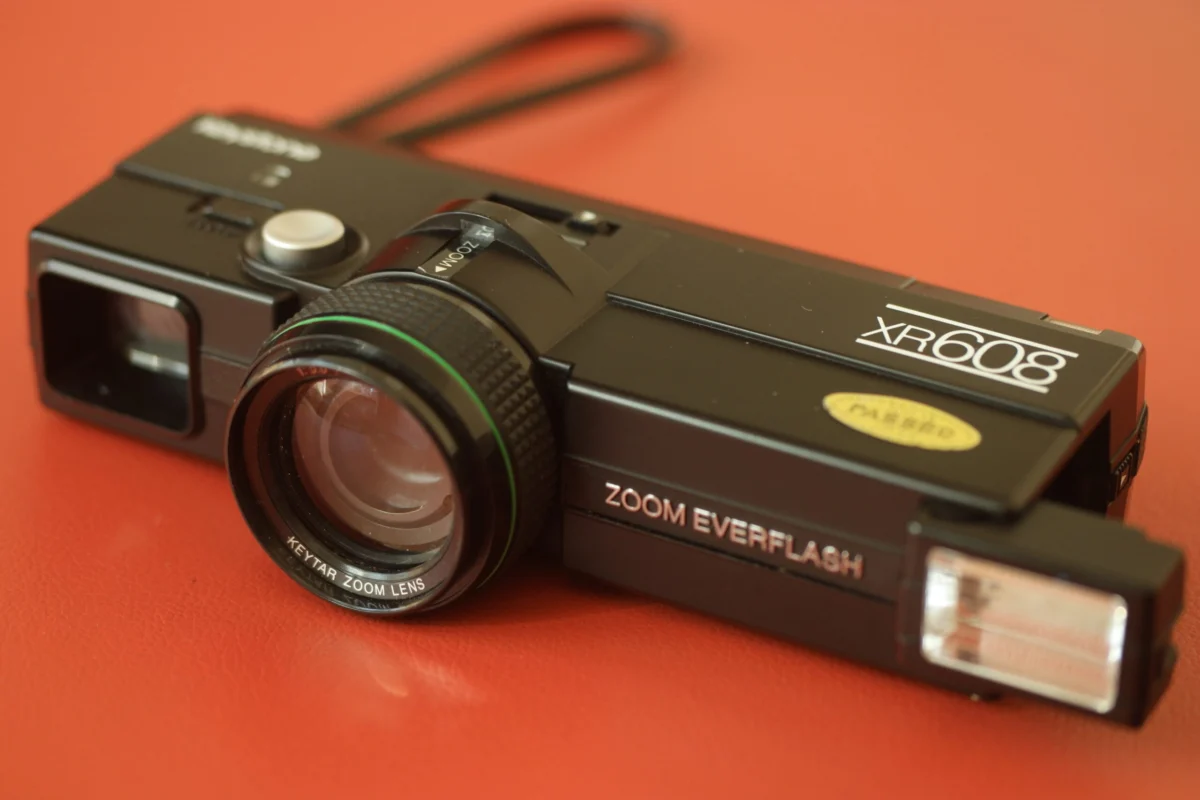
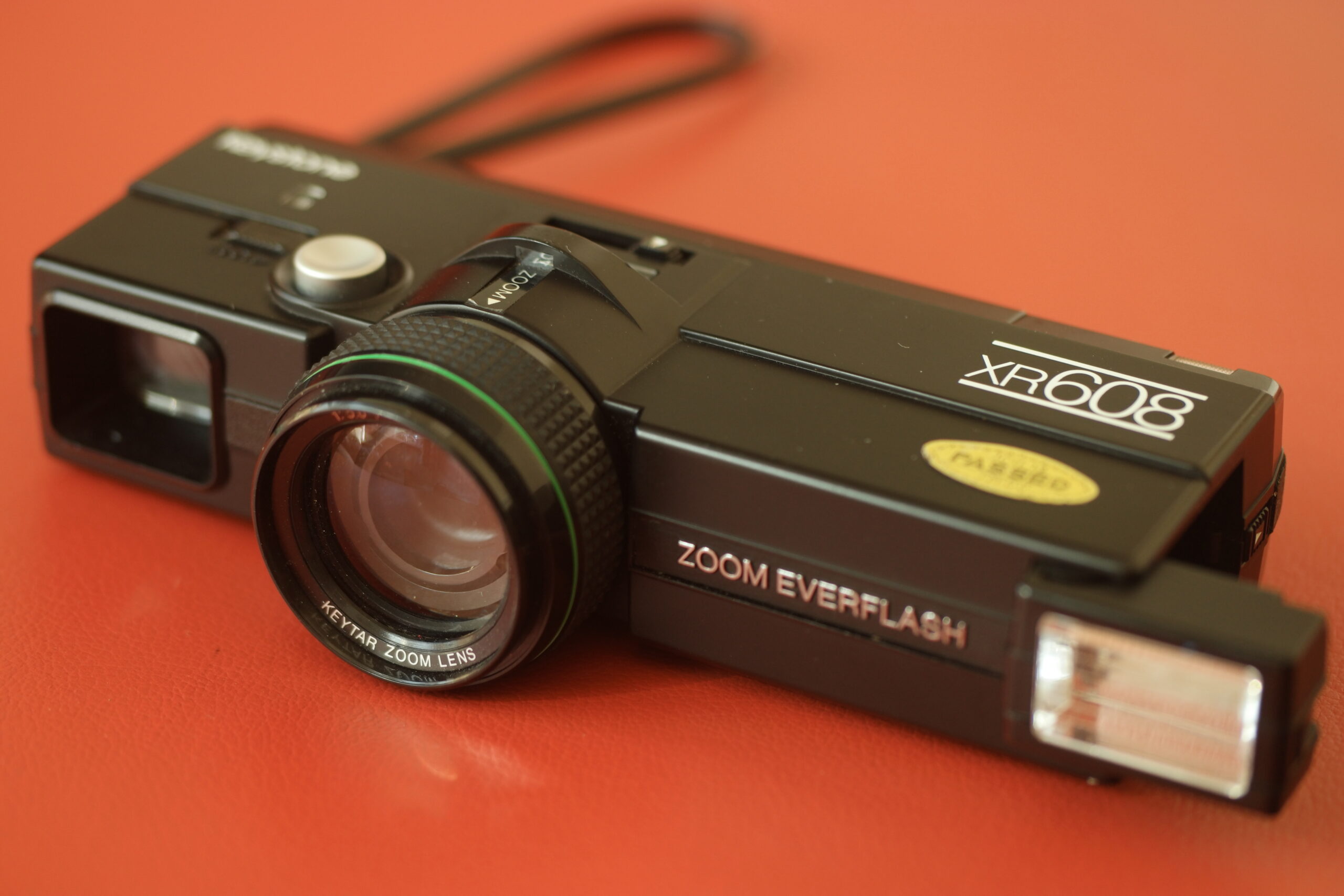
The Keystone Zoom EverFlash XR608 represents a pivotal moment in the history of consumer photography, serving as a primary example of the "chocolate bar" style 110 cameras that dominated the amateur market during the 1980s. Produced by the Keystone Camera Company, an American firm with a legacy spanning over seven decades, the XR608 was a sophisticated attempt to bridge the gap between simple point-and-shoot devices and more professional-grade photographic equipment. Although Keystone was headquartered in the United States, the manufacturing of the XR608 took place in Japan, reflecting the shifting landscape of the global optics industry during the late 20th century. This camera was part of a broader trend where traditional American brands sought to maintain market share by utilizing Japanese precision engineering to meet the growing demand for portable, user-friendly consumer electronics.
The Historical Context of the Keystone Camera Company
To understand the significance of the XR608, one must first examine the trajectory of its manufacturer. The Keystone Camera Company was established in 1919 in Boston, Massachusetts. Initially, the company gained prominence for its high-quality movie cameras and projectors, becoming a staple in American households during the mid-century boom of home filmmaking. Throughout the 1950s and 1960s, Keystone was a formidable competitor to Kodak, often providing more affordable alternatives without sacrificing essential functionality.
However, as the market shifted toward still photography and eventually toward compact formats, Keystone had to pivot. By the 1970s and 1980s, the company became heavily invested in the 110-film format, which had been introduced by Kodak in 1972. This format featured a small, drop-in cartridge that eliminated the need for complex film loading, making it an immediate success with the general public. The XR608 was released during the sunset years of this format’s peak popularity. Despite its innovative designs, Keystone faced increasing financial pressure from both domestic and international competitors. The company eventually filed for bankruptcy in the early 1990s, marking the end of an era for one of the most recognizable names in American optics.
Technical Specifications and Design Architecture
The Keystone Zoom EverFlash XR608 was designed with a specific ergonomic philosophy often referred to as the "chocolate bar" or "subminiature" style. This long, slender form factor allowed the camera to be easily slipped into a jacket pocket or a small handbag, emphasizing the 110 format’s primary selling point: portability.
The defining feature of the XR608 was its push-pull zoom lens. In an era where most 110 cameras were limited to a fixed focal length, the XR608 offered a range of 25mm to 42mm. When translated to the more common 35mm full-frame equivalent, this provided a focal range of approximately 50mm to 84mm. This range transitioned from a standard "normal" perspective to a moderate telephoto, making it suitable for both casual snapshots and tighter portraits. To assist the user, the camera featured a dynamic viewfinder that adjusted its field of view in synchronization with the lens movement, a feature that was relatively advanced for a consumer-grade plastic camera of that period.
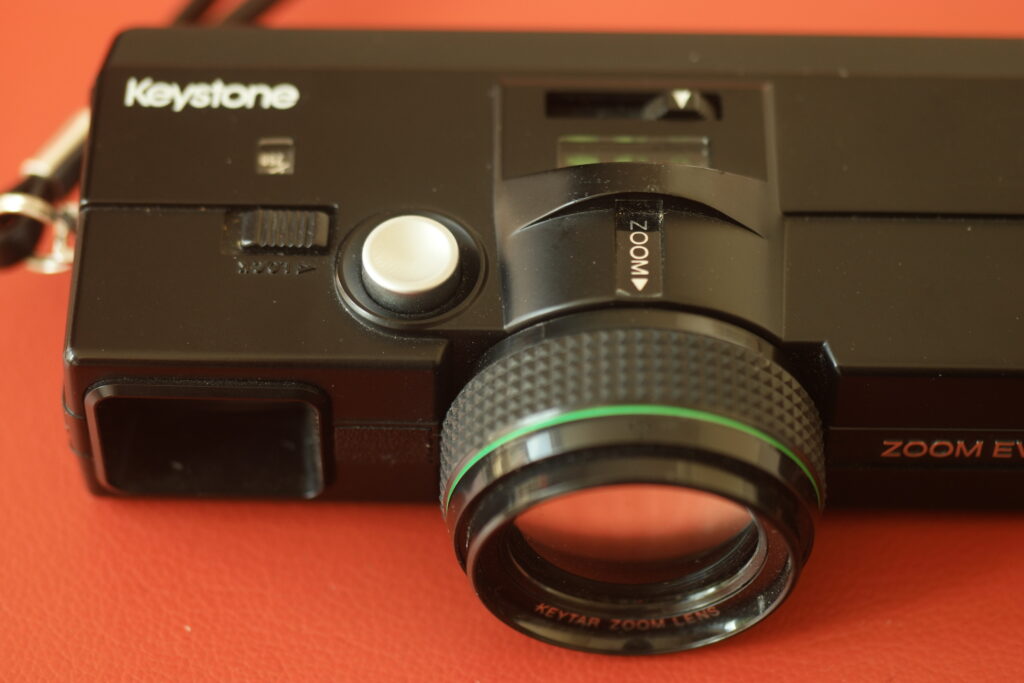
Optically, the camera was built around a slow f/5.6 aperture. This necessitated bright light for optimal performance, as the fixed-focus nature of the lens meant that the depth of field had to be wide enough to compensate for the lack of a focusing mechanism. To manage exposure, the XR608 utilized a manual slider with icons representing full sun, hazy conditions, and overcast skies. This simplified exposure system allowed users to make basic adjustments without requiring a deep knowledge of shutter speeds or f-stops.
The Built-in Flash Revolution
The "EverFlash" branding was more than just a marketing moniker; it highlighted a significant technological shift in the 110 market. Early 110 cameras typically relied on "Flashcubes" or "FlipFlashes"—disposable, one-time-use magnesium bulbs that were both expensive and environmentally wasteful. The XR608 integrated a built-in electronic flash that popped out from the left side of the chassis.
This flash was powered by two AAA batteries housed in a slide-out compartment. The integration of electronic flash technology meant that photographers were no longer tethered to the availability of external bulbs. However, the longevity of these units has proven to be a challenge for modern collectors. The XR608, like many electronic devices of the 1980s, is prone to battery leakage and terminal corrosion. When stored for decades with batteries inside, the alkaline chemicals often leach out, destroying the delicate circuitry required to fire the flash—a phenomenon that has rendered many surviving units "EverFlashes that never flash."

Performance and Image Quality Analysis
The 110 format utilizes a negative size of just 13mm x 17mm, which is significantly smaller than the 24mm x 36mm of standard 35mm film. This small surface area naturally limits the amount of detail that can be captured. When combined with the plastic optics and fixed-focus system of the XR608, the resulting images possess a distinct aesthetic often described by modern enthusiasts as "impressionistic" or "lo-fi."
In practical testing using modern 110 film, such as Lomography Orca (ISO 100), the XR608 produces images with a soft, dreamlike quality. The lack of absolute sharpness is a direct result of the camera’s design constraints. Because the focus is fixed, the lens is optimized for a specific distance—usually around 5 to 10 feet—with everything beyond that falling into a gradual blur. Furthermore, the slow f/5.6 aperture means that in anything less than ideal lighting, the small negative size results in significant grain and a loss of shadow detail.
Modern analysts suggest that the XR608 might have performed more reliably with higher-speed films, such as ISO 400, which would have allowed for faster shutter speeds and better performance in the overcast conditions common in the United Kingdom and Northern Europe. Despite these technical limitations, the camera’s shutter is notably sensitive. The shutter release is nearly silent and requires very little pressure, which, while beneficial for reducing camera shake, often leads to accidental exposures if the shutter lock is not engaged.

Comparative Market Position: Keystone vs. Fujica
The Keystone XR608 did not exist in a vacuum. Its design and feature set were heavily influenced by the Fujica series of 110 cameras, specifically the Fujica Pocket 330 Zoom. During the 1980s, Fuji was a dominant force in the 110 market, offering superior glass optics and more robust build quality.
While the Keystone XR608 mimicked the form factor and zoom functionality of its Japanese counterparts, it was generally positioned as a more affordable, mass-market alternative. The Fujica models often featured multi-coated lenses and more accurate metering systems. In contrast, the Keystone was a "bridge" camera—designed for the consumer who wanted more features than a basic Kodak Instamatic but wasn’t prepared to invest in a high-end subminiature system like the Pentax Auto 110.
The Decline of 110 and the Modern Resurgence
By the late 1980s, the 110 format began to lose ground to the increasingly compact 35mm "point-and-shoot" cameras. These newer devices offered the convenience of auto-focus and auto-exposure with the significantly higher resolution of 35mm film. The introduction of the Disc camera and later the Advanced Photo System (APS) further marginalized the 110 format, leading to its eventual discontinuation by major manufacturers like Kodak and Fuji in the early 2000s.

However, the 21st century has seen a surprising revival of interest in 110 photography, driven largely by the "toy camera" movement and the efforts of companies like Lomography. Today, photographers seek out cameras like the Keystone XR608 specifically for their limitations. The grain, the vignetting, and the soft focus are no longer seen as defects but as artistic tools that provide a nostalgic, analog counterpoint to the clinical perfection of digital imagery.
Conclusion and Legacy
The Keystone Zoom EverFlash XR608 stands as a testament to an era of transition. It represents the height of 110-film technology, offering zoom capabilities and integrated electronics in a package accessible to the average consumer. While it may not have reached the optical heights of its Japanese rivals, its presence in the market helped define the photographic experience for a generation of amateur shooters.
For the modern collector or film enthusiast, the XR608 is a low-cost entry point into the world of subminiature photography. It serves as a reminder of the Keystone Camera Company’s long history and its struggle to adapt to a rapidly changing technological landscape. While the company itself may have succumbed to bankruptcy, its products continue to capture the world through a soft, "impressionistic" lens, preserving a unique chapter in the history of the silver halide era. The camera remains a fascinating study in industrial design and a functional relic of the 1980s’ obsession with making technology smaller, more portable, and more accessible to all.