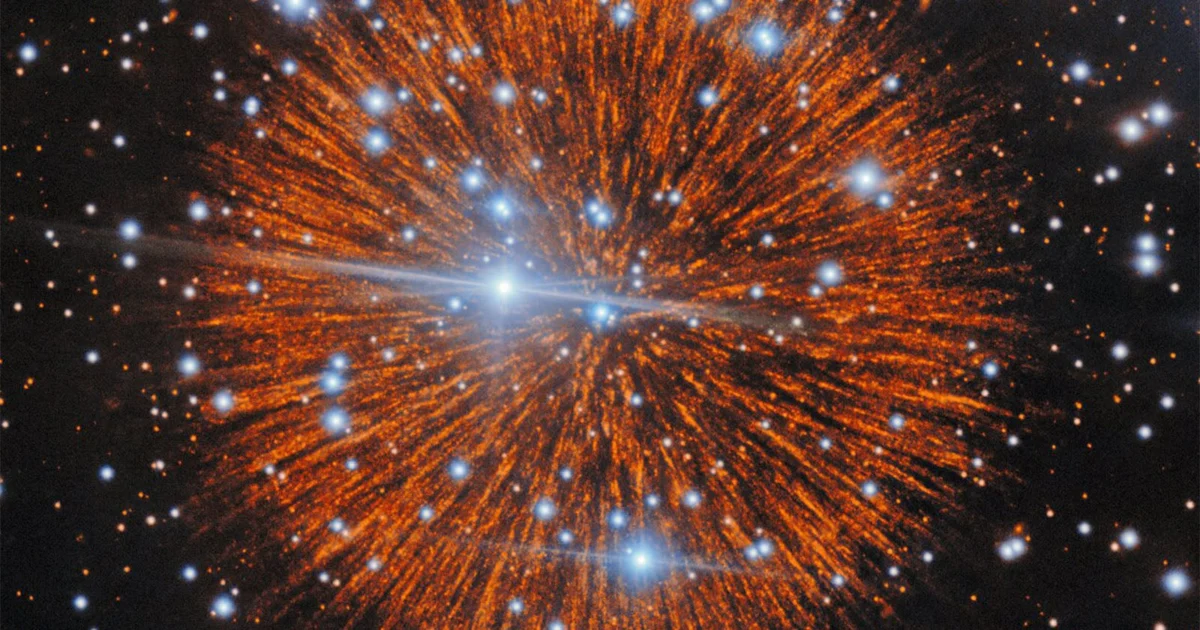
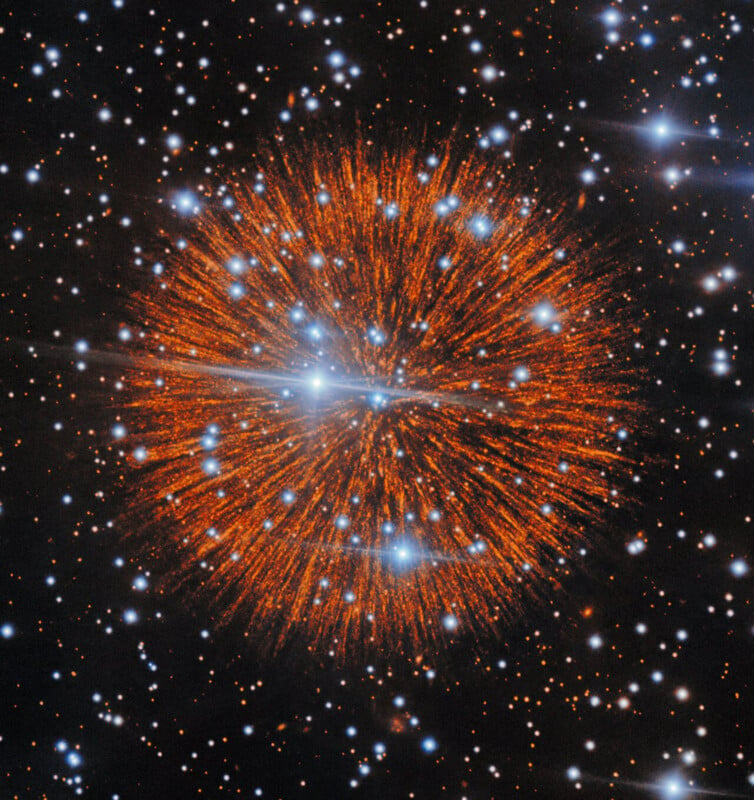
In a remarkable convergence of ancient observation and cutting-edge astrophysics, scientists leveraging the advanced capabilities of the Gemini North telescope in Hawaiʻi have captured a stunning new image of Pa 30. This supernova remnant is now widely recognized as the direct aftermath of SN 1181, one of the most historically significant celestial events witnessed by humanity before the advent of modern instrumentation. The detailed new observations not only provide unprecedented visual clarity of the remnant’s intricate structure but also firmly establish SN 1181 as a profoundly rare Type Iax supernova, an incomplete stellar explosion that leaves behind a surviving, hyper-energetic central star. This discovery marks a monumental step in understanding stellar death and the violent processes that sculpt our galaxy.
The Historic Event: SN 1181 and its Witnessing
The story of Pa 30 begins over eight centuries ago with SN 1181, an astronomical phenomenon that captivated observers across Asia. This celestial spectacle holds a unique place in cosmic history, being one of only five supernovae within the Milky Way galaxy for which verifiable human observations exist prior to the invention of the telescope. For nearly half a year, from August 4 to August 6, 1181, and continuing for 185 days thereafter, a new "guest star" blazed brightly in the constellation Cassiopeia. Its brilliance was such that it was clearly visible to the naked eye, a rare and awe-inspiring sight that prompted meticulous documentation by astronomers and chroniclers of the era.
Eight distinct historical texts, originating from Chinese, Japanese, and Arabic civilizations, provide invaluable accounts of SN 1181. These ancient records, ranging from official court histories to personal astronomical treatises, detail the supernova’s appearance, its gradual dimming, and its position in the night sky. For instance, Chinese records from the Song Dynasty’s official histories, such as the Song Shi, meticulously describe the "guest star" appearing between the constellations Kui and Jiao (parts of Cassiopeia and Perseus). Japanese texts, particularly from the Meigetsuki by Fujiwara no Teika, a renowned poet and scholar, also provide detailed notes on the supernova’s visibility and movement. Similarly, Arabic astronomical treatises from the Islamic Golden Age likely recorded this significant event, although fewer direct translations detailing SN 1181 specifically have been widely publicized in Western academic circles compared to the East Asian records.
These historical observations are far more than mere curiosities; they are foundational pillars for modern astrophysics. By providing a precise date, location, and duration of visibility, these ancient records offer a crucial "time stamp" for a stellar explosion that occurred long before advanced observational tools were available. This allows scientists today to search for the remnants of such events, providing a unique opportunity to study the evolution of supernova debris over millennia. Without these diligent historical records, locating the remnant of SN 1181 in the vast expanse of the Milky Way would be an infinitely more challenging, if not impossible, task.
The Modern Discovery: Unveiling Pa 30
For centuries, SN 1181 remained a captivating historical enigma, its physical remnant lost to the depths of space. It wasn’t until 2013, a remarkable 832 years after its initial appearance, that the most compelling candidate for its remnant, Pa 30, was finally identified. This discovery itself is a testament to the power of modern astronomy, particularly the growing influence of citizen science initiatives.
Pa 30 was initially found through a citizen science program designed to help professional astronomers identify planetary nebulae within the vast datasets generated by the Wide-field Infrared Survey Explorer (WISE) mission. WISE, launched by NASA in 2009, surveyed the entire sky in infrared wavelengths, producing an enormous catalog of celestial objects, many of which were previously unknown. The sheer volume of data often necessitates innovative approaches, and citizen science platforms allow amateur astronomers and enthusiasts to contribute by visually inspecting images for specific patterns or objects that automated algorithms might miss.
It was during one such dedicated search that amateur American astronomer Dana Patchick, a prolific participant in these programs, identified the nebula. Pa 30, standing for "Patchick #30," was the thirtieth nebula he cataloged in this particular search, hence its designation. Patchick’s keen eye, combined with the comprehensive infrared data from WISE, brought this previously hidden cosmic structure to light.
Following its initial discovery by Patchick, scientists swiftly initiated follow-up observations using ground-based telescopes, notably at the NSF Kitt Peak National Observatory. These initial investigations focused on characterizing Pa 30, estimating its age, brightness, and expansion rate. The data gathered from these preliminary studies strongly suggested a connection to SN 1181. The estimated age of Pa 30 aligned remarkably well with an explosion occurring in the 12th century, and its position in the sky was consistent with the historical descriptions of SN 1181 in Cassiopeia. This confluence of evidence made Pa 30 by far the leading candidate for the long-sought remnant of the famous 1181 supernova, setting the stage for more detailed investigations.
Cutting-Edge Astronomy: The Gemini North’s Role
The recent image and subsequent analysis of Pa 30 represent a significant leap forward, thanks to the International Gemini Observatory, a pair of identical 8.1-meter optical/infrared telescopes located in both the Northern and Southern Hemispheres. The Gemini North telescope, perched atop Maunakea in Hawaiʻi, an extinct volcano renowned for its exceptional astronomical seeing conditions, is one of the world’s most advanced observational facilities. Its strategic location and state-of-the-art instrumentation allow astronomers to probe the universe with unparalleled clarity and sensitivity.
For this particular study, scientists employed the Gemini Multi-Object Spectrograph (GMOS), a versatile instrument capable of both imaging and spectroscopic analysis. GMOS is crucial for studying objects like supernova remnants because it can capture light across a wide range of wavelengths, allowing astronomers to not only visualize the remnant’s morphology but also to dissect its light into constituent colors. This spectral analysis reveals critical information about the chemical composition of the ejecta, its temperature, density, and velocity—all vital clues for reconstructing the explosion event and its aftermath.
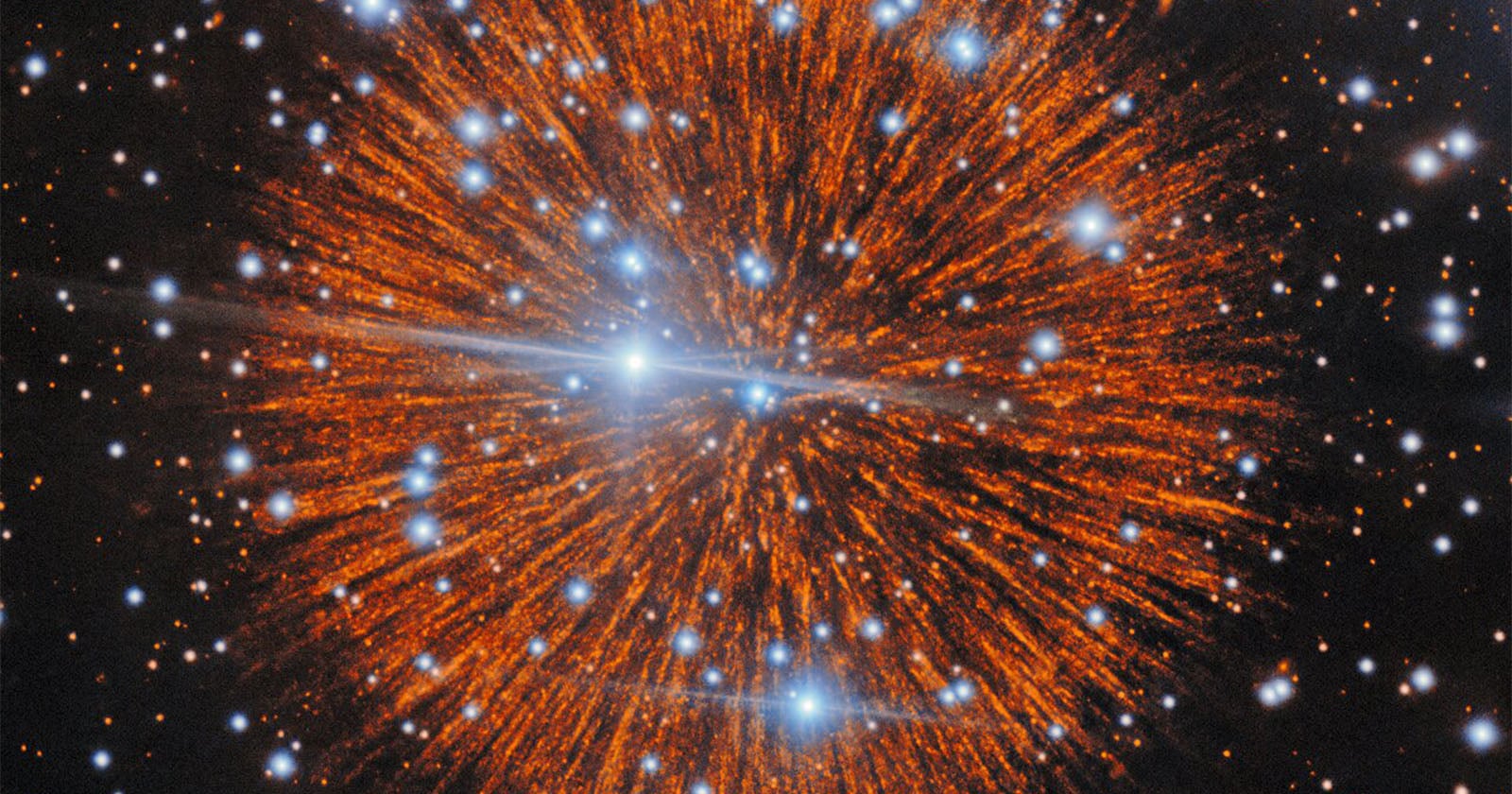
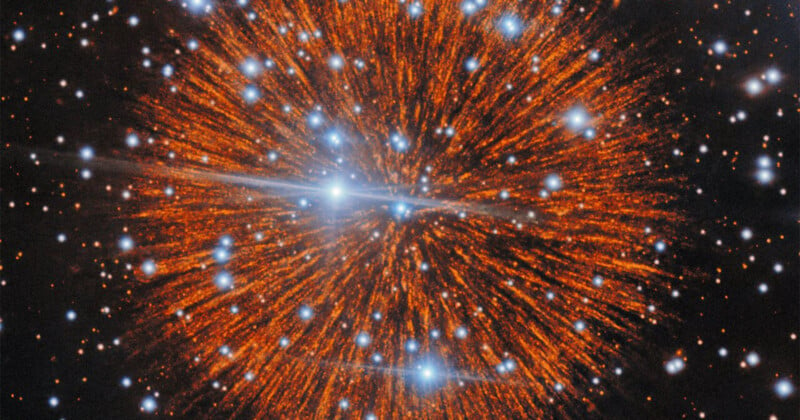
The new image captured by GMOS dramatically improves upon previous observations, revealing Pa 30’s "firework-like structure" with exquisite detail, offering a resolution approximately ten times greater than prior studies. This enhanced clarity is not merely aesthetic; it provides fresh, high-fidelity insights into the remnant’s chemical composition and its complex history. Such detailed imaging is akin to zooming in on a blurry photograph, suddenly bringing into sharp focus features that were previously indiscernible. The ability to resolve the fine filamentary structures within Pa 30 is paramount for understanding the physics of its formation and evolution.
Unraveling the Mysteries: Insights from GMOS Data
The high-resolution GMOS image has allowed scientists to peer deeper into the physical processes shaping Pa 30. The intricate, "knotty structure" observed within the remnant’s expanding shell is particularly revealing. According to experts at NSF NOIRLab (National Optical-Infrared Astronomy Research Laboratory), this knotty appearance suggests that the circumstellar medium—the material surrounding the star before it exploded—was not uniform. Instead, it likely harbored "thermal or density variations."
When the supernova exploded, the ejected material expanded radially outward, interacting with this pre-existing, non-uniform medium. The denser or hotter regions would have resisted the expanding shockwave differently, causing the supernova ejecta to be sculpted into the filamentary and knotty patterns now visible. Studying these structures provides direct evidence of the environment around the progenitor star just before its cataclysmic end, offering clues about its prior stellar evolution and mass loss.
Furthermore, the spectroscopic data gathered by GMOS allows scientists to map the distribution of various elements within Pa 30. Supernovae are the primary cosmic factories for heavier elements, scattering them into the interstellar medium to eventually form new stars and planets. Analyzing the elemental abundances within Pa 30 can help confirm theoretical models of nucleosynthesis during supernova explosions and provide insights into the type of star that exploded. The combination of detailed morphology and chemical mapping is a powerful tool for piecing together the complete story of SN 1181.
The Enigma of Pa 30: A Type Iax Supernova Remnant
Beyond its historical significance, Pa 30 stands out as an exceptionally unique supernova remnant due to the peculiar characteristics of its central star and the nature of the explosion itself. At its heart lies a spectrally hot white dwarf, blazing at an astounding temperature of approximately 200,000°C (360,000°F). This isn’t just a warm ember; it’s an intensely energetic stellar core. Accompanying this searing heat are "extremely fast stellar winds," gushing outward at speeds of about 16,000 kilometers (10,000 miles) per second—a velocity that dwarfs anything experienced in our solar system.
What truly sets Pa 30 apart, however, is the nearly perfect centering of this surviving central star within the expanding nebula. In the vast majority of supernova events, the remnant star, if one survives, is invariably found off-center. This offset is typically due to a "kick" imparted during the asymmetric explosion, or due to interactions with companion stars. The precise centering of Pa 30’s star is a profound anomaly, hinting at an unusual and remarkably symmetrical explosion mechanism.
These unique characteristics—the hot, fast-wind-emitting central star and its perfectly centered position—have led researchers to conclude that SN 1181 was an extremely rare Type Iax supernova. This classification is crucial for understanding the diversity of stellar explosions. Type Ia supernovae are the well-known "standard candles" of cosmology, resulting from the complete thermonuclear destruction of a white dwarf star in a binary system, leaving no remnant behind. In stark contrast, Type Iax supernovae are characterized as "lower-energy, incomplete explosions." Instead of annihilating the white dwarf entirely, these events partially detonate, allowing a significant portion of the star, often including its core, to survive. Pa 30, with its peculiar central star and the definitive evidence of an incomplete explosion, is currently the only known Type Iax remnant in the Milky Way galaxy, making it an invaluable cosmic laboratory for studying this rare class of supernovae.
Implications for Stellar Evolution and Supernova Classification
The definitive identification of Pa 30 as a Type Iax supernova remnant has profound implications for our understanding of stellar evolution and the classification of stellar explosions. Prior to this discovery, Type Iax supernovae were primarily theoretical constructs or inferred from observations in distant galaxies. Finding a pristine example within our own galaxy provides an unprecedented opportunity for detailed study.
This discovery challenges and refines existing models of white dwarf explosions. It suggests that the mechanisms by which white dwarfs detonate are more complex and varied than previously assumed. The "incomplete explosion" model for Type Iax supernovae indicates that the thermonuclear runaway within the white dwarf does not propagate efficiently throughout the entire star. This could be due to factors such as the mass of the white dwarf, its rotation rate, or the composition of the accreted material from a companion star. Understanding the precise conditions that lead to an incomplete versus a complete detonation is critical for refining our understanding of stellar endpoints.
Furthermore, Pa 30 offers a unique window into the properties of the surviving remnant stars from these peculiar explosions. The extreme temperature and fast winds observed from the central star provide empirical data that can be used to test and improve theoretical models of these post-supernova objects. The perfectly centered position of the star also presents a puzzle, suggesting a highly symmetrical explosion or perhaps a different progenitor scenario than typically envisioned for white dwarf supernovae.
The implications extend to the broader field of supernova classification. By identifying a Type Iax remnant, astronomers can better differentiate between various types of supernovae, which is essential for accurate cosmological measurements (as Type Ia are used as standard candles) and for understanding the enrichment of the interstellar medium with heavy elements. This discovery effectively adds a crucial data point to the supernova family tree, demonstrating a distinct pathway for stellar demise that was previously only hypothesized.
Bridging Millennia: The Enduring Legacy of SN 1181
The journey from the ancient observations of SN 1181 to the modern characterization of Pa 30 epitomizes what can be described as "scientific cooperation across nearly a millennium." It is a powerful testament to the enduring human quest for knowledge and the interconnectedness of scientific inquiry across vastly different cultures and time periods. The meticulous records kept by Chinese, Japanese, and Arabic astronomers in the 12th century laid the groundwork for astronomers in the 21st century to pinpoint a specific target for investigation.
This synergy between historical documentation and advanced technology is invaluable. It provides a unique "cosmic timestamp" for a stellar event, allowing scientists to study the evolution of supernova remnants over exceptionally long timescales. By knowing precisely when the explosion occurred, researchers can more accurately model the expansion rates, cooling processes, and interaction of the remnant with the surrounding interstellar medium. This deep historical anchor helps calibrate theoretical models and provides empirical validation for our understanding of supernova physics.
Moreover, the identification of Pa 30 as the remnant of SN 1181 underscores the importance of continued observation and data collection, whether by professional observatories or citizen scientists. Every piece of information, from ancient scrolls to infrared sky surveys, contributes to a more complete picture of the universe, its history, and the dynamic processes that continually reshape it.
Future Research and Observational Prospects
The discovery and detailed imaging of Pa 30 by Gemini North is not an end but a significant new beginning for research into Type Iax supernovae and their remnants. Scientists are now poised to conduct even more in-depth analyses of Pa 30. This will likely involve further spectroscopic observations with GMOS and other instruments to obtain even finer details about the chemical composition, ionization states, and kinematic properties of the nebula and its central star. High-resolution observations at different wavelengths, from radio to X-ray, could reveal additional layers of complexity within the remnant and its interaction with the surrounding interstellar gas.
The search for other Type Iax remnants in the Milky Way and beyond will also intensify. With a clear example like Pa 30, astronomers now have a more concrete template to guide their searches. Identifying more such remnants would allow for comparative studies, helping to establish the range of properties for this supernova subclass and to better understand their frequency and distribution in the galaxy.
Theoretical astrophysicists will undoubtedly use the new data from Pa 30 to refine their models of Type Iax supernova explosions, the evolution of their progenitor systems, and the fate of the surviving white dwarfs. The challenge of explaining the perfectly centered central star, for instance, will stimulate new theoretical investigations into the symmetry of these explosions or alternative progenitor scenarios.
Ultimately, the study of Pa 30 represents a remarkable journey through time and space, demonstrating how the past can illuminate the present and guide the future of scientific discovery. The continued exploration of this unique supernova remnant promises to unlock further secrets about the dramatic lives and deaths of stars, enriching our cosmic narrative one detailed image and spectral line at a time.
Image credits: International Gemini Observatory/NOIRLab/NSF/AURA. Additional credits available in the image captions. The news here is detailed in a new research paper, “Detection of Knots in the Type Iax Supernova Remnant Pa 30,” published on October 6, 2026, in The Astrophysical Journal. The research authors are Tim Cunningham, Illaria Caiazzo, John C. Raymond, and Scott J. Kenyon.