For sixteen years, photographer Ben Marcin has embarked on a meticulous and often perilous journey across Baltimore and its surrounding regions, documenting abandoned homes, crumbling urban row houses, and transient homeless encampments. His extensive fieldwork, which has taken him through environments fraught with challenges ranging from encounters with ticks and venomous copperheads to navigating areas frequented by drug dealers, hunters wielding high-powered rifles, and farmers on ATVs, culminates in his poignant new photobook, The Holdouts, published by Gost. Marcin’s project delves into the silent stories embedded within these structures, exploring themes of resistance, decay, and the relentless passage of time, offering a profound commentary on the socio-economic shifts shaping the American landscape.
The Photographer’s Enduring Odyssey and Methodical Approach
Marcin’s photographic endeavor began over a decade and a half ago, driven by a fascination with the places people inhabit and the stark narratives they leave behind. His commitment to capturing these desolate scenes has required not only artistic vision but also considerable personal risk. The urban decay of Baltimore’s inner city presents its own set of dangers, where derelict row houses, often targeted for demolition, stand as defiant monuments to forgotten lives. Similarly, the rural expanses of the Eastern Shore, spanning parts of Maryland and Delaware, yield a different kind of abandonment: farmhouses and homesteads left vacant as generations pass or families move away, unable to sustain traditional agricultural lifestyles in an evolving economy.
A crucial aspect of Marcin’s methodology involves a deep respect for the context and isolation of his subjects. He explains to PetaPixel that many of these properties were discovered serendipitously – either by the roadside during drives or stumbled upon during hikes through wooded areas. This element of discovery underscores the project’s organic growth. To convey the profound sense of solitude and the broader environmental narrative, Marcin made it a point to photograph the surroundings as extensively as the structures themselves. This deliberate framing emphasizes how these buildings, whether standing defiantly amidst urban redevelopment or dissolving into the rural landscape, are inextricably linked to their environment. His artistic choice to exclude human figures from his photographs, despite often interacting with the inhabitants of homeless camps and some row houses, aims to imbue the series with a sense of mystery, allowing the viewer to project their own understanding onto these silent witnesses of time.
The "Holdouts" Defined: Urban and Rural Narratives of Resistance
The title of Marcin’s photobook, The Holdouts, draws its name from a specific real estate term referring to property owners who refuse to sell their land or building to a developer, thereby obstructing a larger development project. While Marcin acknowledges that the properties he documents are not, in a strict legal sense, impeding major commercial or infrastructural ventures, they embody a more metaphorical definition of "holdout": an act of resistance, a refusal to succumb to prevailing pressures, or an enduring presence against the tide of change.
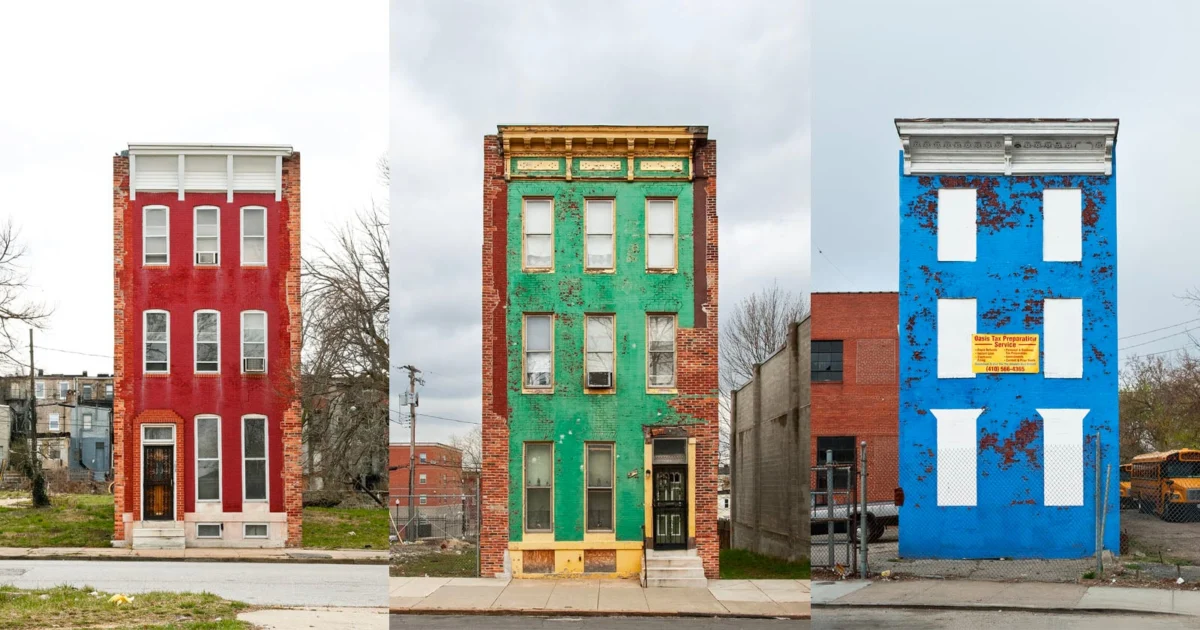
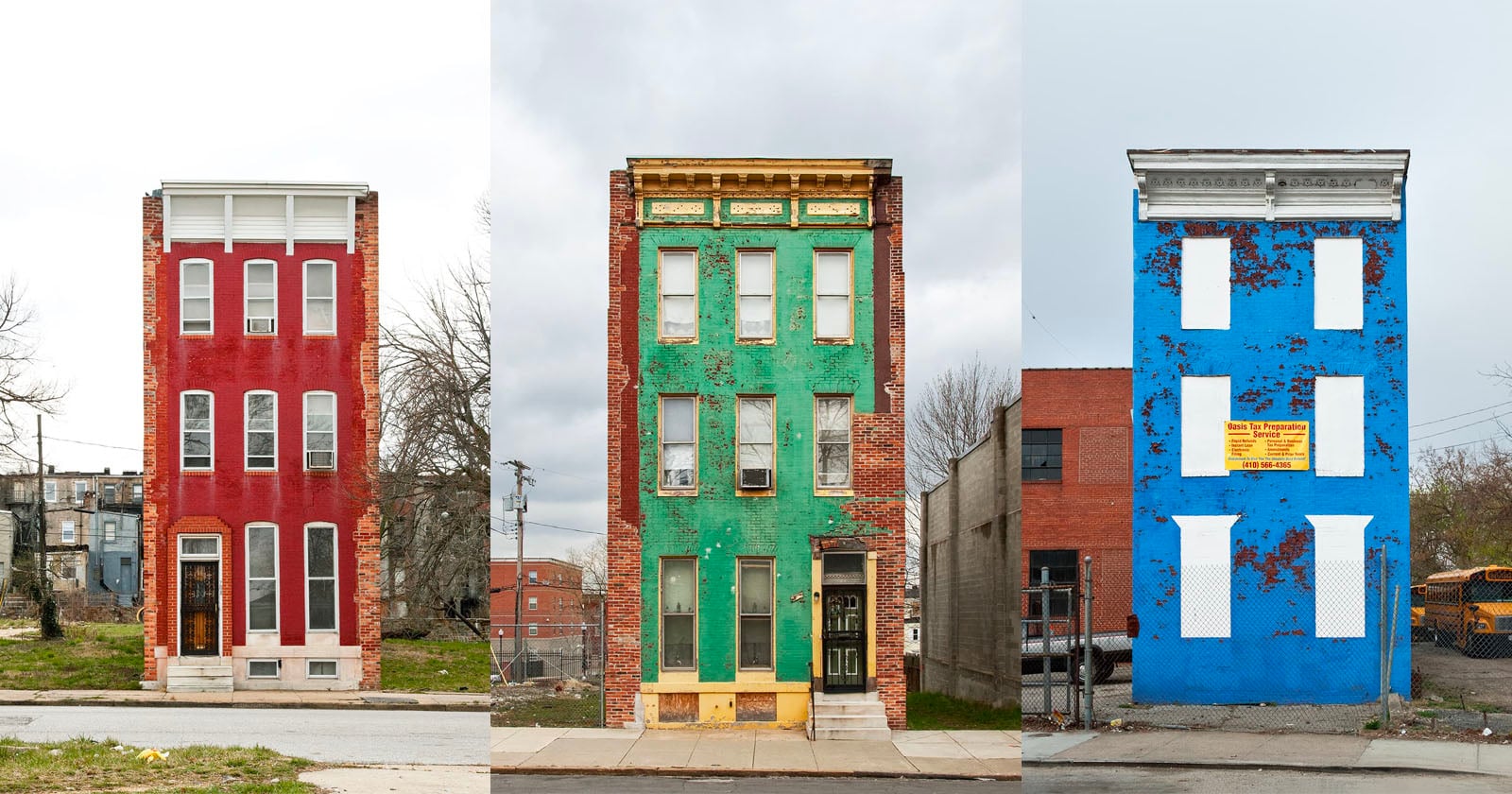
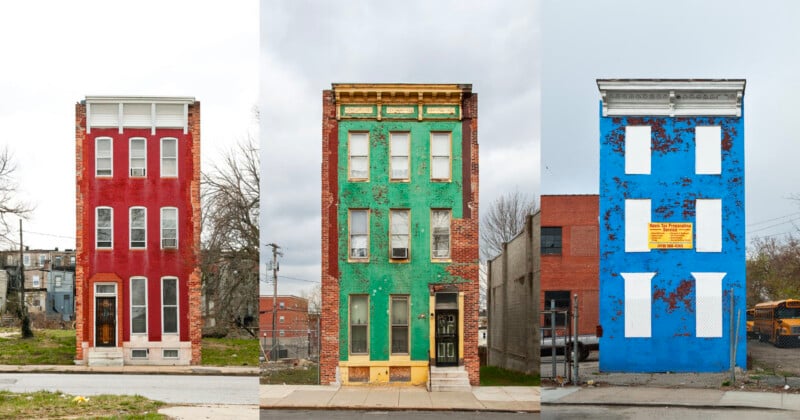
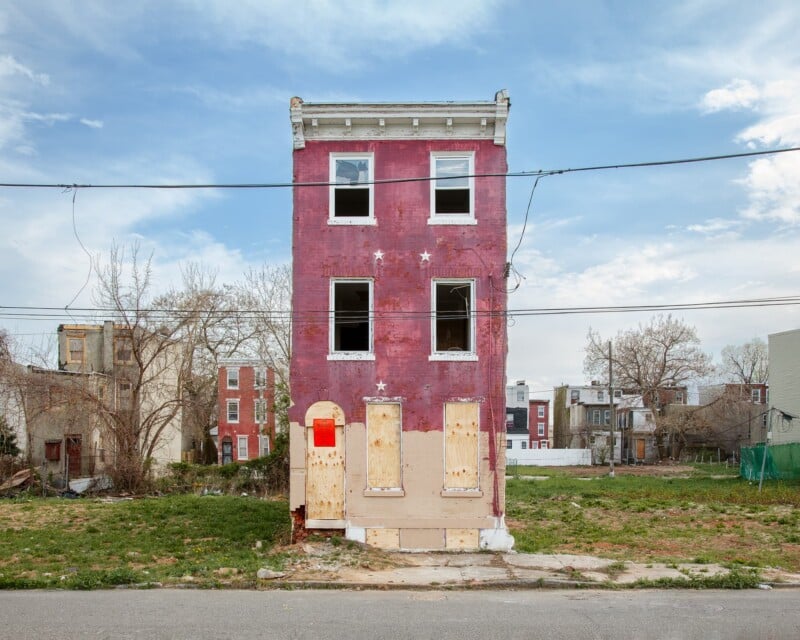
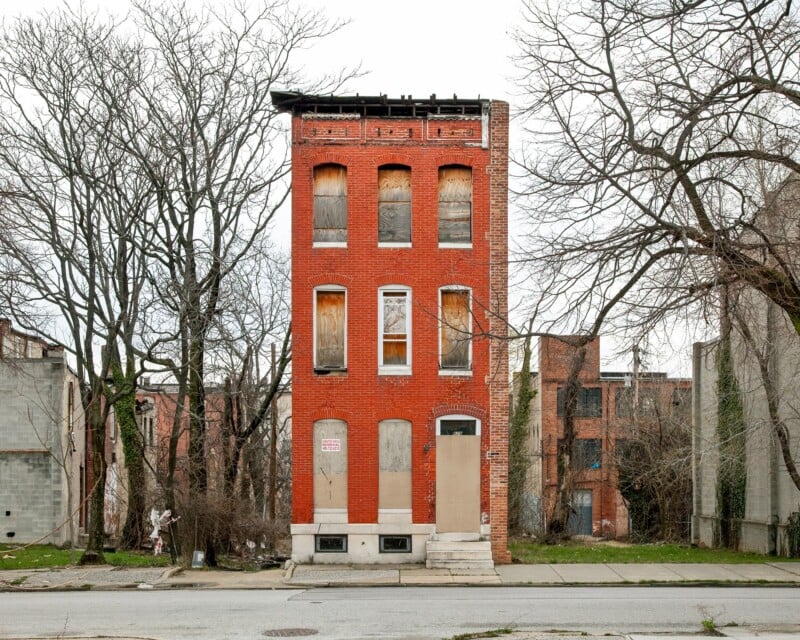
In Baltimore, these "holdouts" manifest as solitary row houses, often brightly painted in hues of red, green, and blue, standing incongruously amidst cleared lots or crumbling neighbors. These structures are architectural survivors, remnants of once-vibrant neighborhoods that have experienced profound demographic and economic shifts. Their continued existence, often with boarded-up windows and faded signs of former life, speaks to a complex interplay of ownership disputes, economic blight, and community inertia. They are symbols of a forgotten urban past, defying the wrecking ball that has swept away so much of the city’s older fabric.
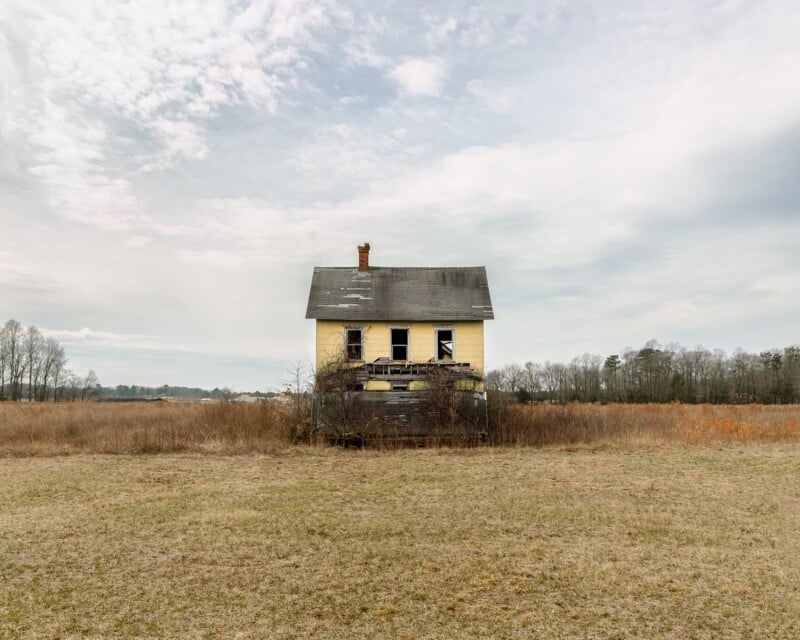
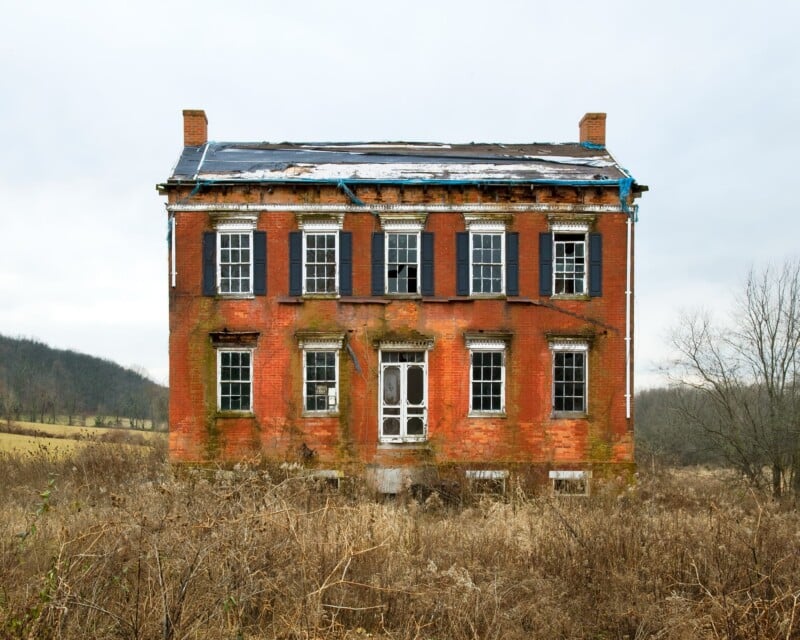
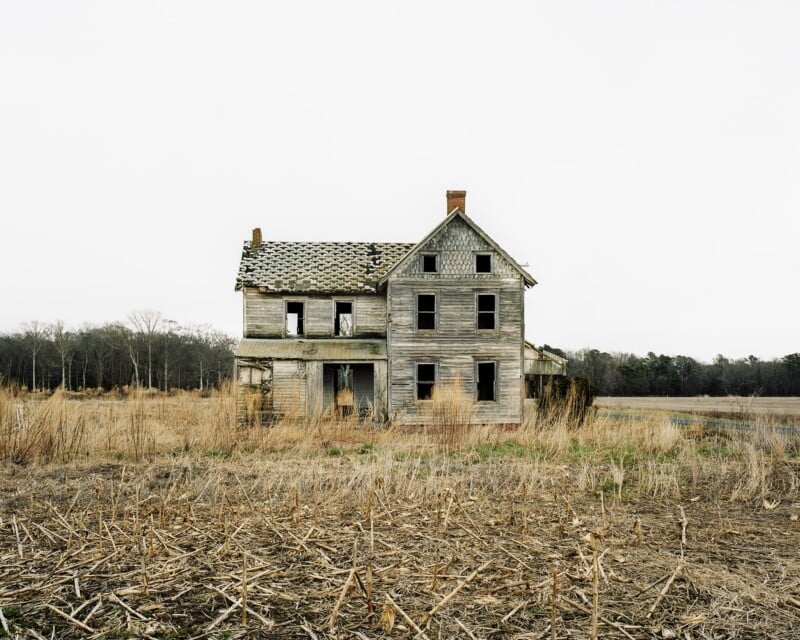
On the Eastern Shore and in parts of Delaware, the "holdouts" take on a different form. Here, they are weathered farmhouses, isolated in vast, often desolate fields, their windows missing, porches collapsed, and foundations slowly returning to the earth. These structures are testaments to the decline of traditional farming communities, where the younger generations have sought opportunities elsewhere, leaving ancestral homes to decay. The stories here are not of active resistance against developers, but rather of a passive, almost mournful, endurance against the forces of depopulation and agricultural transformation.
Baltimore’s Fading Grandeur and Resilience: A City of Contrasts
Baltimore, a city often lauded for its historical charm, has simultaneously grappled with decades of urban decay. Marcin’s photographs of its abandoned row houses provide a stark visual commentary on the city’s complex socio-economic narrative. The phenomenon of "holdouts" in Baltimore is deeply intertwined with its history of deindustrialization, white flight, and the lingering effects of discriminatory housing policies like redlining. As industries declined in the mid-20th century, many residents, particularly from the middle class, moved to the suburbs, leaving behind swaths of inner-city neighborhoods with declining populations and property values.
Data from the U.S. Census Bureau and local housing authorities consistently show high vacancy rates in certain Baltimore neighborhoods. In 2022, for instance, Baltimore City reported thousands of vacant properties, many of them row houses, contributing to urban blight and posing challenges for revitalization efforts. These abandoned structures often become havens for illicit activities, further destabilizing communities. Yet, within this decay, Marcin finds a peculiar resilience. The houses he photographs are not merely ruins; they are characters in a larger urban drama, silently resisting complete erasure. Their vibrant colors, though faded, hint at past lives, and their continued physical presence suggests an enduring spirit against overwhelming odds. The image of three narrow, multi-story row houses painted bright red, green, and blue, with one featuring boarded-up windows and a tax preparation sign, captures this urban paradox perfectly – a mix of vibrant defiance and stark abandonment.
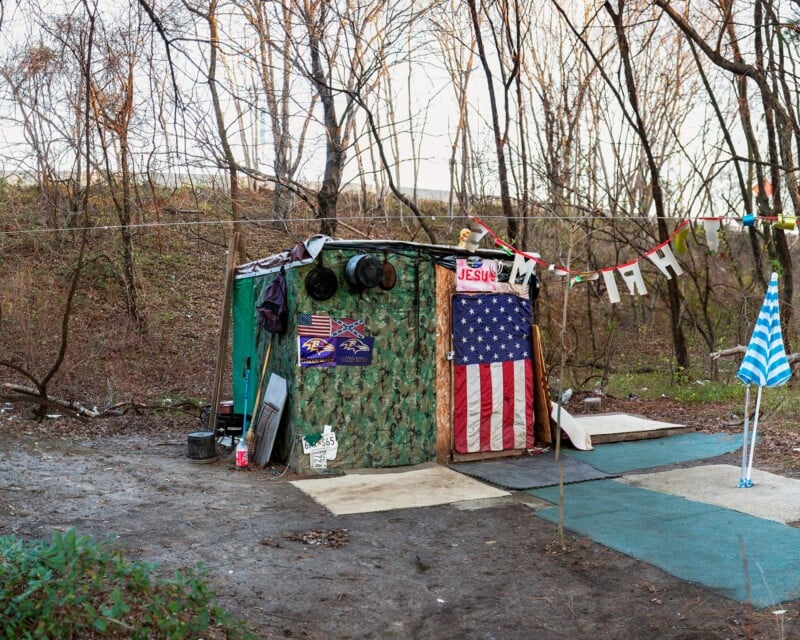
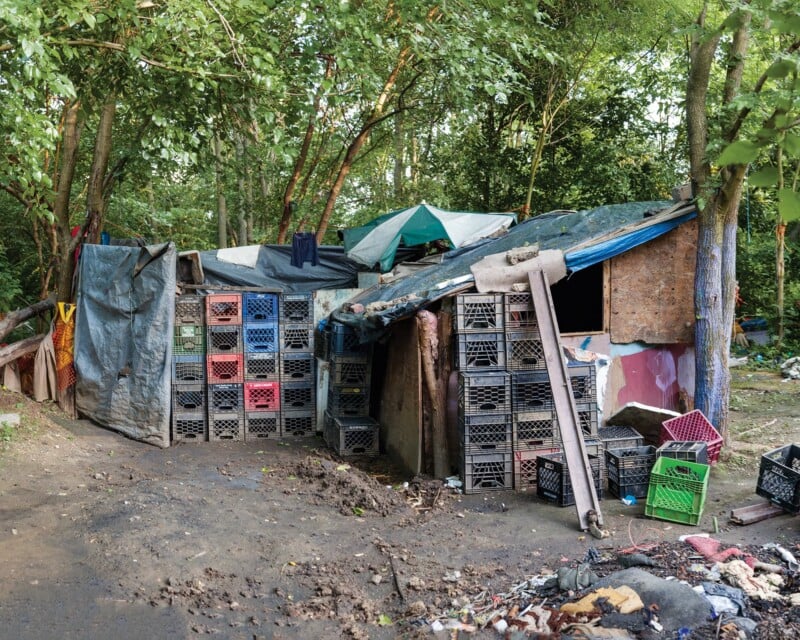
The city’s struggle with homelessness is another dimension explored by Marcin. His documentation of temporary homeless camps, often hidden in urban green spaces or forgotten corners, highlights the transient nature of extreme poverty. These makeshift shelters, constructed from tarps, scavenged wood, and found objects, rarely survive for more than a year before being dismantled or relocating. They represent a different kind of "holdout" – individuals or groups holding onto a precarious existence, often invisible to the broader society, resisting the complete loss of shelter and dignity in the face of systemic challenges. The image of a makeshift shelter adorned with an American flag, Baltimore Ravens logos, and a "JESUS" banner speaks volumes about the human need for identity and spiritual solace even in the most desperate circumstances.
Echoes of the Past: The Eastern Shore’s Abandoned Farmlands
Moving beyond the urban core, Marcin’s lens captures the profound transformations occurring in Maryland’s Eastern Shore and parts of Delaware. This region, historically agrarian, has seen a gradual decline in small-scale family farming due to economic pressures, consolidation of agricultural land, and an aging rural population. The abandonment of farmhouses and associated outbuildings reflects a slow but inexorable shift in the rural economy and social fabric.
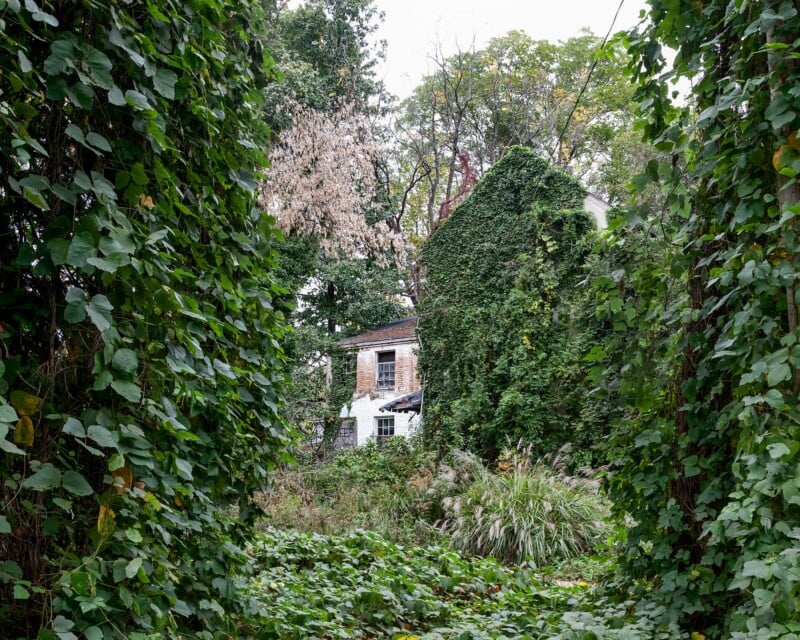
According to agricultural census data, the number of small family farms in the Mid-Atlantic region has been steadily decreasing for decades, while the average age of farmers continues to rise. Younger generations often find farming financially unviable or are drawn to urban centers for better educational and employment opportunities. When the last generation of a farming family passes away or moves on, the homesteads they leave behind often fall into disrepair, becoming victims of neglect and the elements. Marcin’s photographs of these rural holdouts—like a weathered, yellow two-story house with missing windows in a vast field, or an ivy-covered structure nestled among dense trees—evoke a powerful sense of nostalgia and loss. They are silent witnesses to a bygone era, their decaying timbers and overgrown landscapes narrating stories of hard work, community, and ultimately, departure. The isolation of these structures, standing alone in expansive fields, underscores the immense challenges faced by rural communities struggling to maintain their heritage and vitality.
Ephemeral Existence: Homeless Camps and the Invisible
A distinctive, albeit temporary, aspect of Marcin’s project is his documentation of temporary homeless camps. Unlike the permanent structures that stand as physical "holdouts," these encampments represent a transient form of resistance – an attempt by individuals to carve out a space for themselves when conventional housing is unavailable. Marcin notes that none of these camps have survived for more than a year, highlighting the precarious and often invisible nature of homelessness. These sites, often located in wooded areas or neglected urban fringes, are quickly established and just as quickly dismantled, reflecting the constant displacement faced by their inhabitants.
His decision not to photograph the people living in these camps, despite frequently conversing with them, is a deliberate artistic choice to preserve their anonymity and emphasize the universal struggle for shelter. By focusing on the structures themselves – the tarps, makeshift furniture, and personal artifacts – Marcin invites viewers to contemplate the human resilience and ingenuity required to survive in such conditions. These images challenge societal perceptions of homelessness, moving beyond mere statistics to offer a glimpse into the raw reality of life on the margins. The presence of personal touches, such as a makeshift outdoor bar with stools, a grill, and even a tiled patio floor, found in one Baltimore camp, reveals a poignant attempt to create a semblance of home and community amidst profound instability.
The Art of Observation: Marcin’s Photographic Philosophy
Ben Marcin’s long-term commitment to this project is not merely about cataloging abandoned buildings; it is a philosophical inquiry into the meaning of "home" and the relentless march of time. His work aligns with a tradition of documentary photography that uses landscape and architecture to reflect social conditions. By emphasizing the surroundings and the isolation of each structure, Marcin achieves a powerful sense of context. The viewer is not just looking at a house; they are seeing a house within a specific environment, shaped by both natural and human forces.
His choice to exclude people from the frames is particularly insightful. In doing so, Marcin elevates the structures themselves to primary subjects, allowing them to speak volumes about the lives once lived within their walls or the struggles of those who temporarily inhabit them. This absence creates a contemplative space, inviting viewers to ponder the narratives of those who left and those who remain unseen. It transforms the buildings into silent protagonists, imbued with a mysterious quality that prompts deeper reflection on abandonment, resilience, and the human condition. This approach also allows the series to transcend simple architectural documentation, becoming a nuanced exploration of societal decay, economic hardship, and the enduring human spirit.
Beyond the Frame: Socioeconomic and Cultural Implications
Marcin’s The Holdouts offers a powerful commentary on broader socioeconomic and cultural implications. The urban "holdouts" in Baltimore highlight the challenges of urban revitalization and the uneven distribution of wealth and opportunity. They stand as stark reminders of communities fragmented by poverty, crime, and neglect, where the dream of homeownership has either faded or been irrevocably lost. The economic implications are significant; vacant properties depress surrounding home values, attract crime, and drain municipal resources. Urban planners and policymakers constantly grapple with strategies to address these issues, from demolition to rehabilitation, but the sheer scale of the problem often overwhelms resources.
The rural "holdouts" on the Eastern Shore, conversely, speak to the decline of traditional agrarian lifestyles and the challenges of sustaining rural communities in a globalized economy. They symbolize a cultural shift, where generations-old connections to the land are severed, and unique regional identities risk being lost. The environmental implications are also present, as these abandoned properties slowly merge back into the natural landscape, sometimes becoming ecological havens, other times posing environmental hazards.
Collectively, Marcin’s body of work forces a confrontation with the uncomfortable truths about contemporary American society: the stark inequalities, the transience of life for many, and the physical manifestations of economic and social decline. It is a visual archaeology, unearthing the layers of history, memory, and struggle embedded in these forgotten places.
The Publication: "The Holdouts" Photobook
The culmination of Marcin’s sixteen-year dedication is his photobook, The Holdouts, published by Gost. The book serves as a curated exhibition of his extensive work, bringing together the disparate images of urban decay, rural abandonment, and temporary encampments into a cohesive narrative. The physical format of a photobook allows for a deeper engagement with the images, inviting readers to spend time with each frame, absorbing the details and contemplating the stories they imply.
The publication of The Holdouts marks a significant contribution to contemporary documentary photography and the discourse surrounding urban and rural decline. It provides a vital visual record of a particular moment in the socio-economic history of Maryland and Delaware, offering insights that transcend local boundaries and resonate with universal themes of change, loss, and endurance. For those interested in the quiet resilience of structures against the tide of progress, the intimate stories of forgotten places, and the profound observations of a dedicated artist, The Holdouts offers a compelling and essential photographic journey.
Conclusion: Understanding Where We Live
Ben Marcin’s journey from photographing global locations to focusing on sites near his home in Baltimore reflects a profound personal and artistic evolution. As he states, "In short, I began to understand where I live." This sentiment encapsulates the essence of The Holdouts. It is more than a collection of images of abandoned properties; it is an intimate exploration of place, identity, and the intricate relationship between people and their built environment. Through his lens, Marcin transforms decay into a compelling visual language, inviting viewers to pause, observe, and reflect on the silent narratives that shape our landscapes and define the elusive concept of home in an ever-changing world. His work stands as a testament to the power of photography to reveal hidden truths and foster a deeper understanding of the places we inhabit and the stories they continue to tell.