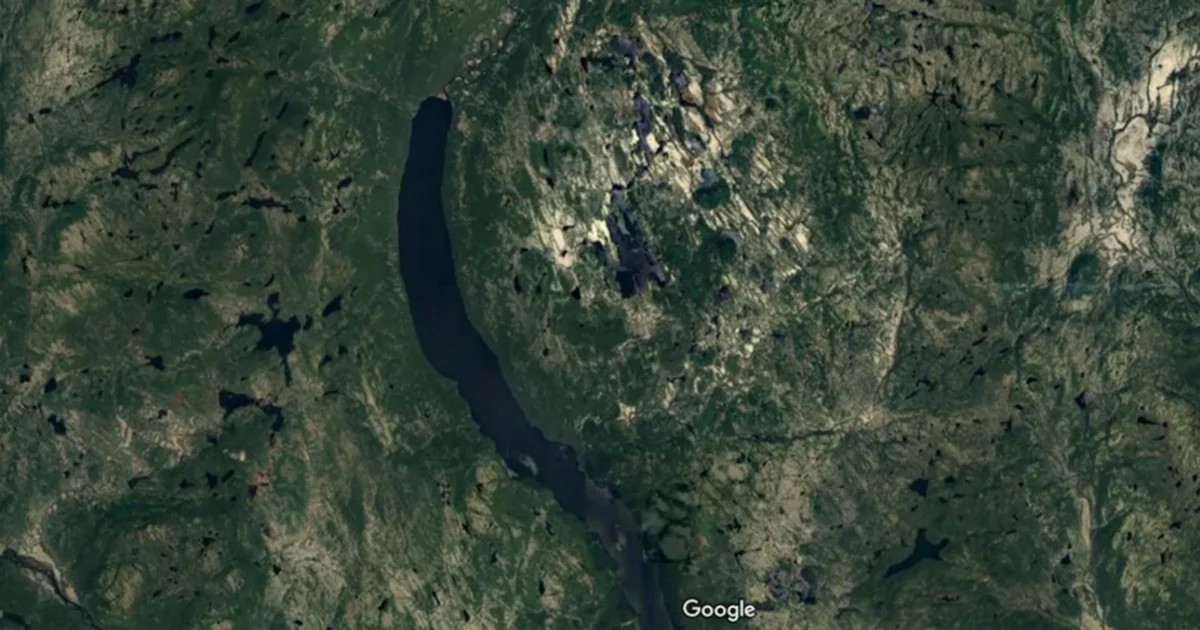
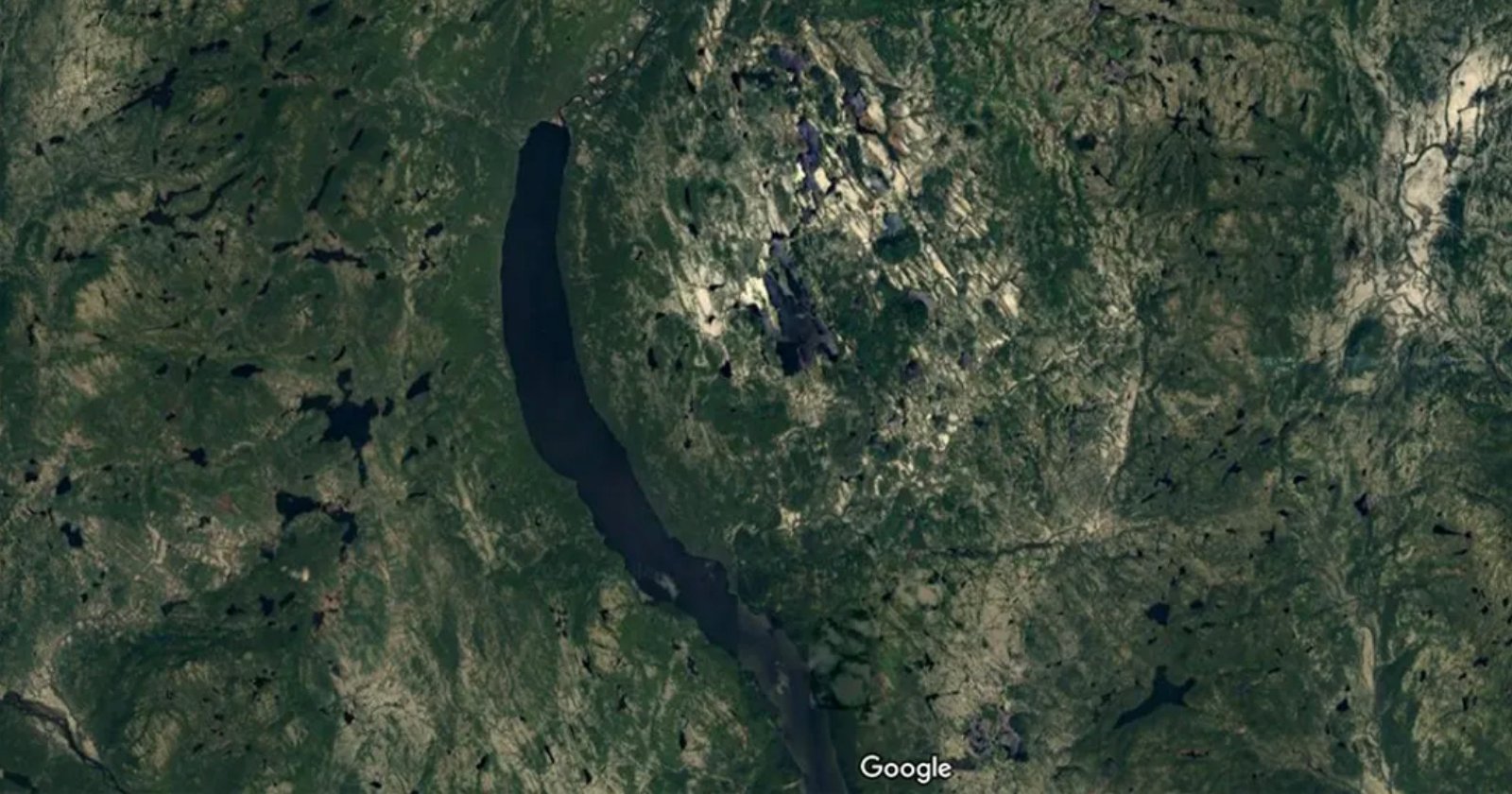
The vast, largely unexplored expanse of Quebec’s Côté-Nord region has yielded a remarkable geological secret, thanks to the astute observation of an amateur astronomer planning a camping trip. Joël Lapointe, a resident of Quebec, was meticulously charting his route on Google Maps when an unusual spherical structure on the digital landscape caught his eye, immediately sparking the suspicion that it might be a giant meteor crater. This initial intuition, often dismissed in the realm of citizen science, has now been unequivocally confirmed by a team of professional geologists, marking the discovery of a 390-million-year-old impact crater measuring an impressive 15 miles (approximately 24 kilometers) in diameter, making it one of the largest and most significant recent additions to Earth’s known impact structures.
The Genesis of a Digital Discovery
Lapointe’s discovery underscores the evolving role of readily accessible satellite imagery and the power of citizen science in uncovering scientific marvels. While many individuals routinely use platforms like Google Maps for navigation and exploration, few possess the keen eye and geological insight to identify features of such profound scientific importance. In early 2024, as Lapointe was digitally traversing the rugged, forested terrain of Côté-Nord, an area renowned for its pristine wilderness and challenging access, he stumbled upon a circular anomaly that stood out from the natural geological patterns. The symmetrical, bowl-like depression, though ancient and heavily eroded, retained enough of its characteristic form to suggest an extraterrestrial origin. Recognizing the potential significance of his observation, Lapointe took the crucial step of contacting professional researchers, setting in motion a chain of events that would lead to a groundbreaking confirmation.
From Skepticism to Scientific Pursuit: The Expedition
The journey from a digital anomaly to a confirmed geological site is often fraught with challenges, not least of which is the inherent skepticism from experts. Gordon Osinski, a distinguished planetary geology professor at Western University and a leading authority on impact craters, receives numerous inquiries from the public regarding potential crater discoveries. He candidly admits, "I get lots of messages from the public thinking they have found a crater and 99/100 turn out not to be the case." However, Lapointe’s submission presented a rare exception, compelling Osinski and his team to undertake a rigorous investigation. "This is one of those rare examples that shows this is possible," Osinski noted, highlighting the exceptional nature of Lapointe’s find.
The confirmation necessitated an arduous expedition into the heart of the Côté-Nord wilderness. The region itself is characterized by its remote, untamed landscape, dense boreal forests, numerous lakes, and challenging topography, making ground access extremely difficult. The geological team, led by Professor Osinski, embarked on what he described as one of the most physically demanding endeavors of his career. "This was one of the most arduous expeditions I’ve ever done — and I’ve done 25 expeditions to the Arctic and six continents," Osinski recounted to Live Science, emphasizing the extreme conditions encountered. The terrain proved to be "incredibly rough and rugged," compounded by the pervasive presence of insects, a common affliction in Quebec’s summer wilderness.
Logistical hurdles began even before the team set foot on solid ground. The dense overgrowth and uneven landscape precluded a direct landing for their seaplane. Instead, the aircraft was forced to drop the team and their essential gear more than 150 feet offshore, compelling them to wade through deep water to reach the supposed impact site. This initial struggle set the tone for the entire field investigation, underscoring the commitment required to access such a remote and unforgiving environment.
Unearthing Definitive Evidence: Shatter Cones and Impact Melt
Upon reaching the suspected crater, the geologists wasted no time in searching for definitive evidence of an extraterrestrial impact. The primary diagnostic features they sought were "shatter cones." These distinctive cone-shaped rock formations, characterized by their striated surfaces resembling horsetails, are formed under the extreme pressures and shockwaves generated by hypervelocity impacts, such as those from meteorites. They are considered irrefutable evidence of an impact event, as their formation requires pressures far exceeding those of typical geological processes like volcanic activity or tectonic movements. The only other known terrestrial phenomena capable of producing shatter cones are large nuclear bomb test sites.
To the team’s immense relief and scientific validation, shatter cones were identified on the second day of their field research. This discovery provided the critical, unequivocal proof that the circular structure was indeed an ancient impact crater. Further bolstering their findings, the geologists also unearthed "spectacular examples" of impact melt rock. This type of rock forms when the immense kinetic energy of a meteoroid striking the Earth’s surface is converted into heat, instantly melting vast quantities of the target rock. The molten material then solidifies, often preserving unique textures and mineral compositions indicative of extreme temperatures and rapid cooling. Osinski explained the scale of this phenomenon, telling CBC, "You can melt literally tens of cubic kilometres of the Earth’s crust when you get a big enough asteroid hitting." The presence of both shatter cones and impact melt rock provided a robust and comprehensive body of evidence for the extraterrestrial origin of the feature.
Dating the Cosmic Collision: A Devonian Impact
With the impact origin confirmed, the next crucial step was to determine the age of the event. Geological dating techniques, particularly radiometric dating of the impact melt rock, allowed the team to pinpoint the timing of the collision. The analysis revealed that the previously unidentified crater was formed approximately 390 million years ago. This places the impact squarely within the Devonian Period, a pivotal epoch in Earth’s history often referred to as the "Age of Fishes," characterized by the significant diversification of marine life and the emergence and diversification of early land plants and arthropods.
At 15 miles (24 kilometers) wide, the newly discovered Quebec crater is a substantial structure. To put this into perspective, there are only about 200 confirmed meteor craters known globally, many of which are significantly smaller or far more eroded and less distinct. Canada, due to its vast landmass and ancient geological shields, is particularly rich in impact structures, with 31 confirmed craters, while the United States has an estimated 50. The Quebec discovery adds a significant new entry to this exclusive list, providing a fresh site for scientists to study impact mechanics, post-impact geological processes, and the environmental consequences of such an event during the mid-Paleozoic Era.
Broader Impact and Implications: A Window into Earth’s Past
The confirmation of the Quebec crater holds multifaceted implications for scientific research, geological understanding, and even the future of citizen science.
Scientific Significance:
The discovery adds a valuable data point to the global inventory of impact structures, which are crucial for understanding the history of impacts on Earth and other planetary bodies. Each new crater offers a unique geological laboratory to study:
- Impact Mechanics: How large objects from space interact with planetary surfaces, the physics of shockwave propagation, and the energy transfer involved.
- Post-Impact Processes: The subsequent geological and biological responses to such a cataclysmic event, including erosion, sedimentation, and potential localized ecological disruptions.
- Planetary Evolution: Impact events have played a fundamental role in shaping Earth’s geological and biological history, influencing everything from atmospheric composition to the evolution of life. Studying ancient craters helps refine models of early Earth and its bombardment history.
- Paleoclimate and Paleoenvironment: The Devonian impact could have had localized, or even regional, effects on climate and environments during that period. Further research may reveal clues about atmospheric conditions, ocean chemistry, and biological responses 390 million years ago.
Geological Context:
The Côté-Nord region, part of the Canadian Shield, is an ancient and stable geological core. The preservation of a 390-million-year-old crater in this region, despite extensive erosion over hundreds of millions of years, highlights the robustness of the underlying bedrock and the relatively low rates of tectonic deformation in this area. This makes the site particularly valuable for studying long-term crater preservation.
The Role of Citizen Science:
Joël Lapointe’s journey from an amateur observation on Google Maps to a confirmed scientific discovery is a powerful testament to the growing importance of citizen science. His story encourages individuals worldwide to engage with scientific inquiry and to trust their intuition when faced with unusual observations. Lapointe himself expressed his satisfaction and offered a universal message: "It’s not every day that an ordinary citizen finds a 390-million-year-old crater. I encourage everyone to not ignore intuition or an observation, even if it isn’t part of your field of expertise." This event underscores how digital tools, combined with human curiosity and a willingness to reach out to experts, can unlock significant scientific breakthroughs.
Future Research and Exploration:
The confirmation of the crater is just the beginning. The geological team from Western University and potentially other institutions will likely pursue further research, which could include:
- Detailed Geological Mapping: Comprehensive mapping of the crater structure and its surroundings to understand its full extent and geological context.
- Drilling Expeditions: Core drilling into the crater floor and rim could provide invaluable samples of impact melt, breccias (fragmented rocks), and potentially even post-impact sediments, offering a deeper understanding of the event and its aftermath.
- Geophysical Surveys: Using techniques like gravity or magnetic surveys to map the subsurface structure of the crater, revealing hidden features that are not visible on the surface.
- Paleontological Studies: Investigating whether the impact had any discernible effects on local Devonian ecosystems, if fossil evidence can be found in associated sedimentary layers.
The discovery in Quebec serves as a vivid reminder that even in an age of advanced satellite technology and global exploration, Earth still holds profound geological secrets waiting to be uncovered. It is a triumph of both cutting-edge scientific methodology and the enduring power of human curiosity, demonstrating that significant contributions to our understanding of the planet can originate from the most unexpected sources. The 390-million-year-old Quebec crater now stands as a silent monument to a powerful cosmic collision, offering scientists an invaluable new window into Earth’s ancient, violent past.