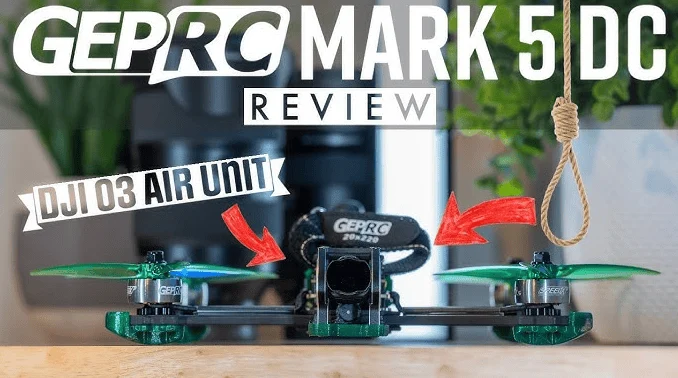
The rapid evolution of First-Person View (FPV) technology has reached a new milestone with the release and subsequent market dominance of the GEPRC MARK5 DC HD O3 FPV. This high-performance quadcopter represents a strategic fusion of robust structural engineering and cutting-edge digital imaging, positioning itself as a premier tool for both freestyle enthusiasts and professional cinematographers. Built upon the successful MARK5 platform, the "DC" (DeadCat) variant specifically addresses the needs of content creators by providing a prop-free field of view, ensuring that high-definition captures remain unobstructed by the aircraft’s own propulsion system. As the FPV industry moves toward higher integration and "bind-and-fly" (BNF) reliability, GEPRC’s latest iteration serves as a benchmark for what modern 5-inch drones can achieve in terms of stability, power, and visual fidelity.
The Evolution of the MARK Series and the Digital Shift
The journey to the MARK5 DC HD O3 is rooted in years of iterative development by GEPRC, a company that has carved out a reputation for premium build quality in the FPV sector. The MARK series began as a pursuit of the ultimate freestyle frame—balancing weight, durability, and ease of maintenance. Early iterations focused on the "X" frame geometry, favored by racers and hardcore freestyle pilots for its symmetrical handling. However, as the demand for high-quality aerial footage grew, the industry saw a shift toward the "DeadCat" configuration.
In a DeadCat layout, the front arms are flared further apart and pushed back slightly, while the rear arms remain in a standard position. This prevents the propellers from appearing in the camera’s view, even at low camera tilts. The introduction of the DJI O3 Air Unit acted as the catalyst for the MARK5 DC’s current prominence. By integrating a system capable of recording 4K video at 60 frames per second (fps) directly onto the onboard storage of the air unit, GEPRC eliminated the mandatory requirement for a secondary "Action Camera" (such as a GoPro), thereby reducing takeoff weight and improving flight efficiency.
Technical Specifications and Structural Engineering
The GEPRC MARK5 DC HD O3 is constructed using high-grade T700 carbon fiber, known for its superior tensile strength compared to the more common T300 variants. The frame features a 5mm thick bottom plate and 2mm thick side plates, reinforced with CNC-machined 7075 aluminum alloy components. These metal accents are not merely aesthetic; they provide critical protection for the camera lens and internal electronics during high-velocity impacts.
The aircraft is powered by the SPEEDX2 2107.5-1960KV motors. These brushless motors are specifically tuned for 6S LiPo battery configurations, providing a high torque-to-weight ratio that allows for instantaneous "punch-outs" and precise control during technical maneuvers. Managing this power is the GEP-F722-45A AIO (All-in-One) flight controller and ESC system. The F722 processor offers higher clock speeds and more UART ports than older F4 chips, allowing for smoother filtering algorithms and better compatibility with the DJI O3 digital ecosystem.
The propulsion system is rounded out with Gemfan 5136 propellers. This specific propeller pitch was selected to complement the DeadCat frame, offering a balance between raw thrust and the smooth, "locked-in" feel required for cinematic tracking shots.
The DJI O3 Air Unit: A Paradigm Shift in Imaging
At the heart of this drone’s appeal is the DJI O3 Air Unit. This transmission and recording system has effectively bridged the gap between FPV hobbyist gear and professional cinema tools. The O3 unit features a 1/1.17-inch CMOS sensor, which is significantly larger than previous FPV camera sensors, allowing for better dynamic range and improved low-light performance.
Key features of the imaging system include:
- 4K/60fps Recording: The ability to record high-bitrate video internally means that pilots can capture professional-grade footage without the added weight and drag of an external camera.
- 155° Ultra-Wide FOV: The wide field of view provides an immersive experience for the pilot and allows for dramatic, sweeping shots that capture more of the environment.
- RockSteady Technology: DJI’s proprietary Electronic Image Stabilization (EIS) is integrated into the unit, smoothing out high-frequency vibrations and minor pilot corrections to produce "buttery smooth" footage.
- Canvas Mode: This allows the full Betaflight On-Screen Display (OSD) to be transmitted to the DJI Goggles 2 or Goggles V2, giving pilots real-time data on battery voltage, flight time, and GPS coordinates.
Market Reception and Professional Impact
Industry analysts note that the GEPRC MARK5 DC HD O3 has significantly lowered the barrier to entry for high-end FPV cinematography. Previously, achieving this level of video quality required custom-built drones, complex wiring, and the risk of carrying a $400 external camera. The "Bind-and-Fly" nature of the MARK5 means that professionals can deploy the drone almost immediately out of the box.
Statements from professional FPV pilots suggest that the MARK5 DC has become a "workhorse" for commercial productions. "The stability of the DeadCat frame combined with the O3’s internal recording makes it the most efficient tool for chasing cars or filming outdoor athletes," says one industry veteran. "You no longer have to worry about the GoPro failing or the SD card getting ejected in a crash; the O3 handles it all."
Furthermore, the inclusion of a dedicated camera cooling system within the MARK5 frame addresses a common complaint regarding the DJI O3 unit: overheating. By utilizing airflow-optimized side plates, GEPRC ensures that the air unit remains within operational temperature limits even during prolonged hovering or in high-ambient-temperature environments.
Operational Analysis: Power Management and Flight Dynamics
To maximize the potential of the MARK5 DC, GEPRC recommends the use of 6S LiPo batteries ranging from 1300mAh to 1500mAh. This setup provides a flight window of approximately 5 to 8 minutes, depending on the aggressiveness of the pilot. The 6S voltage (22.2V nominal) ensures that there is minimal "voltage sag" during high-current demands, which is essential for maintaining control during "power loops" or "split-S" maneuvers.
From a flight dynamics perspective, the DeadCat geometry does introduce a slight asymmetry in the center of gravity compared to a True-X frame. However, modern flight control firmware like Betaflight 4.4 and 4.5 have evolved to compensate for these differences. The MARK5 comes pre-tuned from the factory, utilizing custom PID (Proportional-Integral-Derivative) settings and filters that have been refined through hundreds of test flights. This ensures that the drone feels "locked-in" and resists the "prop wash" oscillations that often plague 5-inch quads during rapid descents through their own wake.
Broader Implications for the Drone Industry
The success of the GEPRC MARK5 DC HD O3 highlights a broader trend in the Unmanned Aerial Vehicle (UAV) market: the move toward specialized, high-integration platforms. As global regulations, such as the FAA’s Remote ID in the United States and EASA regulations in Europe, become more stringent, manufacturers are under pressure to produce drones that are not only capable but also compliant and reliable.
The MARK5 series also reflects the growing importance of "lifestyle" and "content creator" drones. While the FPV community was once dominated by racers, the current growth is driven by social media platforms like YouTube and Instagram, where cinematic FPV footage has become a viral sensation. By providing a "cinema-ready" drone in a durable freestyle package, GEPRC has successfully captured a dual-market segment.
Safety and Best Practices for High-Performance UAVs
Given the power and weight of a 5-inch drone like the MARK5 (which typically exceeds 600g with a battery), safety and maintenance are paramount. Professional operators are encouraged to follow a strict pre-flight checklist:
- Structural Integrity: Inspecting the carbon fiber arms for delamination and ensuring all screws are secured with thread-locking compound.
- Propeller Condition: Even minor nicks in the Gemfan 5136 blades can cause vibrations that degrade video quality and stress the motors.
- Signal Range: While the O3 system offers up to 10km of range (in ideal conditions), urban environments with high interference can drastically reduce this. Pilots are advised to utilize the onboard GPS module (if equipped) for "Return to Home" functionality.
- Post-Processing: To achieve the highest cinematic standard, users are encouraged to film in D-Cinelike or D-Log color profiles. This allows for greater flexibility in "color grading" during post-production, enabling the footage to match the aesthetic of high-end ground cameras.
Conclusion: The Future of the 5-Inch Class
The GEPRC MARK5 DC HD O3 FPV stands as a testament to the maturity of the FPV industry. It is no longer a niche hobby defined by "garage builds" and frequent soldering; it is a sophisticated sector of aerospace engineering that provides unique perspectives for the film and media industries. By combining the durability of a freestyle frame with the surgical precision of DJI’s digital imaging, GEPRC has created a tool that is as much at home on a Hollywood set as it is at a local park.
As technology continues to advance, the industry anticipates even smaller and lighter systems that do not sacrifice the 4K capabilities seen here. However, for the foreseeable future, the 5-inch DeadCat configuration, exemplified by the MARK5, remains the "gold standard" for those who refuse to compromise between flight performance and visual excellence. For pilots looking to transition from beginner-level equipment to professional-grade hardware, the MARK5 DC HD O3 represents a logical and highly capable evolution.