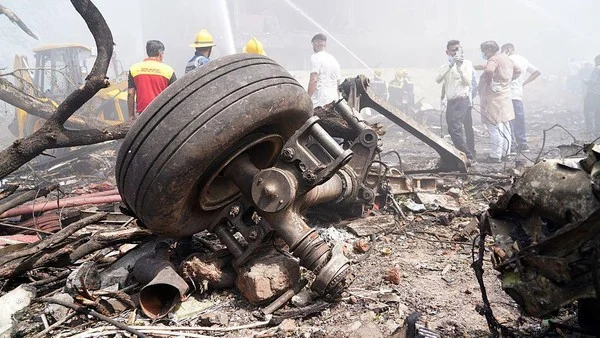
The global aviation community remains in a state of mourning and intense scrutiny following the tragic crash of Air India Flight AI-171 on June 12, 2025. The Boeing 787 Dreamliner, a cornerstone of modern long-haul aviation, went down in the vicinity of Sardar Vallabhbhai Patel International Airport in Ahmedabad, India, during its final approach from London Heathrow. With 245 souls on board, including crew members, the disaster has resulted in 244 fatalities, leaving a single survivor whose condition remains critical. As the debris is cleared and the grieving process begins for families across two continents, the focus of the Indian government and international aviation regulators has shifted to the recovery and analysis of the aircraft’s "black boxes"—the Flight Data Recorder (FDR) and the Cockpit Voice Recorder (CVR).
The recovery of these devices is a pivotal milestone in an investigation that seeks to answer why a sophisticated, modern aircraft fell from the sky in the final stages of a routine flight. The Ministry of Civil Aviation in India, in coordination with the Directorate General of Civil Aviation (DGCA), has confirmed that both recorders were retrieved from the wreckage in a condition that suggests the data remains salvageable. These devices have been transported under heavy security to a specialized laboratory in New Delhi, where experts from the United States National Transportation Safety Board (NTSB) and technical representatives from Boeing are assisting Indian investigators in decoding the final moments of AI-171.
Chronology of the Tragedy
Flight AI-171 departed London Heathrow (LHR) at approximately 10:30 AM BST, scheduled for a direct flight to Ahmedabad (AMD). The flight was part of Air India’s expanded international roster, catering to the significant diaspora population in the United Kingdom. For the first eight hours of the journey, the flight proceeded without incident, maintaining a standard cruising altitude of 37,000 feet. Weather reports along the route indicated clear skies over the Middle East and moderate seasonal monsoon activity as the aircraft approached the western coast of India.
According to radar telemetry, the descent into Ahmedabad began at 11:20 PM IST. At 11:42 PM, as the aircraft was maneuvering for its final approach to Runway 23, air traffic controllers (ATC) noted a sudden deviation from the prescribed flight path. Seconds later, a brief, garbled transmission was received from the cockpit, though the contents were not immediately clear. At 11:45 PM, the aircraft disappeared from radar screens. Eyewitnesses near the airport reported seeing a low-flying aircraft struggling with its orientation before a massive impact was heard several kilometers from the runway threshold. Emergency services arrived at the scene within minutes, but the intensity of the post-crash fire limited rescue operations.
Technical Analysis of the Black Boxes
The term "black box" is a misnomer; the devices are painted in heat-resistant, international orange to ensure visibility among charred wreckage. The Flight Data Recorder (FDR) is designed to record at least 25 hours of flight data, including over 1,000 distinct parameters such as airspeed, altitude, vertical acceleration, flap positions, and engine performance. Simultaneously, the Cockpit Voice Recorder (CVR) captures all audio signals from the flight deck, including pilot conversations, radio transmissions, and ambient sounds like cockpit alarms or mechanical clicks that could indicate a switch being toggled.
The analysis process in New Delhi is following a rigorous, multi-step protocol. First, the devices undergo "cleaning and drying" to ensure that any environmental contaminants from the crash site do not interfere with the electronic components. Once the solid-state memory chips are accessed, investigators use specialized software to download the binary data. This data is then converted into a readable format, creating a second-by-second reconstruction of the flight’s technical status and the crew’s actions.
The presence of the NTSB and Boeing is standard procedure for an accident involving an American-manufactured aircraft. Their involvement provides technical depth, particularly regarding the Dreamliner’s complex fly-by-wire systems and composite airframe behavior under stress.
Preliminary Hypotheses: The Flap System Failure
While investigators caution that a final report could take twelve to eighteen months, preliminary focus has centered on the aircraft’s wing flap system. Reports from the preliminary ground survey of the wreckage suggest that the flaps may have been in an asymmetrical configuration at the time of impact. Flaps are movable panels on the trailing edge of the wings that increase lift and drag, allowing an aircraft to fly at the lower speeds required for landing.
If the flaps failed to deploy correctly—or if one side deployed while the other remained retracted (an "asymmetric flap" condition)—the aircraft would experience a severe roll that is difficult to counteract, especially at low altitudes. Such a failure could be mechanical, hydraulic, or software-based. The FDR data will be crucial in determining whether the pilots commanded a flap change and how the aircraft’s flight control computers responded to that command.

Official Statements and Reactions
The crash has prompted immediate reactions from the highest levels of government. The Indian Prime Minister’s Office issued a statement expressing profound grief and promising a "transparent and exhaustive" investigation to ensure the safety of the flying public. The Union Minister for Civil Aviation stated, "We owe it to the families of the victims to find the truth. No stone will be left unturned, and the findings will be made public to ensure such a tragedy never recurs."
Boeing issued a concise statement from its headquarters in Arlington, Virginia: "We extend our deepest condolences to the families and loved ones of those on board Air India Flight AI-171. Boeing is providing technical assistance to the investigative authorities as they work to determine the cause of the accident."
The tragedy has also put a spotlight on Air India’s rapid expansion under its new ownership. Industry analysts are looking into the maintenance logs of the specific Boeing 787 involved, a relatively young aircraft in the fleet, to see if there were any recurring issues with its flight control systems prior to the June 12 flight.
Global Aviation and Economic Implications
The impact of the AI-171 crash extends far beyond the borders of India. The Boeing 787 Dreamliner is one of the most widely used long-haul aircraft in the world, praised for its fuel efficiency and passenger comfort. Any finding that suggests a systemic mechanical or software flaw could lead to a global grounding or mandatory inspections for hundreds of aircraft operated by major carriers like United Airlines, Qatar Airways, and British Airways.
Market reactions were immediate, with Boeing’s stock experiencing a dip following news of the crash. For Air India, the disaster is a significant blow to its brand transformation efforts. The airline had been working to position itself as a premier global carrier; now, it must navigate the legal, financial, and reputational fallout of one of the deadliest aviation accidents in Indian history.
Furthermore, the "sole survivor" factor has drawn comparisons to historic miracles in aviation, such as the 2010 Afriqiyah Airways crash. Medical experts in Ahmedabad are working around the clock to stabilize the survivor, whose identity is being withheld out of respect for the family’s privacy. The survivor’s eventual testimony, if possible, could provide a rare human perspective on the conditions inside the cabin during the descent.
The Path Forward for Safety
As the technical teams in New Delhi begin the painstaking task of syncing the FDR data with the CVR audio, the aviation world waits for the "Preliminary Report," which is expected to be released within 30 days of the accident. This report will not assign blame but will provide a factual summary of the data collected thus far.
The investigation into Flight AI-171 serves as a grim reminder of the inherent risks of aviation, despite the industry’s extraordinary safety record over the last decade. The data extracted from the orange boxes in New Delhi will eventually be used to update pilot training manuals, refine maintenance protocols, and perhaps even redesign hardware components.
In the coming weeks, the focus will remain on the laboratory. Every click, every alarm, and every degree of flap movement recorded on those memory chips will be scrutinized. For the families of the 244 who perished, these technical details are the only path toward understanding the final moments of their loved ones. For the rest of the world, the findings will be a vital contribution to the collective knowledge that keeps the skies safe for millions of passengers every day. The mystery of Air India AI-171 is currently locked within two small orange containers; soon, the truth will be brought to light.