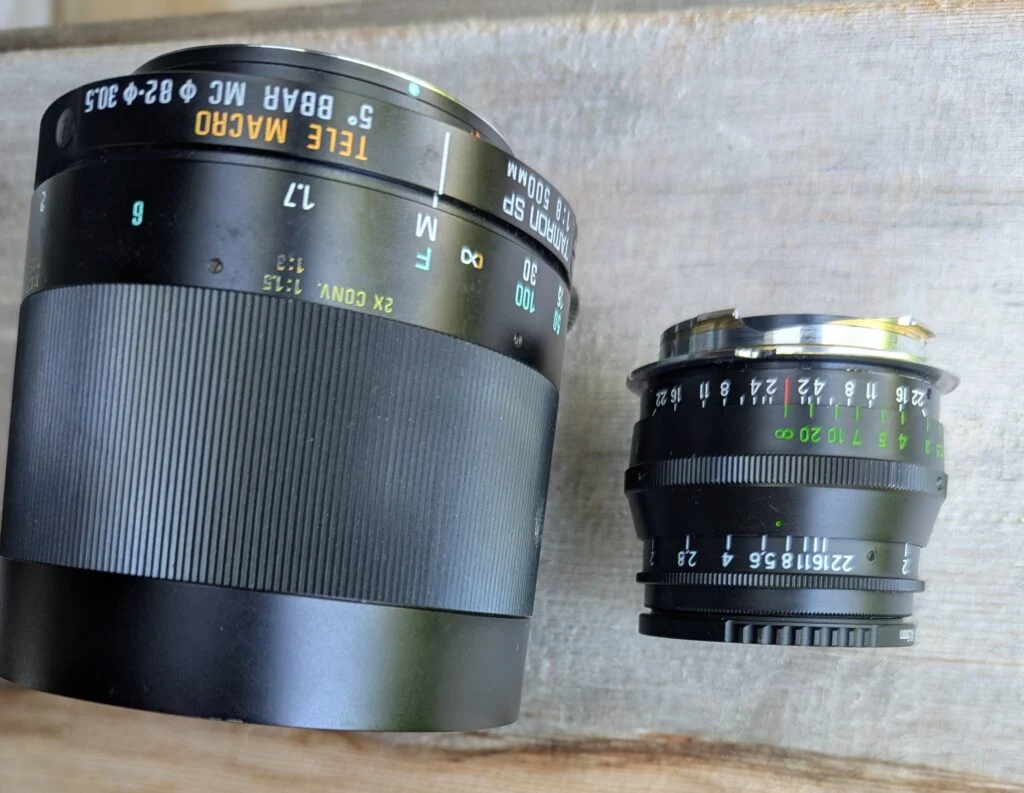
The global photography market has witnessed a significant resurgence in the utilization of legacy optics, as contemporary photographers increasingly adapt vintage manual lenses to high-resolution mirrorless camera systems. This trend, driven by both economic considerations and a desire for distinct optical characteristics, has brought mid-20th-century engineering into direct contact with 21st-century sensor technology. Recent field evaluations conducted in Asahikawa, Japan, utilizing the Sony A7RII mirrorless platform, have highlighted the functional realities of two disparate yet iconic budget-friendly lenses: the Soviet-era Jupiter 8 50mm f/2 and the Tamron 500mm f/8 SP mirror lens. Both optics, currently retailing for approximately $50 (approx. €45 or £40) on the secondary market, represent the entry-level tier of "alt-glass" photography, yet they offer vastly different experiences regarding ergonomics, optical fidelity, and utility.

The Technical Heritage of the Jupiter 8 50mm f/2
The Jupiter 8 is a cornerstone of Soviet optical history, based directly on the pre-World War II Carl Zeiss Sonnar 5cm f/2 design. Following the conclusion of the war, the Soviet Union acquired technical drawings and manufacturing equipment from the Zeiss plants in Jena as part of war reparations. Production of the Jupiter 8 began in the late 1940s and continued for decades, primarily manufactured at the KMZ (Krasnogorsk Mechanical Factory) and the Arsenal factory in Kyiv.
The Sonnar design is characterized by its high speed and relatively low number of air-to-glass surfaces, which historically provided better contrast than contemporary Planar designs before the advent of advanced multi-coating. However, in the context of modern digital sensors, the Jupiter 8 is often categorized as "character glass." Evaluative data indicates that the lens exhibits a noticeable softness and reduced contrast when compared to modern Zeiss counterparts, even when stopped down to f/8.
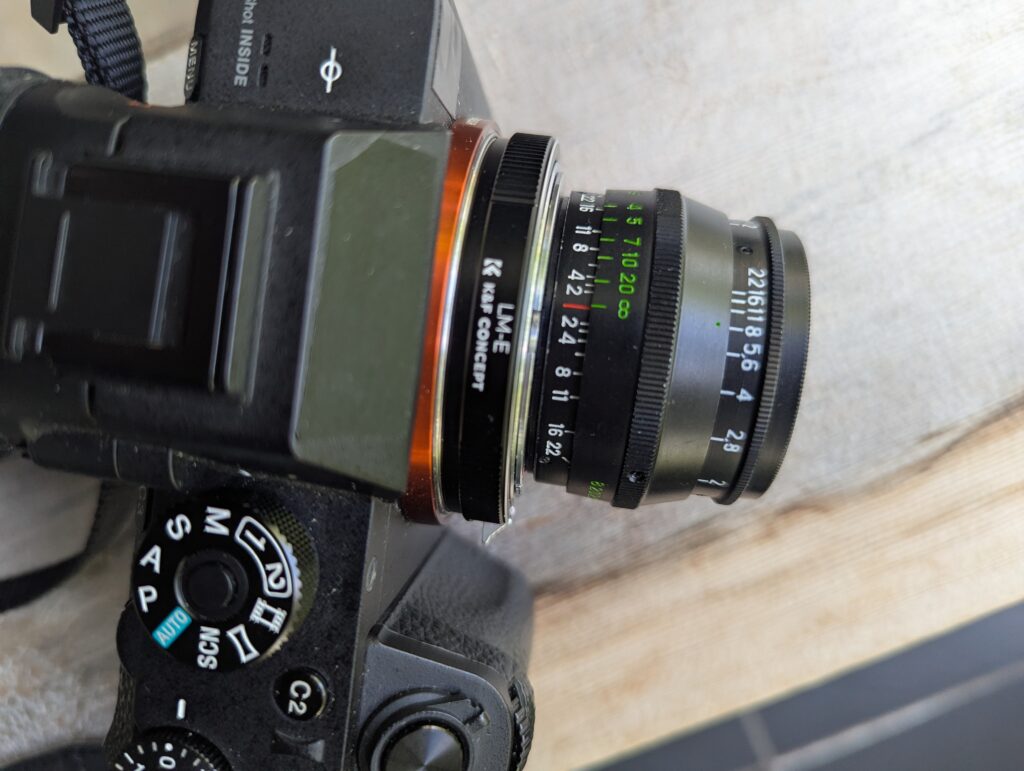
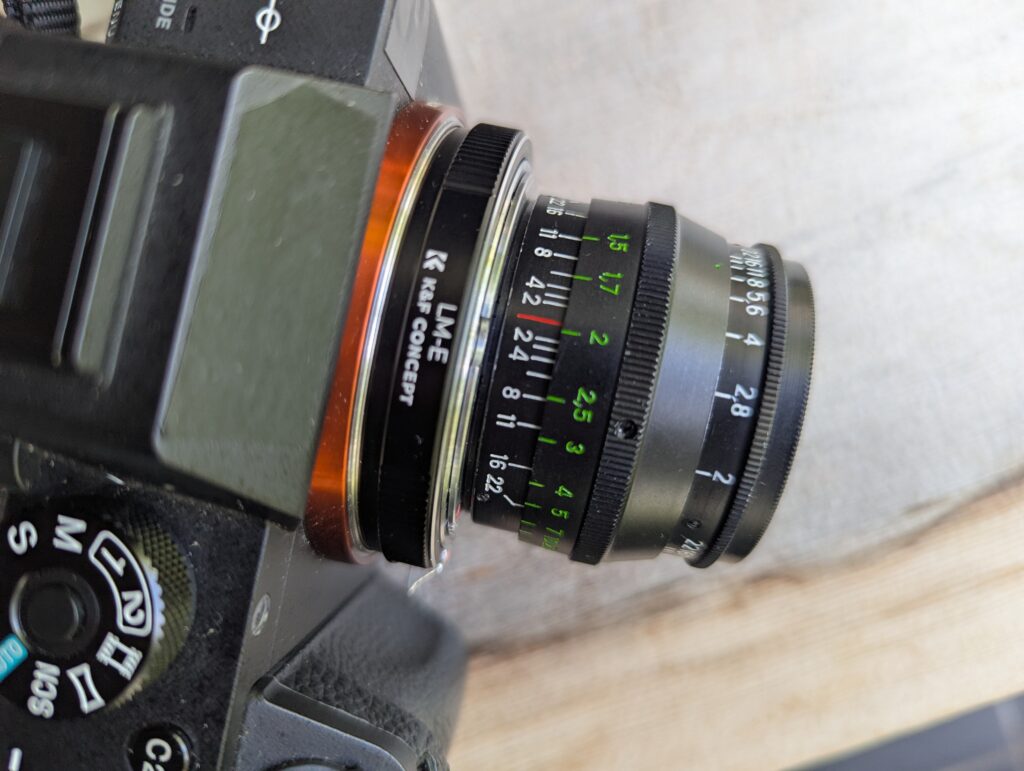
Technical analysis of the Jupiter 8’s ergonomics reveals several challenges for the modern user. The lens features a stepless (de-clicked) aperture ring, which, while beneficial for cinematography, poses difficulties for still photographers who may inadvertently shift the setting. Furthermore, the aperture ring on many iterations of the Jupiter 8 rotates in tandem with the focus mechanism. This design choice frequently moves the aperture index marker—a small green dot—away from the photographer’s line of sight, complicating adjustments in fast-paced environments. The physical dimensions of the aperture ring are also exceptionally slim, presenting tactile challenges, particularly when operating the equipment with gloves in colder climates such as northern Japan.
The Catadioptric Innovation: Tamron 500mm f/8 SP
In contrast to the refractive design of the Jupiter 8, the Tamron 500mm f/8 SP (Model 55B/55BB) utilizes catadioptric or "mirror" technology. This design, based on the Maksutov telescope principle, uses a combination of mirrors and lenses to fold the light path, allowing for a 500mm focal length in a physical chassis only a fraction of the size of a traditional refractive telephoto lens.
The Tamron SP (Super Performance) series was the manufacturer’s flagship line, and the 500mm f/8 was widely regarded as one of the finest mirror lenses produced during the film era. One of its primary advantages is the Adaptall-2 mount system, which allows the lens to be fitted to almost any modern camera body via a simple mechanical adapter.
Despite its compact form factor, the Tamron 500mm presents significant operational hurdles. The lens has a fixed aperture of f/8, meaning exposure must be controlled entirely through shutter speed and ISO adjustments. Additionally, the inherent "donut-shaped" bokeh—a result of the central secondary mirror obstructing the light path—remains a polarizing aesthetic choice. In field tests, the primary difficulty identified was the precision required for manual focusing. At a 500mm focal length, even minute adjustments to the focus ring result in massive shifts in the focal plane. When coupled with the 10x magnification typically required for critical focus on digital viewfinders, the "shaky-hand" effect becomes pronounced, necessitating high shutter speeds or robust stabilization.

Integration with Modern Mirrorless Systems: The Sony A7RII Case Study
The adoption of these vintage lenses is made possible by the short flange focal distance of mirrorless cameras like the Sony A7RII. This 42.4-megapixel full-frame camera provides a rigorous testing ground for legacy glass. A critical technical requirement for utilizing these lenses effectively is the manual configuration of In-Body Image Stabilization (IBIS). Because these lenses lack electronic communication with the camera body, users must manually input the focal length (e.g., 50mm or 500mm) into the camera’s "SteadyShot" settings to ensure the sensor-shift mechanism compensates correctly for movement.
Data from field use suggests that while IBIS can theoretically allow for handheld shots at 1/30th of a second with a 500mm lens, the reality is often more complex. The high resolution of the A7RII sensor (7952 x 5304 pixels) tends to highlight optical flaws and focus inaccuracies that might have been masked by the grain and lower resolution of 35mm film.

Chronology of the Vintage Lens Resurgence
The timeline of vintage lens adaptation can be divided into three distinct phases:
- The Analog Era (1950s–1990s): Lenses like the Jupiter 8 and Tamron 500mm were standard tools for enthusiasts. The Jupiter 8 was a kit lens for Zorki and Kyiv rangefinders, while the Tamron was a specialized telephoto for wildlife and sports.
- The Digital Transition (2000s–2010): Early DSLR cameras had long flange distances, making it difficult to adapt many vintage rangefinder lenses without corrective glass elements that degraded image quality. During this period, many of these lenses were relegated to pawn shops and attics.
- The Mirrorless Revolution (2010–Present): The release of the Sony NEX and later the A7 series, along with the Micro Four Thirds system, eliminated the mirror box. This allowed for simple mechanical adapters to bridge the gap between old and new. Prices for lenses like the Helios 44-2 and Jupiter 8 began to rise as the "vintage look" became a sought-after aesthetic in digital post-processing.
Comparative Market Analysis and Economic Impact
The current market for vintage glass is driven by a unique intersection of low cost and high creative potential. For the price of a mid-range bottle of wine, a photographer can acquire a 500mm telephoto capability—a focal length that, in modern autofocus iterations, can cost upwards of $2,000.

| Lens Model | Design Type | Current Market Price (Avg) | Primary Drawback |
|---|---|---|---|
| Jupiter 8 50mm | Refractive (Sonnar) | $40 – $60 | Ergonomics/Low Contrast |
| Tamron 500mm SP | Catadioptric (Mirror) | $50 – $90 | Fixed Aperture/Focus Difficulty |
| Modern 50mm f/1.8 | Refractive (Planar/Asph) | $200 – $300 | "Clinical" Appearance |
| Modern 500mm f/5.6 | Refractive | $2,000 – $12,000 | Weight and Extreme Cost |
Industry analysts suggest that the "democratization of focal lengths" provided by these budget vintage lenses has allowed hobbyists to experiment with styles of photography (such as extreme telephoto or "dreamy" wide-aperture portraiture) that were previously financially inaccessible.
Broader Implications for Photography and Sustainability
The continued use of lenses like the Jupiter 8 and Tamron 500mm has broader implications for the photography industry. First, it challenges the "planned obsolescence" model of modern technology. Many of these lenses are 40 to 70 years old and, provided they are kept free of internal fungus, continue to perform reliably. This mechanical longevity stands in stark contrast to modern lenses laden with electronic focus motors and aperture actuators that may become unrepairable over time.

However, the shift toward legacy glass also reflects a growing dissatisfaction among a subset of photographers with the "automated" nature of digital imaging. The tactile "process" of photography—manually calculating exposure, focusing by eye, and working within the limitations of the hardware—is increasingly viewed as a counter-movement to the AI-driven, computational photography found in smartphones and high-end professional cameras.
Conclusion: The Verdict on Budget Vintage Glass
While the Jupiter 8 50mm f/2 and Tamron 500mm f/8 SP are flawed by modern standards, they remain viable tools for specific applications. The Jupiter 8, despite its ergonomic frustrations and softer rendering, offers a historical aesthetic that modern, perfectly corrected lenses cannot replicate. The Tamron 500mm, meanwhile, provides a compact and affordable entry into long-range photography, forcing the user to develop better stabilization techniques and a more deliberate approach to composition.

For the modern photographer, the integration of these lenses onto digital platforms is not merely a cost-saving measure but an intentional choice to engage with the physics of light and the history of optical engineering. As the market for secondary optics continues to thrive, the legacy of the Soviet factories and the Japanese mirror-lens innovators remains firmly embedded in the contemporary photographic landscape.