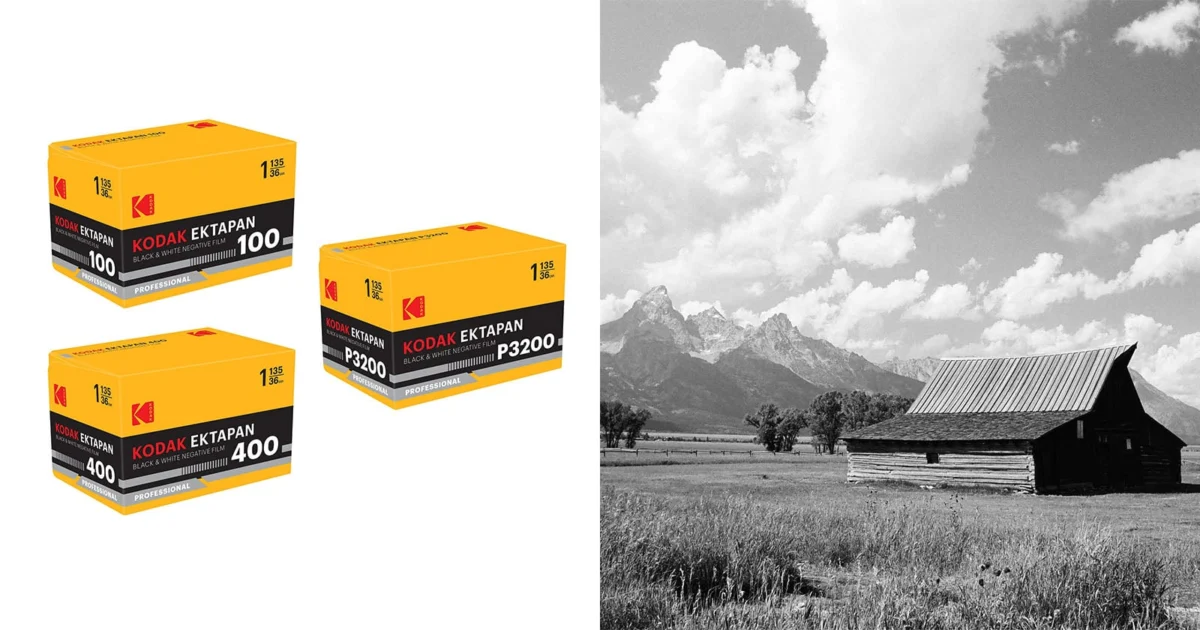
Eastman Kodak, the legendary Rochester-based imaging giant, has continued its aggressive reassertion into the photographic film market with the announcement of two new professional film lines: Ektacolor Pro and Ektapan. This latest release introduces a total of six new films, five of which will be available in both 135 (35mm) and 120 (medium format) formats, with one exclusive to 35mm. The Ektapan line specifically comprises continuous-tone panchromatic black-and-white films, offered in ISO 100, 400, and a high-speed P3200 variant. This strategic move underscores Eastman Kodak’s intensifying efforts to consolidate its film offerings and distribution channels, a process that began in earnest last September.
The introduction of Ektapan carries particular historical resonance. While the "Ektapan" name itself is not new to Kodak’s extensive archives, the series was formally discontinued nearly a quarter-century ago, with photographers at the time advised to transition to Kodak Professional T-Max films. The re-emergence of Ektapan, however, presents an interesting dynamic within Kodak’s current product ecosystem. Industry observers note a striking resemblance between the newly announced Ektapan films and the existing T-Max line, which for many years has been distributed by Kodak Alaris, a separate entity from Eastman Kodak. This deliberate choice to revive a vintage brand name, rather than adopting the familiar T-Max moniker, mirrors a similar strategy seen with the accompanying Ektacolor Pro films, which appear to be the Eastman Kodak equivalent of the popular Portra color negative films.
A Strategic Re-alignment: Eastman Kodak Reclaims its Heritage
This announcement is the latest in a rapid series of actions by Eastman Kodak to bring its film manufacturing and distribution back under its direct control. For years, the landscape of Kodak film products was bifurcated, with Eastman Kodak focusing primarily on motion picture film and some specialized products, while Kodak Alaris handled the distribution and often the manufacturing of many still photography films, including iconic lines like Portra, T-Max, Gold, and Ultramax, under a licensing agreement. This arrangement, born out of Eastman Kodak’s complex restructuring post-bankruptcy, had created a somewhat fragmented brand identity for consumers.
The current "torrid pace" of film releases from Eastman Kodak signifies a clear intention to streamline its operations and re-establish a direct relationship with photographers and retailers. The journey began in September with the launch of Kodacolor 100 and 200, marking the first new film releases directly from Eastman Kodak in some time. This was swiftly followed by the reintroduction of Kodak Gold and Ultramax under direct distribution in November. January saw the inclusion of Ektar and Tri-X, two highly regarded professional films, into Eastman Kodak’s direct network. Most recently, in February, Ektachrome slide film joined the growing roster, further solidifying the company’s commitment to a diverse and comprehensive film portfolio. The March unveiling of Ektacolor Pro and Ektapan therefore represents a logical, yet significant, progression in this ongoing corporate strategy.
The Ektapan Series: Blending Legacy with Modern Emulsion Technology
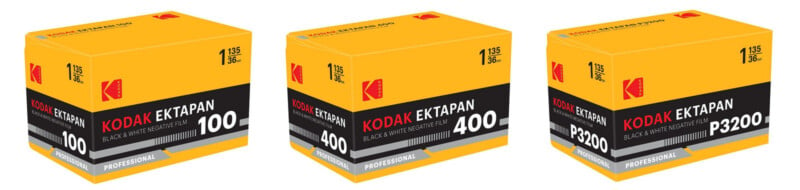
The new Kodak Ektapan films are positioned as high-quality, continuous-tone panchromatic black-and-white films designed for a wide range of photographic applications. Available in ISO 100, 400, and P3200, they cater to diverse lighting conditions and creative demands. The ISO 100 and 400 variants offer flexibility across 135 and 120 formats, appealing to both 35mm camera users and medium format enthusiasts seeking the expanded tonal range and detail of larger negatives. The P3200, a high-speed option ideal for low-light conditions or fast action, is exclusively available in the 35mm format.

While Eastman Kodak has not explicitly stated that these films are entirely "new" formulations distinct from existing products, the re-branding suggests a consolidation under the Eastman Kodak umbrella. The company highlights that the Ektapan family delivers "exceptional image quality for detailed subjects" and boasts "wide latitude for push and pull processing with good results," attributes highly valued by professional and serious amateur photographers. This latitude is crucial for photographers who often manipulate exposure and development to achieve specific artistic effects or to compensate for challenging lighting.
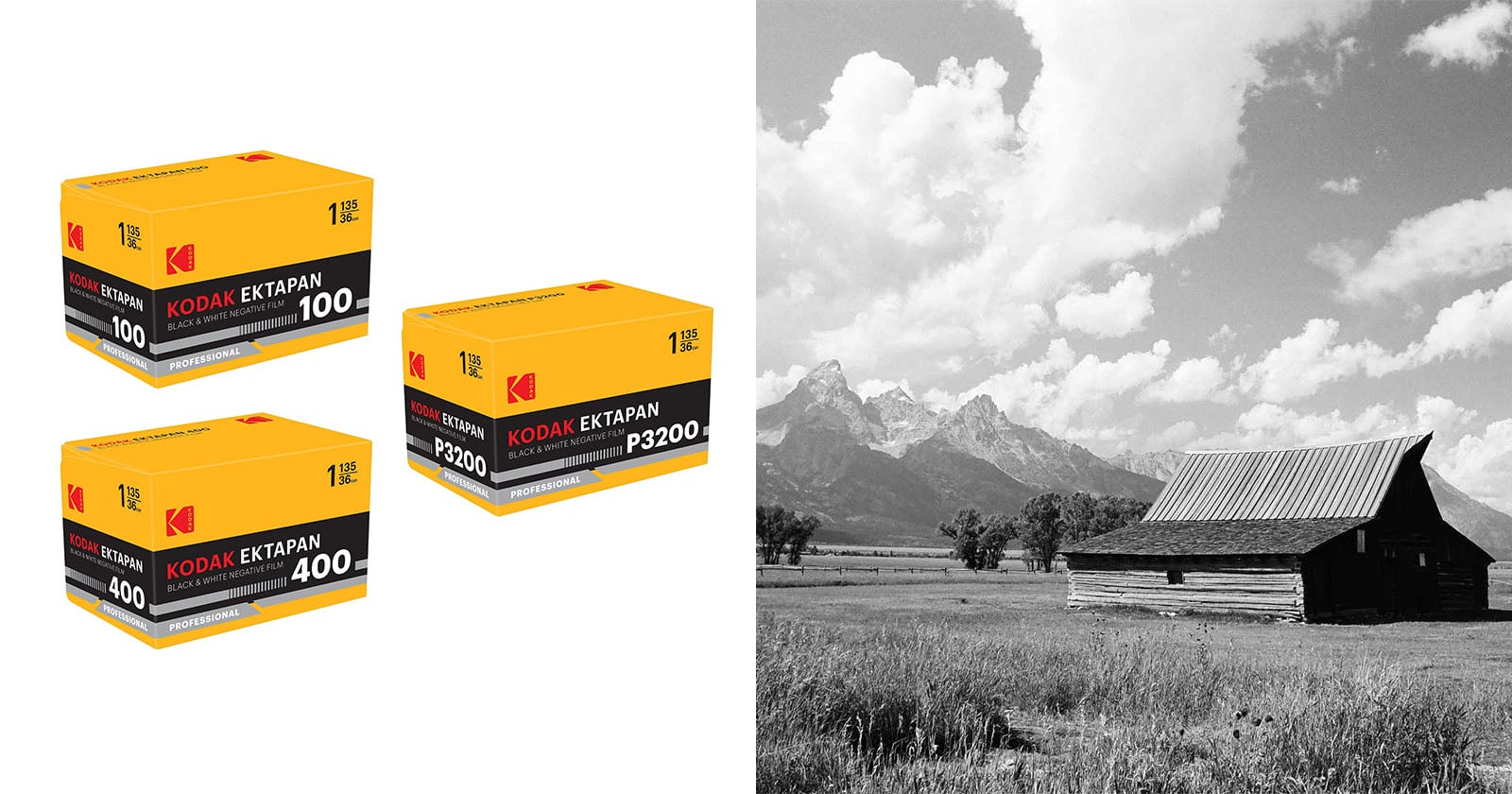
A key technical feature of the Ektapan films is their T-Grain emulsion. This advanced emulsion technology utilizes flat, tabular silver halide crystals, a departure from the more traditional cubic-grain structures. The primary advantage of T-Grain technology is its ability to maintain a remarkably low-grain appearance, even at higher ISOs, while simultaneously delivering higher resolution and sharper images. This translates into finer detail rendition and smoother tonal transitions, characteristics that are particularly appealing for large prints or high-resolution scans. Kodak elaborates on this, stating, "This structure provides a ‘clean’ look with high contrast, distinct edges, and reduced texture," indicating a film designed for clarity and precision. The visual evidence from the provided sample images, showcasing landscapes, urban scenes, and intimate details, reinforces these claims, demonstrating rich tonal scales, sharp detail, and minimal visible grain, even in the higher ISO 3200 examples.

Ektacolor Pro: The Color Companion to Ektapan
Alongside Ektapan, Eastman Kodak also unveiled Ektacolor Pro. While fewer specific details were provided for this line in the initial announcement, the explicit comparison to Portra film by the article suggests that Ektacolor Pro will serve as Eastman Kodak’s direct-distributed, professional-grade color negative film. Portra has long been celebrated for its exceptional skin tones, wide exposure latitude, and fine grain, making it a staple for portrait, fashion, and wedding photographers. The introduction of Ektacolor Pro under Eastman Kodak’s direct control signals a comprehensive effort to offer a full suite of professional film solutions, both black-and-white and color, directly to the market. This move allows Eastman Kodak to fully capitalize on the renewed interest in analog photography across all its segments.

Market Implications, Pricing, and Accessibility
The broader implications of these releases extend beyond merely adding new films to the market. Eastman Kodak’s strategy of bringing film lines back under its direct distribution network is predicated on a commitment to enhancing accessibility and affordability for photographers. The company has consistently articulated that this streamlined approach will help stabilize costs and improve the availability of film products, which have often been subject to supply chain fluctuations and rising prices in recent years.

However, the initial pricing structure for Ektapan films suggests a cautious approach to cost differentiation. At launch, Kodak Ektapan 100 and 400 are priced at $10.99 per 36-shot roll for 135 format, with Ektapan P3200 slightly higher at $13.95. For medium format users, five rolls of 120-format Ektapan 100 are offered at $44.99, and Ektapan 400 at $48.95. Notably, these prices, at least as observed at major retailers like B&H, are currently on par with Kodak T-Max films. This parity in pricing, despite the strategic re-branding, indicates that while the distribution model is changing, the immediate consumer cost may not see a dramatic reduction. The long-term impact on pricing will likely depend on economies of scale achieved through direct distribution and market competition.
The shift also raises questions about the future of film distribution by Kodak Alaris. As Eastman Kodak steadily reclaims its heritage brands and distribution, the product lines available through Kodak Alaris may contract or evolve. This could lead to a more defined separation of product offerings or a complete transition of certain lines back to Eastman Kodak over time, ultimately simplifying the purchasing landscape for photographers.

The Resurgence of Analog Photography and Kodak’s Position
These developments occur against the backdrop of a significant global resurgence in analog photography. What was once considered a niche pursuit or a fading art form has experienced a remarkable revival, driven by younger generations seeking a tangible, deliberate, and often aesthetically distinct photographic experience. The demand for film cameras, darkroom supplies, and a diverse range of film stocks has steadily climbed over the past decade. This renewed interest is not merely nostalgic; it is a vibrant cultural movement embracing the unique qualities of film, from its distinctive grain and color rendition to the slower, more intentional process it encourages.

Eastman Kodak’s aggressive re-entry into direct film distribution positions it to fully capitalize on this market trend. By consolidating its brands and streamlining its supply chain, the company aims to ensure a steady and reliable supply of film, which has been a pain point for the community due to periodic stock shortages and unpredictable availability. The choice to revive classic names like Ektapan and Ektacolor Pro also taps into the rich history and brand loyalty associated with Kodak, appealing to both seasoned film photographers and newcomers eager to explore its legacy.
The company’s commitment to professional film lines, specifically, highlights its understanding that the growth of analog photography is not limited to casual snapshooters. Professional photographers, artists, and serious enthusiasts are increasingly integrating film into their workflows for commercial projects, fine art, and personal work, valuing its unique aesthetic and creative control. By offering a comprehensive and high-quality range of films like Ektapan and Ektacolor Pro, Eastman Kodak is directly supporting this professional segment.

Conclusion
The introduction of Kodak Ektacolor Pro and Ektapan represents more than just a product launch; it is a clear declaration of Eastman Kodak’s intent to be a dominant and direct player in the revitalized film photography market. Through a methodical and rapid re-alignment of its distribution channels and the strategic re-branding of its professional film lines, Eastman Kodak is working to simplify its offerings, enhance accessibility, and leverage its iconic brand heritage. While the immediate pricing strategy remains consistent with existing market benchmarks, the long-term goal of fostering a more stable and available film supply chain promises significant benefits for the global community of analog photographers. As the film renaissance continues to unfold, Eastman Kodak is positioning itself at the forefront, ensuring that the legacy of film photography remains vibrant and accessible for generations to come.