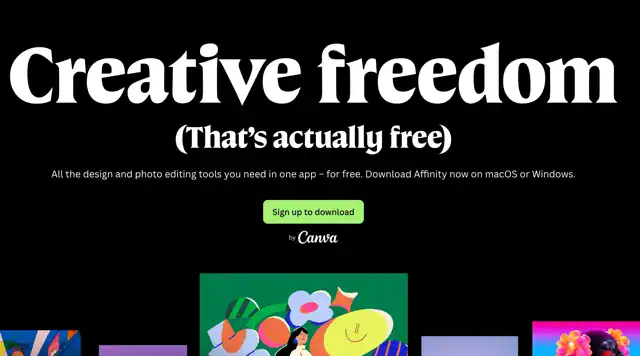
Canva has officially launched a unified version of the Affinity creative suite, transitioning the professional-grade software into a single, integrated application that is now available to the public free of charge. This strategic move follows Canva’s high-profile acquisition of Serif, the United Kingdom-based developer behind the Affinity brand, in early 2024. By consolidating Affinity Designer, Affinity Photo, and Affinity Publisher into a cohesive workspace and removing the financial barrier to entry, Canva is positioning itself as a primary challenger to Adobe’s long-standing dominance in the professional creative software market. The new Affinity environment allows users to transition seamlessly between vector illustration, advanced image retouching, and complex page layout without the friction of switching between disparate applications or managing multiple file formats.
The Evolution of Affinity and the Canva Acquisition
The journey toward a unified Affinity application began decades ago with Serif, a company founded in 1987 that initially focused on low-cost publishing software for Windows. However, the modern era of the brand began in 2014 with the launch of Affinity Designer, followed by Affinity Photo in 2015 and Affinity Publisher in 2019. These tools were built from the ground up to utilize modern hardware acceleration, offering a faster and more responsive alternative to the aging architectures of legacy competitors.
In March 2024, Canva announced the acquisition of Serif in a deal valued at several hundred million pounds. At the time of the purchase, Affinity boasted a user base of over three million creative professionals globally. The acquisition was viewed by industry analysts as a tactical move to bridge the gap between Canva’s user-friendly, template-based platform for non-designers and the high-end, precision-focused requirements of professional agencies and studios. The release of the unified, free Affinity app represents the culmination of this integration strategy, blending Serif’s technical prowess with Canva’s mission to democratize design.

Technical Architecture of the Unified Environment
The new Affinity application is characterized by its "StudioLink" technology, which has been refined to allow a truly non-linear workflow. In previous iterations, while StudioLink allowed for some cross-functionality, users still largely viewed the tools as three separate entities. The updated version eliminates these boundaries. Within a single project file, a designer can perform high-end vector path manipulation, switch to a pixel-based persona for intricate mask editing, and then immediately adjust the typography and grid systems for a multi-page print document.
The suite supports a wide array of professional file formats, including Adobe Photoshop (PSD) with smart object support, Adobe Illustrator (AI), Scalable Vector Graphics (SVG), and Encapsulated PostScript (EPS). Furthermore, it maintains its proprietary .af format, which is now optimized for cloud synchronization within the Canva ecosystem. The software is currently available for macOS and Windows, with an iPadOS version featuring full parity expected to follow shortly. This cross-platform consistency is vital for modern workflows where designers often move between desktop workstations and mobile tablets.
A Disruptive Pricing Model in the SaaS Era
Perhaps the most significant aspect of this launch is the departure from traditional software monetization. For years, the creative industry has been defined by the "subscription model," pioneered by Adobe Creative Cloud. While this model provides constant updates, it has also led to "subscription fatigue" among freelancers and small businesses who face mounting monthly overhead costs. Affinity previously countered this with a "perpetual license" model, where users paid a one-time fee for the software.
By making the unified Affinity app free, Canva has effectively undercut the entire market. To access the software, users simply require a standard Canva account. While Canva offers a "Pro" subscription for its primary web-based platform, the core professional features of the Affinity app—including batch processing, advanced CMYK color management, and non-destructive live filters—are available without a paywall. Industry experts suggest this move is designed to expand Canva’s user data and ecosystem footprint, potentially converting free Affinity users into Canva Pro subscribers for other enterprise-level features, such as brand kits and advanced AI tools.

Integration of Artificial Intelligence and the Canva AI Studio
While the core editing tools remain focused on manual precision, the new Affinity integrates Canva’s "Magic Studio" for users who opt into the premium tier. This brings generative AI capabilities directly into a professional desktop environment. Key features include:
- Generative Fill: Allowing designers to add or replace elements within an image using text prompts.
- Smart Background Removal: A one-click solution for isolating subjects in complex photography.
- Content Suggestion: AI-driven layout recommendations based on the visual hierarchy of the document.
Canva has been proactive in addressing ethical concerns regarding AI. The company has stated that data from Affinity users will not be used to train its generative models without explicit consent. This is a critical distinction for professional agencies that handle sensitive client intellectual property and require strict data privacy standards. By keeping the AI components within the "Canva AI Studio" section of the app, the software maintains a clean interface for traditionalists while offering cutting-edge automation for those who require it.
Market Context and Competitive Data
The creative software market is currently experiencing a period of intense volatility. According to market research data, Adobe currently holds roughly 75% of the market share for creative software. However, Canva’s growth has been exponential, reaching over 185 million monthly active users and generating more than $2 billion in annual revenue as of 2024.
The introduction of a free, professional-grade alternative targets a specific demographic: the "prosumer" and the independent professional. For a freelance designer, an Adobe Creative Cloud subscription can cost upwards of $600 per year. Over a five-year period, the cost of professional software can exceed $3,000. By offering a zero-cost alternative that matches the technical capabilities of industry standards, Canva is making a play for the millions of students, emerging designers, and budget-conscious studios that find legacy subscriptions financially burdensome.

Timeline of the Canva-Affinity Integration
The rollout of this unified platform has followed a deliberate timeline aimed at stabilizing the user base during the transition:
- March 2024: Canva acquires Serif and pledges to keep Affinity as a standalone professional tool while exploring integration.
- June 2024: Introduction of basic cloud-syncing capabilities between Canva and Affinity, allowing users to move assets between the web platform and the desktop apps.
- August 2024: Beta testing of the unified workspace environment begins with a select group of "Canva Champions" and long-term Affinity users.
- October 2024: Official public launch of the unified Affinity app, featuring the free-access model and the integration of the AI Studio.
Industry Reactions and Implications
The reaction from the creative community has been a mixture of optimism and cautious observation. Many long-term Affinity users expressed initial concerns that the acquisition by a "simplified" platform like Canva would lead to the "watering down" of professional features. However, the initial release of the unified app has largely quelled these fears, as the precision and performance of the software remain intact.
Graphic design educators have lauded the move, noting that the cost of software has long been a barrier to entry for talented individuals in developing economies. With a free, high-end tool now available, the "digital divide" in the creative arts is expected to narrow. Conversely, some financial analysts question the sustainability of a "free forever" model for such complex software. They point to the high costs of ongoing development and server maintenance, suggesting that Canva may eventually introduce premium "add-on" packs or advanced collaboration features behind a subscription wall.
Future Outlook for Professional Design Workflows
The launch of the unified Affinity app signals a broader shift in the software industry where the lines between "easy-to-use" and "professional-grade" are blurring. Canva’s strategy suggests a future where a single project might start as a rough brainstorm on a mobile device, move to a high-precision desktop environment for professional execution, and finally be deployed via automated social media scheduling—all within one ecosystem.

As the industry moves toward 2025, the competition between Canva and Adobe is expected to intensify. While Adobe retains the advantage of being the "industry standard" in many corporate environments, Canva’s aggressive pricing and focus on workflow efficiency are rapidly changing the landscape. For the individual creator, the result is a market with more choices, lower costs, and more powerful tools than ever before. The unified Affinity app is not just a software update; it is a statement of intent that the professional creative market is no longer a monopoly.