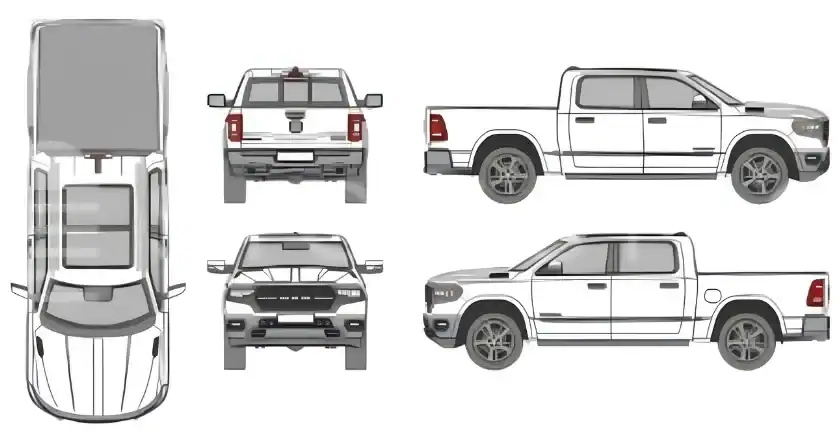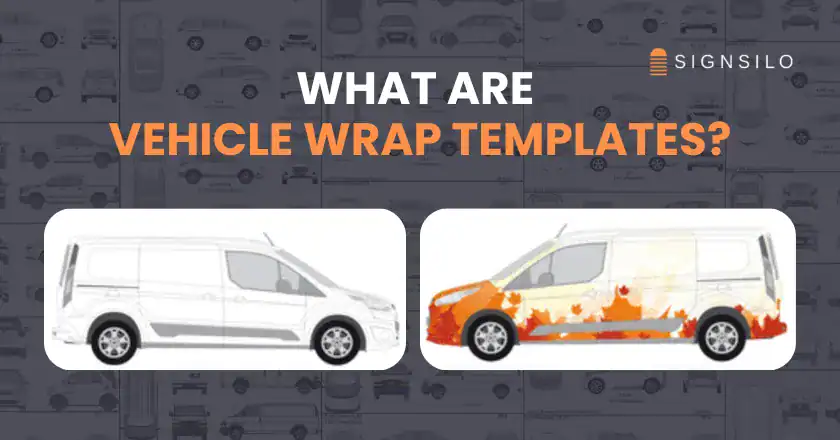
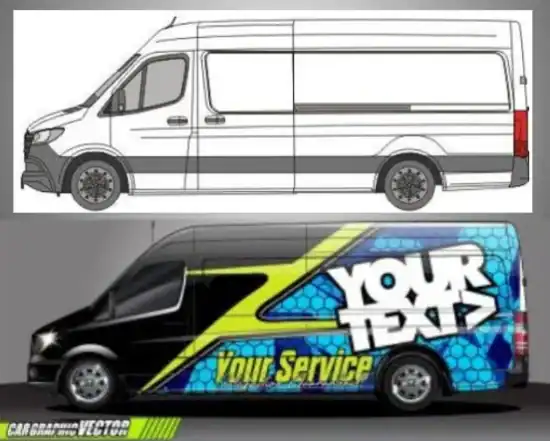
The automotive customization and mobile advertising industries have undergone a radical transformation over the past two decades, transitioning from traditional hand-painted lettering to sophisticated high-definition vinyl wraps. At the center of this technical evolution is the vehicle wrap template, a mission-critical tool that serves as the architectural blueprint for any professional graphics installation. A vehicle wrap template is a scaled, dimensionally accurate vector outline of a specific vehicle, providing designers with a precise canvas that accounts for every contour, seam, and hardware component of a vehicle’s exterior. By utilizing these templates, designers can ensure that branding elements, logos, and contact information are perfectly positioned, avoiding the costly errors associated with manual measurement and guesswork.
The Technical Foundations of Vehicle Wrap Templates
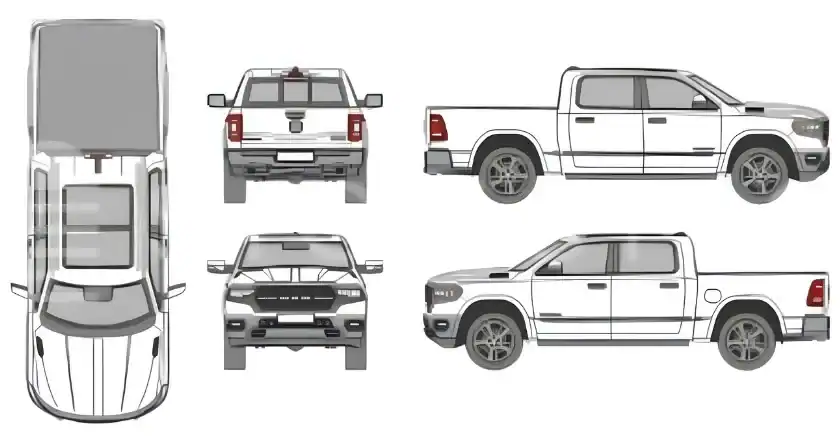
A professional-grade vehicle wrap template is far more than a simple drawing; it is a complex vector file, typically created at a scale of 1:10 or 1:20. This scaling allows designers to work on manageable file sizes within software environments like Adobe Illustrator or CorelDRAW while maintaining the mathematical integrity required to blow the design up to full size for large-format printing. These templates are meticulously drafted to include multiple views of the vehicle, encompassing the driver’s side, passenger’s side, front, rear, and frequently the roof.
The accuracy of these templates is paramount because modern vehicles are increasingly complex. A 2024 Ford Transit, for instance, features specific sensor placements, door handle recesses, and body molding that differ significantly from previous model years. A high-quality template maps these features in a "flat" layout, essentially unrolling the 3D surface of the vehicle into a 2D plane. This allows the designer to see exactly where a logo might be interrupted by a sliding door track or where a phone number might be obscured by a wheel well.
The Evolution of Vehicle Graphics: A Brief Chronology
The reliance on digital templates is a relatively recent development in the history of automotive branding. Understanding the chronology of this industry provides context for why precision templates have become the industry standard.
- Pre-1980s: The Era of Sign Painting: Before the advent of vinyl, vehicle branding was performed by skilled artisans who hand-painted logos directly onto the metal. This required no digital templates, only physical measurements and steady hands.
- The 1980s: Plotter-Cut Vinyl: The introduction of vinyl plotters allowed for the creation of "die-cut" lettering. Designers began using basic 2D outlines to estimate the placement of individual letters and simple shapes.
- The 1990s: Early Digital Printing: As large-format inkjet printers entered the market, the concept of the "full wrap" began to take shape. The need for accurate templates became apparent as designers attempted to cover entire panels with complex imagery.
- The 2000s to Present: The Template Revolution: With the explosion of the "moving billboard" industry, specialized companies began laser-scanning vehicles to create hyper-accurate CAD-based templates. Today, these templates are updated annually to match the release cycles of major automotive manufacturers.
Supporting Data: The Economic Impact of Precision Branding
The demand for accurate vehicle wrap templates is driven by the significant growth of the vehicle wrapping market. According to market analysis reports, the global vehicle wrap market was valued at approximately $5.8 billion in 2023 and is projected to expand at a compound annual growth rate (CAGR) of over 22% through 2030.

This growth is fueled by the high Return on Investment (ROI) of vehicle advertising. Data from the Outdoor Advertising Association of America (OAAA) indicates that a single intra-city truck wrap can generate between 30,000 and 70,000 impressions per day. For small to medium-sized enterprises (SMEs), the cost-per-thousand (CPM) impressions for vehicle wraps is significantly lower than that of television, radio, or even digital social media ads. However, this ROI is only realized if the wrap is professional and legible. A poorly aligned wrap—where a logo is cut off by a window or a URL is lost in a bumper fold—negatively impacts brand perception, making the precision of the template a direct factor in marketing efficacy.
Make-Specific vs. Generic Templates: A Critical Distinction
In the professional design world, a sharp distinction is made between make-specific templates and generic outlines.
- Make/Model-Specific Templates: These are engineered for a specific year, make, model, and trim level. They account for nuances such as the difference between a "long wheelbase" and a "short wheelbase" van. Professional shops almost exclusively use these for final production because they include "bleed" areas—extra design space that wraps around the edges of panels to ensure no paint is visible after installation.
- Generic/Universal Templates: These are simplified shapes representing a general category, such as "compact sedan" or "box truck." While useful for providing a client with a "ballpark" quote or a quick visual concept, they lack the dimensional accuracy required for printing. Relying on a generic template for a final print often results in "panel misalignment," where the graphics on the front door do not line up with the graphics on the rear door.
The Professional Workflow: From Blueprint to Installation
The process of utilizing a vehicle wrap template follows a rigorous technical sequence to ensure a flawless finish.
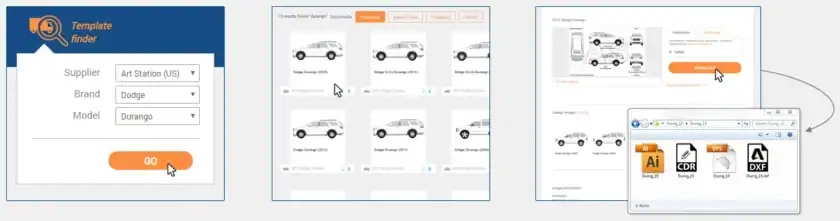
Step 1: Template Acquisition and Verification
The designer identifies the exact vehicle specifications. This includes the year, make, model, and often the sub-model or trim package. Even a seemingly minor detail, such as whether a van has rear windows or solid panels, will change the template required.
Step 2: Layered Design Construction
The template is imported into vector software. Professional designers work in layers: the template outline sits on the top layer (locked), while the artwork is built on layers beneath it. This allows the designer to toggle the template’s visibility to see how the graphics interact with the vehicle’s physical landmarks.
Step 3: Scaling and Pre-Press
Once the design is approved, the file is scaled up from the 1:10 or 1:20 template size to the 1:1 actual size. During this phase, the designer adds "overlap" to the panels. Since vinyl is applied in vertical or horizontal strips (tiles), having a 1-inch to 2-inch overlap ensures that the installer can perfectly align the image across different sections of the vehicle body.
Step 4: The Physical Measurement Check
Industry experts emphasize that a template should never be the only source of measurement. Installers typically perform a "walk-around" of the actual vehicle to check for aftermarket additions, such as roof racks, ladders, or custom bumpers, which may not be present on the standard factory template.
Industry Implications and Official Responses
The shift toward standardized, high-accuracy templates has been welcomed by professional organizations such as the Professional Decal Application Alliance (PDAA) and the International Sign Association (ISA). These bodies advocate for the use of premium templates as a means of reducing industrial waste.
From an environmental and economic perspective, "re-wraps" caused by design errors are a significant burden. When a wrap is printed incorrectly due to a faulty template, dozens of yards of non-biodegradable vinyl and high-VOC inks are wasted. By utilizing precision templates, the industry moves toward a more sustainable "measure twice, print once" model. Furthermore, insurance companies and fleet managers have begun to require standardized templates for "proof of concept" documents, ensuring that every vehicle in a national fleet maintains a uniform appearance.
Future Trends: 3D Modeling and Augmented Reality
As we look toward the future of the industry, vehicle wrap templates are evolving from 2D vector files into 3D environments. Many top-tier template providers now offer 3D "mockup" files that allow designers to wrap a digital 3D model of the vehicle. This enables the client to see the design from any angle in a simulated environment, including reflections and lighting.
Additionally, the integration of Augmented Reality (AR) is beginning to take hold. Some firms are developing tools where a client can point a smartphone at their white van and see the templated design projected onto the vehicle in real-time. Despite these technological leaps, the 2D vector template remains the essential "source of truth" for the actual printing and cutting process.
Conclusion: The Anchor of Professionalism
In the competitive landscape of modern advertising, the vehicle wrap template is the unsung hero of brand consistency. It bridges the gap between a creative vision on a computer screen and the physical reality of a complex, curved automotive surface. By providing a dimensionally accurate framework, these templates allow for the creation of high-impact, professional graphics that turn everyday vehicles into powerful marketing assets. For the designer, they provide security; for the installer, they provide a roadmap; and for the business owner, they ensure that their investment in mobile branding yields the highest possible professional standard.