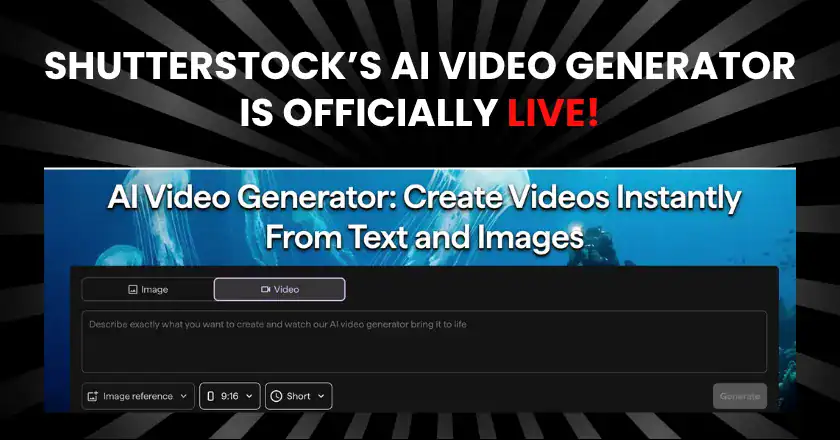
Shutterstock, a global leader in transformative brands and digital content, has announced the official commercial launch of its highly anticipated AI Video Generator. This milestone represents a significant shift in the digital media landscape, transitioning generative video from an experimental novelty into a professional-grade tool capable of meeting the rigorous legal and quality standards required by corporate and creative industries. By integrating sophisticated models from industry pioneers such as Google and Runway, Shutterstock aims to provide a unified, intuitive interface that streamlines the production of high-fidelity video assets.
The launch follows a period of rapid development within the generative AI sector, where the focus has moved from static image generation to the more complex domain of temporal consistency and motion synthesis. Unlike many existing tools that operate in legal "gray areas" regarding training data, Shutterstock’s offering is built upon a foundation of ethical sourcing and contributor compensation, a strategy intended to mitigate the copyright risks that have previously deterred large-scale enterprise adoption.
A New Standard for Integrated AI Video Production
The Shutterstock AI Video Generator is designed as a comprehensive solution for content creators who require rapid turnaround times without sacrificing visual integrity. The tool allows users to generate high-definition video clips through simple text prompts, leveraging the massive library of metadata and visual assets already housed within the Shutterstock ecosystem.
A defining feature of this launch is the strategic collaboration with external technology partners. By incorporating models from Google and Runway, Shutterstock is not merely competing with other platforms but is acting as a centralized hub for best-in-class AI technologies. This "multi-model" approach ensures that users have access to diverse aesthetic styles and technical capabilities, ranging from hyper-realistic cinematic footage to stylized animations, all within a single workflow.
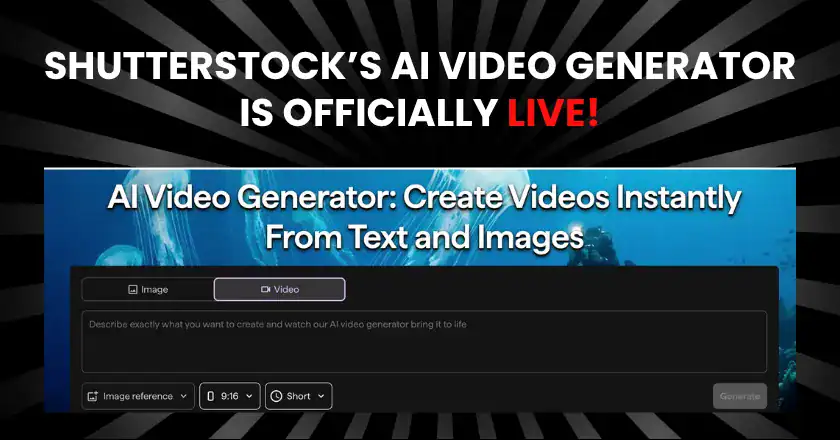
Furthermore, the integration into the existing Shutterstock platform allows for a seamless transition between generated content and traditional stock assets. Users can browse millions of high-quality images, music tracks, and pre-recorded video clips to complement their AI-generated scenes, providing a level of creative flexibility that standalone generators currently lack.
Chronology of Shutterstock’s AI Evolution
The release of the AI Video Generator is the culmination of a multi-year strategy to lead the creative industry into the era of generative media. To understand the significance of this launch, one must look at the timeline of Shutterstock’s technological pivot:
- October 2022: Shutterstock announced a groundbreaking partnership with OpenAI to integrate DALL-E 2 directly into its platform. This was one of the first major instances of a stock media company embracing generative AI rather than resisting it.
- Early 2023: The company launched its AI Image Generator and simultaneously introduced the "Contributor Fund." This initiative was designed to compensate artists, photographers, and videographers whose content was used to train the AI models, setting a precedent for ethical AI development.
- Late 2023: Shutterstock expanded its partnerships to include NVIDIA and Google, focusing on the development of 3D models and more advanced visual synthesis.
- Early 2024: Beta testing for AI video capabilities began with select enterprise clients, focusing on refining motion physics and prompt accuracy.
- Current Launch: The official public release of the AI Video Generator, now available to all registered users with a specific focus on commercial indemnity and professional output.
Technical Specifications and Commercial Security
One of the primary barriers to the adoption of AI-generated video has been the lack of legal protection. Shutterstock addresses this by offering commercial-ready licensing for content generated through its tool. Because the models are trained on licensed data or data where the company has clear usage rights, Shutterstock provides indemnification to its users, a critical requirement for advertising agencies and global brands.
Technically, the generator is optimized for a variety of formats, including social-media-friendly vertical orientations and traditional cinematic aspect ratios. The system utilizes advanced natural language processing (NLP) to interpret complex prompts, allowing users to specify lighting, camera movement, and atmospheric conditions. For instance, a prompt such as "cinematic slow-motion shot of a futuristic city during a rainstorm at sunset, 4k, neon lights reflecting on wet pavement" is translated into a coherent visual sequence with consistent motion.
The Economic Impact on the Creative Industry
The introduction of commercial-grade AI video has profound implications for the economics of content creation. Traditionally, producing even a few seconds of high-quality video required significant capital, including location scouting, hiring talent, and lengthy post-production. The AI Video Generator reduces these costs to a fraction of their previous levels.

Industry Segment Impact:
- Social Media Management: Agencies can now produce daily video content for platforms like TikTok and Instagram without the need for constant film shoots. This allows for real-time responses to trends and more frequent audience engagement.
- Small and Medium Enterprises (SMEs): Businesses with limited marketing budgets can now create professional-grade advertisements that were previously the exclusive domain of large corporations.
- Creative Directors and Filmmakers: The tool serves as an advanced storyboarding and mood-boarding instrument. Directors can visualize complex scenes instantly to communicate their vision to stakeholders before a single frame of traditional film is shot.
Data from recent market analyses suggests that the generative AI market in the creative space is expected to grow at a compound annual growth rate (CAGR) of over 30% through 2030. Shutterstock’s move to capture the video segment of this market positions it as a dominant player in a sector that is increasingly prioritizing speed and cost-efficiency.
Addressing the Ethical Landscape and Contributor Welfare
Shutterstock’s launch is notably distinct from its competitors due to its "Ethics-First" framework. The stock media industry has faced criticism from the creative community regarding the potential for AI to displace human artists. In response, Shutterstock has emphasized that its AI tools are meant to augment, not replace, human creativity.
The Contributor Fund remains a cornerstone of this ethical approach. By ensuring that the individuals who provided the foundational data for these models receive a share of the revenue generated by the AI tools, Shutterstock is attempting to create a sustainable ecosystem where technological progress does not come at the expense of the creator class. This proactive stance has been viewed by industry analysts as a necessary move to maintain the quality of the company’s core library, as high-quality human-made content remains essential for training the next generation of AI models.
Official Responses and Market Context
While official statements from partner organizations like Google and Runway have highlighted the technical synergy of the collaboration, the broader market reaction has been one of cautious optimism. Competitors such as Adobe, with its Firefly Video Model, and OpenAI, with its Sora project, are also vying for dominance in this space. However, Shutterstock’s advantage lies in its massive distribution network and its established reputation for licensing compliance.

"The launch of the AI Video Generator is not just about the technology; it is about the application of that technology in a way that is safe, scalable, and sustainable for the professional world," noted a spokesperson related to the project’s development. "We are moving past the era of ‘AI for fun’ and entering the era of ‘AI for business’."
Broader Implications and Future Outlook
As AI video technology continues to mature, the focus will likely shift toward longer durations and even more complex physics. Currently, most AI generators produce short-form clips (typically 5 to 10 seconds). The next technical hurdle will be maintaining character and environmental consistency across several minutes of footage, which would open the door for AI-generated short films and long-form documentaries.
Shutterstock’s integration of these tools into a wider ecosystem—including its existing AI image and music generators—suggests a future where a single individual could theoretically produce a full-length feature film from a desktop computer. This democratization of production tools will likely lead to an explosion of niche content, tailored to highly specific audiences.
For the immediate future, Shutterstock is encouraging user experimentation by offering two free generations for every registered user. This strategy is intended to lower the barrier to entry and allow creators to witness the tool’s capabilities firsthand. As the platform gathers more user data and feedback, the models are expected to become even more refined, further closing the gap between artificial and traditional cinematography.
In conclusion, the official launch of the Shutterstock AI Video Generator marks a pivotal moment in the evolution of digital storytelling. By balancing cutting-edge innovation with legal security and ethical responsibility, Shutterstock has provided a blueprint for how the creative industry can embrace artificial intelligence. The tool stands as a testament to the power of collaboration between human creativity and machine learning, promising a future where the only limit to visual storytelling is the imagination of the prompter.