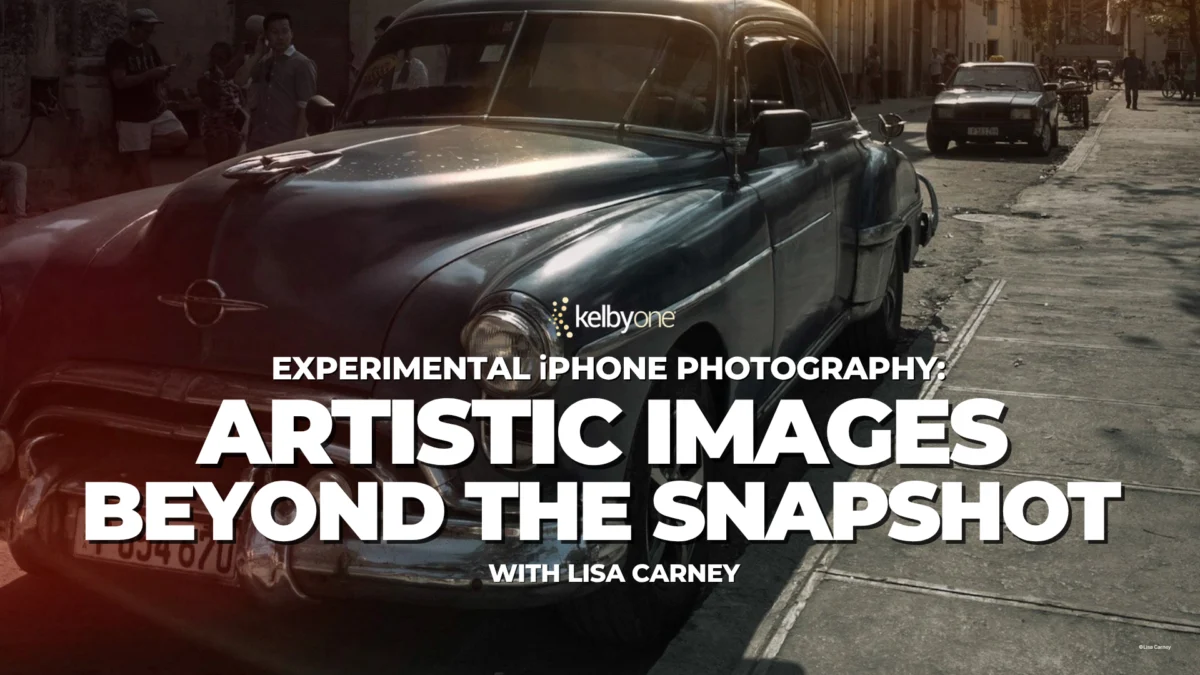
KelbyOne, a global leader in online creative education, has announced the launch of a groundbreaking new course titled "iPhone Photography Beyond the Snapshot," led by acclaimed instructor Lisa Carney. This comprehensive program is designed to empower iPhone users to transcend the casual capture of moments, guiding them towards a more personal, artistic, and uniquely expressive approach to mobile photography. The course is immediately available, promising to unlock advanced creative potential for millions of smartphone owners worldwide.
A New Frontier in Mobile Artistry
The course, spearheaded by Lisa Carney, an instructor renowned for her innovative teaching methodologies, delves into a suite of sophisticated techniques aimed at transforming everyday scenes into evocative works of art. Carney’s curriculum focuses on creative applications that leverage the iPhone’s advanced camera capabilities, moving beyond simple documentation. Students will explore methods such as motion blur to convey dynamism, reflections to create surreal compositions, double exposures for layered narratives, silhouettes to emphasize form and drama, and abstract compositions to challenge conventional perspectives.
Beyond in-camera techniques, the program emphasizes the critical role of post-processing applications. Carney provides practical demonstrations on how powerful mobile apps, including Adobe Photoshop Mobile, Adobe Lightroom Mobile, Mextures, Tintype, and Prisma, can be utilized to refine, enhance, and ultimately bring these creative visions to life. This integrated approach ensures that learners gain a holistic understanding of the mobile photography workflow, from conceptualization to final artistic output.
The Evolution of the Mobile Lens: From Utility to Art
The launch of "iPhone Photography Beyond the Snapshot" arrives at a pivotal moment in the history of photography. What began as a novelty in the early 2000s with rudimentary camera phones has evolved into a sophisticated photographic ecosystem dominated by smartphones. The introduction of the first iPhone in 2007 marked a significant turning point, not just for mobile computing but for photography itself, by integrating a relatively high-quality camera with an intuitive interface and the burgeoning app economy.
Today, smartphones are the primary photographic tool for billions globally. According to recent industry reports, over 1.4 trillion digital photos are taken annually, with approximately 90% of these captured on smartphones. This ubiquitous access has democratized photography, making it accessible to virtually anyone with a mobile device. However, while capturing moments has become effortless, transforming these captures into deliberate artistic expressions often requires guidance and specialized knowledge. This is precisely the void that Carney’s new course aims to fill, elevating the mobile camera from a simple recording device to a powerful artistic instrument. The advancements in computational photography, multi-lens systems, and improved sensor technology in modern iPhones have further blurred the lines between professional cameras and mobile devices, making advanced techniques more attainable than ever before.
Lisa Carney: Pioneering Creative iPhone Techniques
Lisa Carney’s instructional approach is rooted in her deep understanding of visual storytelling and digital manipulation. As a respected figure in the photography and digital art community, her expertise spans a wide array of creative disciplines. In "iPhone Photography Beyond the Snapshot," Carney’s philosophy is clear: the iPhone is not merely a convenient tool, but a legitimate medium for profound artistic expression. She challenges the notion that mobile photography is inherently inferior, instead showcasing its unique strengths and how to harness them creatively.
Carney meticulously breaks down each creative technique, providing actionable steps and conceptual insights. For instance, her module on motion blur explains how to manipulate shutter speed and movement to create dynamic streaks of light or blurred backgrounds, adding a sense of speed or ethereal quality to static scenes. The exploration of reflections teaches students to identify and utilize reflective surfaces – from puddles to windows – to add depth, symmetry, and abstract elements to their compositions. Double exposures are demystified, revealing how to merge two distinct images to create surreal, layered narratives that often evoke emotional responses. Similarly, the segment on silhouettes guides learners on how to effectively use backlight to create dramatic, minimalist images that focus on form and outline, stripping away distracting details. Finally, abstract compositions are explored as a means to move away from literal representation, encouraging students to focus on color, texture, line, and shape to create purely visual experiences.
The integration of various mobile applications is a cornerstone of Carney’s curriculum. She demonstrates how Adobe Photoshop Mobile and Lightroom Mobile offer professional-grade editing capabilities on a handheld device, allowing for intricate adjustments to color, tone, and composition. Mextures is introduced for its ability to add textures, grains, and light leaks, imbuing images with a tactile, vintage, or atmospheric feel. Tintype app allows users to replicate the aesthetic of archaic photographic processes, adding historical depth and a unique artistic signature. Prisma, known for its AI-powered artistic filters, is showcased as a tool for transforming photos into painterly or graphic interpretations, pushing the boundaries of digital artistry. By teaching the effective use of these diverse tools, Carney equips students with a versatile toolkit for creative expression.
KelbyOne’s Commitment to Cutting-Edge Education
KelbyOne has long been recognized as a premier online platform for photography, Photoshop, and Lightroom education, offering a vast library of courses taught by industry-leading experts. The platform’s mission is to provide high-quality, accessible education that empowers creatives at all skill levels. The introduction of "iPhone Photography Beyond the Snapshot" underscores KelbyOne’s commitment to staying at the forefront of evolving photographic trends and technologies. Recognizing the immense impact and pervasive nature of mobile photography, KelbyOne strategically invests in content that addresses this critical segment of the creative community.
KelbyOne’s curriculum development process involves identifying emerging trends, sourcing top-tier instructors, and crafting courses that deliver tangible skills and creative inspiration. The collaboration with Lisa Carney on this specific course highlights KelbyOne’s dedication to offering specialized, in-depth training that goes beyond generic tutorials. For subscribers, this new class enhances an already extensive library, providing continuous value and opportunities for professional development and personal creative growth. The platform’s flexible subscription model, offering unlimited access to all courses, ensures that learners can explore diverse topics and refine their skills across multiple disciplines.
A Chronology of Mobile Photography’s Ascent
The journey of mobile photography from a niche feature to a dominant force in visual culture is a testament to rapid technological advancement and changing user habits.
- Early 2000s: The first commercial camera phones emerge, primarily in Japan and South Korea, offering VGA-quality photos. These devices were seen as novelties, often with limited storage and sharing capabilities.
- 2002: The first camera phone is sold in the U.S., the Sanyo SCP-5300.
- 2007: Apple introduces the original iPhone, featuring a 2-megapixel camera and laying the groundwork for an integrated mobile experience that prioritized user interface and app integration. This marked a significant leap in usability and public perception of mobile photography.
- 2010: Instagram launches, revolutionizing photo sharing and popularizing mobile photo editing with its simple filters and social network integration. This propelled mobile photography into mainstream culture.
- Early 2010s: Android smartphones rapidly gain market share, with companies like Samsung, HTC, and Google pushing camera innovation, introducing higher megapixel counts and improved optics.
- Mid-2010s: Computational photography begins to play a crucial role, with features like HDR (High Dynamic Range), panorama, and portrait mode (bokeh simulation) becoming standard. Dual-lens systems appear, enhancing zoom and depth-sensing capabilities.
- Late 2010s onwards: Triple and even quad-lens systems become common on flagship smartphones, offering ultra-wide, telephoto, and macro options. AI integration for scene recognition, image optimization, and advanced editing features like Night Mode and Deep Fusion further elevate mobile camera performance, often surpassing entry-level dedicated cameras. RAW image capture becomes available on many devices, offering greater post-processing flexibility.
- Present Day: Smartphones are considered sophisticated imaging devices, capable of professional-grade photos and videos, driving a demand for advanced creative education like KelbyOne’s "iPhone Photography Beyond the Snapshot."
Voices from the Forefront: Expert Perspectives
The launch of this course has garnered enthusiastic reactions from key stakeholders in the photography and education sectors.
Lisa Carney, reflecting on her motivation for developing the course, stated, "For too long, the iPhone camera has been viewed primarily as a convenient tool for snapshots. My goal with ‘iPhone Photography Beyond the Snapshot’ is to challenge that perception entirely. I wanted to empower users to see their iPhone not just as a convenience, but as a powerful artistic tool capable of profound expression. We’re breaking down barriers and showing that true artistry isn’t defined by the equipment, but by the vision and techniques applied."
A spokesperson for KelbyOne emphasized the strategic importance of the course. "Mobile photography represents a significant frontier in visual storytelling, and Lisa’s course is a testament to our dedication to providing top-tier education that pushes creative boundaries. We recognize that millions of our members and aspiring photographers worldwide rely on their iPhones for daily captures. This course equips them with the knowledge and inspiration to elevate those captures into genuine works of art, aligning perfectly with KelbyOne’s mission to foster creativity and skill development across all platforms."
Industry analysts also recognize the timely nature and potential impact of such specialized training. Dr. Evelyn Reed, a prominent digital media consultant, commented, "Courses like this are crucial as they bridge the gap between casual phone snapping and intentional photographic artistry. They validate the smartphone as a legitimate creative medium and provide a structured pathway for individuals to develop sophisticated visual literacy and technical skills. As mobile technology continues to advance, the demand for high-quality education that harnesses these capabilities will only grow, making KelbyOne’s offering particularly relevant in today’s creative landscape."
Supporting the Vision: The Data Behind Mobile Photography
The data unequivocally supports the growing significance of mobile photography. Global smartphone penetration is estimated to be over 80% in many developed nations, with billions of active devices worldwide. This widespread adoption means that nearly everyone carries a powerful camera in their pocket. The sheer volume of photos taken on smartphones underscores their primary role in personal visual documentation. Furthermore, the market for mobile photo editing applications continues to expand, with millions of downloads for apps like Adobe Lightroom Mobile, Snapseed, VSCO, and specialized creative tools like Mextures and Prisma, indicating a strong user base actively seeking to enhance and stylize their images. The economic accessibility of mobile photography, compared to the significant investment required for professional DSLR or mirrorless camera systems, further lowers the barrier to entry for aspiring artists, making educational resources like Carney’s course particularly impactful.
Implications: Reshaping the Photographic Landscape
The implications of accessible, high-quality mobile photography education are far-reaching. Firstly, it further democratizes art. By equipping individuals with an understanding of advanced photographic techniques using a device they already own, the course empowers a broader demographic to engage with artistic creation, fostering self-expression and visual literacy across society. This can lead to a richer, more diverse visual culture.
Secondly, it reshapes the professional photographic landscape. While dedicated cameras remain essential for certain professional niches, mobile photography skills are becoming increasingly valuable for content creators, social media managers, journalists, and even traditional photographers looking to expand their toolkit or adapt to fast-paced digital environments. The ability to produce compelling, artistic imagery quickly and efficiently with an iPhone can open new avenues for creative professionals.
Finally, it influences future trends in camera technology and education. As users demand more from their mobile cameras, manufacturers are pushed to innovate further, integrating more advanced optics, sensors, and computational algorithms. Concurrently, educational platforms must continue to adapt, offering relevant, forward-thinking courses that cater to the evolving capabilities of mobile devices and the creative aspirations of their users. The "iPhone Photography Beyond the Snapshot" class is a prime example of this adaptive educational strategy, anticipating and addressing the needs of a modern, mobile-first creative community.
Accessing Your Creative Journey
For those eager to embark on this creative journey, "iPhone Photography Beyond the Snapshot" is available directly through the KelbyOne platform. The course can be purchased individually for a one-time fee of $39. Alternatively, aspiring photographers can subscribe to KelbyOne for just $19.99 per month, which grants unlimited access not only to Lisa Carney’s new course but also to KelbyOne’s entire expansive library of photography, Photoshop, and Lightroom courses. KelbyOne stands by the quality of its education, offering a 100% money-back guarantee, allowing learners to try the course risk-free and discover the full potential of their iPhone as an artistic instrument. The opportunity to transform everyday moments into personal masterpieces is now more accessible than ever before.