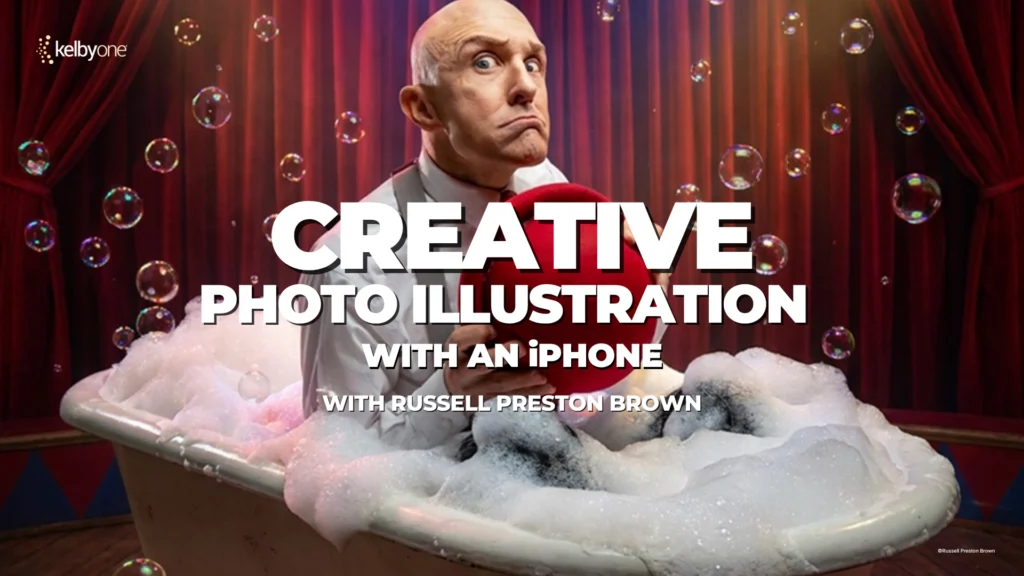
A groundbreaking new educational offering from Adobe’s Russell Preston Brown is set to redefine how aspiring and seasoned photographers approach creative photo illustration, emphasizing that professional-grade results are attainable without extensive studio equipment. The course, spearheaded by Adobe’s Senior Creative Director and celebrated digital art evangelist, demonstrates a powerful synergy between fundamental photographic principles, accessible mobile technology, and cutting-edge artificial intelligence, illustrating that exceptional visual storytelling can begin with just an iPhone, a single continuous light source, and a tripod. This innovative approach challenges traditional notions of high-end photography production, positioning creativity and technical understanding above the reliance on costly gear.
The Genesis of a New Creative Paradigm
The core premise of Brown’s new class revolves around simplicity and ingenuity. By meticulously detailing a workflow that begins with an iPhone’s advanced camera capabilities, Brown guides students through capturing high-quality raw images. The course features professional bubbleologist and model Kirk Marsh, providing a dynamic and visually engaging subject to showcase the practical application of these techniques. The curriculum extends beyond mere capture, delving deep into the transformative potential of Adobe Lightroom and Photoshop, significantly enhanced by the integration of Adobe Firefly and Generative Fill. This comprehensive educational package underscores Adobe’s commitment to democratizing advanced creative tools and fostering an environment where imagination is the primary constraint, not equipment or budget.
Russell Preston Brown: A Legacy of Innovation and Education
Russell Preston Brown is a name synonymous with digital imaging innovation and creative education within the Adobe ecosystem. As the Senior Creative Director at Adobe, Brown has played a pivotal role in shaping the landscape of digital art and photography for decades. His unique blend of technical expertise, artistic vision, and engaging teaching style has made him a beloved figure among creative professionals worldwide. Known for his charismatic presentations and ability to demystify complex software features, Brown has consistently championed workflows that push the boundaries of what’s possible, often demonstrating how powerful results can be achieved through clever application of readily available tools. His contributions extend beyond education, influencing the development of Adobe’s flagship products and inspiring generations of artists. This new course is a testament to his ongoing mission to empower creatives, providing practical insights rooted in a deep understanding of both photographic craft and digital manipulation.
Democratizing Professional Photo Illustration with Mobile Technology
The selection of the iPhone as the primary capture device is a deliberate and significant statement in an era where smartphone cameras continue to advance at an exponential rate. Modern iPhones, particularly the Pro models, boast sophisticated camera systems capable of capturing high-resolution images, including 48-megapixel raw files. This capability, which Brown meticulously explores, allows for greater flexibility in post-production, akin to traditional DSLR or mirrorless camera raw files. The course specifically highlights how to leverage the iPhone’s advanced optics and computational photography features to lay a strong foundation for subsequent artistic enhancements. This focus on mobile photography reflects a broader industry trend where smartphones are increasingly becoming viable tools for professional-level content creation, bridging the gap between casual snapshots and meticulously crafted artistic pieces. Data from industry reports consistently show that smartphone photography accounts for the vast majority of photos taken globally, with a growing percentage demonstrating professional-grade quality. This course capitalizes on that ubiquitous accessibility, proving that the barrier to entry for sophisticated image creation is lower than ever.
Mastering Light with Minimalist Gear
One of the most compelling aspects of Brown’s methodology is the demonstration of how a single continuous light source can be manipulated to achieve a variety of classic and compelling lighting patterns. The course systematically breaks down the creation of split lighting, Rembrandt lighting, loop lighting, and butterfly lighting – foundational techniques traditionally taught in studio photography with multiple lights and modifiers.
- Split Lighting: Creates a dramatic effect by illuminating exactly half of the subject’s face while leaving the other half in shadow, emphasizing contours and creating a sense of mystery.
- Rembrandt Lighting: Characterized by a small, inverted triangle of light on the shadowed side of the face, it adds depth and dimension, often conveying a serious or contemplative mood.
- Loop Lighting: Features a small shadow created by the nose on the cheek, which doesn’t connect with the shadow from the cheekbone. It’s a softer, more flattering light often used in portraiture.
- Butterfly Lighting: Named for the butterfly-shaped shadow created directly under the nose, this high-key, frontal lighting is popular for fashion and beauty photography, accentuating cheekbones and a strong jawline.
Brown’s ability to achieve these distinct and professional results with a single light source underscores the importance of understanding light direction, intensity, and modifier placement, rather than relying on an abundance of equipment. This segment of the course is invaluable for photographers operating with limited resources or those seeking to streamline their workflow without compromising on quality.
Post-Production Redefined: The Power of Adobe AI
The true "fun," as described by Brown, commences when the captured images are brought into the Adobe ecosystem – specifically Lightroom and Photoshop. Here, the raw photographic material is transformed into sophisticated photo illustrations, with a significant emphasis on the revolutionary capabilities of Adobe Firefly and Generative Fill.
- Lightroom: Serves as the initial hub for organizing, cataloging, and performing essential non-destructive edits on the raw iPhone files. This includes color correction, exposure adjustments, and basic retouching, ensuring the foundational image is optimally prepared for further manipulation.
- Photoshop: Becomes the canvas for advanced creative intervention. Brown demonstrates how to leverage Photoshop’s robust toolset for intricate selections, masking, and compositing.
- Adobe Firefly and Generative Fill: These AI-powered features are the game-changers. Generative Fill, driven by Adobe Firefly’s generative AI models, allows artists to expand canvases, add new objects, or even introduce elements that were entirely absent during the initial shoot, all while maintaining photorealistic quality and seamless integration with the original image. Brown illustrates how to add lighting effects and environmental elements that were not present in the original scene, such as dynamic light sources, reflections, or atmospheric effects, without altering the integrity of the captured subject. This capability dramatically broadens creative possibilities, enabling photographers to realize ambitious visions that would previously require extensive staging, complex compositing skills, or even re-shooting. The AI intelligently analyzes the image’s context, perspective, and lighting to generate content that harmonizes with the existing photograph, allowing for rapid iteration and experimentation.
Adobe’s Vision for the Creative Future
This course aligns perfectly with Adobe’s broader strategic vision: to empower creatives at all levels with cutting-edge tools that simplify complex tasks and unlock unprecedented artistic freedom. The integration of generative AI, exemplified by Firefly and Generative Fill, represents a significant leap forward in this mission. An Adobe spokesperson, speaking on the company’s commitment to innovation, might emphasize that "Adobe is dedicated to providing artists with intelligent tools that augment human creativity, allowing them to transcend traditional limitations and bring their most ambitious ideas to life with unparalleled efficiency. Russell’s course brilliantly showcases how our latest AI innovations seamlessly integrate with foundational photography skills to create something truly extraordinary." The company has consistently invested in AI research and development, aiming to embed intelligent features across its creative cloud suite, making advanced capabilities accessible to a wider audience. This move is also a response to the rapidly evolving landscape of digital content creation, where speed, adaptability, and imaginative output are increasingly valued.
Broader Implications for Photographers and Artists
The implications of Russell Preston Brown’s new class extend far beyond individual learning. It signals a significant shift in the photography and digital art industries:
- Democratization of High-End Production: By proving that studio-quality results are achievable with an iPhone and minimal lighting, the course lowers the financial and technical barriers to entry for aspiring creatives. This empowers a new generation of artists who may not have access to expensive gear.
- Evolution of Skillsets: The emphasis shifts from purely technical camera operation to a hybrid skillset that combines foundational photographic knowledge with advanced digital artistry and AI proficiency. Photographers are encouraged to be not just capturers of light, but also architects of visual narratives, leveraging AI as a creative partner.
- Efficiency and Creative Freedom: AI tools like Generative Fill dramatically accelerate the creative process, allowing for rapid prototyping of ideas and the execution of complex visual concepts that would otherwise be prohibitively time-consuming. This newfound efficiency translates into greater creative freedom, enabling artists to experiment more boldly.
- Redefining Authenticity: While AI offers immense creative power, it also sparks discussions around the nature of authenticity in photography. Brown’s course subtly navigates this by emphasizing starting with a strong photograph as the foundation, suggesting AI as an enhancement tool rather than a complete replacement for human capture. Industry analysts suggest that courses like Brown’s are critical for bridging the gap between traditional photographic skills and the burgeoning capabilities of AI, preparing the creative workforce for the future.
This innovative class from Russell Preston Brown stands as a compelling example of how a robust photographic foundation, coupled with a touch of imagination and the transformative power of Adobe’s AI tools, can culminate in something profoundly different and creatively expansive. It serves as a blueprint for modern photo illustration, illustrating that the most powerful creative tool remains the human mind, now augmented by intelligent technology. A promotional video featuring Russell Brown discussing the course is available, offering further insights into its content. For those interested in exploring these cutting-edge techniques, two lessons from the course are available for free viewing, providing an accessible entry point into this evolving world of digital artistry.