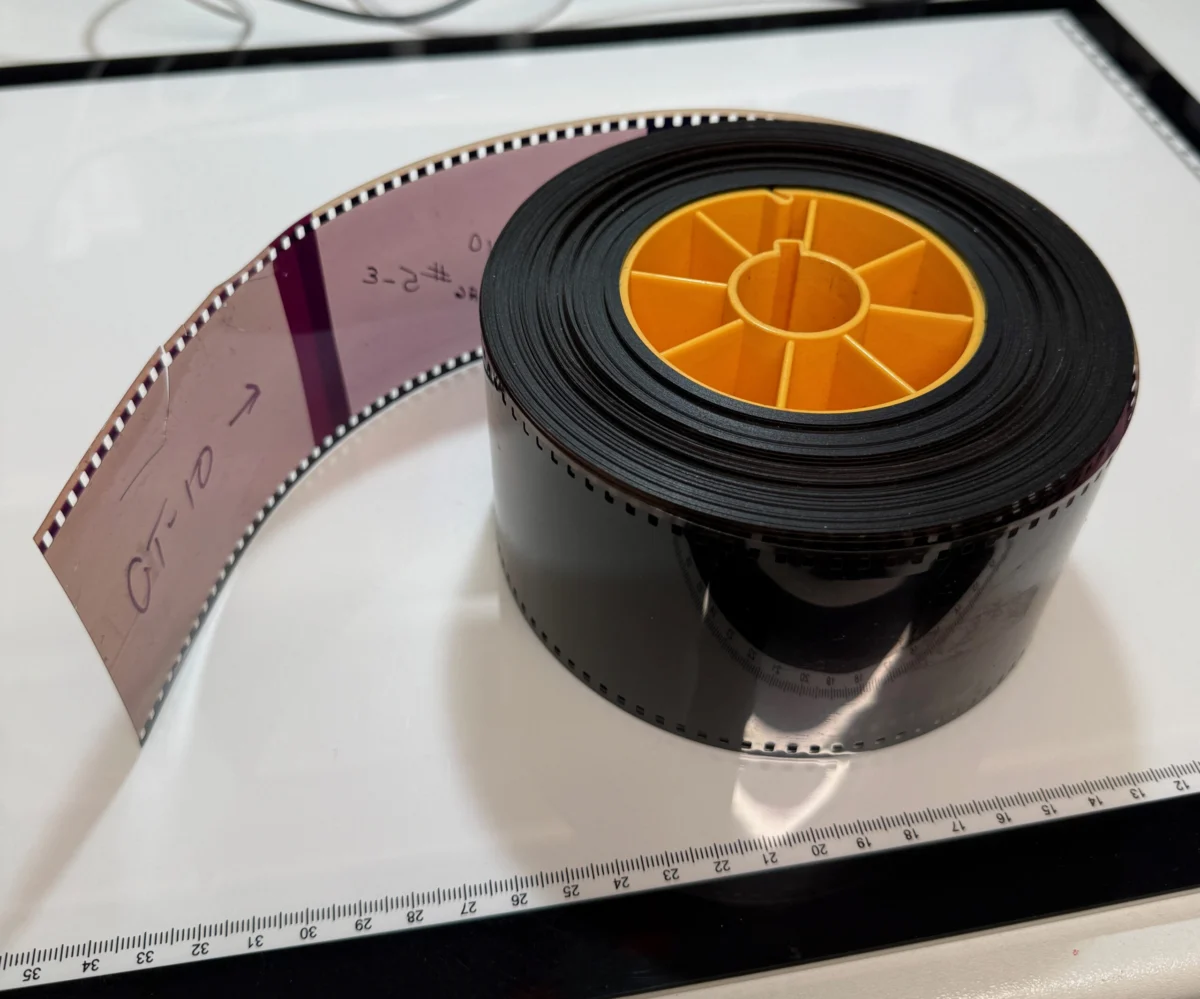
The intersection of mid-20th-century Soviet engineering and contemporary film manufacturing has long presented a unique set of challenges for analog photography enthusiasts, a reality recently highlighted by the technical difficulties experienced during a field test of the Kiev 60 medium format camera paired with Ferrania P30 film. While the revival of film photography has seen a surge in the use of vintage equipment, the mechanical inconsistencies of legacy hardware often clash with the precise requirements of modern boutique emulsions. This specific case study, involving a modified Kiev 60, underscores the inherent volatility of using Cold War-era tools in a modern artistic context and the lengths to which photographers must go to achieve a single successful exposure.
The Mechanical Heritage of the Kiev 60 and the Arsenal Factory
To understand the failures encountered during the recent use of the Kiev 60, one must first examine the industrial origins of the device. Produced by the Arsenal Factory in Kyiv, Ukraine—then part of the Soviet Union—the Kiev 60 was designed as a more affordable, heavy-duty alternative to Western medium format systems like the Hasselblad or the East German Pentacon Six. Introduced in the mid-1980s as an evolution of the Kiev 6C, the Kiev 60 utilizes a 6×6 cm frame size on 120 roll film, offering a significant increase in resolution over standard 35mm formats.
Despite its robust, "tank-like" exterior, the internal mechanics of the Kiev 60 are notoriously temperamental. The camera’s film transport system relies on a series of gears and friction-based rollers that were often manufactured with inconsistent tolerances. Unlike high-end Western counterparts that utilized sophisticated planetary gear systems to ensure precise spacing, the Kiev 60’s mechanism frequently suffers from "frame overlap" or "excessive spacing." In many units, the friction-based advance fails to account for the decreasing thickness of the film roll as it moves from the supply spool to the take-up spool, leading to inconsistent frame intervals that can ruin an entire roll of film.
The Integration of Ferrania P30: A Modern High-Contrast Emulsion
The choice of Ferrania P30 film for this exercise adds a layer of technical complexity. Ferrania P30 is a modern reproduction of a classic mid-century Italian cinema film, known for its high silver content and exceptionally fine grain. Produced by Film Ferrania in the refurbished remains of the original factory in Cairo Montenotte, Italy, the P30 is an ISO 80 panchromatic black-and-white film.
Because P30 is a "slow" film (low ISO), it requires precise exposure and development. Furthermore, the physical properties of modern 120 film—specifically the thickness of the backing paper and the acetate base—can differ slightly from the Soviet-era films for which the Kiev 60 was originally calibrated. When a camera with a known mechanical drift in its winding mechanism is paired with a high-value, boutique film like P30, the margin for error becomes virtually non-existent.
Chronology of Technical Intervention: The "Ruby Window" Modification
The subject of this report, photographer Andrea Monti, identified a recurring failure in his specific Kiev 60 unit: the film loading mechanism was unable to space shots correctly, rendering the standard frame counter useless. To rectify this, a manual intervention was required, mirroring techniques used in much older, simpler folding cameras from the early 20th century.
- Diagnosis of Mechanical Failure: Initial tests confirmed that the internal gearing of the Kiev 60 was not advancing the film at a consistent rate, a common defect attributed to the aging of internal lubricants and the wear of the winding lever’s ratchet.
- Structural Modification: To bypass the faulty internal counter, a hole was drilled into the camera’s back door. This modification, often referred to as a "ruby window" (though not always covered with red glass in modern DIY fixes), allows the photographer to visually monitor the frame numbers printed on the paper backing of 120 film.
- The Operational Workflow: The theory of operation required the photographer to cock the shutter lever multiple times—a "short stroke" technique—until the corresponding frame number appeared in the newly created window. This process was intended to ensure that each 6×6 cm square of film was positioned perfectly behind the lens.
- The Failure of Implementation: Despite the theoretical soundness of the modification, the practical application proved difficult. The Kiev 60’s winding lever is tied to both the film advance and the shutter cocking mechanism. Managing these two functions independently while squinting through a small aperture in the camera back created a margin of error that resulted in two wasted rolls of film.
Supporting Data: The Statistics of Soviet Camera Reliability
Data from analog repair specialists suggests that the Kiev 60 and its predecessor, the 6C, have one of the highest "out-of-the-box" failure rates among vintage medium format systems. According to historical service records from European importers who rebranded these cameras (such as the Arax or Hartblei conversions), approximately 30% to 50% of factory-standard Kiev 60s required professional recalibration of the winding mechanism to function reliably with modern films.
| Feature | Kiev 60 (Standard) | Pentacon Six (Competitor) | Hasselblad 500C (Western Peer) |
|---|---|---|---|
| Format | 6×6 cm | 6×6 cm | 6×6 cm |
| Film Type | 120 Roll Film | 120/220 Roll Film | 120/220 Roll Film |
| Advance Type | Lever / Friction | Lever / Gear | Crank / Planetary Gear |
| Common Issue | Frame Overlap | Frame Overlap | Mechanical Jamming |
| Reliability Rating | Low to Moderate | Moderate | High |
The failure described by Monti—where only one frame was successfully captured across multiple rolls—represents a 91.6% failure rate per roll (assuming 12 frames per roll of 120 film). This highlights the extreme volatility of using unserviced Soviet hardware for professional or high-stakes artistic work.
Expert Analysis: The Complexity of the "Double-Cocking" Procedure
The requirement to "cock the lever a few times" before a final pull suggests a significant misalignment between the shutter’s tensioning spring and the film advance gears. In a healthy Kiev 60, one full stroke of the lever should advance the film exactly one frame and fully cock the shutter.
Technical analysts suggest that when a user has to perform multiple partial strokes, they risk "slippage." The 120 film format relies on the friction of the take-up spool; if the spool does not grab the paper leader with sufficient tension, the "ruby window" method becomes the only way to track movement. However, because the Kiev 60 was not designed for a ruby window, the internal light seals must be meticulously maintained around the hole to prevent "light leaks" from fogging the Ferrania P30 film, which is particularly sensitive to stray light due to its clear base.
Broader Impact and Implications for the Analog Community
The struggle to synchronize a Kiev 60 with Ferrania P30 is emblematic of a broader trend within the global photography community: the "Slow Photography" movement. This movement prioritizes the process and the mechanical interaction with the medium over the convenience of digital capture. However, as this case demonstrates, the movement is fraught with technical hurdles as the supply of functional vintage cameras dwindles.
The Economic Cost of Technical Failure
For the modern photographer, the cost of such a failure is not merely temporal but financial. A roll of Ferrania P30 currently retails for approximately $12 to $15 USD, with specialized black-and-white development adding another $10 to $15. Wasting two rolls of film in a Kiev 60 constitutes a loss of roughly $50 before factoring in the time spent on the "ruby window" modification.
The Preservation of Industrial Knowledge
This incident also highlights the importance of specialized repair technicians. Facilities like Arax in Ukraine have made a business out of "de-Sovietizing" these cameras—stripping them down, replacing the substandard parts with precision-machined components, and flocking the interiors to improve contrast. For the average user, the DIY approach, while grounded in the spirit of the medium, often results in the "one-frame success" scenario experienced by Monti.
Conclusion: The Persistence of the Analog Aesthetic
The single successful photo captured on the Ferrania P30 roll serves as a testament to the persistence required in analog photography. While the Kiev 60’s film loading mechanism proved to be a formidable adversary, the resulting image carries the specific aesthetic markers of the P30 emulsion—high contrast, deep blacks, and a cinematic quality that is difficult to replicate digitally.
The story of the failed rolls serves as a cautionary tale for those entering the world of medium format Soviet cameras. It emphasizes that these machines are not "point-and-shoot" devices but complex mechanical puzzles that require a deep understanding of physics, engineering, and patience. As the production of films like Ferrania P30 continues to support the analog ecosystem, the demand for reliable, well-maintained vintage hardware will only increase, potentially driving a new market for refurbished Soviet optics and bodies that can meet the standards of 21st-century film enthusiasts.