The integration of the AVSS PRS-M30 parachute system into the DJI Matrice 30 (M30) series marks a transformative moment for the commercial drone industry, effectively allowing these high-performance aircraft to operate safely over crowds and in densely populated urban environments. This technological synergy addresses one of the most significant regulatory hurdles in the unmanned aerial vehicle (UAV) sector: the risk of kinetic impact in the event of a system failure. By combining DJI’s enterprise-grade flight stability and sensor suites with Aerial Vehicle Safety Solutions Inc. (AVSS) ASTM-compliant recovery technology, operators in public safety, infrastructure inspection, and emergency response now have a validated pathway to conduct complex missions that were previously restricted by aviation authorities worldwide.
The Evolution of Safety in Industrial Drone Operations
The DJI M30 series was designed from its inception to bridge the gap between the portability of the Mavic series and the heavy-lift capabilities of the Matrice 300 RTK. However, despite its advanced obstacle avoidance and redundant systems, the inherent risks of operating a multi-kilogram drone over human beings required additional mechanical safeguards to satisfy stringent civil aviation requirements, such as the Federal Aviation Administration (FAA) Category 2 and 3 rules in the United States and similar EASA frameworks in Europe.
The introduction of the PRS-M30 parachute system by AVSS provides a fail-safe mechanism that significantly reduces the terminal velocity and impact energy of the drone. In the event of a motor failure, battery loss, or critical software error, the system deploys a high-strength canopy that ensures the aircraft descends at a rate that minimizes the potential for injury to persons on the ground or damage to property. This advancement is not merely a technical upgrade but a regulatory enabler that allows commercial entities to expand their operational footprint into the "Operations Over People" (OOP) category.
Technical Specifications of the DJI M30 and M30T
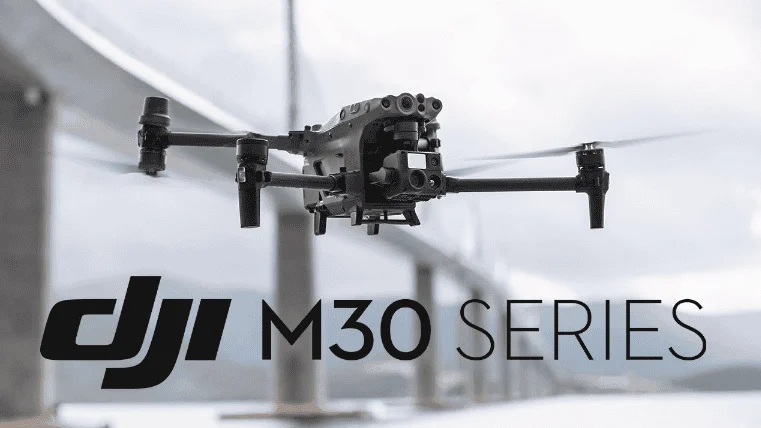
To understand the impact of this safety integration, one must examine the baseline capabilities of the Matrice 30. The platform is available in two primary configurations: the M30 and the M30T (Thermal). Both models feature a high-performance multi-sensor payload integrated into a stabilized gimbal.
The M30 features a 48-megapixel 1/2" CMOS zoom camera capable of 5x to 16x optical zoom and up to 200x digital zoom, alongside a 12-megapixel wide-angle camera. The M30T adds a 640×512 resolution radiometric thermal camera, which is essential for search and rescue (SAR) operations and identifying hotspots in structural fires. Both models include a laser rangefinder with a detection range of up to 1,200 meters, providing precise coordinates for objects viewed from a distance.
Beyond the cameras, the M30 is built for resilience. It boasts an IP55 rating, protecting it against dust and low-pressure water jets, allowing for deployment in inclement weather conditions including heavy rain and snow. Its operating temperature range of -20°C to 50°C ensures reliability in extreme climates. However, even with these robust features, a total power failure remains a statistical possibility, which is where the AVSS parachute system becomes indispensable.
The AVSS PRS-M30: A Sophisticated Recovery Solution
The PRS-M30 is not a passive accessory but an intelligent, integrated safety system. It consists of three primary components: the electronic module, the parachute pod, and the flight termination system (FTS).
Automatic Deployment Logic
The system utilizes an independent onboard computer equipped with its own sensors to monitor the drone’s flight telemetry in real-time. If the sensors detect an abnormal flight attitude—such as a sudden tumble or an uncontrolled descent—the system triggers the parachute deployment automatically in less than a fraction of a second. This autonomous capability is crucial because human reaction time is often too slow to prevent a crash during low-altitude failures.
Flight Termination System (FTS)
A critical requirement for ASTM F3322-18 compliance (the industry standard for drone parachutes) is the inclusion of a Flight Termination System. The PRS-M30 includes a "plug-and-play" FTS that communicates directly with the DJI M30’s power distribution. Upon parachute deployment, the FTS instantly cuts power to the drone’s motors. This prevents the parachute lines from becoming entangled in spinning propellers and ensures that the drone does not continue to fly away under power while the canopy is attempting to deploy.
Lightweight and Aerodynamic Design
AVSS has engineered the PRS-M30 to be as unobtrusive as possible. The system is mounted to the top of the M30 chassis, positioned to maintain the aircraft’s center of gravity. Its lightweight construction ensures that the drone’s flight time—roughly 41 minutes under standard conditions—is only minimally affected, preserving the endurance required for long-range inspections or persistent surveillance.
Regulatory Context and Compliance Standards
The ability to fly over people is governed by strict kinetic energy thresholds. In many jurisdictions, a drone must prove that in a worst-case scenario, it will not transfer more than a specific amount of joules upon impact. For the DJI M30, which weighs approximately 3.7 kg (8.1 lbs), a free-fall from operational altitudes would far exceed these safety limits.
By integrating the AVSS parachute, the M30 meets the ASTM F3322-18 standard. This standard requires the parachute system to pass 45 successful deployment tests in various failure scenarios, including hovering and full-speed forward flight. With this certification, operators can submit more robust safety cases to aviation authorities for waivers and permits. This is particularly relevant for the FAA’s Part 107 operators in the U.S., who can use the documented reliability of the AVSS system to gain authorization for missions over moving vehicles and open-air assemblies.
Strategic Applications Across Multiple Sectors
The convergence of M30 performance and AVSS safety opens up high-stakes environments that were previously "no-fly zones" for heavy industrial drones.
Public Safety and Law Enforcement
Police departments often use drones for crowd monitoring at festivals, protests, or sporting events. Without a parachute, flying a 3.7 kg drone directly over a crowd poses a liability risk that many agencies are unwilling to take. The PRS-M30 allows law enforcement to maintain an aerial vantage point directly over the area of interest, providing real-time situational awareness that can prevent stampedes, locate missing persons, or coordinate ground units more effectively.
Fire and Emergency Services
In urban firefighting, the M30T’s thermal camera is invaluable for seeing through smoke and identifying structural weaknesses. However, fire scenes are often surrounded by onlookers, media personnel, and first responders. The parachute system ensures that even if the drone is damaged by extreme heat or signal interference, it will not become a secondary hazard to the people working below.
Critical Infrastructure Inspection
Inspecting bridges, high-rise buildings, and power lines in urban centers requires flying in close proximity to traffic and pedestrians. The M30’s 360-degree obstacle avoidance handles the navigation, while the AVSS parachute handles the "what if" scenarios of hardware failure. This allows utility companies to conduct inspections without the need to cordone off large sections of city streets, significantly reducing the operational cost and public inconvenience.
Timeline of Development and Market Adoption
The journey toward this integration began shortly after the launch of the DJI M30 in early 2022. Recognizing the market demand for a "safe" version of the M30, AVSS accelerated its research and development to adapt its proven PRS technology for the M30’s unique folding frame.
By mid-2023, the PRS-M30 had undergone rigorous field testing, and by 2024, it became a standard recommendation for DJI Enterprise dealers worldwide. The partnership between DJI’s hardware and third-party safety developers like AVSS reflects a maturing ecosystem where safety is treated as a collaborative effort between drone manufacturers and specialized engineering firms.
Broader Implications for the Drone Industry
The successful deployment of the DJI M30 with parachute systems serves as a blueprint for the future of the UAV industry. It shifts the conversation from "if" drones can be safe to "how" they are made safe.
- Insurance Reliability: Insurance providers are increasingly offering lower premiums for operators who utilize certified parachute systems. The data provided by AVSS regarding the reduced risk of third-party liability makes the M30 a more "insurable" asset for large corporations.
- Standardization: As more operators adopt the PRS-M30, the ASTM F3322-18 standard becomes the de facto requirement for all urban drone operations. This pushes other manufacturers to prioritize safety-first designs.
- Public Perception: One of the greatest barriers to drone adoption is public anxiety regarding "falling drones." Seeing a drone equipped with a visible, orange-and-white parachute canister provides a psychological safety net for the general public, fostering greater social acceptance of drone technology.
Conclusion: A New Standard for Urban Aerial Mobility
The capability of the DJI M30 to fly over crowds, enabled by the AVSS PRS-M30 parachute system, is a landmark achievement in the field of industrial robotics. It represents a harmonious balance between power and protection, allowing the M30’s sophisticated multi-sensor arrays to be deployed where they are needed most: in the heart of our communities.
As urban environments become smarter and more reliant on aerial data, the importance of such safety systems cannot be overstated. The DJI M30 is no longer just a tool for the remote wilderness or fenced-off industrial sites; it is now a safe, reliable participant in the urban airspace. By mitigating the risks of technical failure, DJI and AVSS have provided a solution that protects not only the operator’s investment but, more importantly, the safety of the public. This integration ensures that the benefits of drone technology—faster emergency response, more efficient inspections, and enhanced public safety—can be realized without compromising the fundamental priority of human life.