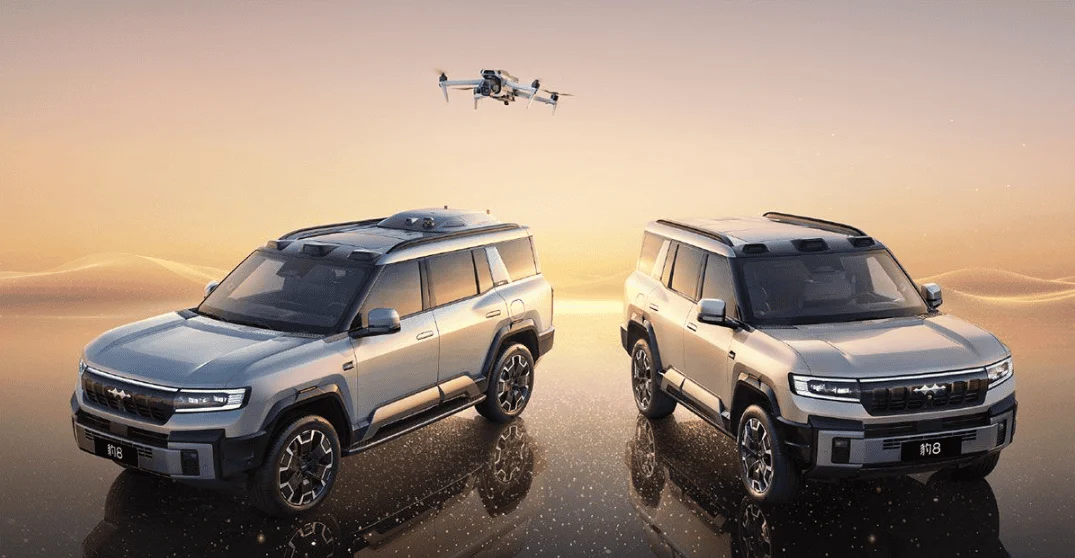
The global automotive landscape is witnessing a transformative shift as BYD, the world’s leading manufacturer of new energy vehicles (NEVs), officially launches its integrated smart drone system developed in collaboration with DJI, the global leader in civilian drones and aerial imaging technology. This pioneering integration marks the world’s first vehicle-mounted Unmanned Aerial System (UAS), designed specifically to enhance the driving experience through advanced automation, artificial intelligence, and seamless hardware synchronization. By embedding a drone ecosystem directly into the architecture of its premium electric vehicles, BYD is moving beyond traditional transportation, positioning the car as a mobile command center for both terrestrial and aerial exploration.
The Genesis of the BYD-DJI Collaboration
The partnership between BYD and DJI represents a strategic alignment between two of China’s most dominant technology titans. While BYD has spent the last decade perfecting battery technology and vehicle intelligence, DJI has maintained a near-monopoly on high-end consumer and industrial drones. The collaboration was first teased during the "BYD Dream Day" event in early 2024, where the company showcased its "Xuanji" smart architecture. This architecture serves as the "brain" of the vehicle, managing everything from autonomous driving to the newly integrated drone bay.
The development of this system was driven by the growing demand among EV owners for "lifestyle technology." As electric vehicles become increasingly homogenized in terms of range and speed, manufacturers are seeking "killer features" to differentiate their products. For BYD, the inclusion of a high-performance drone provides a unique selling proposition that appeals to outdoor enthusiasts, content creators, and tech-savvy professionals.
Technical Specifications and Hardware Integration
The smart drone system is not merely an accessory stored in the trunk; it is a fully integrated component of the vehicle’s bodywork. In models such as the Yangwang U8—BYD’s high-end luxury off-roader—the drone is housed in a specialized, aerodynamic "bay" or "hangar" mounted on the roof.
- Automated Launch and Recovery: The system features a sophisticated mechanical arm and a retractable roof hatch. With a single command from the vehicle’s internal touchscreen, the hatch opens, and the drone is deployed. Upon completion of its mission, the drone uses high-precision sensors to identify the moving vehicle and land autonomously back into its cradle.
- Intelligent Charging: Once docked, the drone is automatically charged by the vehicle’s massive onboard battery pack. This eliminates the "range anxiety" typically associated with drone flight, as the drone is always at 100% capacity whenever the car is in use.
- Advanced Imaging by DJI: Leveraging DJI’s industry-leading gimbal and camera technology, the drone is capable of capturing 4K high-definition video with professional-grade stabilization. This allows for cinematic "follow-me" shots where the drone tracks the vehicle at high speeds across various terrains.
- AI-Powered Flight Paths: The system utilizes the vehicle’s NVIDIA Orin-X chips and DJI’s flight algorithms to navigate obstacles. The drone can perform "one-click" maneuvers, such as circling the car for a 360-degree view or scouting the road ahead to identify traffic congestion or obstacles.
Chronology of Development and Rollout
The journey toward this launch followed a rigorous multi-year development cycle. In 2022, BYD’s research and development wing began exploring "aerial perception" to assist with autonomous driving. By mid-2023, rumors surfaced regarding a joint venture with DJI to solve the complex physics of landing a drone on a moving platform.
In January 2024, at the BYD Dream Day in Shenzhen, the company demonstrated the prototype, proving that the drone could withstand high winds and maintain a stable connection even in remote areas with poor GPS signals. Following successful field tests in the deserts of Xinjiang and the mountainous regions of Sichuan, BYD moved into the production phase. The official commercial rollout, integrated into the 2025 model year vehicles, signifies that the technology has met stringent safety and durability standards required for mass-market automotive use.
Strategic Analysis: The "Low-Altitude Economy"
The launch of the BYD smart drone is more than a luxury gimmick; it is a calculated move into China’s burgeoning "low-altitude economy." The Chinese government has recently identified low-altitude airspace (typically below 1,000 meters) as a strategic frontier for economic growth, encompassing everything from delivery drones to eVTOL (electric Vertical Take-off and Landing) vehicles.

By integrating drones into cars today, BYD is gathering invaluable data on aerial navigation and vehicle-to-everything (V2X) communication. This data will be crucial as the industry moves toward flying cars. Analysts suggest that BYD is using this partnership to build an ecosystem where the car serves as the primary node for a suite of peripheral robotic devices. This strategy mirrors the ecosystem approach of companies like Apple or Xiaomi, where hardware, software, and services are inextricably linked.
Enhancing Safety and Utility: Practical Use Cases
While the marketing focuses heavily on "travel documentation" and "scenic filming," the practical implications for safety and utility are significant:
- Emergency Response: In the event of an accident or a natural disaster, the drone can be launched to provide emergency services with a bird’s-eye view of the scene, helping to locate survivors or assess road damage that is not visible from the ground.
- Traffic and Route Optimization: The drone can fly several kilometers ahead of the vehicle to provide real-time updates on traffic flow, allowing the vehicle’s navigation system to reroute more accurately than traditional GPS apps.
- Off-Road Scouting: For adventurers, the drone acts as a virtual scout, checking the depth of water crossings or the steepness of a trail before the vehicle proceeds, thereby preventing costly damage or dangerous stalls.
- Security Monitoring: When parked in remote areas, the drone can perform periodic "perimeter sweeps," sending live video feeds to the owner’s smartphone to ensure the vehicle and campsite remain secure.
Official Reactions and Industry Impact
Industry experts have reacted with a mix of admiration and caution. "BYD is effectively redefining what a ‘smart car’ is," said a senior analyst at a Shanghai-based automotive consultancy. "While others are focusing solely on screens and software, BYD is expanding the vehicle’s physical footprint into the air. This is a level of vertical integration we haven’t seen since the early days of the aerospace industry."
However, the launch also raises questions regarding regulation. Aviation authorities in various regions, including the FAA in the United States and the EASA in Europe, have strict rules regarding the operation of drones from moving vehicles and beyond visual line of sight (BVLOS). BYD has stated that the system will include "geofencing" software to ensure compliance with local laws, automatically preventing flight in restricted airspaces such as near airports or government buildings.
Future Implications and the Path Forward
The successful launch of the BYD-DJI smart drone system is expected to trigger a "tech arms race" in the EV sector. Competitors like Tesla, Xpeng, and Geely are already exploring similar technologies, with Xpeng specifically focusing on its AeroHT flying car division.
As AI continues to evolve, the next generation of these drones will likely be fully autonomous, requiring zero input from the driver. We may see drones that can autonomously deliver small packages to the vehicle while it is in motion or drones that act as external sensor arrays, extending the "eyes" of the car’s self-driving system by miles.
In conclusion, BYD’s launch of the smart drone represents a milestone in the convergence of the automotive and aerospace sectors. By solving the technical hurdles of integration, charging, and automated flight, BYD and DJI have provided a glimpse into a future where the boundaries between ground and air transportation are increasingly blurred. For the consumer, it offers a new dimension of freedom and security; for the industry, it sets a new benchmark for what a high-tech vehicle can achieve. As this technology matures and spreads across more affordable models, the sight of a drone emerging from a car roof may soon become as common as the panoramic sunroof is today.