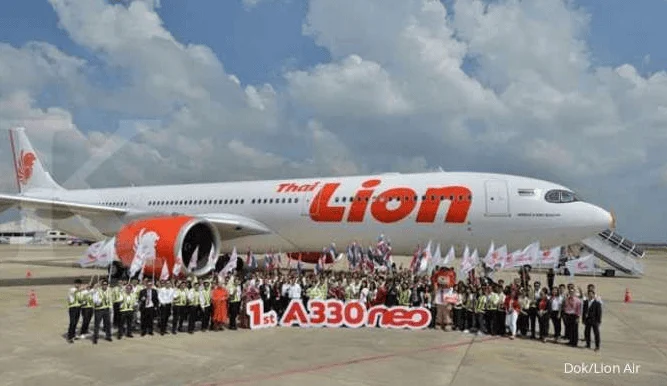
On October 7, 2021, Thai Lion Air officially marked a transformative era in its operational history with the arrival of its first two Airbus A330-900 (A330neo) aircraft at Don Mueang International Airport in Bangkok. These state-of-the-art wide-body vessels, which arrived directly from the Airbus delivery center in Toulouse, France, represent a strategic investment in the carrier’s long-haul capabilities and its commitment to modernizing the Thai aviation sector. The welcoming ceremony was a high-profile event, attended by key dignitaries including the French Ambassador to Thailand, Thierry Mathou, and the Head of Airbus Thailand, Jean-Francois Laval, alongside executives from the Lion Air Group. This acquisition serves as a cornerstone for the airline’s post-pandemic recovery strategy, focusing on increased fuel efficiency, expanded passenger capacity, and a robust entry into the burgeoning air cargo market.
A Strategic Milestone in Fleet Modernization
The delivery of the Airbus A330neo is more than a simple fleet addition; it is a calculated move to align Thai Lion Air with global aviation trends toward sustainability and cost-optimization. As a member of the Lion Air Group, Thai Lion Air has historically focused on short-to-medium haul routes using narrow-body aircraft. However, the introduction of the A330neo allows the airline to compete more effectively in the long-haul low-cost carrier (LCC) segment, challenging established players by offering competitive pricing on routes that were previously unreachable with their existing fleet.
The choice of the A330neo reflects a broader industry shift. Amidst the volatile fuel prices and increasing environmental regulations of the early 2020s, the A330neo offers a significant advantage. It is designed to bridge the gap between the proven reliability of the original A330ceo (Current Engine Option) and the ultra-advanced technology of the A350. For Thai Lion Air, this translates to an aircraft that is familiar to flight crews and maintenance teams while delivering the economic performance of a next-generation jet.
Technical Specifications and the Rolls-Royce Advantage
The Airbus A330neo is powered by the latest-generation Rolls-Royce Trent 7000 engines. These powerplants are central to the aircraft’s performance, providing a 25% reduction in fuel burn and CO2 emissions per seat compared to previous-generation competitors. The Trent 7000 incorporates technology from the Trent XWB (used on the A350), featuring a high bypass ratio and advanced materials that allow for higher operating temperatures and better efficiency.
Beyond the engines, the A330neo features significant aerodynamic improvements. The most notable change is the increased wingspan, which now reaches 64 meters, and the addition of new composite "Sharklets" or wingtip devices. ini. These enhancements reduce drag and improve lift, allowing the aircraft to operate with a maximum take-off weight (MTOW) that supports longer routes without sacrificing payload capacity. For Thai Lion Air, this means the ability to fly from Bangkok to destinations deep into North Asia, Australia, and potentially Eastern Europe, all while maintaining the high-density seat configuration necessary for the LCC business model.
Passenger Experience and the Airspace Cabin
While efficiency is the priority for the airline’s bottom line, the A330neo also introduces the "Airspace by Airbus" cabin concept to Thai Lion Air’s passengers. This cabin design is centered on four pillars: Comfort, Ambiance, Service, and Design.
- Enhanced Space: The cabin features re-contoured overhead bins that allow for more carry-on luggage, a common pain point for budget travelers. The sidewalls are also designed to provide more shoulder room for passengers in window seats.
- Advanced Lighting: The aircraft is equipped with full-spectrum LED mood lighting. This technology is programmed to simulate different times of day, which helps reduce the effects of jet lag on long-haul flights.
- Quietness: The A330neo is recognized as one of the quietest cabins in its class. The reduction in engine noise and improved insulation create a more peaceful environment, which is a significant upgrade for the airline’s long-distance offerings.
- Configuration: Thai Lion Air has opted for a high-density, single-class configuration with 436 seats. While this maximizes the number of passengers per flight, the modern slimline seats and the Airspace design ensure that the cabin does not feel overly cramped, maintaining a level of comfort that meets modern traveler expectations.
Chronology of Delivery and Operational Challenges
The path to the October 2021 delivery was not without its hurdles. The Lion Air Group originally placed orders for the A330neo years prior, intending to distribute the aircraft among its subsidiaries in Indonesia, Malaysia, and Thailand. However, the global COVID-19 pandemic, which began in early 2020, brought the aviation industry to a virtual standstill.
By the time the aircraft were ready for delivery in late 2021, Thailand was still navigating complex travel restrictions and quarantine requirements, such as the "Phuket Sandbox" and "Test & Go" programs. Consequently, while the arrival of the aircraft was a cause for celebration, their immediate deployment into international passenger service was tempered by the reality of restricted borders.
Thai Lion Air utilized this period to conduct rigorous crew training and proving flights. The airline also pivoted its focus toward the cargo sector. During the pandemic, the demand for air freight surged as global supply chains were disrupted and the need for medical supplies and e-commerce goods skyrocketed. The A330neo’s large belly-hold capacity allowed Thai Lion Air to operate "preighter" flights—passenger aircraft carrying only cargo—thereby generating essential revenue while passenger demand remained low.
Diplomatic and Economic Implications
The presence of the French Ambassador at the welcoming ceremony underscored the diplomatic and economic ties facilitated by the aviation industry. Airbus, a European conglomerate with a massive manufacturing footprint in France, views Thailand as a strategic hub for its Southeast Asian operations. The delivery of these aircraft supports French exports and strengthens technical cooperation between European aerospace engineers and Thai aviation professionals.
From a local perspective, the expansion of Thai Lion Air’s fleet is a vital component of Thailand’s broader economic recovery. Tourism accounts for roughly 12% to 20% of Thailand’s GDP. For the industry to recover, the country requires a mix of full-service and low-cost carriers capable of bringing in large volumes of tourists from key markets like China, Japan, and South Korea. The A330neo provides the necessary scale to make these routes profitable even at lower ticket prices, effectively stimulating the tourism ecosystem.
Environmental Responsibility and Sustainability
As the aviation industry faces mounting pressure to address its carbon footprint, the introduction of the A330neo is a proactive step toward environmental responsibility. Thai Lion Air’s transition to newer, more efficient aircraft is the most direct way a carrier can reduce its environmental impact. By replacing older, less efficient models with the A330neo, the airline significantly reduces the amount of fuel required per passenger kilometer.
Furthermore, the A330neo is certified to fly on a blend of Sustainable Aviation Fuel (SAF). While the widespread availability of SAF remains a challenge in Southeast Asia, having a fleet that is "future-proofed" and capable of utilizing greener fuels is a key part of Thai Lion Air’s long-term sustainability roadmap. This alignment with global environmental standards is increasingly important for securing landing rights in regions with strict emissions regulations and for appealing to the growing demographic of eco-conscious travelers.
Future Outlook: Expanding the Network
Looking ahead, Thai Lion Air intends to utilize the A330neo to reclaim and expand its international footprint. Before the pandemic, the airline had successfully launched routes to several cities in China and Japan. With the added range and efficiency of the A330neo, the airline is looking at new horizons.
Potential routes include high-demand destinations such as Tokyo-Narita, Osaka-Kansai, and Seoul-Incheon. There is also significant interest in the Australian market, with cities like Perth, Brisbane, and Melbourne being viable targets for a wide-body LCC. The ability to offer these long-haul flights from Don Mueang International Airport—which serves as a convenient hub for domestic connections—provides Thai Lion Air with a unique competitive edge.
The air cargo division is also expected to remain a permanent fixture of the airline’s business model. The A330neo’s ability to carry significant belly-hold cargo alongside a full passenger load ensures that the airline can maximize yield on every flight, providing a buffer against the fluctuations of the passenger travel market.
Conclusion
The arrival of the first Airbus A330neo aircraft for Thai Lion Air is a landmark event that signals the airline’s resilience and its vision for the future. By combining the latest in aerospace technology with a high-capacity, low-cost operational model, Thai Lion Air is positioning itself as a dominant force in the Asian long-haul market.
This investment reflects a deep confidence in the recovery of the Thai tourism industry and a commitment to providing modern, efficient, and affordable travel options. As these aircraft begin their service, they carry not just passengers and cargo, but the hopes of an industry ready to soar to new heights in the post-pandemic era. With the A330neo, Thai Lion Air is well-equipped to navigate the complexities of modern aviation, delivering value to its customers and contributing to the economic vitality of the region.