The Ukrainian defense industrial base has undergone a radical transformation over the past three years, shifting from a reliance on Soviet-era heavy machinery to becoming a global epicenter for unmanned aerial vehicle (UAV) innovation. As the conflict with Russia enters a protracted phase of attrition, the Ukrainian government has officially prioritized the mass production of First-Person View (FPV) drones, viewing them as a cost-effective asymmetrical response to traditional armored warfare. This strategic pivot is backed by a massive infusion of capital, with the government allocating more than $2.6 billion specifically for the procurement and development of drone technology. By the end of 2025, Ukraine aims to produce an unprecedented 4.5 million FPV units annually, a figure that represents a monumental scale-up from the early days of the invasion when drone operations relied largely on modified civilian hardware.
The Strategic Importance of FPV Systems in Modern Attrition
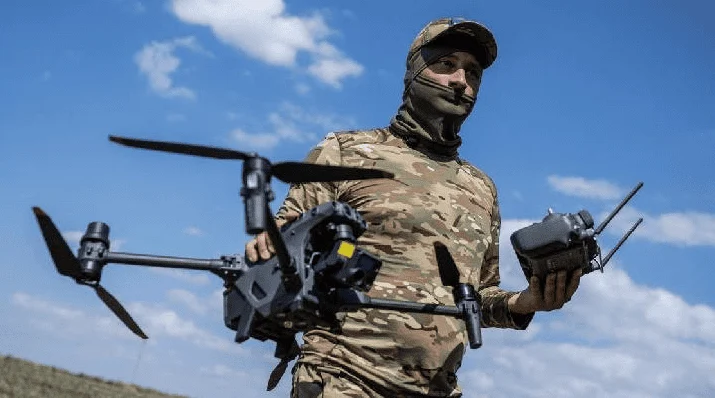
FPV drones, which allow pilots to see a real-time video feed from the aircraft’s perspective, have redefined the tactical landscape of the 21st-century battlefield. Unlike traditional reconnaissance drones that hover at high altitudes, FPV drones are typically used as "loitering munitions"—high-speed, maneuverable kamikaze crafts equipped with explosive payloads. Their primary value lies in their surgical precision and extreme cost-efficiency. A single FPV drone, which may cost between $400 and $600 to manufacture, is capable of neutralizing a main battle tank or an advanced air defense system worth millions of dollars.
The surge in production is a direct response to the evolving needs of the Ukrainian Armed Forces (AFU). As traditional artillery ammunition supplies have fluctuated due to international logistics and political delays, drones have stepped in to fill the "firepower gap." They provide a constant, 24/7 presence over the front lines, capable of striking moving targets, infiltrating trenches, and even intercepting other low-flying aerial threats. This high-density drone environment has forced a total reconsideration of military camouflage, troop movement, and armored vehicle deployment.
A Chronology of Ukraine’s Drone Evolution
The trajectory of Ukraine’s drone industry can be categorized into three distinct phases, each marked by increasing sophistication and industrial capacity:
- The Grassroots Phase (February 2022 – Early 2023): During the initial months of the full-scale invasion, drone use was largely decentralized. Volunteer groups and individual soldiers repurposed commercial off-the-shelf drones, such as the DJI Mavic series, for basic reconnaissance and grenade dropping. Production was limited to "garage workshops" where enthusiasts soldered components sourced from consumer electronics markets.
- The Institutionalization Phase (Mid-2023 – Late 2024): Recognizing the potential of these systems, the Ukrainian government launched the "Army of Drones" initiative under the Ministry of Digital Transformation. This period saw the deregulation of the defense industry, allowing private startups to bypass traditional bureaucratic hurdles to secure state contracts. Over 200 companies emerged during this time, focusing on specialized FPV frames, flight controllers, and munition release mechanisms.
- The Industrial Scale-Up (2025 and Beyond): The current phase is characterized by mass industrialization and the integration of advanced technologies. The focus has shifted from quantity alone to "smart" quantity. This involves the implementation of Artificial Intelligence (AI) for autonomous targeting, the development of electronic warfare (EW)-resistant signal protocols, and the establishment of localized supply chains for critical components like motors and carbon-fiber frames.
Technological Advancements and AI Integration
One of the most significant developments in the 2025 production cycle is the integration of "machine vision" and automated terminal guidance. As Russian forces have deployed increasingly sophisticated electronic warfare systems to jam the radio frequencies used by drone pilots, the need for autonomy has become paramount. Modern Ukrainian FPV drones are now being equipped with onboard processors capable of identifying and locking onto targets in the final stages of flight. If the connection between the pilot and the drone is severed by jamming, the AI takes over, guiding the craft to its pre-selected target using visual recognition.
Furthermore, the industry is moving toward "swarm" capabilities, where multiple drones can coordinate their movements to overwhelm enemy defenses. This requires a high level of software sophistication and a robust domestic manufacturing base for microchips and sensors. To support this, the Ukrainian government has fostered the "Brave1" defense-tech cluster, a platform that connects developers with military end-users and investors to accelerate the "lab-to-battlefield" pipeline.
Economic and Industrial Ecosystem
The push for 4.5 million drones is not just a military necessity but a significant economic driver. The drone sector has become one of the fastest-growing industries in Ukraine, creating thousands of high-tech jobs and fostering a new generation of engineers and software developers. The government’s $2.6 billion investment serves as a catalyst for private investment, both domestic and international.
To ensure the sustainability of this production, Ukraine is actively working to reduce its reliance on foreign-made components. Historically, most drone parts—including motors, batteries, and flight controllers—were imported from China. However, due to shifting export regulations and the risk of supply chain disruptions, Ukrainian firms are now domesticating the production of these essential parts. This includes the development of local battery assembly plants and the precision machining of brushless DC motors.
Statistical Analysis of Battlefield Efficacy
The impact of this industrial surge is reflected in recent battlefield data. According to military reports, Ukrainian FPV drone strikes saw a 22% increase in February 2025 compared to the previous month. This uptick correlates directly with the increased delivery of units from domestic factories to frontline brigades.
Data from specialized monitoring groups suggests that FPV drones are now responsible for upwards of 60% of documented Russian armored vehicle losses in certain sectors of the front. This high success rate has led to the creation of the "Unmanned Systems Forces," a dedicated branch of the Ukrainian military specifically designed to manage drone operations, logistics, and training. This is the first military branch of its kind in the world, signaling a permanent shift in how national defense is structured.
Navigating Challenges: Electronic Warfare and Supply Chains
Despite the rapid growth, the Ukrainian drone industry faces formidable challenges. The "electronic cat-and-mouse game" is the most pressing. As Ukraine develops new frequencies and hopping algorithms, Russian EW units respond with broad-spectrum jammers and specialized "trench EW" devices. This constant cycle of measure and countermeasure requires Ukrainian manufacturers to be extremely agile, often updating the software and hardware of their drones on a weekly basis.
Another challenge is the physical security of production facilities. Given the strategic importance of these factories, they are high-priority targets for long-range missile and drone strikes. To mitigate this risk, Ukraine has decentralized its manufacturing. Rather than relying on a few massive factories, production is spread across hundreds of smaller, nondescript locations across the country. This "cellular" manufacturing model makes it nearly impossible for an adversary to dismantle the industry with a single strike.
Official Responses and Global Implications
The Ukrainian leadership has been vocal about the necessity of this program. President Volodymyr Zelenskyy has repeatedly emphasized that "superiority in drones is the key to victory in a modern war of attrition." Mykhailo Fedorov, the Minister of Digital Transformation, has been the primary architect of the drone program, advocating for a "market-based approach" to defense procurement that encourages competition and rapid innovation among private firms.
International observers are watching the Ukrainian model closely. Military analysts from NATO and other global powers are studying the data coming out of the conflict to inform their own defense procurement strategies. The success of Ukraine’s FPV production has demonstrated that a nation can maintain a potent defense even when outmatched in traditional artillery and air power, provided it can achieve dominance in the unmanned sector.
Future Outlook and Post-War Potential
Looking beyond the current conflict, Ukraine is positioning itself to become a major exporter of combat-proven drone technology. The "Made in Ukraine" label in the UAV sector now carries a level of prestige due to the rigorous real-world testing these systems have undergone. Once the war concludes, the infrastructure and expertise developed during this period could transition into a multi-billion dollar export industry, providing security solutions to nations worldwide.
In the immediate term, the focus remains on reaching the 4.5 million unit target. This will require not only continued funding but also a steady stream of skilled operators and technicians. To this end, the government is expanding training programs, utilizing flight simulators and specialized academies to ensure that the massive influx of hardware is matched by the human expertise required to use it effectively.
The production of FPV drones in Ukraine has evolved from a desperate wartime measure into a sophisticated, high-tech industrial pillar. As these systems become smarter, more resilient, and more numerous, they will continue to dictate the rhythm of the conflict, serving as a testament to the power of rapid technological adaptation in the face of conventional military pressure. The commitment to this technology ensures that Ukraine remains at the forefront of a military revolution that is changing the nature of warfare forever.