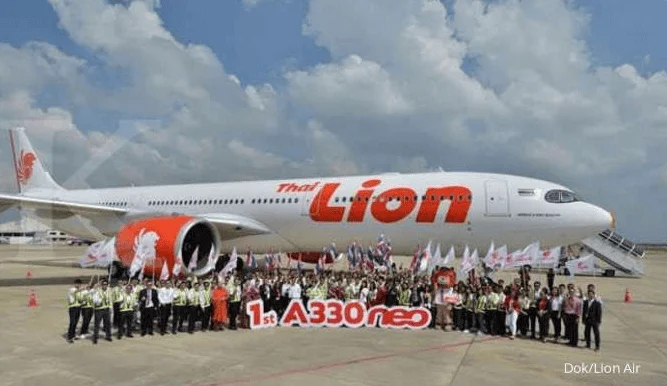
On October 7, 2021, the aviation landscape in Thailand marked a significant transition as Thai Lion Air officially took delivery of its first two Airbus A330neo aircraft. The arrival of these state-of-the-art widebody jets at Don Mueang International Airport in Bangkok represents a pivotal moment for the low-cost carrier, signaling a robust commitment to long-haul expansion and operational modernization despite the global challenges facing the airline industry. These aircraft, which traveled directly from the Airbus production facility in Toulouse, France, were greeted with a traditional water cannon salute and a formal blessing ceremony, reflecting the cultural importance and the strategic weight of this fleet acquisition.
The delivery ceremony was attended by high-ranking dignitaries, including the French Ambassador to Thailand and the Head of Airbus Thailand, alongside executives from Thai Lion Air. This high-level presence underscores the bilateral economic cooperation between France and Thailand in the aerospace sector. For Thai Lion Air, a member of the Indonesia-based Lion Air Group, the integration of the A330neo (New Engine Option) is not merely an addition of seats but a fundamental upgrade in its ability to compete on the international stage.
A New Era of Efficiency: The Technical Evolution of the A330neo
The Airbus A330neo is the latest generation of the highly successful A330 widebody family, incorporating advancements from the A350 XWB program. At the heart of the A330neo’s performance are the Rolls-Royce Trent 7000 engines. These powerplants are designed to deliver a 14% increase in fuel efficiency per seat compared to previous generation aircraft. For a low-cost carrier like Thai Lion Air, where fuel typically accounts for a significant portion of operating expenses, this efficiency is a critical factor in maintaining competitive ticket pricing while expanding into longer routes.
Beyond the engines, the A330neo features aerodynamic enhancements, including newly developed high-span wings and "Sharklets" inspired by the A350. These features reduce drag and improve lift, allowing the aircraft to operate with a maximum take-off weight (MTOW) that supports longer ranges without sacrificing payload capacity. The aircraft’s range of approximately 7,200 nautical miles (13,334 km) enables Thai Lion Air to connect Bangkok to distant markets in North Asia, Australia, and potentially parts of Europe and the Middle East.
Inside the cabin, Thai Lion Air has opted for a high-density configuration to maximize its low-cost model. The aircraft is configured to accommodate 436 passengers in a single-class layout. While the seat count is high, the "Airspace by Airbus" cabin philosophy ensures a modern passenger experience. This includes larger overhead bins, redesigned sidewalls that provide more shoulder room, and advanced LED lighting systems that help reduce jet lag by simulating different times of day. Furthermore, the A330neo is equipped with the latest generation of in-flight entertainment and connectivity options, allowing the airline to offer ancillary services that are vital for revenue generation in the LCC sector.
Chronology of Delivery and the Impact of Global Events
The journey of these two aircraft began long before their arrival in Bangkok. Thai Lion Air’s parent company, Lion Air Group, has been one of Airbus’s largest customers in Southeast Asia. The specific units delivered in October 2021 were part of a broader order intended to replace older widebody assets and facilitate the group’s aggressive expansion in the region.
However, the timeline for the deployment of these aircraft was significantly influenced by the COVID-19 pandemic. Originally slated for an earlier entry into service, the delivery was rescheduled as global travel restrictions decimated demand for international air travel. Throughout 2020 and much of 2021, Thai Lion Air, like many of its peers, had to navigate a landscape of grounded fleets and closed borders.
The decision to proceed with the delivery in late 2021 was a calculated move. It coincided with the Thai government’s efforts to reopen the country to international tourists through initiatives like the "Phuket Sandbox" and the gradual easing of quarantine requirements in Bangkok. By taking delivery of the A330neo at this juncture, Thai Lion Air positioned itself to be ready for the "rebound" phase of the pandemic recovery. The aircraft spent its initial weeks undergoing rigorous safety checks and pilot training programs to ensure that the flight crews were fully certified on the new avionics and systems of the Neo variant.
Strategic Objectives: International Routes and Cargo Operations
Thai Lion Air’s strategic roadmap for the A330neo is twofold: dominating regional long-haul tourism and capturing a larger share of the air cargo market. Historically, the airline operated a fleet primarily composed of Boeing 737 narrowbody aircraft, which limited its reach to a four-to-five-hour radius from Bangkok. The A330neo breaks this barrier, allowing the airline to target high-volume routes to cities in Japan, South Korea, and China.
In the pre-pandemic era, Thailand saw a massive influx of tourists from East Asia. As these markets begin to reopen, Thai Lion Air intends to use the A330neo to offer "high-value, low-fare" options to travelers who prioritize direct flights and affordability. The 436-seat capacity allows the airline to achieve a lower cost per available seat mile (CASM) than many full-service carriers, providing a significant edge in price-sensitive markets.
Furthermore, the cargo capacity of the A330neo is a secondary but equally vital revenue stream. The pandemic highlighted the volatility of passenger revenue and the relative stability of air freight. The A330neo’s under-floor cargo holds can carry significant tonnage of belly cargo. Thai Lion Air has indicated that it will leverage this capacity to transport e-commerce goods, perishables, and electronics across Asia. This diversification of income is essential for the airline’s long-term financial health, providing a buffer against future fluctuations in passenger demand.
Broader Implications for Thailand’s Aviation Industry
The arrival of the A330neo in Thai Lion Air’s fleet has broader implications for the Thai aviation industry and the national economy. Thailand’s Ministry of Transport and the Civil Aviation Authority of Thailand (CAAT) have been working to restore the country’s status as a premier aviation hub in Southeast Asia. The modernization of local fleets with quieter, more fuel-efficient aircraft aligns with global aviation trends toward sustainability and carbon reduction.
The A330neo produces significantly less noise and has a lower carbon footprint than the aircraft it replaces. As international regulations, such as the Carbon Offsetting and Reduction Scheme for International Aviation (CORSIA), become more stringent, having a fleet of "Neo" aircraft will reduce Thai Lion Air’s environmental compliance costs and improve its corporate social responsibility profile.
Economically, the expansion of Thai Lion Air’s international reach supports the Thai tourism sector, which contributes roughly 12-20% of the nation’s GDP. By providing more seats and more routes, the airline helps facilitate the flow of international visitors to Bangkok’s Don Mueang International Airport. This, in turn, stimulates local businesses, from hotels and restaurants to transportation providers and retail outlets. The presence of a strong low-cost long-haul carrier also forces competition, which generally leads to better service and more affordable options for the traveling public.
Official Responses and Market Sentiment
The reception from industry analysts has been cautiously optimistic. While the aviation sector continues to face headwinds from fluctuating fuel prices and geopolitical instability, the A330neo is viewed as the "right aircraft for the time." Experts note that the A330neo offers a mid-market solution that avoids the extremely high acquisition costs of the larger A350 or Boeing 787, while still providing the range and efficiency needed for profitable long-haul operations.
Airbus Thailand executives expressed confidence that the A330neo would provide Thai Lion Air with the best-in-class economics required to navigate the post-pandemic recovery. They emphasized that the commonality between Airbus aircraft types allows for easier transitions for pilots and maintenance crews, further reducing the operational overhead for the airline.
From a passenger perspective, the introduction of the A330neo is expected to improve the brand perception of Thai Lion Air. The "new plane" feel, combined with modern cabin amenities, helps bridge the gap between low-cost and full-service experiences on long flights. Early feedback from the industry suggests that the increased cabin pressure and humidity control of the A330neo (compared to older models) will be a significant selling point for passengers concerned with comfort on eight-to-ten-hour journeys.
Conclusion: A Resilient Path Forward
The delivery of the first two Airbus A330neo aircraft to Thai Lion Air is more than a simple fleet update; it is a declaration of resilience. By investing in next-generation technology during one of the most difficult periods in aviation history, Thai Lion Air has signaled its intention to remain a dominant force in the Southeast Asian market.
As the aircraft begin their scheduled service from Don Mueang and Suvarnabhumi airports, the focus will shift to operational execution. The success of this expansion will depend on the airline’s ability to fill the 436 seats per flight and effectively manage its new long-haul network. However, with the fuel efficiency of the Rolls-Royce Trent 7000 engines and the strategic range of the Airbus design, the airline is now equipped with the tools necessary to thrive in a competitive and evolving global sky.
The arrival of these aircraft marks the beginning of a new chapter for Thai Lion Air, one characterized by greater reach, environmental responsibility, and a renewed focus on the international traveler. For the Thai aviation industry, it serves as a beacon of recovery, suggesting that despite the setbacks of the past few years, the future of flight in the region is poised for a significant and technologically advanced ascent.