The stark beauty of Norway’s Arctic coastline provides a dramatic backdrop for one of nature’s most breathtaking displays: the raw power and grace of the orca, or killer whale. In the frigid, dimly lit waters off the Norwegian coast, where winter days are characterized by short periods of twilight, photographer Paul Nicklen and his team embarked on an expedition to document these magnificent marine mammals. After weeks of challenging conditions and elusive sightings, their perseverance was rewarded with a moment of unparalleled intensity, capturing a pod of orcas engaged in a feeding frenzy, an event rarely witnessed with such dramatic fervor in this region.
The Elusive Giants of the North
Norway is a significant feeding ground for a distinct population of orcas, primarily known for their specialized diet of herring. These Norwegian orcas, unlike their counterparts in British Columbia known for frequent breaching and aerial acrobatics, are generally more reserved. Their behavior is often characterized by powerful dives and strategic hunting techniques rather than spectacular leaps from the water. The expedition, led by Nicklen, aimed to capture these elusive creatures in their natural habitat during the challenging winter months. The prevailing conditions were harsh: near-constant darkness, with the sun barely clearing the horizon even at midday, casting a muted pink and orange glow that quickly faded into deep twilight. Rough seas were a frequent companion, making the pursuit of these agile predators a formidable undertaking.
A Weeks-Long Vigil Yields a Moment of Epiphany
The team had dedicated weeks to tracking the orca pods, often encountering periods of quiet or limited activity. The low light conditions presented significant photographic challenges, demanding precise calculations of shutter speed and aperture to freeze the swift movements of the whales without introducing motion blur. The days were characterized by a pervasive gloom, with the dark silhouette of an orca’s dorsal fin cutting through the choppy, dark waters serving as the only visual cue for much of the expedition.
Then, one frigid morning, as the boat followed a distant pod, a transformation occurred. Initially, the group appeared calm, with several large males visible but no overt signs of energetic activity. This normalcy was shattered without warning. A palpable shift in the pod’s behavior indicated something extraordinary was happening. The distant orcas, previously a picture of quiet presence, suddenly became a whirlwind of motion. Nicklen described this moment as a trigger, igniting a palpable excitement within the pod that was evident even from a distance. The observation quickly evolved into a feeding frenzy, a behavior that immediately galvanized the expedition team.

Matching the Rhythm of the Hunt
The senses of the observers snapped to acute attention, as if a switch had been flipped. The expedition’s boat accelerated, maintaining a careful distance from the agitated pod, a delicate dance of observation and non-interference. The speed of the boat was adjusted to approximately 20 knots, matching the rapid pace of the orcas’ athletic maneuvers. For once, the notoriously volatile Arctic waters offered a period of calm, allowing for more stable observation and photography.
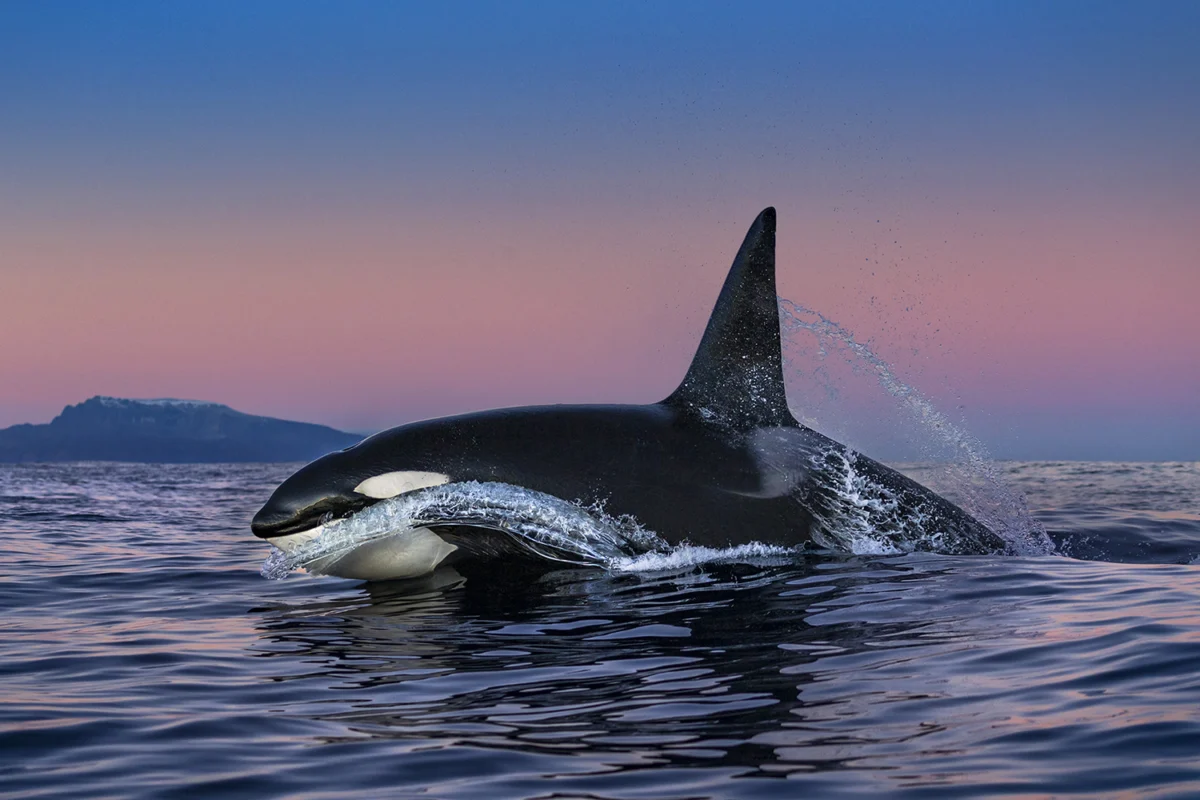
It was during this opportune moment that a particularly massive male orca, estimated to weigh around 12,000 pounds and measuring approximately 25 feet in length, began to porpoise with astonishing speed and power. The visual spectacle was described as an explosion of water streaming off the whale’s body with each powerful leap. This particular male, with a dorsal fin reaching an impressive six feet and pectoral fins comparable in size to a car hood, was a breathtaking sight. The photographer’s challenge was to capture this raw energy, a feat complicated by the low light and the sheer speed of the action.
The Art of Capturing Ephemeral Power
Nicklen’s photographic equipment, a single-lens reflex camera, presented its own set of challenges in such dynamic situations. The act of taking a photograph—the mirror flipping, the shutter opening and closing—rendered the photographer momentarily "blind" to the unfolding action. This meant that, even while shooting at ten frames per second, there was an inherent uncertainty about whether the perfect shot had been captured. The low light conditions further amplified this challenge, demanding a rapid, almost intuitive, photographic response.
The visual composition was further enhanced by the prevailing atmospheric conditions. The sky had transformed into a canvas of soft pink and hints of orange, with the majestic, snow-capped mountains of Norway forming a dramatic natural backdrop on the horizon. This ethereal light, combined with the raw power of the orca’s leaps, created a scene of profound natural beauty.
A Perfect Frame, Frozen in Time
The culmination of weeks of anticipation and challenging conditions arrived in a fleeting, yet immortalized, moment. As the orca surged through the water, its body arced, sending cascades of spray into the air. Nicklen’s skilled navigation of the photographic process, coupled with the fortuitous calm of the sea and the opportune light, allowed him to capture an image that perfectly encapsulated the essence of the event.

After the intense burst of activity subsided, Nicklen retreated to the back of the boat, a quiet sense of anticipation settling in. He reviewed the images on his camera’s LCD screen, a process that often brought anxiety about the outcome of such demanding shots. However, on this occasion, the results were immediately apparent. The image displayed a breathtaking clarity. The water droplets, frozen mid-air, seemed to outline the orca’s powerful form. The subtle interplay of light and shadow, the rich hues of the sky, and the sharp detail of the whale’s eye—all converged to create a visually stunning photograph.
Nicklen expressed his initial doubt about the possibility of capturing such fine detail, particularly the sharpness of the orca’s eye, given the circumstances. Yet, upon zooming in, he discovered that the image was not only sharp but possessed an extraordinary level of detail. He meticulously scrolled through the frames, searching for any imperfection that might indicate a missed opportunity, but found none. The photographs represented a perfect confluence of subject, environment, and photographic execution.
The Enduring Gift of Nature Photography
This extraordinary encounter underscores the profound connection between wildlife, environment, and the art of capturing these moments. Nicklen described these captured images as "gifts of nature," transforming the ephemeral beauty of the natural world into a tangible, enduring testament. The photographs serve as a powerful reminder of the wild’s untamed magnificence and the critical importance of preserving these ecosystems. In the context of ongoing conservation efforts for marine life, images like these play a crucial role in raising awareness and fostering a deeper appreciation for the planet’s biodiversity.
The specific population of Norwegian orcas is intricately linked to the abundance of herring stocks, which have faced challenges due to climate change and overfishing in the past. The health of these orca populations is a strong indicator of the overall health of the marine ecosystem. Moments like the one captured by Nicklen highlight not only the intrinsic beauty of these animals but also their vital role within their environment. The fact that these orcas, typically less prone to breaching, engaged in such an energetic display suggests a particularly successful or abundant feeding opportunity, potentially reflecting a healthy herring population in that specific period.
The expedition’s success in documenting such a rare and powerful behavior offers valuable insights into the hunting strategies and social dynamics of Norwegian orcas. While further scientific study is needed to fully interpret the triggers and significance of such frenzied activity, the visual evidence provided by Nicklen’s work contributes to our understanding of these apex predators. This visual narrative serves as a compelling argument for continued research and robust conservation measures to protect the marine environments that sustain these magnificent creatures and the delicate balance of the Arctic ecosystem. The "Dawn Patrol" moment, as Nicklen’s photograph is titled, is more than just a stunning image; it is a window into the wild heart of the Arctic, a testament to nature’s enduring power and a call to its preservation.